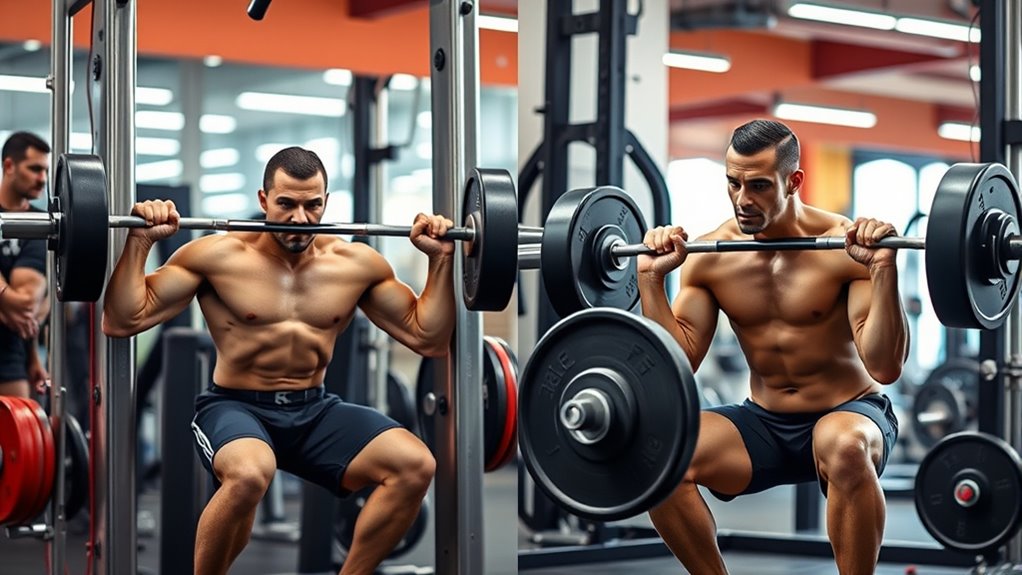

Using a Smith machine gives you a safer, more controlled workout, which is great if you’re a beginner or focused on safety. It limits muscle engagement and reduces the need to balance, meaning you won’t develop as much core or stabilizer strength as you would with free squats. While it’s easier to maintain proper form, relying solely on it can limit overall progress. Keep exploring to discover how each method can fit into your fitness goals.
Key Takeaways
- Smith machines offer safer, guided lifts ideal for beginners, but may limit muscle activation compared to free squats.
- Free squats engage stabilizer muscles more fully, improving functional strength and coordination.
- Smith machines simplify technique, reducing injury risk, but can create a false sense of security leading to improper form.
- Free squats require higher skill and proper technique, providing comprehensive muscle engagement and better real-world transfer.
- Choosing between them depends on experience, safety needs, and fitness goals; incorporating both can optimize results.

When choosing between the Smith machine and free squats, understanding their differences can help you make the best decision for your fitness goals. The Smith machine offers a guided, controlled environment, which can be beneficial for beginners or those prioritizing safety considerations. Its fixed barbell path minimizes the risk of losing balance, making it easier to maintain proper form, especially when lifting heavier weights. This safety aspect allows you to push yourself without the fear of dropping the bar or injuring yourself due to instability. However, this safety can come at the expense of muscle engagement. Because the machine restricts movement to a predetermined path, it may reduce the activation of stabilizer muscles that you’d naturally engage during free squats. Stabilizer muscles, such as those in your core and hips, work harder in free-weight exercises to maintain balance and proper posture. When using a Smith machine, your muscles might not be challenged as fully in these areas, which could limit overall functional strength development.
On the other hand, free squats demand greater muscle engagement across multiple muscle groups. Since you’re balancing the barbell yourself, your core, lower back, and hip muscles are constantly working to stabilize your entire body during each repetition. This increased muscle activation can lead to improved coordination, balance, and functional strength—benefits that are often more transferable to real-world activities. However, free squats also require more skill and technique, and there’s a higher risk of injury if performed incorrectly or with excessive weight. Proper form is essential, especially without the guided bar path of the Smith machine, which can be intimidating for beginners or those recovering from injury.
Safety considerations are essential when comparing these two options. While the Smith machine provides a safer environment for heavy lifting and allows you to train alone with less risk, it may give a false sense of security that leads to improper technique or over-reliance on the machine. Conversely, free squats demand more attention to form and technique but can offer superior benefits in muscle engagement and functional strength. Ultimately, your choice should depend on your experience level, goals, and comfort with each method. If safety and controlled movement are your top priorities, the Smith machine can be a good starting point. If you aim for full-body muscle activation and functional strength, incorporating free squats into your routine will serve you better, provided you learn proper technique and progress gradually.
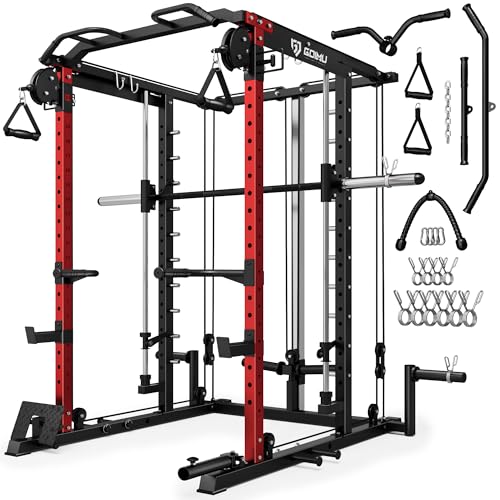
Goimu S1-V4 Smith Machine, 2000LBS Power Cage with Cable Crossover System, All-in-One Squat Rack with Smith Bar, Strength Training Equipment for Hone Gym (Red Smith Machine S1)
【2000LBS Heavy-Duty Steel Construction】: The GOIMU S1 Smith Power Cage supports up to 2000LBS of weight, ensuring superior…
As an affiliate, we earn on qualifying purchases.
As an affiliate, we earn on qualifying purchases.
Frequently Asked Questions
Can Beginners Safely Use the Smith Machine for Squats?
Yes, beginners can safely use the Smith machine for squats if you focus on proper form and safety precautions. Start with lighter weights, keep your feet shoulder-width apart, and avoid overextending your knees or back. Always warm up, use a spotter if possible, and listen to your body. Following these steps helps prevent injuries and builds confidence as you learn the correct squat technique.
How Does Muscle Engagement Differ Between Smith Machine and Free Squats?
When it comes to muscle engagement, the difference is clear—you’ll find that free squats activate more stabilizer muscles, giving you a full-body workout. The smith machine guides your movement, focusing more on primary muscles like quads and glutes, but reduces stabilizer engagement. So, if you want to really get your muscles firing on all cylinders, free squats are the way to go—don’t put all your eggs in one basket.
Is There a Higher Injury Risk With Free Squats?
Yes, there’s a higher injury risk with free squats if you don’t focus on proper technique and injury prevention. Free squats require more stability training, which can challenge your balance and coordination. To reduce risk, start with lighter weights, practice good form, and gradually increase intensity. Incorporating stability exercises helps build the muscles needed for safe free squat performance, minimizing injury chances and keeping you safe during your workout.
Which Option Is Better for Athletic Performance?
Studies show that athletes who incorporate free squats see a 15% greater improvement in explosive power than those using Smith machines. For athletic performance, free squats are better because they enhance stability benefits, engaging more muscles and improving balance. They mimic real-world movements, making you more athletic overall. If your goal is to maximize explosive power and functional strength, free squats are the superior choice.
How Do the Costs Compare Between Smith Machines and Free Weights?
You’ll find that smith machines generally have higher initial costs but tend to require less maintenance, which can save you money over time. Free weights, on the other hand, usually cost less upfront but may incur higher maintenance costs due to equipment wear and tear. Consider equipment longevity too; free weights tend to last longer with proper care, while smith machines might need repairs sooner depending on usage.
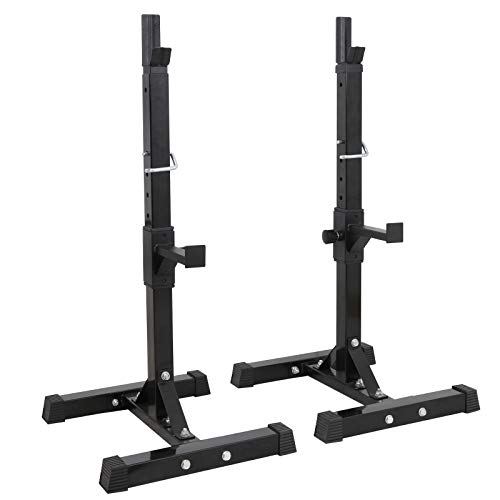
F2C Max Load 550Lbs Pair of Adjustable Squat Rack 41"-66" Sturdy Steel Barbell Rack Free Bench Press Stands GYM/Home Gym Portable Dumbbell Racks Stands
【Professional Grade for Serious Training】 Ideal for squats, bench presses, and a wide range of strength exercises, this…
As an affiliate, we earn on qualifying purchases.
As an affiliate, we earn on qualifying purchases.
Conclusion
Ultimately, choosing between a smith machine and free squats depends on your goals and experience. While the smith machine offers stability and safety, it may limit natural movement and muscle engagement. Free squats challenge your balance and core, promoting functional strength. Some believe the smith machine’s controlled environment can lead to better progress, but many experts argue that incorporating free weights develops more well-rounded strength. Try both to see which aligns best with your fitness journey.

Tidal Tank Classic – Aqua Bag with Water, Sandbag Weighted Workout Equipment for Strength Training Adjustable Weights for Core Stability, Free App for Full Body Workout – up to 49 lb
UNLEASH YOUR POTENTIAL WITH OUR INNOVATIVE EXERCISE EQUIPMENT – Tidal Tank offers the ultimate full-body workout, leveraging instability…
As an affiliate, we earn on qualifying purchases.
As an affiliate, we earn on qualifying purchases.

VEVOR Safety Squat Bar, 700 LBS Fitness Squat Bar, Safety Squat Bar Attachment with Shoulder and Arm Pads, 28mm Diameter Weight Bar, Ideal for Front Squats, Lunges, Rehab, Physical Therapy
Superb Weight Capacity: The safety squat bar is constructed with precision using seamless welding technology and 28mm thick…
As an affiliate, we earn on qualifying purchases.
As an affiliate, we earn on qualifying purchases.