
If you’re after intense cardio, weight loss, or muscle toning, a spin bike is your best choice with its aggressive setup and adjustable resistance for high-intensity workouts. If you prefer comfort, longer sessions, or have joint sensitivities, an upright bike offers a relaxed riding position and steady workouts. Consider your fitness goals and preferences to pick the right fit. Keep exploring to discover which bike aligns perfectly with your exercise style.
Key Takeaways
- Spin bikes are ideal for high-intensity workouts, weight loss, and muscle toning, while upright bikes prioritize comfort and low-impact cardio.
- Spin bikes offer aggressive, adjustable resistance for realistic cycling simulations, whereas upright bikes have simpler, quieter resistance controls.
- Ergonomics differ: spin bikes promote a forward-leaning, core-engaging position, while upright bikes provide a relaxed posture suitable for longer sessions.
- Spin bikes support vigorous training and customization, making them suitable for advanced users; upright bikes are better for beginners and recovery.
- Consider your fitness goals and preferences: choose a spin bike for intense training, or an upright bike for comfort and steady cardio workouts.
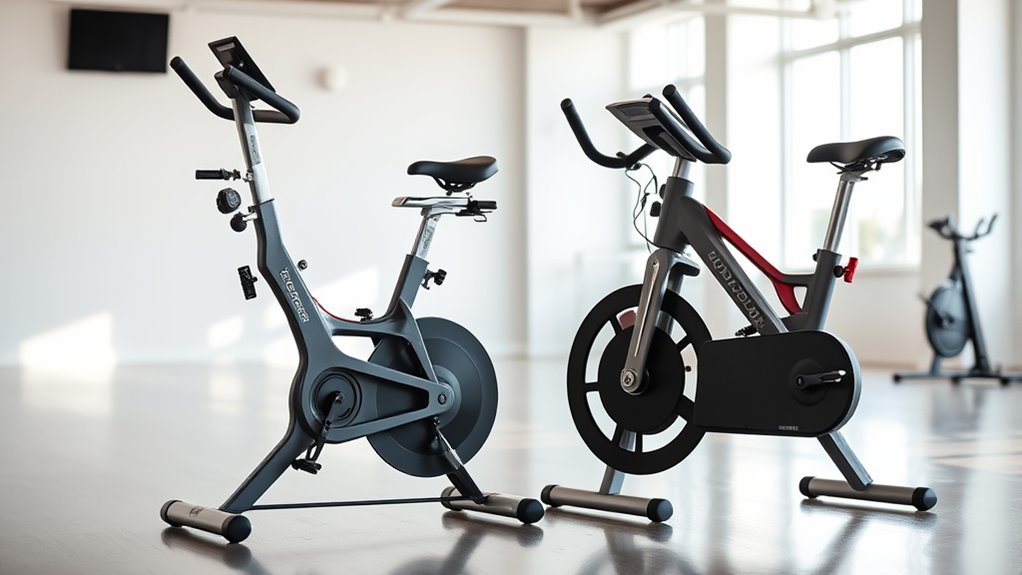
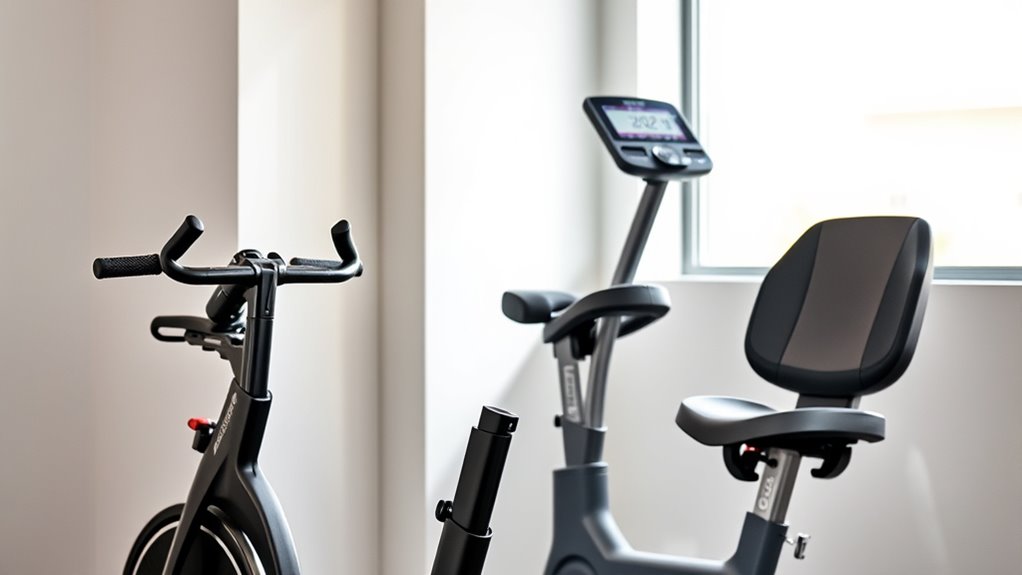
When choosing between a spin bike and an upright bike, understanding their differences can help you find the best fit for your fitness goals. One of the key factors to contemplate is the ergonomic design of each bike. Spin bikes typically feature a more aggressive, racing-style setup with a saddle and handlebars that can be adjusted to mimic outdoor cycling. This design promotes a forward-leaning position, engaging your core and lower back muscles more intensely. Upright bikes, on the other hand, offer a more relaxed riding posture, with a seat positioned higher and handlebars that are often closer to you. Their ergonomic design caters to comfort, making them suitable for longer sessions or users with joint sensitivities.
Choosing between spin and upright bikes depends on your ergonomic preferences and fitness goals.
Another critical aspect is the resistance mechanisms used by each type of bike. Spin bikes usually employ a flywheel with a friction or magnetic resistance system. The resistance is often more dynamic, allowing you to simulate hill climbs or sprints by increasing the resistance levels. This setup provides a smoother, more realistic ride that can challenge serious athletes. Resistance mechanisms in upright bikes tend to be simpler, often using a magnetic or brake pad system that offers a quieter workout. While they may not provide the same intense resistance options as spin bikes, they still allow for effective cardio sessions and adjustable difficulty levels.
The ergonomic design influences your workout experience greatly. Spin bikes are built for high-intensity training, with the adjustable seat and handlebars allowing you to customize your position for maximum power output. The design encourages a more vigorous exercise style, which is ideal if you’re aiming for weight loss, muscle toning, or improved cardiovascular health. Upright bikes prioritize comfort, making them a good choice for beginners or those recovering from injury. Their design reduces strain on your joints and back, allowing for longer, more sustainable workouts without discomfort.
Resistance mechanisms also determine how challenging your workout is. Spin bikes’ resistance systems can be finely tuned to match your fitness level, making them versatile for different workout intensities. Magnetic resistance, common in modern spin bikes, provides a quiet, low-maintenance option with consistent resistance. Upright bikes usually feature simpler resistance controls, which are easier to operate but may not offer the same precise intensity adjustments. Your choice depends on whether you prefer a more immersive, high-intensity experience or a comfortable, low-impact workout.
Additionally, some upright bikes incorporate built-in workout programs, which can help guide your exercise intensity and keep you motivated. Ultimately, your decision should hinge on your fitness goals, comfort preferences, and how you want to challenge yourself. Spin bikes excel at delivering intense, realistic cycling experiences with sophisticated resistance mechanisms and ergonomic features that support vigorous workouts. Upright bikes prioritize comfort and ease of use, with simpler resistance options suited for steady-state cardio or beginners. Understanding these differences helps you select the stationary bike that aligns with your needs and keeps you motivated to stay active.
Frequently Asked Questions
Are Spin Bikes Suitable for Beginners?
Yes, spin bikes can be beginner-friendly, especially if they have features like adjustable resistance and a comfortable seat. They allow you to control training intensity, making it easier to start at a manageable level and gradually increase as you build strength. Just guarantee you choose a bike with beginner-friendly features, and listen to your body to avoid overexertion. With proper setup, spin bikes are a great option for newcomers.
How Much Space Does Each Bike Require?
A spin bike typically requires about 2 to 3 square feet of space, making it relatively compact for bike storage and easy to fit in small rooms. An upright bike usually needs around 4 to 6 square feet due to its larger frame, but still maintains a compact design suitable for limited spaces. Consider your available room and storage options to choose the bike that best fits your space constraints.
Which Bike Offers Better Injury Prevention?
Prioritizing protection, you’ll find spin bikes typically pose a higher injury risk due to their intensity, but upright bikes often feature safety features like adjustable seats and stable frames that promote proper posture. If you focus on fitness with fewer falls and less strain, an upright bike offers better injury prevention. Stay safe, stay steady, and choose the bike that best balances your body’s needs with built-in safety features.
Can I Use These Bikes for Weight Loss?
Yes, you can definitely use spin and upright bikes for weight loss. Both bikes help increase calorie burning, especially when you boost your workout intensity. Spin bikes often allow more vigorous, high-intensity sessions, making them great for quick calorie burn. Upright bikes are also effective, especially if you prefer a steady, moderate pace. Consistency and adjusting your workout intensity are key to achieving your weight loss goals.
Are Maintenance Costs Different Between the Two?
You’ll find that maintenance expenses for spin bikes tend to be higher because they often have more complex parts, like heavy flywheels and adjustable resistance systems. On average, repair needs for spin bikes can be 20% more costly compared to upright bikes, mainly due to their durability demands. Regular upkeep is essential, but expect to spend a bit more on repairs and maintenance if you choose a spin bike.
Conclusion
Choosing between a spin bike and an upright bike is like picking your dance partner—you’ll find the one that moves with your rhythm. If you crave intensity and speed, the spin bike’s your fierce partner, ready to push you to new heights. For a steady, comfortable groove, the upright bike gently guides your journey. Whichever you choose, embrace the ride, and let each pedal turn be a step toward your healthier, happier self.