
To improve your hinge pattern safely, focus on maintaining proper alignment with a straight back and engaged core. Use cues like pushing your hips back instead of bending your knees too much, and keep contact points along your spine aligned, like a broomstick. Incorporate hip mobility exercises and dynamic stretches to enhance flexibility. Consistently practicing these techniques builds awareness and control, leading to safer lifting—continue exploring for more tips on mastering this essential movement.

Get workout gear delivered free — and shop member deals
- Fast, free delivery on millions of items
- Access to Prime Big Deal Days deals on October 6–7
- Prime Video, Amazon Music and more included
Key Takeaways
- Focus on maintaining a flat back and engaging your core before hinging.
- Use a dowel along your spine to ensure proper alignment during movement.
- Incorporate hip mobility exercises like leg swings and pigeon pose regularly.
- Practice pushing hips back with a slight knee bend, avoiding excessive knee flexion.
- Develop awareness by slow, controlled reps and emphasizing proper form over weight.
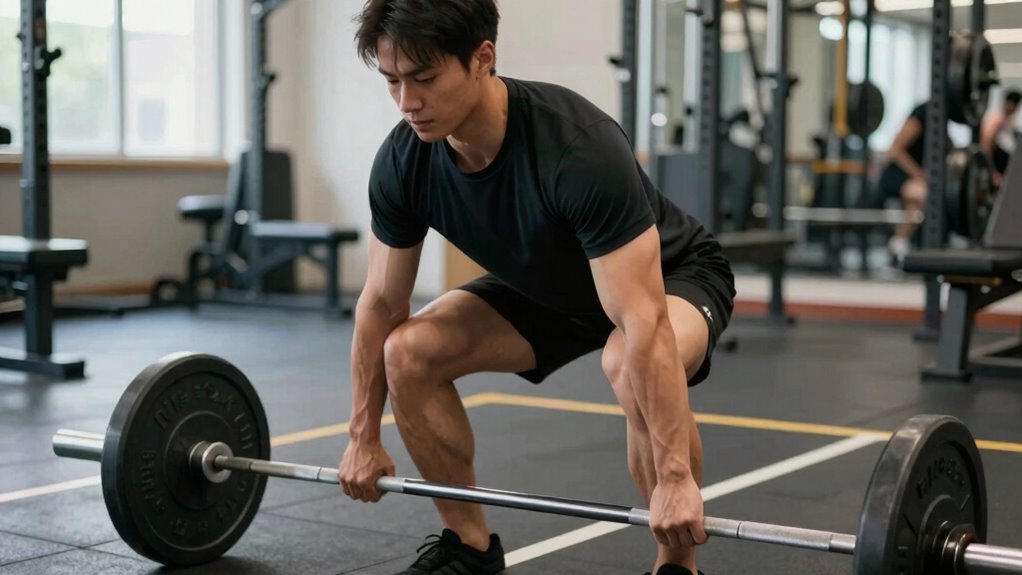
Hinging correctly is vital for safe lifting, yet many people unknowingly develop poor patterns that increase the risk of injury. The hinge movement involves bending at the hips while keeping your back flat, engaging your core, and maintaining proper hip mobility. When these elements are off, you put unnecessary strain on your lower back and compromise your overall safety. Improving your hinge pattern starts with understanding how your core stability and hip mobility contribute to proper form.
Your core acts as the foundation for maintaining stability during the hinge. When your core is weak or disengaged, you tend to compensate by rounding your back or shifting your hips improperly. To correct this, focus on activating your abdominal muscles and engaging your deep core before you even begin the movement. Think of bracing your abs as if you’re about to be punched in the stomach. This engagement keeps your spine in a neutral position and prevents it from collapsing forward. A stable core allows your hips and pelvis to move freely, which is indispensable for executing a proper hinge. Additionally, paying attention to proper alignment during the movement can help reinforce good form and prevent compensations.
Engage your deep core muscles like bracing for a punch to maintain a neutral spine during hinges.
Hip mobility plays an equally important role. Limited hip flexibility can cause you to compensate by overusing your lower back, leading to poor form and potential injury. To improve your hip mobility, incorporate dynamic stretches like leg swings or hip circles into your warm-up. Regularly perform hip-opening exercises such as pigeon pose or hip flexor stretches to increase flexibility over time. When your hips move freely through their range of motion, you can hinge at the hips without excessive compensations, minimizing strain on your lumbar spine. Incorporating joint health strategies, like proper warm-up routines, can further enhance your ability to hinge correctly and safely.
Practicing the hinge pattern with a dowel or broomstick can help you develop better awareness of your movement. Place the stick along your back, touching your head, upper back, and tailbone, to ensure those contact points stay aligned as you hinge forward. Keep your core engaged, and focus on pushing your hips back rather than bending your knees excessively. Maintaining a slight bend in your knees can help, but the movement should primarily come from your hips, not your lower back.
Consistently integrating core stability exercises and hip mobility drills into your routine will reinforce proper hinge mechanics. Over time, you’ll notice increased control, reduced discomfort, and a safer lifting technique. Remember, perfecting the hinge isn’t just about lifting heavier — it’s about protecting your body and moving efficiently. Prioritize these fundamentals, and your lifting form will improve considerably, making every lift safer and more effective.
dowel stick for posture alignment
As an affiliate, we earn on qualifying purchases.
As an affiliate, we earn on qualifying purchases.
Frequently Asked Questions
What Are Common Signs of Poor Hinge Technique?
You’ll notice signs of poor hinge technique through poor hinge alignment, such as rounding your back or overextending the neck. You might also ignore posture cues, leading to a weak core and strained muscles. If you feel pain or discomfort in your lower back during or after lifting, it’s a clear sign your hinge pattern needs improvement. Focus on maintaining proper posture cues to protect your spine and guarantee safe, effective lifts.
How Often Should I Practice Hinge Exercises?
You should practice hinge exercises 2 to 3 times a week to build hinge flexibility and strengthen your core engagement. Regular practice helps you develop better movement patterns, ensuring safer lifting. Focus on maintaining proper form, engaging your core, and improving flexibility to avoid injury. Consistency is key, so gradually increase reps and intensity as your hinge pattern improves, making sure each session reinforces good technique.
Can Incorrect Hinge Form Cause Long-Term Back Issues?
Did you know that poor lifting habits contribute to over 80% of back pain cases? Incorrect hinge form can indeed cause long-term back issues, especially if you overlook posture correction. If you don’t maintain proper form, you risk straining your back muscles and spine, leading to chronic pain. Practicing correct hinge techniques helps protect your back and ensures safer lifting, preventing long-term damage and promoting better posture.
Are There Specific Warm-Up Routines Before Hinging?
Yes, there are specific warm-up routines before hinging. You should start with dynamic stretching to loosen up your muscles and increase blood flow. Follow that with muscle activation exercises targeting your glutes, hamstrings, and core. This prepares your body for the movement, reduces injury risk, and improves hinge form. Incorporate activities like leg swings, hip circles, and glute bridges to get ready for safe, effective lifting.
How Do I Know if My Hinge Posture Is Correct?
You can tell if your hinge posture is correct by checking your hinge mobility and shoulder alignment. Stand in front of a mirror or ask a partner to observe. Keep your back flat, chest up, and shoulders back and down. Make certain your hips move backward without rounding your lower back. Proper hinge mobility means smooth, controlled movement, and shoulder alignment stays stable throughout. If you feel strain, adjust your form accordingly.
hip mobility exercises equipment
As an affiliate, we earn on qualifying purchases.
As an affiliate, we earn on qualifying purchases.
Conclusion
By fine-tuning your hinge pattern, you’re not just lifting; you’re orchestrating a symphony of strength and safety. Think of your movement as a delicate dance with gravity—each step precise, each bend purposeful. When you master this rhythm, you build a fortress around your spine, turning potential chaos into controlled harmony. Keep practicing, stay mindful, and let your newfound mastery be the steady anchor in every lift, guiding you through safer, stronger days ahead.
As an affiliate, we earn on qualifying purchases.
As an affiliate, we earn on qualifying purchases.
Fall Picks
fall essentials
As an affiliate, we earn on qualifying purchases.