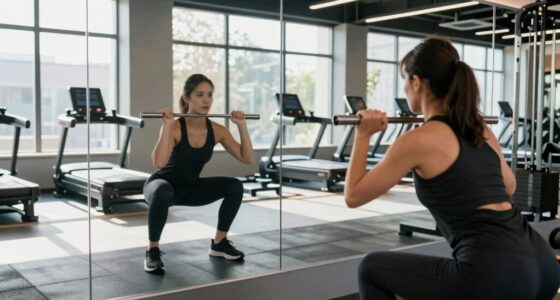
To improve your pulling mechanics, focus on the often-overlooked keys like grip control, core stability, and body positioning. A secure, consistent grip helps you stay controlled during lifts, while engaging your core creates a strong foundation for force transfer. Maintaining proper positioning and a neutral spine reduces injury risk and boosts efficiency. Paying attention to these details can make a big difference, and if you keep exploring, you’ll discover even more ways to perfect your technique.

Get workout gear delivered free with Prime
- Fast, free delivery on millions of items
- Prime Video, Amazon Music and more included
- Member-only deals all year
Key Takeaways
- Prioritize core stability and activation to ensure a solid force transfer during pulls.
- Maintain consistent grip strength and control to prevent energy wastage and imbalance.
- Focus on proper body positioning, including neutral spine and correct bar path, for efficiency and safety.
- Incorporate targeted core and grip training to enhance overall pulling power and endurance.
- Pay attention to technique details, such as hip hinge and shoulder positioning, to improve mechanics and reduce injury risk.
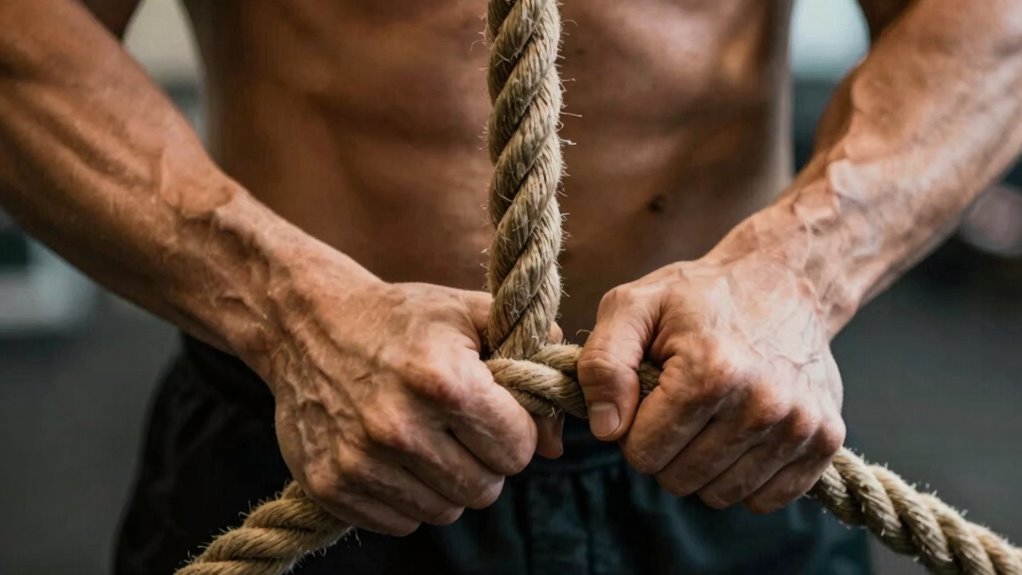
Improving your pulling mechanics is essential for maximizing strength and efficiency during lifts. When you focus on proper technique, you not only lift more effectively but also reduce your risk of injury. Two often overlooked yet critical aspects are grip technique and core stability. These elements might seem small compared to the bigger movements, but they form the foundation that allows you to lift safely and powerfully.
Your grip technique plays a vital role in how well you can pull. A secure, consistent grip ensures you maintain control throughout the lift. Whether you prefer a double overhand grip or mixed grip, focus on how your grip affects your overall stability. A weak or uneven grip can lead to unnecessary energy wastage and imbalance, making your pulls less effective. Engage your forearm muscles and squeeze the bar tightly—this activates your grip and helps transfer force from your arms to the bar efficiently. Avoid gripping too loosely, as it can cause slipping or a loss of control, especially during heavier lifts. Experiment with different grip styles to find what offers the best control and comfort for your body, but always prioritize a grip that feels firm and stable. Developing grip strength can further enhance your control and lifting capacity over time.
Core stability is another critical, yet often neglected, component of pulling mechanics. Your core acts as a powerhouse that transmits force from your lower body to your upper body. When your core is weak or unstable, your entire lift suffers—your back may round, your hips may drift, and your overall efficiency diminishes. To improve core stability, engage your abdominal muscles before initiating the pull. Think of brace-like activation, tightening your midsection as if preparing for a punch to the stomach. This bracing creates a solid, supportive foundation that keeps your spine in a neutral position during the lift. Incorporating proper technique into your training, such as maintaining a neutral spine and correct bar path, can significantly impact your lifting success. Additionally, practicing core activation exercises can build the necessary strength and endurance to maintain stability throughout your lifts. Developing a comprehensive training plan that includes core strengthening can further support your pulling mechanics. Remember, a strong core helps you maintain proper posture, control the bar path, and generate more power during each lift. Moreover, paying attention to your body positioning can help optimize force transfer and reduce injury risk, ensuring consistent progress in your training.
As an affiliate, we earn on qualifying purchases.
Frequently Asked Questions
How Does Grip Position Affect Pulling Efficiency?
Grip position considerably impacts your pulling efficiency by influencing how much force you can generate and how smoothly your movement feels. Using different grip variations alters hand positioning, which can optimize leverage and reduce fatigue. When you experiment with hand positioning, you’ll find what best suits your strength and comfort, allowing for more powerful pulls and better overall mechanics. Proper grip management is essential for maximizing your pulling performance and minimizing injury risk.
What’s the Ideal Body Posture During a Pull?
For an ideal body posture during a pull, you should focus on posture analysis to maintain a straight back and engaged core. Keep your shoulders slightly back and down, ensuring proper muscle engagement in your lats, traps, and arms. Bend your knees slightly and hinge at your hips, distributing effort evenly. This posture maximizes efficiency, reduces injury risk, and allows for stronger, more controlled pulls.
How Can I Prevent Common Pulling Injuries?
To prevent common pulling injuries, focus on injury prevention through proper technique refinement. Always warm up thoroughly before pulling, maintain correct posture, and use controlled movements. Strengthen your back, shoulders, and core to support your muscles during pulls. Listen to your body, avoid overtraining, and rest if you feel pain. Consistently improving your technique helps reduce strain, enabling safer, more effective pulls over time.
Does Footwear Impact Pulling Mechanics?
Like a knight in shining armor, your footwear greatly impacts pulling mechanics. Proper footwear selection guarantees stability and support, while good shoe grip prevents slips and maintains control. Worn-out shoes can throw off your technique, risking injury. Opt for shoes designed for traction and support, and regularly check their condition. When your footwear aligns with your pulling style, you’ll notice improved form, power, and safety during every pull.
How Often Should I Practice Pulling Drills?
You should practice pulling drills 2-3 times a week to see steady improvement. Keep your training frequency consistent but avoid overdoing it to prevent fatigue. Incorporate drill variation to target different muscle groups and refine your technique. This approach helps you develop well-rounded pulling mechanics, boosts strength, and reduces the risk of injury. Remember, quality practice beats quantity, so focus on proper form during each session.
core stability training equipment
As an affiliate, we earn on qualifying purchases.
As an affiliate, we earn on qualifying purchases.
Conclusion
Remember, practice makes perfect, and paying attention to those overlooked keys can transform your pulling mechanics. Focus on your grip, body positioning, and timing—small tweaks can lead to big improvements. Don’t forget, even the best athletes had to learn these basics first. As the saying goes, “You can’t teach an old dog new tricks,” but with dedication, you can master new skills at any age. Keep pushing, stay consistent, and watch your performance soar.
As an affiliate, we earn on qualifying purchases.
As an affiliate, we earn on qualifying purchases.
Fall Picks
fall essentials
As an affiliate, we earn on qualifying purchases.