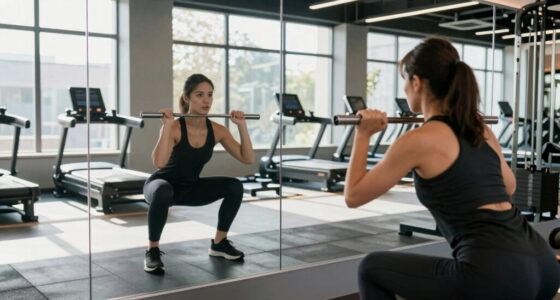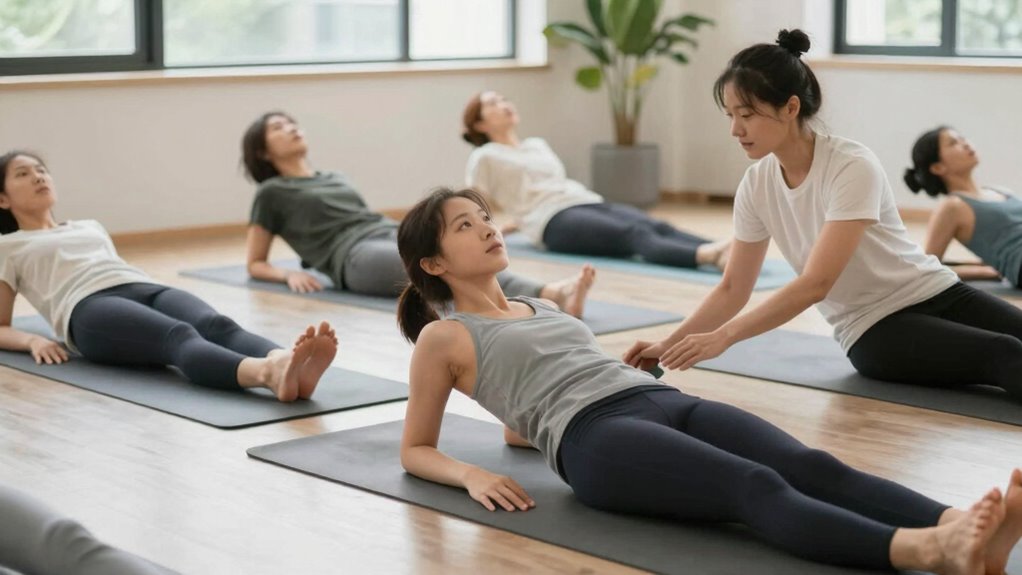

To learn new exercises without feeling awkward, start with adaptations like wall or knee push-ups to build confidence and prevent overwhelm. Practice in private or less crowded spaces, and record yourself to see your progress and correct form. Focus on consistency and patience, knowing everyone starts somewhere—initial awkwardness is normal and temporary. As you practice steadily, you’ll gain confidence and improve. Keep exploring for more tips to make your fitness journey smoother.

Get workout gear delivered free — and shop member deals
- Fast, free delivery on millions of items
- Access to Prime Big Deal Days deals on October 6–7
- Prime Video, Amazon Music and more included
Key Takeaways
- Start with adaptations like wall or knee exercises to build confidence gradually.
- Watch detailed demonstrations or videos to learn proper form before practicing.
- Practice in private or less crowded spaces to reduce self-consciousness and focus on technique.
- Record yourself to observe progress and correct mistakes without external judgment.
- Emphasize consistency and patience, knowing that initial awkwardness is temporary and progress comes with practice.
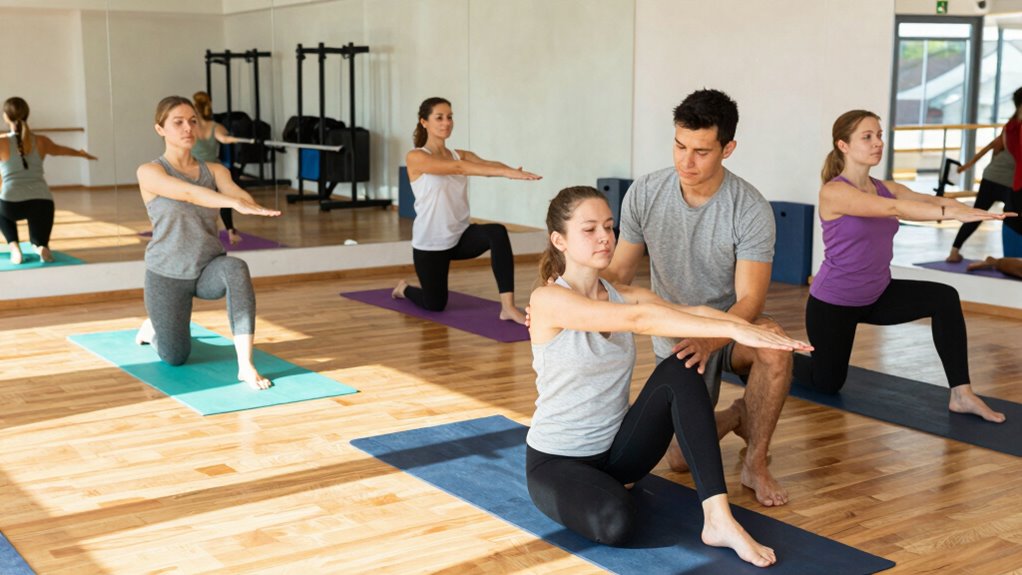
Trying new exercises can feel intimidating, especially when you’re worried about looking awkward in front of others. It’s natural to feel self-conscious when stepping into unfamiliar territory, but remember that everyone starts somewhere. The key is to approach learning with patience and a strategic mindset. One of the most helpful ways to ease into new exercises is by focusing on exercise adaptations. These adjustments allow you to tailor movements to your current fitness level, making the exercise more manageable and less intimidating. For example, if a full push-up feels too challenging, start with wall push-ups or knee push-ups. Over time, as you build strength and confidence, you can gradually progress to the standard version. Adaptations help you master the fundamentals without risking injury or feeling overwhelmed, giving you a solid foundation to build upon.
Another effective approach is to seek out effective demonstrations of the exercises you want to learn. Watching clear, well-explained videos or live demonstrations can substantially boost your understanding of proper form and technique. When you see the movement performed correctly, it’s easier to mimic it and avoid common mistakes. Pay close attention to the instructor’s cues, especially about posture, alignment, and breathing. Watching multiple demonstrations can also help you pick up on nuances that might be missed in a single video. If possible, practice in front of a mirror so you can observe your own form and make adjustments as needed. Seeing the exercise from different angles or perspectives can clarify how your body should move, reducing the likelihood of awkwardness and increasing your confidence. Additionally, understanding how proper projection of movement impacts overall exercise effectiveness can motivate you to refine your technique. Developing an awareness of movement mechanics can further enhance your ability to perform exercises safely and efficiently.
It’s also helpful to practice in a private or less crowded space initially. This way, you focus on mastering the movement without feeling judged. You can record yourself performing the exercise and compare it to the demonstration videos to identify areas for improvement. Over time, as your technique improves and your confidence grows, you’ll naturally feel less awkward when performing the exercises around others. Remember, everyone has been a beginner at some point, and most people are focused on their own workouts rather than scrutinizing yours. The goal is consistency and progress, not perfection from the start. With patience, the right modifications, and effective demonstrations, you’ll find yourself mastering new exercises more comfortably and with greater enjoyment.
As an affiliate, we earn on qualifying purchases.
Frequently Asked Questions
How Can I Stay Motivated to Try New Exercises Regularly?
You can stay motivated by adopting mindset strategies that emphasize growth and enjoyment. Set clear, achievable goals to track your progress and celebrate small wins. Remind yourself why you want to try new exercises, focusing on how they benefit you. Keep a positive attitude, and don’t be afraid to step out of your comfort zone. Regularly revisit your goals to stay inspired and committed to trying new exercises consistently.
What Should I Wear to Feel Comfortable Trying New Workouts?
For comfort trying new workouts, choose workout attire that feels good and fits well. Opt for clothing comfort that allows free movement and breathability, like moisture-wicking tops and stretchy leggings or shorts. Avoid anything too tight or restrictive. Wearing lightweight, breathable fabrics helps you focus on learning the exercises without distractions. When you’re comfortable in your clothing, you’ll feel more confident and less awkward trying unfamiliar movements.
How Do I Deal With Injuries While Learning New Exercises?
To handle injuries while learning new exercises, prioritize injury prevention by starting slowly and listening to your body. Use proper form and warm up thoroughly. If you get injured, focus on recovery strategies like rest, ice, compression, and elevation (RICE). Consult a healthcare professional if needed, and gradually reintroduce exercises once you’re healed. This approach helps you stay safe and build confidence in new workout routines.
Can I Learn Exercises Effectively at Home Without a Trainer?
Like a skilled navigator charting new waters, you can master exercises at home through personalized routines and online tutorials. They act as your guiding stars, illuminating proper form and technique. With dedication, patience, and a keen eye on tutorials, you’ll build confidence and skill. No trainer needed—just a willingness to learn, adapt, and embrace your journey. Your home becomes a gym where progress flows as freely as a river.
How Long Should I Practice a New Exercise Before Mastering It?
You should practice a new exercise consistently for about 2 to 4 weeks to see noticeable progress. Exercise consistency is key for skill development, so aim for daily or every-other-day sessions. Focus on proper form and gradually increase intensity. With regular practice, you’ll become more comfortable and proficient, making mastery achievable faster. Remember, patience and persistence are essential for solidifying new skills.
As an affiliate, we earn on qualifying purchases.
Conclusion
Remember, practice makes perfect, patience makes progress, and persistence makes confidence. When you approach new exercises with an open mind, a willingness to learn, and a focus on growth, you’ll find yourself improving faster and feeling more comfortable. Embrace the process, celebrate small victories, and keep pushing forward. With dedication, positivity, and consistency, you’ll turn awkward moments into confident movements. Keep moving, keep trying, and enjoy the journey of becoming your best self.
As an affiliate, we earn on qualifying purchases.
As an affiliate, we earn on qualifying purchases.
Halloween Picks
halloween
As an affiliate, we earn on qualifying purchases.