Your shoulder position impacts pressing performance because proper alignment allows your muscles to work efficiently, maximizing power and control. When your shoulders are stable and correctly positioned, it reduces strain and injury risk, ensuring consistent progress. Misalignment can cause compensations in your shoulder and back, limiting strength and risking damage. By maintaining ideal shoulder positioning, you’ll improve stability and force transfer. Keep exploring to understand how refining your technique can boost your pressing ability even further.

Get workout gear delivered free — and shop member deals
- Fast, free delivery on millions of items
- Access to Prime Big Deal Days deals on October 6–7
- Prime Video, Amazon Music and more included
Key Takeaways
- Proper shoulder alignment ensures efficient force transfer and reduces energy loss during pressing movements.
- Shoulder position affects muscle activation, optimizing or impairing the involvement of stabilizers and prime movers.
- Misalignment increases strain on supporting muscles, decreasing overall pressing power and risking injury.
- Correct shoulder positioning maintains scapular stability, enhancing control and range of motion.
- Changes in shoulder position influence joint stress, impacting performance longevity and injury prevention.
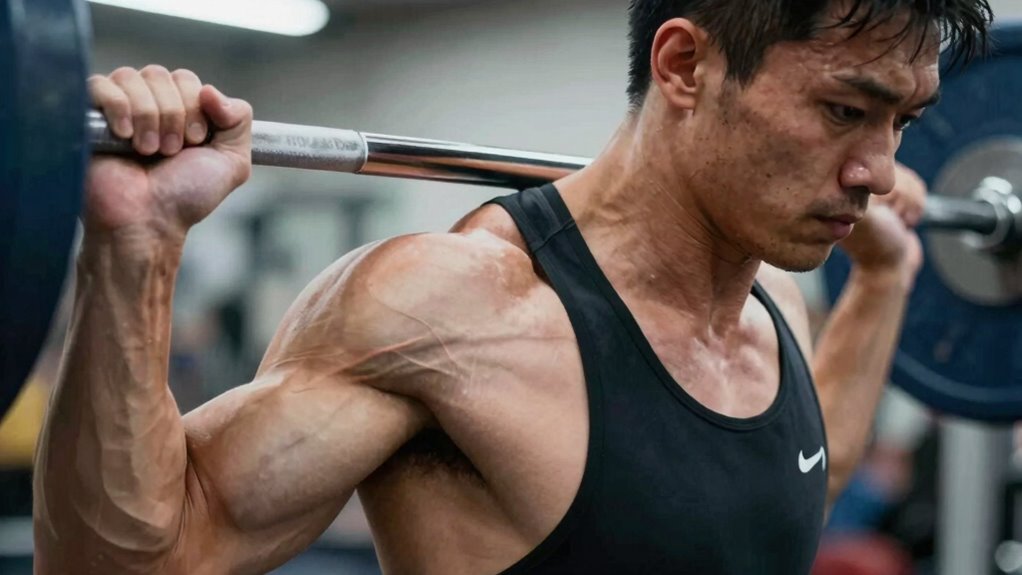
Your shoulder position plays a crucial role in pressing performance, as it directly influences strength, stability, and injury risk. When you press, the alignment of your shoulder joint determines how effectively you transfer power and maintain control throughout the movement. Proper positioning ensures that your muscles work together efficiently, reducing the chance of strain or injury. One often-overlooked factor is your overall hip stability, which acts as a foundation for your upper body. If your hips are unstable, it can lead to compensations in your shoulder and back, hampering your pressing capacity. Maintaining a solid, engaged core and stable hips helps you stay aligned, allowing your shoulders to move through the press with maximum efficiency.
Shoulder stability and hip engagement are key to safe, powerful pressing performance.
Another critical aspect is grip width, which influences shoulder positioning during pressing. A grip that’s too narrow or too wide can alter your shoulder angle, impacting both performance and safety. A wider grip tends to elevate your shoulder position, increasing the range of motion and potentially placing more stress on the shoulder joint. Conversely, a narrower grip can reduce shoulder mobility requirements but may shift the load onto different muscles, affecting overall stability and power. Finding the right grip width allows you to keep your shoulders in a more natural, safe position, enabling you to generate maximum force without risking impingement or instability. Additionally, joint alignment plays a vital role in ensuring your pressing mechanics are optimal and injury-free. Proper scapular stability also supports maintaining correct shoulder positioning, which is essential for safe and effective pressing.
Your shoulder position also affects how well you engage supporting muscles, like the rotator cuff and scapular stabilizers. When your shoulders are correctly aligned, these muscles can work synergistically to keep the joint steady during the press. Misalignment or poor positioning can cause these muscles to underperform or become strained, increasing injury risk and decreasing pressing efficiency. Proper shoulder positioning involves not just the placement of the arms and hands but also ensuring your scapulae are retracted and stable. This setup creates a more solid platform for pressing, allowing your deltoids and triceps to do their jobs effectively. Additionally, understanding how shoulder position impacts your pressing can help you tailor your training to promote long-term shoulder health and performance. Incorporating hip stability exercises can further enhance your overall pressing ability and reduce the likelihood of compensatory movements. Recognizing the importance of proper technique and continually refining your form can make a significant difference in your progress and injury prevention.
Frequently Asked Questions
How Does Shoulder Mobility Affect Pressing Strength?
Your shoulder mobility directly impacts pressing strength because increased shoulder flexibility allows for a full range of motion, leading to more effective muscle engagement. When you have good shoulder flexibility, you’re less likely to develop muscle imbalances that can hinder performance. Conversely, limited mobility may cause compensations and reduce pressing power. Improving shoulder flexibility helps maintain proper shoulder mechanics, ultimately boosting your pressing strength and reducing injury risk.
Can Shoulder Injuries Influence Pressing Technique?
Think of your shoulders as the hinges of a gate; injury can cause them to jam or stick, affecting your pressing technique. Shoulder injuries can limit your flexibility and movement, making proper form difficult and risking further damage. Prioritizing injury prevention keeps these hinges smooth and functional, ensuring your pressing remains powerful and safe. When your shoulders stay healthy, your technique flows effortlessly, like a well-oiled gate swinging open with ease.
What Role Does Shoulder Stability Play in Pressing Performance?
Shoulder stability is essential for peak pressing performance because a stable shoulder joint allows you to effectively engage the right muscles. When your shoulder is stable, your muscles work together efficiently, reducing strain and enhancing power. If stability is lacking, your muscle engagement becomes uneven, risking injury and decreasing your pressing strength. Focus on strengthening shoulder stabilizers to improve performance and maintain a healthy, resilient shoulder joint.
How Do Different Shoulder Widths Impact Pressing Ability?
Your shoulder width considerably impacts pressing ability by influencing your pressing mechanics. A wider shoulder width can enhance stability and distribute weights more evenly, potentially increasing strength. However, it may also reduce range of motion, affecting movement efficiency. Narrower shoulders might improve mobility but could limit stability. Adjusting your shoulder positioning based on your shoulder width helps optimize pressing performance, allowing you to lift more effectively and safely.
Are There Specific Warm-Up Exercises for Shoulder Readiness?
Think of warming up as priming your engine before a race. You should include shoulder flexibility exercises like arm circles, band pull-aparts, and shoulder dislocations in your routines. These warm-up routines help increase blood flow and loosen tight muscles, reducing injury risk and improving performance. Incorporate dynamic stretches and mobility drills to make sure your shoulders are ready for pressing, making your lifts smooth and effective.
Conclusion
So, next time you hit the bench, remember that your shoulder position really does matter. Keeping your shoulders properly aligned isn’t just about safety; it can actually boost your pressing power. Some say certain positions reveal more strength, and there’s truth to it—your body’s mechanics play a big role. Pay attention to how your shoulders feel during lifts, and you might just find yourself pressing more weight with less effort.
Fall Picks
fall essentials
As an affiliate, we earn on qualifying purchases.