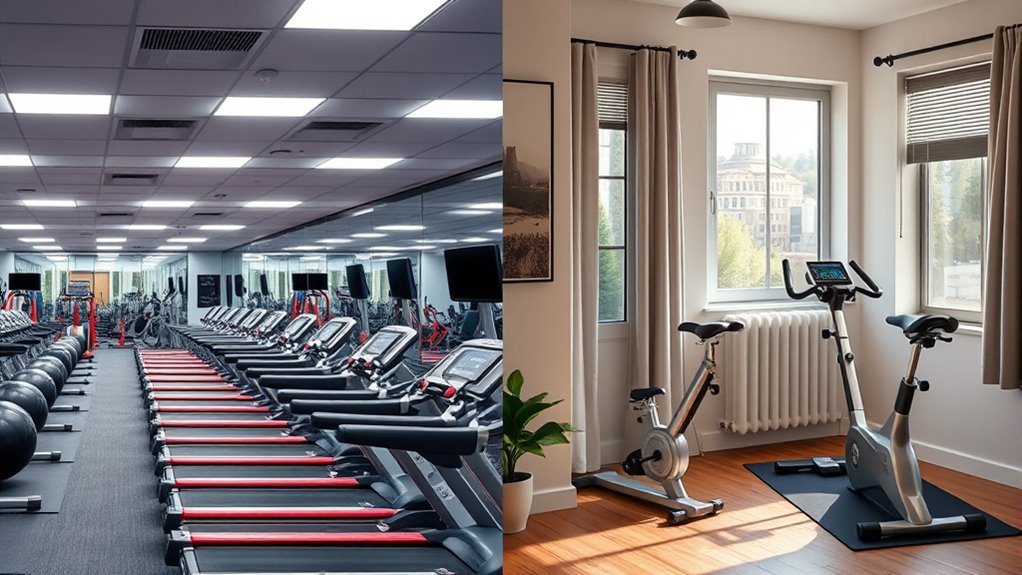

When comparing costs, working out at a gym typically involves monthly fees and potential personal training costs, but offers advanced equipment and social motivation. Home workouts require a significant upfront investment in quality equipment and ongoing maintenance, though you save on membership fees. Virtual programs and tech enhancements can lower costs and boost engagement. To weigh the true expenses and benefits, consider your preferences and goals—more details can guide you toward the best choice.
Key Takeaways
- Home gyms require high upfront equipment costs but avoid ongoing membership fees, potentially saving money long-term.
- Personal training at gyms offers professional guidance but increases overall expenses compared to virtual or self-led routines.
- Maintaining home gym equipment incurs ongoing costs, whereas gym facilities handle maintenance, reducing personal expenses.
- Virtual workouts and online programs provide affordable alternatives to in-person training, lowering total fitness costs.
- Gym memberships vary widely in price and amenities, influencing overall costs compared to the fixed expenses of a home workout setup.

Deciding between working out at the gym or staying home depends on your goals, schedule, and preferences. When contemplating costs, it’s essential to look beyond just membership fees or equipment prices. Personal training, for instance, can markedly impact your expenses if you opt for professional guidance. At a gym, personal trainers are readily available, and their fees are often included in your membership or charged separately. Investing in a few sessions can boost your results and keep you motivated. However, if you prefer working out solo at home, you can still benefit from personal training through virtual sessions or online programs, which often come at a lower cost.
Personal training costs vary; gyms include trainers in memberships, while online options are more affordable for home workouts.
When it comes to equipment maintenance, the costs can add up quickly if you’re setting up a home gym. Buying quality equipment like treadmills, weights, or resistance machines requires a substantial upfront investment. Plus, maintaining and repairing this equipment can be costly over time. You’ll need to contemplate regular upkeep, such as lubricating machines, replacing worn-out parts, or troubleshooting issues, which may require professional repair services. At a gym, these maintenance concerns are taken care of by the facility, saving you both money and hassle. The gym staff handles equipment repairs and ensures everything is in safe working order, so you don’t have to worry about the costs or technical know-how involved.
On the other hand, staying at home can save you ongoing gym membership fees, which can be quite substantial depending on the location and amenities. Without a monthly fee, you only pay for your equipment and accessories, making it potentially more economical in the long run. But keep in mind, initial setup costs for a decent home gym can be high, especially if you aim to replicate a full gym experience. Additionally, if you’re someone who values social motivation or prefers the environment of a gym, the cost savings might not outweigh the benefits you get from professional guidance or dedicated workout spaces.
Ultimately, your decision hinges on how much you’re willing to invest upfront versus ongoing costs, and how much you value convenience, professional help, and specialized equipment. If you’re committed to a structured program and want expert advice, gym memberships with personal training might be more cost-effective over time. Conversely, if you’re comfortable with DIY workouts and can handle equipment maintenance, building a home gym could save you money in the long run. It’s also worth noting that modern projectors with 4K resolution can enhance your workout videos and virtual training sessions, making your home gym more engaging. Either way, understanding these financial aspects helps you make an informed choice aligned with your fitness goals and budget.
Frequently Asked Questions
How Do Maintenance Costs Differ Between Home Gyms and Commercial Gyms?
Your maintenance costs differ because home gyms often have lower ongoing expenses, while commercial gyms face higher costs due to frequent equipment use. Equipment lifespan may decrease faster with heavy use, requiring replacement sooner in commercial settings. Additionally, energy consumption is typically higher in commercial gyms, raising utility bills. As a result, home gyms tend to be more cost-effective over time, with lower maintenance and energy costs.
What Hidden Expenses Should I Consider for a Home Gym Setup?
You might overlook hidden expenses like additional storage for your equipment or safety gear, but they can skyrocket costs. You’ll need sturdy racks, mats, and maybe even climate control to protect your investment. Don’t forget safety equipment like mats, mirrors, and ventilation to prevent injuries. These extras add up quickly, turning your home gym from a simple setup into a costly project. Plan ahead to avoid surprises and keep your fitness space safe and functional.
Are There Any Long-Term Financial Benefits to Choosing a Gym Membership?
Choosing a gym membership offers you membership benefits that can lead to long-term savings. You’ll access a variety of equipment and classes without the upfront costs of a home gym. Plus, regular visits motivate consistency. Over time, these benefits can outweigh initial expenses, saving you money on purchasing and maintaining equipment. So, a gym membership can be a smart investment in your fitness journey with potential long-term financial advantages.
How Does Equipment Depreciation Impact Home Gym Costs Over Time?
You might think equipment depreciation barely affects your home gym costs, but it actually does. Over its equipment lifespan, depreciation spreads out the true cost, making your initial investment seem lower over time. By following a depreciation schedule, you can track how equipment value decreases, revealing that the longer you keep your gear, the more cost-effective your home gym becomes, especially compared to ongoing gym membership fees.
What Are the Insurance Implications for Home Gym Owners Versus Gym Members?
As a home gym owner, you might face increased insurance liability, needing to update your policy to cover equipment and potential accidents. Gym members typically have health coverage that may include injury protection, but home setups aren’t always covered. You should review your insurance options carefully, ensuring your policy offers adequate health coverage and liability protection. This helps you avoid unexpected costs if injuries occur during your workouts.
Conclusion
Think of your fitness journey as a garden. The gym is a lush, well-tended plot with abundant resources, but it costs time and money to nurture. Home is like a wildflower patch—free and flexible, yet requiring your patience and care to flourish. Whichever you choose, remember that consistent effort is the sunlight that helps your garden grow. Ultimately, your dedication, not the location, determines the beauty of your personal bloom.