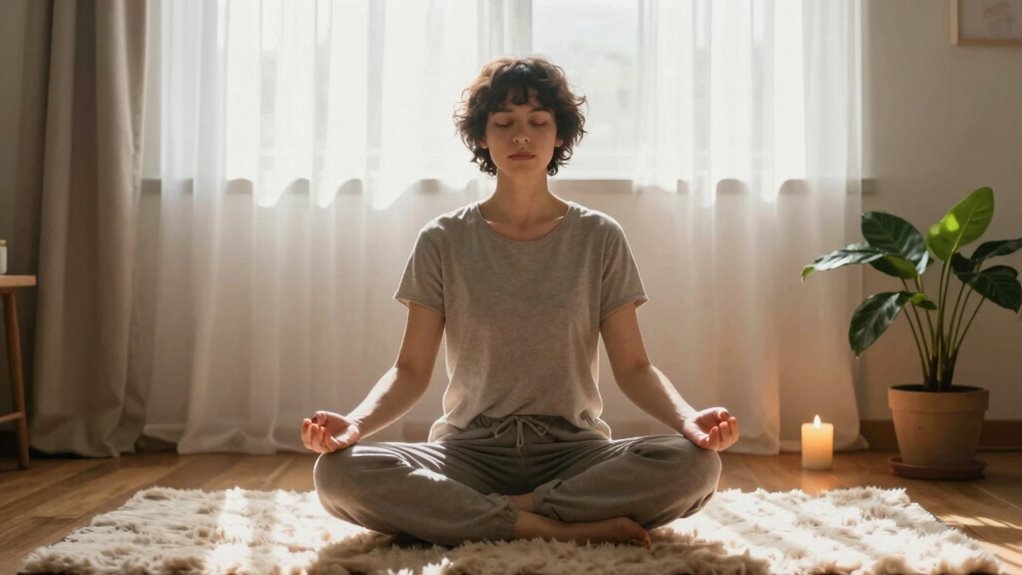
To use breathing for better recovery and relaxation, find a comfortable position and focus on slow, deep breaths. Inhale deeply through your nose, letting your abdomen rise, then exhale slowly through your mouth or nose while releasing tension. Pay attention to sensations like the coolness on inhale and warmth on exhale. Regular practice activates your relaxation response, helping you recover faster and feel calmer. Keep exploring these techniques to release even more calming benefits.

Get workout gear delivered free — and shop member deals
- Fast, free delivery on millions of items
- Access to Prime Big Deal Days deals on October 6–7
- Prime Video, Amazon Music and more included
Key Takeaways
- Practice slow, deep breathing to activate the parasympathetic nervous system and promote relaxation.
- Focus on breath sensations to enhance mindfulness and reduce stress during recovery.
- Inhale deeply through the nose, filling the belly, and exhale slowly to release tension.
- Use breath awareness after physical activity or stressful moments to aid mental and physical healing.
- Combine mindful breathing with hydration and gentle movement to support overall recovery and resilience.

Have you ever wondered how something as simple as breathing can markedly impact your well-being? It’s easy to overlook, but your breath is a powerful tool for recovery and relaxation. When you focus on mindful breathing, you bring your attention to the present moment, helping to calm your mind and reduce stress. Breath awareness isn’t just about inhaling and exhaling; it’s about being conscious of each breath, noticing its depth, rhythm, and how it feels in your body. This practice can greatly improve your mental clarity and physical recovery by anchoring you in the here and now.
Breath awareness calms the mind, enhances clarity, and supports physical recovery through mindful, present-moment breathing.
To start, find a comfortable position where you won’t be disturbed. Close your eyes if you like, and take a slow, deep breath. As you do, pay attention to the sensation of the air filling your lungs. Feel your chest rise and fall, the coolness as you inhale, and the warmth as you exhale. By practicing mindful breathing regularly, you develop a heightened breath awareness—an ability to tune into your breath even in everyday situations. This heightened awareness helps you recognize early signs of tension or fatigue, allowing you to intervene before stress or exhaustion take hold. Developing this mindful awareness can deepen your overall sense of calm and resilience. Incorporating natural breathing techniques can further enhance your relaxation and recovery processes.
When you’re in recovery mode, using breath awareness can accelerate healing and restore energy. During post-exercise or after a stressful day, slow your breathing down intentionally. Inhale deeply through your nose, filling your belly with air, then exhale slowly through your mouth or nose. Focus solely on the breath, feeling the release as you exhale. This simple act activates your parasympathetic nervous system, which promotes relaxation and helps your body recover faster. It’s a natural way to lower cortisol levels and ease muscle tension, supporting your overall well-being. Incorporating hydrating ingredients into your routine can also support skin health and recovery. Remember, consistent practice can strengthen your ability to stay present and composed in challenging moments.
As an affiliate, we earn on qualifying purchases.
Frequently Asked Questions
Can Breathing Exercises Replace Medical Treatment?
Breathing exercises can’t replace medical treatment, but they can complement your holistic health approach and serve as effective alternative therapies for stress reduction and relaxation. You should see a healthcare professional for any serious condition, but incorporating breathing techniques into your routine can improve overall well-being. These exercises support your body’s natural healing process, helping you manage symptoms better and promote relaxation, making them a valuable addition—not a substitute—for medical care.
How Often Should I Practice Breathing Techniques Daily?
You should practice breathing techniques daily, ideally 10 to 15 minutes, to see benefits. Focus on calming breathing patterns like deep diaphragmatic or box breathing, which can enhance relaxation. Incorporate meditation techniques to deepen your practice and boost recovery. Consistency is key; practicing regularly helps your body adapt and experience ongoing stress reduction and improved mental clarity. Adjust the duration as you become more comfortable with the techniques.
Are There Any Risks Associated With Breathing Exercises?
Breathing exercises are generally safe, but risks involved exist if you have contraindicated conditions like severe asthma or heart issues. Imagine each breath as a gentle wave, calming yet powerful. If you feel dizzy, lightheaded, or discomfort, stop immediately. Always consult a healthcare professional before starting new techniques, especially if you’re pregnant or have chronic health problems. Stay mindful, listen to your body, and breathe with care.
Can Breathing Help With Anxiety or Panic Attacks?
Yes, breathing can help with anxiety and panic attacks. When you practice mindfulness meditation, focusing on your breath calms your mind and body, reducing stress. Deep, slow breathing signals your nervous system to relax, helping to control panic symptoms. Regularly incorporating stress reduction techniques like breathing exercises can make you more resilient during anxious moments, promoting overall calmness and mental clarity.
What Is the Best Time of Day to Practice Breathing?
The best time of day to practice breathing is right now—no, really, right this second! Make it part of your morning routine to set a calm tone or immerse yourself in evening relaxation, when the world slows down. Morning breath, evening wind-down—both moments are perfect for deep, intentional breathing. Consistency transforms these practices into powerful tools, helping you start or end your day with clarity, calm, and control.
mindfulness breathing meditation cushion
As an affiliate, we earn on qualifying purchases.
As an affiliate, we earn on qualifying purchases.
Conclusion
Remember, a breath is a gift, and how you use it can transform your recovery and relaxation. By incorporating mindful breathing into your daily routine, you harness a simple yet powerful tool to calm your mind and rejuvenate your body. Don’t forget, slow and steady wins the race—so take the time to breathe deeply and intentionally. With patience and practice, you’ll find each breath bringing you closer to a more relaxed, resilient you.
relaxation and recovery breathing mask
As an affiliate, we earn on qualifying purchases.
As an affiliate, we earn on qualifying purchases.
As an affiliate, we earn on qualifying purchases.
Fall Picks
fall essentials
As an affiliate, we earn on qualifying purchases.