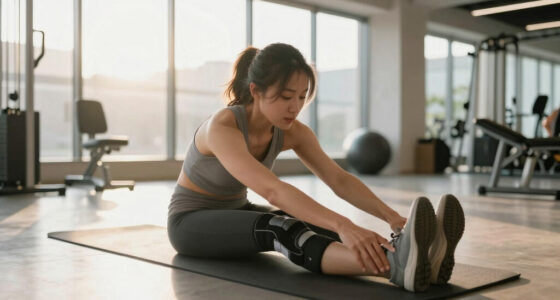
To figure out if you need more mobility or stability, pay attention to how your joints feel during movement. If you experience tightness, difficulty with wide-range motions, or compensation, you likely need more mobility. On the other hand, if your joints feel wobbly, unstable, or you experience pain, stability might be the focus. Understanding these signs helps you improve your movement safely—keep exploring to learn how to fine-tune your approach.
Key Takeaways
- If joints feel loose or wobbly, you likely need more stability; if they feel tight or restricted, focus on mobility.
- Pain during movement may indicate instability or tightness needing targeted mobility or stability exercises.
- Limited range of motion suggests a need for mobility work; effortless, uncontrolled movement may require stability training.
- Observation of compensatory movements or instability signs points to strengthening for stability; restricted movement indicates mobility improvement.
- Assess whether increased flexibility or joint support enhances your performance and reduces discomfort for optimal results.

Determining whether you need more mobility or stability in your movements can be vital for improving your overall performance and preventing injury. The key lies in understanding how your body moves and where it struggles. For example, if you find it difficult to perform movements that require a wide range of motion, such as deep squats or lunges, you may need to focus on enhancing your hip flexibility. Limited hip flexibility can restrict your movement and lead to compensations that put unnecessary stress on other joints, increasing injury risk. Conversely, if your joints feel unstable or you experience a sense of wobbliness during certain activities, your body may lack the joint strength necessary to support proper movement patterns.
Assess whether your movement issues stem from tightness or weakness to improve performance and prevent injury.
To determine whether you need more mobility, pay attention to how easily you can move through your joints. Do you feel tightness or restrictions in areas like your hips, shoulders, or ankles? If so, incorporating dynamic stretching, foam rolling, or mobility drills can help. Improving hip flexibility, for instance, allows your pelvis and hips to move more freely, which can enhance overall movement efficiency. When your joints are more mobile, you gain a better range of motion, reducing the likelihood of compensatory movements that could lead to injury. Additionally, understanding the principles of strength training fundamentals can guide you in building a balanced approach to increasing stability. Recognizing the importance of joint stability is essential for maintaining proper alignment and preventing injuries caused by excessive mobility without adequate support.
On the other hand, if you notice that your movements are fluid but your joints feel unstable or you experience pain or discomfort, it’s likely a matter of joint strength. Building strength around key joints provides the stability needed to control your movements and withstand the forces exerted during activity. Strengthening exercises targeting the muscles around your hips, knees, and ankles can bolster joint support, helping you perform activities with confidence and safety. Sometimes, addressing muscle imbalances is crucial to prevent future issues and ensure balanced development.
Sometimes, the distinction isn’t clear-cut, and you might need a combination of both. For instance, if your hips are tight but also lack strength, working on hip flexibility alongside joint-strengthening exercises balances mobility with stability. This balance ensures that your joints move freely without becoming vulnerable to injury. Ultimately, listening to your body and evaluating how your joints respond during movement is vital. If you’re unsure, consulting a professional for a movement assessment can help pinpoint whether you need to prioritize increasing mobility, stability, or both.

TriggerPoint Grid 1.0 Foam Roller – 13" Multi-Density Massage Roller for Deep Tissue & Muscle Recovery – Relieves Tight, Sore Muscles & Kinks, Improves Mobility & Circulation – Targets Key Body Parts
- Enhances Muscle Recovery: Promotes tissue aeration and blood flow
- Comfortable Foam Construction: Distrodensity zones for sore muscles and soft tissue
- Customizable Massage Feel: Varying ridges and nodules for targeted relief
As an affiliate, we earn on qualifying purchases.
As an affiliate, we earn on qualifying purchases.
Frequently Asked Questions
Can Poor Posture Indicate a Need for More Stability or Mobility?
Poor posture often indicates a need for better stability or mobility. Through a posture assessment, you can identify if your muscles are too tight or weak, affecting your alignment. Improper movement patterns can also reveal whether you need more stability to control movements or increased mobility to improve flexibility. Addressing these issues helps correct posture, enhances movement efficiency, and reduces discomfort, guiding you toward targeted exercises for ideal balance.
How Do Injuries Influence Mobility Versus Stability Requirements?
Injury recovery and muscle imbalances considerably influence whether you need more mobility or stability. Injuries often cause instability, so you might need to focus on stability exercises to rebuild strength and support. Conversely, muscle imbalances can restrict movement, requiring mobility work to restore proper range of motion. By addressing these issues through targeted rehab, you can better determine whether to prioritize stability or mobility for ideal recovery.
Is Age a Factor in Determining Mobility or Stability Needs?
Think of your body as a tree: with age, its branches may become stiff or fragile. Age-related changes and decreased muscle flexibility influence your mobility and stability needs. As you grow older, you might need more stability to prevent falls, but also focus on maintaining mobility through gentle stretching. Recognizing these shifts helps you adapt your workouts, ensuring your body stays strong and flexible regardless of age.
Can Lifestyle Habits Affect Whether I Need Mobility or Stability?
Yes, your lifestyle habits can influence whether you need more mobility or stability. If you sit for long hours, incorporating flexibility training helps improve your range of motion. On the other hand, if you’re active or prone to injuries, focusing on core strengthening enhances stability. Regularly evaluating your movement patterns and adjusting your routines guarantees your body stays balanced and functional, preventing strain or injury.
How Do Specific Sports Demands Impact Mobility and Stability Needs?
Different sports demand varying levels of mobility and stability. For example, sports like gymnastics or dance require dynamic flexibility and excellent core strength to perform fluid movements. In contrast, activities like weightlifting demand stability and core strength to maintain control during lifts. You should focus on improving your dynamic flexibility for sports needing fluid motion and boost core strength to enhance stability. Tailoring your training to these demands helps optimize performance.

Knee Brace for Men & Women with Patented 4-Way Adjustable Support
- Versatile Fit: Unisex design for left or right knee
- Adjustable Support: Patented 4-way wraparound straps
- Enhanced Stability: Dual stabilizers for patella support
As an affiliate, we earn on qualifying purchases.
As an affiliate, we earn on qualifying purchases.
Conclusion
In the end, understanding whether you need more mobility or stability is like choosing between a flowing river and a sturdy bridge. One moves freely, embracing change and flexibility, while the other provides grounded support and strength. Recognize your body’s signals—are you slipping or struggling to hold? By listening carefully, you’ll find the balance that keeps you moving confidently forward, neither too loose nor too rigid, but perfectly aligned with your body’s true needs.
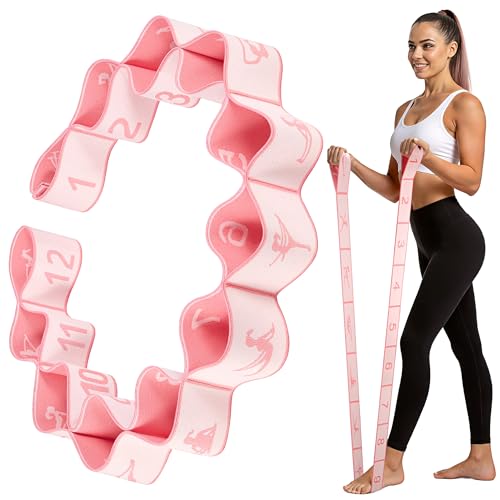
GHCTFE Resistance Bands, Stretch Band for Exercise, Physical Therapy, Rehab & Flexibility, Home Gym Equipment for Yoga, Pilates, Dance, Gymnastics, Number Loop Elastic Strap for Leg and Hip Stretches
- 12 Numbered Loops for Progress Tracking: Visual roadmap for flexibility gains
- Pinch-Free Comfort Material: Soft polyester-cotton blend prevents pinching
- Non-Slip Elastic Design: Ensures secure grip during exercises
As an affiliate, we earn on qualifying purchases.
As an affiliate, we earn on qualifying purchases.

Ankle Foot Strengthener Exerciser for Sprained, Single Leg Balance Board, Posture Corrector, Foot Stretcher for Plantar Fasciitis Relief
- Versatile Foot and Leg Training: Customizable with movable panels and Velcro bar
- Enhanced Training Guide: QR code videos for step-by-step exercises
- Portable and Durable Design: Made of high-quality birch plywood with non-slip surface
As an affiliate, we earn on qualifying purchases.
As an affiliate, we earn on qualifying purchases.