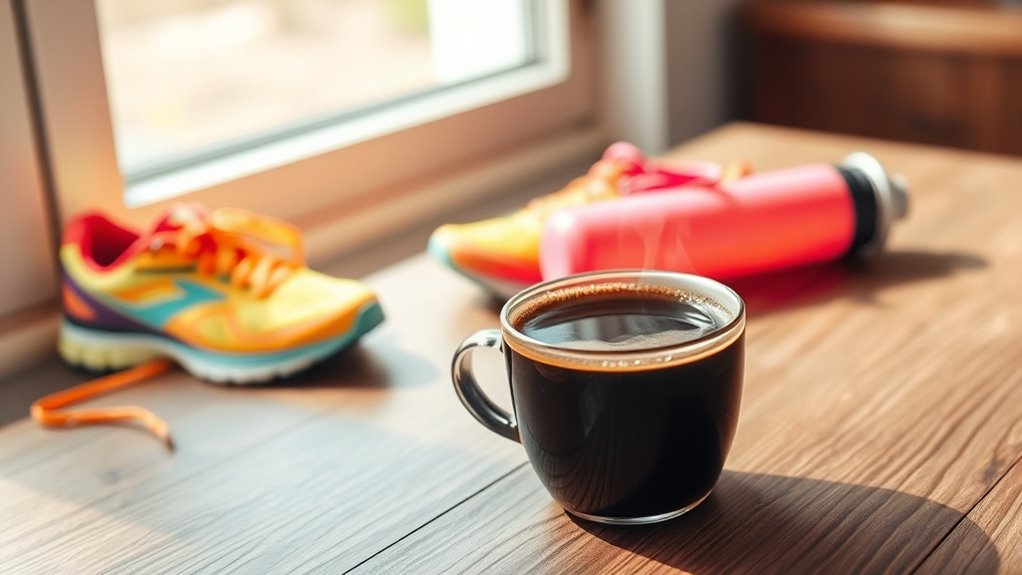

Coffee can be a good pre-workout option because caffeine boosts your energy, focus, and performance during exercise. It acts as a natural stimulant that helps you push through intense sessions, while also improving alertness. Just keep in mind that caffeine can affect hydration and sleep if not timed properly. Understanding how caffeine impacts you personally can help optimize your routine—stick around to discover tips for maximizing coffee’s benefits for your workouts.
Key Takeaways
- Coffee provides a quick energy boost and improves focus, making it a popular pre-workout choice.
- Moderate coffee intake usually doesn’t cause dehydration, but hydration remains important during exercise.
- Consuming coffee too late in the day may disrupt sleep, affecting recovery and workout performance.
- Individual caffeine sensitivity varies; timing and amount should be personalized to avoid sleep and hydration issues.
- Alternatives like decaf or natural energizers can be beneficial if coffee causes sleep disturbances or dehydration.
Many people turn to caffeine before workouts to boost energy and improve performance. It’s a quick, accessible way to feel more alert and ready to push through intense training. But before you reach for that coffee cup, it’s important to understand how caffeine affects your body, especially regarding hydration effects and sleep disruption. Caffeine, being a natural diuretic, can influence hydration levels. While moderate intake doesn’t usually cause significant dehydration, it’s still wise to stay mindful of your fluid intake. If you consume caffeine before exercise, make sure to drink plenty of water to counteract any potential dehydration. Proper hydration is essential for maintaining energy levels, reducing muscle fatigue, and preventing cramps during your workout. Ignoring hydration effects can lead to diminished performance and slower recovery, so balancing your caffeine intake with adequate water consumption is key.
Another aspect to consider is how caffeine influences your sleep. Many people underestimate the impact it can have, especially if consumed later in the day. Caffeine’s stimulating effects can linger in your system for hours, disrupting your ability to fall asleep or enjoy restful, deep sleep. Poor sleep quality not only affects your overall recovery but can also diminish your workout performance over time. Sleep disruption caused by caffeine can lead to decreased motivation, slower reaction times, and less muscle repair, ultimately undermining your fitness goals. To avoid these issues, it’s best to limit caffeine intake to earlier in the day or at least several hours before bedtime. Additionally, understanding the effects of caffeine on hydration and sleep can help you optimize your pre-workout routine for better results.
You should be aware of your own sensitivity to caffeine. Some individuals metabolize it faster, experiencing fewer sleep disruptions, while others may find it keeps them awake all night. Monitoring how your body reacts can help you determine the most suitable timing and amount of caffeine to consume before exercise. Remember that caffeine’s effects on hydration and sleep are interconnected; staying well-hydrated can help mitigate some side effects, and being mindful of your caffeine timing can protect your sleep quality. If you find caffeine disrupts your sleep or causes dehydration symptoms, consider alternatives like decaffeinated coffee or other natural energy boosters.
Top picks for "workout caffeine coffee"
Open Amazon search results for this keyword.
As an affiliate, we earn on qualifying purchases.
Frequently Asked Questions
How Much Caffeine Is Safe Before Exercising?
You should limit caffeine intake to about 200-300 mg before exercising, which is roughly two cups of coffee. Going beyond this can increase your risk of caffeine withdrawal symptoms later and lead to caffeine tolerance, reducing its energizing effects over time. Listen to your body and avoid excessive amounts, especially if you’re sensitive to caffeine. Moderation helps you enjoy the benefits without unwanted side effects.
Does Caffeine Improve Endurance or Strength?
Think of caffeine as a trusted coach whispering encouragement into your ear. It can boost your endurance and strength by increasing your metabolic effects and alertness, helping you push harder. However, your caffeine tolerance may dull these benefits over time, like a coach losing their edge. To maximize gains, find your ideal dose and avoid overdoing it, so your body responds with renewed energy and resilience during workouts.
Can Coffee Cause Dehydration During Workouts?
Coffee can cause a hydration risk during workouts because caffeine may increase urine production, leading to dehydration if you don’t hydrate properly. However, moderate caffeine absorption generally doesn’t substantially impact hydration if you drink enough water. To stay safe, balance your coffee intake with plenty of water before, during, and after exercise. Listen to your body and monitor signs of dehydration, especially during intense or long workouts.
Are There Any Long-Term Effects of Caffeine on Fitness?
Think of caffeine as a double-edged sword; it can boost your performance but also carve deep scars over time. Long-term caffeine use may lead to dependency, making you rely on it to power through workouts. It can also impact your cardiovascular health, increasing heart rate and blood pressure if overused. Stay mindful of your intake, and you’ll keep your fitness journey healthy and sustainable.
What Are Alternative Pre-Workout Caffeine Sources?
You can try alternatives like tea, which offers benefits such as antioxidants and a gentler caffeine boost. Energy drinks are another option, providing quick energy but watch for sugar and artificial ingredients. Both can enhance your workout focus and stamina without relying solely on coffee. Experiment to see which source suits your tolerance and preferences, maximizing benefits like increased alertness and sustained energy during exercise.
Conclusion
So, next time you chug a cup of coffee before hitting the gym, remember it’s like strapping a rocket to your workout. Caffeine can turn your tired, sluggish session into an unstoppable, superhero-level power surge. Just don’t overdo it—unless you want to feel like a jittery squirrel on a caffeine high! With the right amount, coffee can be your secret weapon to crush those workouts and feel like a total champion.