
Staying well-hydrated is essential for peak performance because water supports nearly all body functions, from muscle efficiency and temperature regulation to mental clarity. Proper hydration helps you avoid fatigue, headaches, and dehydration signs like dark urine or dizziness. It also boosts recovery and keeps your immune system strong. By drinking enough water throughout the day, you can optimize your physical and mental abilities—improving results and well-being. Keep going to discover more tips and strategies to stay at your best.
Key Takeaways
- Proper hydration supports cellular function, nutrient delivery, and waste removal, enhancing overall body efficiency.
- Drinking water regulates body temperature and prevents overheating during physical activity.
- Adequate hydration improves mental clarity, focus, and decision-making for optimal performance.
- Recognizing early signs of dehydration helps maintain safety and prevents health issues.
- Consistent water intake boosts recovery, immune function, and maintains healthy skin and muscle health.
The Science Behind Hydration and Body Function

Understanding how hydration affects your body begins with recognizing that water is vital for nearly every biological process. When you stay properly hydrated, you support electrolyte balance, which is key for nerve function, muscle contractions, and maintaining pH levels. Water helps regulate cellular hydration, ensuring that each cell functions at its best. Proper hydration allows nutrients to reach cells efficiently and waste products to be removed effectively. Without enough water, your body’s systems can become imbalanced, leading to fatigue, confusion, or disrupted organ function. Maintaining cellular hydration keeps your tissues flexible and your muscles functioning smoothly. Additionally, automation technologies are being integrated into healthcare to monitor hydration levels and optimize individual health management. These innovations contribute to a more personalized approach to health, ensuring optimal hydration for each individual. Fundamental to this process is the understanding that hydration supports body function and overall well-being, making water an essential component of a healthy lifestyle. Essentially, water acts as the foundation for your body’s internal environment, making sure that all processes operate seamlessly and efficiently.
How Water Affects Physical Performance

When you stay well-hydrated, your muscles work more efficiently, helping you perform better during activity. Water also keeps your body temperature in check, preventing overheating and fatigue. By maintaining proper hydration, you give yourself a real edge in physical performance. Additionally, endless entertainment ideas can make staying motivated to hydrate more enjoyable.
Enhances Muscle Function
Proper hydration is essential for ideal muscle function, as water plays a key role in maintaining the balance of electrolytes and nutrients necessary for muscle contraction. When you’re well-hydrated, your muscles stay elastic and responsive, reducing the risk of cramps and strains. Hydration therapy helps replenish lost fluids and minerals, ensuring your muscles operate smoothly. Water helps transport nutrients directly to muscle cells, supporting energy production and recovery. Staying hydrated also prevents stiffness by keeping tissues supple, which is vital during intense workouts. Additionally, proper hydration can influence the effectiveness of Aromatherapy Oils used for recovery and relaxation, as optimal fluid levels support overall health. By maintaining maximum hydration, you support muscle elasticity and overall performance, enabling you to move efficiently and recover faster. Proper hydration is also crucial for Kia Tuning, as it can influence the effectiveness of performance enhancements and modifications. Maintaining optimal fluid levels supports sustained physical activity and prevents dehydration-related fatigue, further enhancing athletic performance. Drinking enough water isn’t just about quenching thirst—it’s about maximizing your muscle function and athletic potential. Moreover, staying properly hydrated can improve your exercise endurance and enable longer, more effective training sessions.
Regulates Body Temperature
Water plays a crucial role in regulating your body temperature during physical activity. When you exercise, sweat regulation helps cool your body through evaporation, preventing overheating. Proper hydration supports body cooling by enabling sweat to flow freely and evaporate efficiently. Without enough water, your body struggles to maintain this balance, risking heat exhaustion. Staying well-hydrated allows you to:
- Enhance sweat regulation for consistent cooling
- Prevent rapid dehydration-induced fatigue
- Maintain ideal body temperature during workouts
- Improve endurance by avoiding overheating
- Support overall thermal balance in demanding conditions
Your body’s ability to cool itself depends on sufficient water intake, especially during intense or prolonged activity. Drinking enough water ensures your body can efficiently manage heat, keeping you safer and more comfortable while pushing your physical limits. Adequate hydration also helps maintain optimal thermal regulation, which is essential for peak performance. Additionally, maintaining hydration levels can support home decor elements that create a calming environment conducive to recovery and relaxation after exercise.
Mental Clarity and Hydration

Staying well-hydrated directly impacts your mental clarity, helping you think more clearly and stay alert throughout the day. When you practice mindfulness hydration, you become more aware of your body’s signals, ensuring you drink enough water to support ideal brain function. Proper hydration enhances hydration and focus, allowing you to concentrate better and make decisions more effectively. Even mild dehydration can lead to difficulty concentrating, memory lapses, and feelings of fatigue. Drinking water regularly keeps your brain hydrated, which is essential for maintaining mental sharpness. Additionally, understanding the importance of AI safety measures can help you stay informed about technological advancements that may influence health and safety considerations. Being aware of regional legal resources can also help you seek appropriate support if needed. By prioritizing hydration, you set yourself up for improved cognitive performance, sharper focus, and increased mental resilience—key components for staying productive and alert in daily activities. Recognizing the role of brain hydration can further motivate consistent water intake to support overall mental health.
Recognizing Signs of Dehydration

You’ll notice dehydration signs through simple cues like feeling thirsty or having a dry mouth. Dark urine and a strong odor can also signal you’re not drinking enough, while headaches and fatigue are common symptoms to watch for. Recognizing these signs early helps you stay properly hydrated and avoid more serious issues. Additionally, understanding how natural language processing can improve health monitoring apps may help in early detection of dehydration symptoms. Monitoring hydration levels with digital tools can provide real-time feedback and prompt timely interventions. Incorporating air quality monitoring into health apps can further enhance awareness of environmental factors affecting hydration and overall well-being. Being mindful of sleep patterns can also influence hydration needs, as poor sleep may increase dehydration risk, and integrating crochet techniques into relaxation routines could offer stress-relief benefits that support better hydration habits.
Thirst and Dry Mouth
Have you ever noticed feeling especially thirsty or having a dry mouth? These are clear signs of dehydration, signaling your body to sensing thirst and dry mouth symptoms. When you’re dehydrated, your mouth may feel sticky or parched, and your throat might be dry. Recognizing these signs early helps you respond quickly before more serious symptoms develop. Keep an eye out for:
- Increased thirst
- Dry, sticky mouth
- Chapped lips
- Sticky or dry tongue
- Feeling tired or sluggish
If you notice these dry mouth symptoms, it’s a cue to drink water. Staying ahead of thirst ensures proper hydration, keeps your mouth comfortable, and supports overall performance throughout the day. Don’t ignore these signs—they’re your body’s way of telling you to hydrate. Additionally, using headphones with clear audio can help you stay focused and motivated during hydration routines or breaks.
Dark Urine Indicators
Dark urine is a clear sign that your body is dehydrated and needs more fluids. When your hydration levels drop, your urine becomes more concentrated, resulting in a darker color. If you notice your urine is deep amber or almost brown, it indicates you’re not drinking enough water. This is your body’s way of signaling that it’s conserving water, but it also warns you to hydrate promptly. Monitoring the color of your urine is an easy and effective method to assess your hydration status. Keep in mind that consistently dark urine suggests ongoing dehydration, which can impair your performance and overall health. To maintain proper hydration, aim for clear or light-colored urine regularly, ensuring your body hydration levels stay balanced throughout the day. Recognizing these signs early can help prevent more serious health issues linked to dehydration and maintain your body’s optimal functioning. Staying aware of hydration levels can help you make timely adjustments to your water intake. Additionally, understanding hydration can motivate you to prioritize fluid intake for better health and performance.
Headaches and Fatigue
Dehydration often manifests through headaches and fatigue, signaling that your body lacks essential fluids. If you notice these symptoms, it’s a sign to hydrate immediately. Caffeine intake can worsen dehydration because it acts as a diuretic, increasing fluid loss. Poor hydration also affects digestion, leading to discomfort and sluggishness. To recognize dehydration, look for:
- Persistent headaches and tiredness
- Dry mouth or lips
- Dark urine and infrequent urination
- Dizziness or lightheadedness
- Reduced appetite or sluggish digestion
Addressing these signs by drinking water helps restore balance, easing headaches and fatigue. Staying well-hydrated supports better digestion and keeps caffeine’s diuretic effects in check, maintaining your energy levels and overall performance.
Daily Hydration Goals and Recommendations
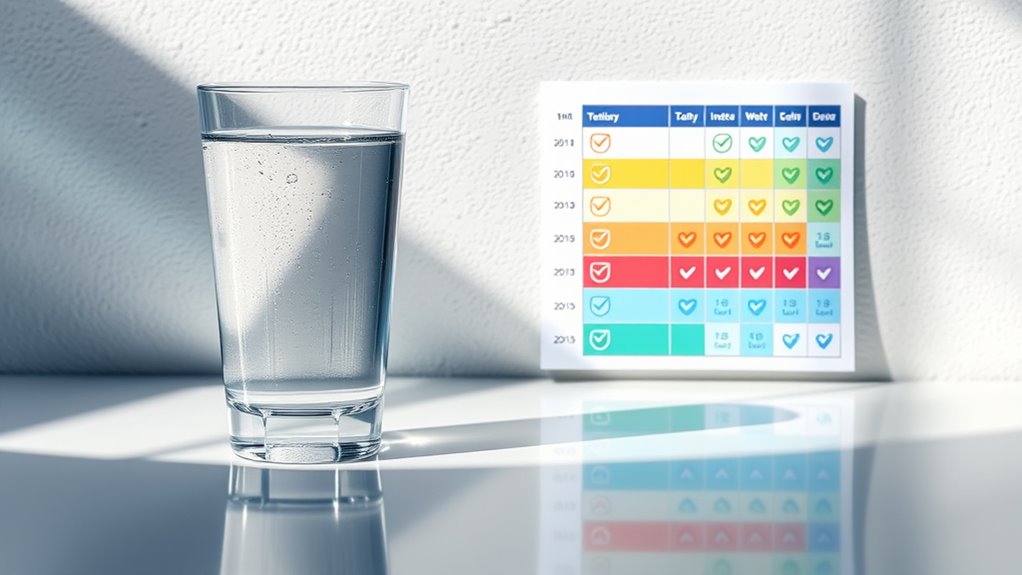
Understanding your daily hydration goals is essential for maintaining ideal health and energy levels. Generally, aim for about 8 cups (64 ounces) of water daily, but individual needs vary based on activity, climate, and body size. To support electrolyte balance, especially during intense or prolonged exercise, consider incorporating electrolyte-rich drinks. Proper hydration timing is key—spread your water intake evenly throughout the day rather than drinking large amounts at once. Listen to your body’s signals, like thirst and the color of your urine, which should be light yellow. Remember, staying consistently hydrated helps optimize bodily functions, improves focus, and prevents dehydration-related issues. Adjust your intake as needed, especially on hot days or when active, to stay properly hydrated and perform at your best.
Practical Tips for Staying Hydrated
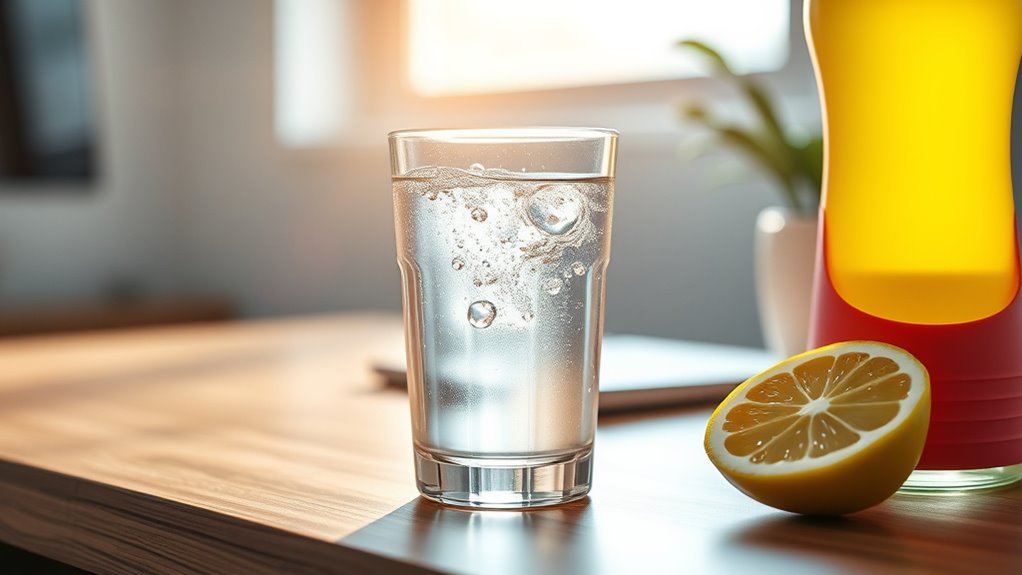
Staying consistently hydrated can be simple if you incorporate practical habits into your daily routine. Start your day with a glass of water and set reminders using hydration apps to track your intake. Try infusing water with fresh fruit or herbs to make hydration more appealing and flavorful. Keep a reusable water bottle with you throughout the day so you can sip steadily. Schedule regular breaks to drink water, especially during busy periods or exercise. Additionally, explore hydration apps that send alerts and monitor your progress, making it easier to stay on track. Remember, small, consistent steps lead to better hydration habits. By making these practical adjustments, you’ll naturally increase your water intake and maintain ideal hydration levels effortlessly.
Hydration Strategies for Athletes and Active Individuals

Maintaining proper hydration becomes even more important when you’re engaging in regular physical activity or athletic performance. To optimize hydration, avoid common hydration myths, like the idea that drinking excessive water boosts performance. Instead, listen to your body’s signals and drink consistently throughout your workout. Leverage hydration technology, such as smart bottles or hydration apps, to track your intake and guarantee you stay ahead of dehydration. Proper hydration strategies also include consuming electrolyte-rich drinks during intense or prolonged activities to replace lost minerals. Remember, individual needs vary based on activity level, climate, and physiology, so tailor your hydration plan accordingly. Staying informed about hydration myths and utilizing the latest hydration technology can give you a competitive edge and help you perform at your best.
The Impact of Hydration on Recovery and Overall Well-being
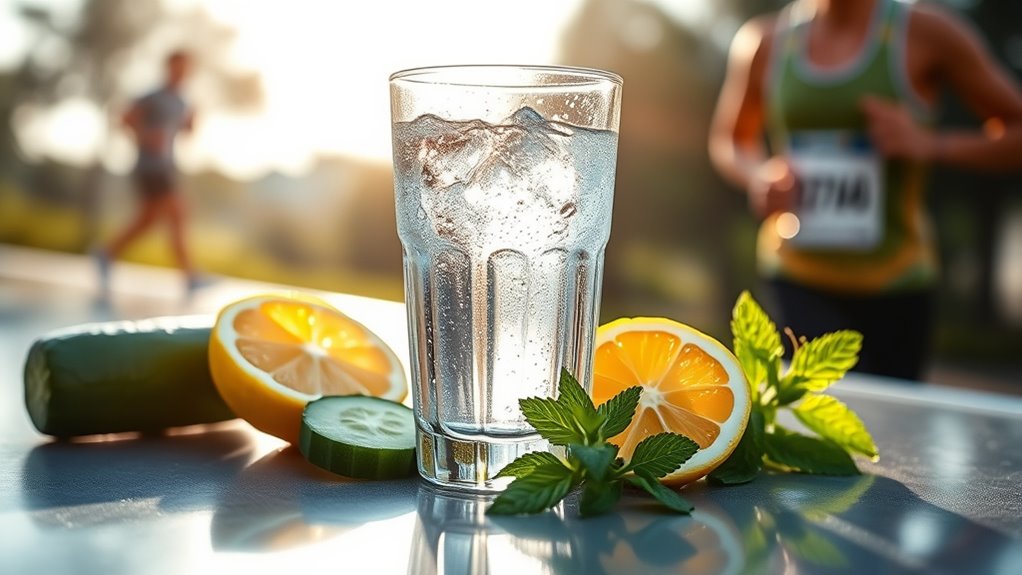
Hydration plays a crucial role in how your body recovers and overall well-being. When you stay properly hydrated, your immune system functions more efficiently, helping your body fight off illnesses. Water also supports skin health, keeping it plump, smooth, and resilient. Proper hydration aids in muscle recovery by flushing out toxins and replenishing lost fluids after activity. It improves energy levels and mental clarity, letting you perform at your best daily. To maximize these benefits, focus on:
Proper hydration boosts immunity, skin health, muscle recovery, and mental clarity for optimal well-being.
- Boosting hydration and immunity
- Enhancing water and skin health
- Accelerating muscle recovery
- Maintaining mental sharpness
- Supporting overall vitality
Staying hydrated isn’t just about quenching thirst; it’s essential for your recovery and long-term well-being.
Frequently Asked Questions
How Does Hydration Influence Electrolyte Balance in the Body?
When you stay hydrated, you support electrolyte regulation by maintaining proper fluid balance in your body. Drinking enough water helps electrolytes like sodium, potassium, and chloride stay in balance, which is essential for nerve function, muscle contractions, and overall cell health. Proper hydration guarantees your body can efficiently manage fluid levels, preventing dehydration or electrolyte imbalances that could impair your performance and well-being.
Can Hydration Levels Affect Sleep Quality and Duration?
Yes, hydration levels can markedly impact your sleep quality and duration. When you’re properly hydrated, your body functions more efficiently, supporting better athletic performance and mental clarity. Conversely, dehydration can cause discomfort, disrupt sleep patterns, and reduce overall restfulness. Maintaining good hydration helps regulate your body’s temperature and promotes relaxation, ensuring you wake up refreshed and ready for peak performance the next day.
What Are the Long-Term Health Risks of Chronic Dehydration?
If you stay chronically dehydrated, you risk electrolyte imbalance, which can cause muscle weakness, dizziness, and irregular heartbeat. Over time, dehydration can also harm your kidney health, increasing the chances of kidney stones or even kidney failure. Consistently drinking enough water helps maintain proper electrolyte levels and supports your kidneys, reducing long-term health risks and keeping your body functioning at its best.
How Does Hydration Impact Digestion and Nutrient Absorption?
Hydration plays a vital role in digestion and nutrient absorption. When you drink enough water, it helps break down food efficiently, ensuring nutrients are absorbed properly. Proper hydration also supports your skin health by maintaining elasticity and clarity, while boosting mental clarity by keeping your brain well-hydrated. Without enough water, digestion slows, nutrient absorption decreases, and your overall health, including skin and mental function, can suffer.
Are There Specific Beverages Better Than Water for Hydration?
Yes, some beverages can hydrate you better than water. Herbal teas, for example, offer hydration plus antioxidants, making them a good choice. Flavor enhancers like fruit slices or a splash of juice can make water more appealing, encouraging you to drink more. Just watch out for sugary drinks, which can dehydrate you. Overall, herbal teas and flavored water with natural enhancers are excellent options for staying well-hydrated.
Conclusion
Staying well-hydrated gently guides your body to perform at its best, like a trusted companion on your journey. When you give water the attention it deserves, you’re quietly fueling your mind and body, helping you feel sharp, energized, and resilient. Think of hydration as your secret ally—subtle, steady, and always there to support your well-being. Embrace this simple habit, and watch how smoothly your day flows, making every moment feel just right.