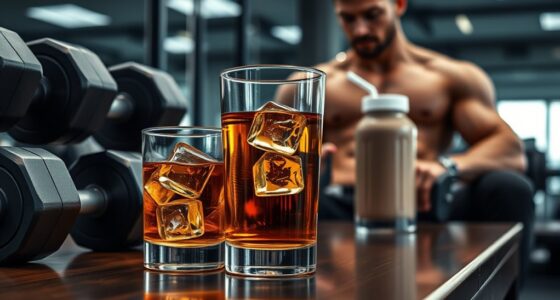
During endurance activities, water is essential for hydration, but it may not replace lost electrolytes like sodium and potassium. Sports drinks contain these electrolytes and carbs, helping you maintain fluid balance, prevent cramps, and sustain energy levels. If you want to optimize your hydration and performance, choosing the right option based on activity duration is key. Keep going to discover how to make the best choice for your endurance needs.

Get workout gear delivered free — and shop member deals
- Fast, free delivery on millions of items
- Access to Prime Big Deal Days deals on October 6–7
- Prime Video, Amazon Music and more included
Key Takeaways
- Water effectively rehydrates but lacks electrolytes necessary for prolonged endurance activities.
- Sports drinks replenish electrolytes lost through sweat, supporting muscle function and preventing cramps.
- During shorter workouts, water suffices; for extended endurance, sports drinks better maintain electrolyte balance.
- Proper hydration involves both fluid intake and electrolyte replacement to sustain performance and prevent dehydration.
- Technology-enhanced sports drinks optimize electrolyte absorption, offering advantages over plain water during intense, long-duration exercise.

Have you ever wondered why staying hydrated is essential during endurance activities? When you push your body through long runs, cycling, or any sustained exertion, maintaining proper hydration isn’t just about quenching thirst—it’s about supporting your overall performance and health. One of the key factors involved is electrolyte balance. Electrolytes like sodium, potassium, magnesium, and chloride are minerals that help regulate nerve function, muscle contractions, and fluid balance. When you sweat during intense activity, you lose these vital electrolytes along with water. If they aren’t replenished, your body’s delicate electrolyte balance gets disrupted, which can lead to muscle cramps, fatigue, dizziness, and even more severe dehydration symptoms.
Understanding dehydration symptoms is crucial because they serve as warning signs your body gives when you’re not adequately hydrated. Early symptoms like dry mouth, thirst, and slightly darker urine are common, but if ignored, dehydration can escalate to headaches, rapid heartbeat, confusion, and extreme fatigue. Recognizing these symptoms early helps you take action before your performance suffers or health risks increase. That’s why managing fluid intake and electrolyte replenishment during endurance activities becomes so vital. Simply drinking water may seem enough, but it might not be sufficient to restore electrolyte balance, especially during prolonged exercise. Without replacing lost electrolytes, you risk developing dehydration symptoms that impair your ability to perform optimally.
Additionally, choosing the right hydration strategy can influence your overall performance, especially when considering factors such as hydration technology, which enhances electrolyte delivery and absorption during activity.
Frequently Asked Questions
How Does Hydration Impact Mental Focus During Endurance Activities?
Proper hydration directly boosts your mental focus during endurance activities by maintaining electrolyte balance and ensuring your brain functions at its best. If you hydrate at the right timing, you prevent dehydration-related fatigue and confusion, helping you stay alert and motivated. Drinking fluids with electrolytes during extended efforts can enhance concentration and decision-making, giving you a mental edge. Stay mindful of hydration timing and electrolyte intake to keep your mind sharp throughout your activity.
Can Overhydration Be Harmful During Endurance Sports?
Overhydration can be harmful during endurance sports, especially if you ignore electrolyte balance and hydration timing. Drinking too much water dilutes essential salts, risking hyponatremia, which can cause severe health issues. To stay safe, monitor your thirst and consume fluids strategically, balancing water and sports drinks to maintain electrolyte levels. Proper hydration supports performance and health, but overdoing it can jeopardize your well-being.
Are There Specific Hydration Strategies for Different Climates?
Yes, you should adopt climate-specific hydration and seasonal hydration strategies. In hot, humid climates, drink more water and sports drinks containing electrolytes to replace lost salts. In cold weather, stay hydrated by sipping fluids regularly, even if you don’t feel thirsty. Adjust your intake based on temperature, humidity, and your activity level to prevent dehydration or overhydration, ensuring ideal performance and safety during endurance activities.
How Do Hydration Needs Vary by Age and Gender?
Your hydration needs vary by age and gender, so you should modify your intake accordingly. Age-related hydration decreases as you get older, making it essential to drink more fluids to prevent dehydration. Gender-specific needs also come into play; women may require slightly less fluid than men due to differences in body composition. Pay attention to your body’s signals and consult guidelines to ensure you’re staying properly hydrated for your age and gender.
What Are Signs of Dehydration to Watch for During Exercise?
During exercise, you should watch for signs of dehydration like dry mouth, dizziness, and dark urine. If you feel fatigued or experience muscle cramps, your electrolyte balance might be off. Remember, hydration timing is essential; don’t wait until you’re thirsty. Drinking water or sports drinks helps maintain electrolyte levels and keeps you hydrated, so stay attentive to these signs and hydrate promptly to sustain your performance.
Conclusion
Staying properly hydrated is key to endurance, whether you choose water or sports drinks. Did you know that athletes lose up to 2% of their body weight through sweat, which can impair performance? While water is great for regular hydration, sports drinks can help replenish lost electrolytes during intense activity. Listen to your body, and choose what’s best for your workout. Staying hydrated keeps you strong and ready to go longer and faster.
Fall Picks
fall essentials
As an affiliate, we earn on qualifying purchases.