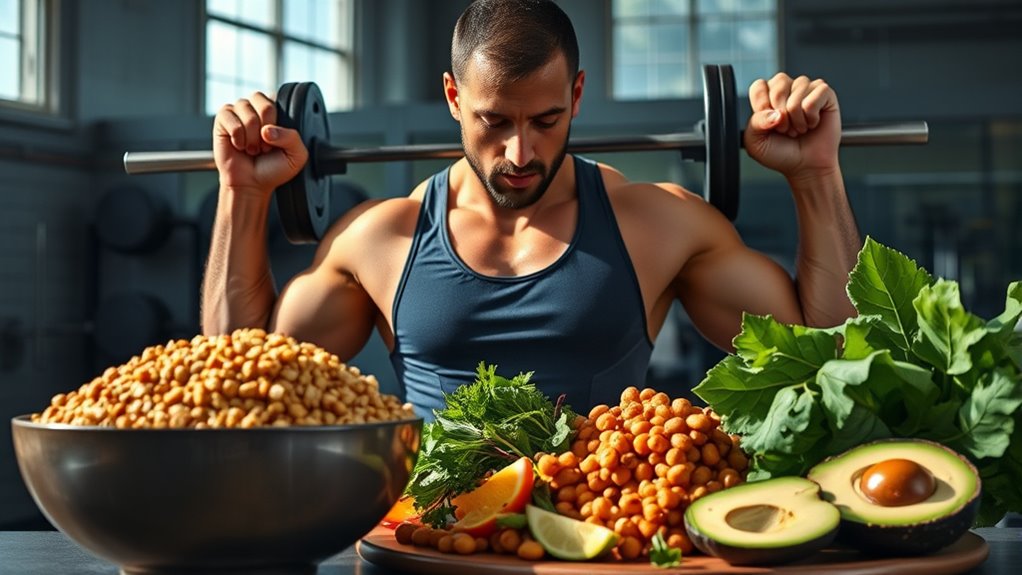

To get protein and build strength on a plant-based diet, focus on combining diverse sources like legumes, grains, nuts, and seeds to guarantee complete amino acids. Include nutrient-dense options such as lentils, quinoa, chia seeds, and tofu to support recovery and energy. Effective meal planning and strategic pairings are key to meeting your needs. If you’re open to exploring practical tips and meal ideas, you’ll discover how to fuel your workouts effectively with plants.
Key Takeaways
- Combine legumes, grains, nuts, and seeds to ensure complete protein intake for muscle repair and growth.
- Incorporate diverse plant-based sources like lentils, quinoa, tofu, and seeds to meet nutritional needs.
- Use strategic food pairings such as rice and beans or hummus with whole wheat bread for complete amino acids.
- Prioritize nutrient-dense foods rich in iron, calcium, and B-vitamins to boost athletic performance and recovery.
- Plan meals ahead with batch-cooked plant proteins and varied ingredients to sustain strength and prevent boredom.
Understanding Plant-Based Proteins and Their Benefits
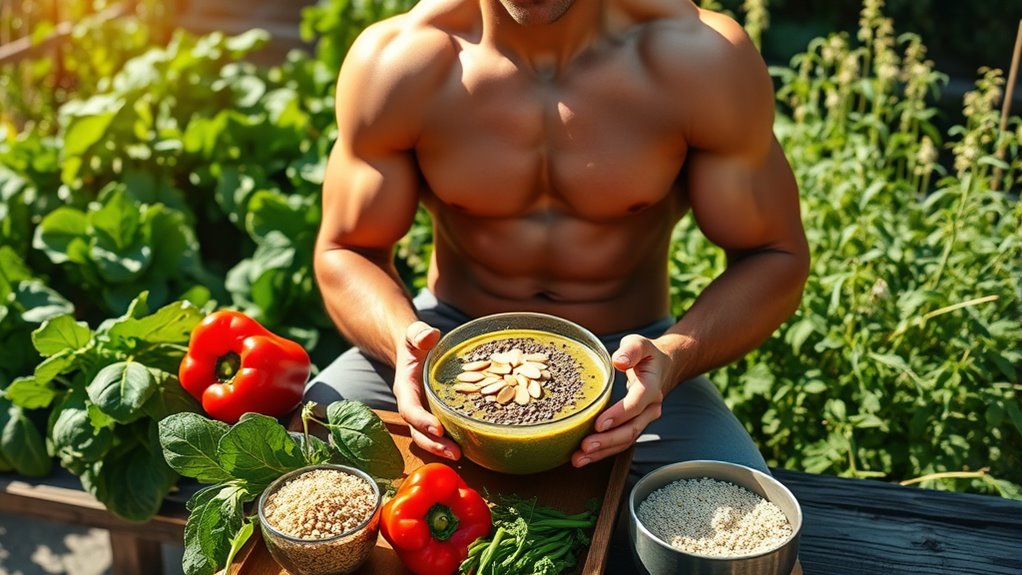
While many people associate protein mainly with animal products, plant-based proteins are a powerful and versatile alternative that can meet your athletic needs. One key benefit is protein diversity, which means you can get a wide range of nutrients from different plant sources. Some plant proteins may lack amino acid completeness, but combining various sources ensures you receive all essential amino acids your body needs for muscle repair and growth. This variety not only enhances your nutrient intake but also supports better digestion and overall health. Understanding the importance of amino acid profiles and the diversity of plant proteins is essential to optimize your nutrition. For example, exploring different plant protein sources can help you create a balanced and complete diet. Additionally, protein quality assessment helps determine how well plant-based sources meet your dietary needs. Embracing plant-based proteins allows you to fuel your workouts effectively while enjoying the benefits of a sustainable diet. By understanding the diversity and amino acid profiles of plant proteins, you can confidently meet your nutritional goals on a plant-centered diet.
Top Plant Sources of Protein for Athletes

You can boost your protein intake with key plant sources like legumes and pulses, which are packed with nutrients. Nuts and seeds also provide a great snack option that supports your energy needs. Additionally, whole grains like quinoa and brown rice deliver essential amino acids to fuel your training.
Legumes and Pulses
Legumes and pulses are among the most important plant-based sources of protein for athletes, providing essential nutrients to support muscle growth and recovery. Their legume diversity offers a wide range of options, from lentils and chickpeas to black beans and peas, ensuring you can vary your diet easily. Pulse processing techniques, such as soaking, cooking, and sprouting, enhance digestibility and nutrient absorption, making these foods even more beneficial. These methods break down anti-nutrients and improve protein bioavailability. Incorporating a variety of legumes and pulses into your meals helps meet your protein needs while also providing fiber, vitamins, and minerals crucial for overall performance. Their versatility means you can enjoy them in salads, stews, or as standalone dishes, fueling your workouts effectively. Additionally, processing methods can reduce anti-nutrients and improve nutrient absorption, further supporting your athletic goals. Using plant-based protein sources can help diversify your diet and optimize your recovery.
Nuts and Seeds
Nuts and seeds are compact powerhouses of plant-based protein, making them ideal for athletes seeking to boost muscle repair and energy levels. They provide healthy fats, protein, and essential nutrients. Nut butter offers a concentrated protein source, perfect for quick snacks or smoothies. Seed oils, such as flaxseed or chia seed oil, add omega-3s that reduce inflammation and support recovery. Incorporate a variety of nuts and seeds into your diet for diverse nutrient profiles. Keep in mind, portion control is key to avoid excess calories. Here’s a quick overview:
| Nut/Seed | Key Nutrients | Best Uses |
|---|---|---|
| Almonds | Protein, vitamin E | Snacks, nut butter |
| Chia Seeds | Omega-3s, fiber | Smoothies, puddings |
| Pumpkin Seeds | Magnesium, zinc | Salads, trail mixes |
| Walnuts | Healthy fats, antioxidants | Baking, snacks |
| Flaxseeds | Fiber, seed oils (omega-3s) | Baking, smoothies |
Whole Grains
Are whole grains a powerful source of plant-based protein for athletes? Absolutely. Whole grains nutrition offers a significant amount of protein, fiber, and essential nutrients that support your training and recovery. Quinoa, brown rice, oats, and barley are excellent options, providing both energy and protein. If you have gluten sensitivities or celiac disease, don’t worry—there are plenty of gluten-free options like quinoa, millet, and certified gluten-free oats. Incorporating these grains into your meals boosts your overall protein intake while also providing complex carbs for sustained energy. Whole grains are versatile, easy to prepare, and can be added to salads, bowls, or eaten as side dishes. They’re a crucial part of a plant-based athlete’s diet, helping you build strength and stay fueled.
Combining Plant Foods for Complete Amino Acid Profiles

While many plant foods lack all essential amino acids on their own, combining different sources can guarantee you get a complete profile. Pairing legumes with grains, nuts, or seeds is a simple strategy. For example, rice and beans or hummus with whole wheat bread ensure you receive all amino acids. Fermentation benefits, like in tempeh or miso, enhance protein digestibility and access more nutrients, making plant-based proteins more effective. This approach also helps dispel plant-based protein myths, which often claim plant foods can’t meet your amino acid needs. Instead, variety and smart combinations provide all essential amino acids, supporting muscle repair and growth. Focus on diverse, colorful plant foods, and you’ll reliably meet your amino acid requirements without relying on animal products.
Nutrients Essential for Athletic Performance on a Plant Diet

Building a well-rounded plant-based diet for athletic performance means paying attention to specific nutrients that support energy, recovery, and overall strength. Your body depends on key elements like iron, calcium, and B-vitamins—just as soil nutrients nourish healthy plants. These nutrients boost your endurance, repair muscles, and keep you resilient. To excel, consider how your choices impact your performance:
Nourish your body with essential nutrients like iron, calcium, and B-vitamins to boost endurance and muscle recovery.
- Prioritize nutrient-dense foods to fuel your workouts and recovery.
- Incorporate variety to ensure you’re getting all essential vitamins and minerals.
- Choose supportive athletic footwear that keeps you comfortable and prevents injury, much like rich soil sustains healthy growth.
- Being mindful of environmental considerations helps you maintain a sustainable and responsible approach to your nutrition and outdoor activities.
- Understanding nutrient bioavailability can help you select plant-based foods that maximize absorption and effectiveness.
- Exploring plant-based protein sources can ensure you meet your daily protein needs for optimal strength and muscle development.
- Paying attention to natural materials in Waldorf toys can inspire a mindful approach to choosing sustainable and eco-friendly products that support holistic growth.
- Additionally, understanding the importance of soil health can guide you in choosing plant foods that are cultivated sustainably and nutritiously.
Meal Planning Tips for Plant-Based Athletes
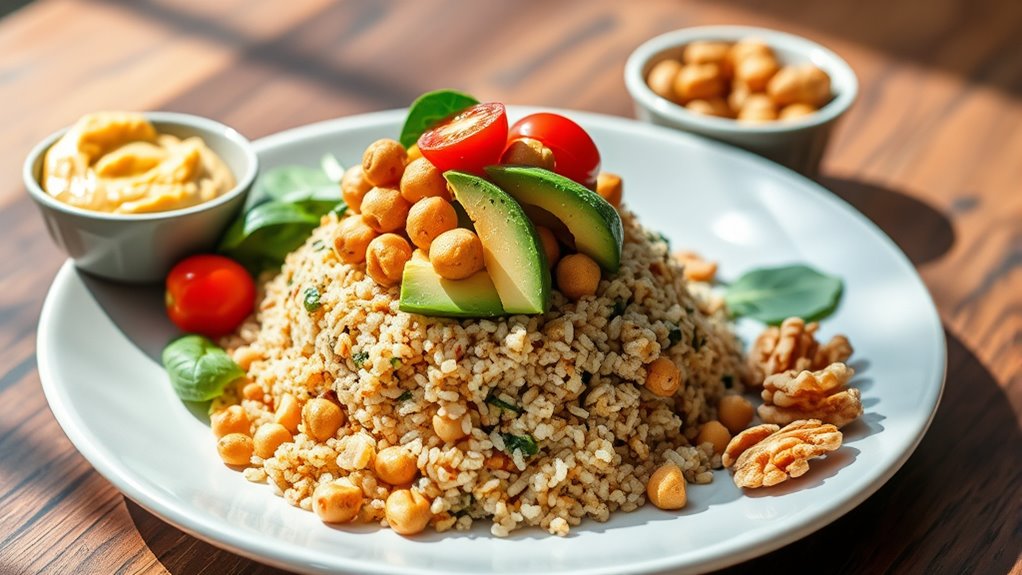
Effective meal planning is key to sustaining your energy levels and supporting recovery as a plant-based athlete. Start with meal prep by batch-cooking nutrient-dense foods like beans, grains, and roasted vegetables to save time during busy days. Incorporate a variety of plant proteins and healthy fats to guarantee balanced nutrition. When grocery shopping, make a list focused on whole, minimally processed foods like legumes, nuts, seeds, and fresh produce. Prioritize seasonal items for freshness and affordability. Planning your meals ahead helps prevent reliance on less nutritious options and keeps your diet aligned with your training goals. Keep your pantry stocked with staples so you can quickly assemble meals. Consistent meal prep and strategic grocery shopping set the foundation for sustained energy and peak performance. Additionally, being aware of nutritional needs can help optimize your diet for athletic performance.
Overcoming Common Challenges in a Plant-Only Diet

Balancing your nutrient intake can be tricky on a plant-only diet, but it’s essential for peak performance. Managing meal variety helps prevent boredom and guarantees you get all the necessary vitamins and minerals. Incorporating plant-based proteins ensures you meet your protein needs effectively. Additionally, choosing air purifiers with advanced filtration technology can help create a clean environment that supports your overall health and athletic performance. Incorporating the right paint sprayer accessories into your painting projects can improve finish quality and efficiency, just as selecting the proper nutrients enhances your athletic results. Understanding best anime movies can also provide a mental boost and inspiration outside of training, fostering a well-rounded lifestyle. Being aware of electric dirt bike horsepower can inspire you to optimize your energy levels and recovery strategies, as high-performance bikes demonstrate the importance of power and efficiency in achieving goals. By staying intentional with your food choices, you can overcome these common challenges and stay energized.
Balancing Nutrient Intake
While a plant-based diet offers many benefits for athletes, it also presents unique challenges in ensuring adequate nutrient intake. You might struggle to get enough protein, iron, or omega-3s, but don’t worry—strategic choices make a difference. Incorporate ancient grains like quinoa or farro to boost protein and fiber. Power up your mornings with superfood smoothies packed with spinach, chia seeds, and berries for essential vitamins. Be mindful of balancing carbs, fats, and proteins to fuel your workouts effectively. Remember, small but consistent adjustments can help you thrive on plants. Incorporating nutrient-dense ingredients can also help optimize your nutrient intake without compromising your plant-based goals. For example, choosing plants that support performance-enhancing nutrients can give you a competitive edge. Additionally, selecting biodiverse plant sources can improve overall nutrient coverage and support sustainable eating habits. Challenges can feel overwhelming, but with dedication, you’ll access your full athletic potential while enjoying the vibrant variety of plant-based foods. Keep pushing forward—you’re capable of mastering this balance.
Managing Meal Variety
Maintaining variety in your plant-based meals can be challenging, but it’s key to preventing boredom and ensuring you get a broad spectrum of nutrients. To achieve this, focus on diverse ingredients and creative meal prep strategies. Incorporate different plant proteins like lentils, beans, tofu, and tempeh to keep flavor variety high. Experiment with herbs, spices, and cooking methods to prevent meals from feeling monotonous. Planning your meals ahead allows you to balance colors, textures, and flavors, making each dish exciting. With thoughtful meal prep, you can prepare multiple options in advance, saving time and encouraging consistency. Additionally, understanding the importance of meal variety can help you better manage your nutritional intake and keep your diet sustainable. Incorporating a range of plant-based proteins ensures that you meet your protein needs while enjoying diverse flavors and textures. Remember, variety isn’t just about taste—it’s essential for covering your nutritional bases and maintaining enthusiasm for your plant-based journey.
Sample Meal Ideas to Maximize Protein Intake

To maximize your protein intake on a plant-based diet, choosing the right meals is essential. Focus on nutrient-dense options that fuel your strength and recovery. Start your day with energizing protein smoothies packed with peas, hemp, or chia seeds—delicious, quick, and customizable. For lunch or dinner, try hearty bowls with lentils, quinoa, and roasted vegetables, ensuring a steady protein supply. When it’s time for snacks, opt for ideas that boost your intake, like roasted chickpeas or nut butters on whole-grain toast. These snack ideas keep you satisfied and support muscle growth. Remember, consistency is key—fuel your body with meals that excite your taste buds while meeting your protein goals. Your plant-based journey to strength begins with smart, satisfying choices.
The Role of Supplements in a Plant-Based Athletic Regimen

Supplementing a plant-based athletic diet can enhance performance and recovery, especially when certain nutrients are challenging to obtain in sufficient amounts through food alone. Proper supplement timing is key—you want to take nutrients like B12, iron, or omega-3s when your body can most effectively absorb them. Using supplements strategically helps fill nutritional gaps without over-relying on processed foods. However, it’s important to be aware of potential supplement side effects, such as gastrointestinal discomfort or nutrient imbalances, which can occur if you take too much or choose inappropriate products. Always consult with a healthcare professional or sports dietitian to tailor supplement use to your specific needs. When used thoughtfully, supplements can support your training while maintaining a balanced, plant-based diet.
Success Stories: Athletes Thriving on Plant-Based Nutrition

Many plant-based athletes have achieved remarkable success by optimizing their nutrition and smartly using supplements to fill gaps. They master cooking techniques to maximize nutrient absorption and create delicious, satisfying meals. Protein supplements play a crucial role in meeting daily demands, proving that plant-based diets can support high performance. These athletes often inspire others by sharing their journeys and strategies.
Feel empowered by their stories:
- Overcoming doubts with innovative cooking techniques that release plant proteins
- Using targeted supplements to boost recovery and strength
- Achieving record-breaking performances fueled by a plant-based diet
Their journeys prove that with dedication and smart choices, thriving on plants isn’t just possible—it’s powerful. You, too, can transform your athletic potential with the right approach.
Frequently Asked Questions
How Do Plant-Based Diets Impact Athletic Endurance and Recovery?
A plant-based diet can boost your athletic endurance and recovery by providing rich antioxidants and anti-inflammatory foods that speed up healing. To optimize performance, focus on hydration strategies to prevent fatigue and maintain energy levels. Additionally, the diet supports mental resilience, helping you stay focused and motivated during tough workouts. With proper nutrition and hydration, you’ll recover faster and push your endurance further, all while supporting overall health.
Are Plant Proteins Sufficient for Strength Training and Muscle Gain?
You can absolutely build muscle with plant proteins—they’re more than enough if you follow muscle gain strategies. Plant protein adequacy depends on variety and portion size, so include beans, lentils, tofu, and grains. Remember, Rome wasn’t built in a day; consistency is key. Combining different plant sources guarantees you get all essential amino acids, fueling your strength training and helping you reach your goals without missing out.
What Are the Best Plant-Based Pre- and Post-Workout Snacks?
For the best plant-based pre- and post-workout snacks, try smoothie combinations with bananas, spinach, and plant-based protein powder for energy and recovery. Energy bites made from oats, nut butter, and seeds provide quick, portable fuel. These options boost your performance, aid muscle repair, and keep you energized throughout your workout, ensuring you get the nutrients you need on a plant-based diet.
Can Vegan Athletes Meet Their Calcium and Iron Needs Effectively?
Sure, vegan athletes can easily meet their calcium and iron needs—just ignore the myths. You can enhance calcium absorption by consuming fortified plant milks, leafy greens, and tahini. For iron, include sources like lentils, quinoa, and pumpkin seeds, and consider iron supplementation if needed. Staying mindful of absorption rates ensures you’re getting enough, proving that plant-based diets can support your strength and health without compromise.
How Do Plant-Based Diets Influence Injury Prevention and Overall Performance?
Plant-based diets can positively influence your injury prevention and overall performance by fueling your body with nutrient-rich foods. You should supplement nutrients like omega-3s and zinc to support injury recovery and reduce inflammation. By prioritizing whole foods and proper supplementation, you improve your resilience, speed up injury recovery, and enhance endurance. Consistently fueling your body with plant-based nutrients helps you perform at your best and stay injury-free longer.
Conclusion
So, you’re ready to ditch meat and still crush your goals? With all these plant-powered options, you’ll be so strong, even Popeye would be jealous. Just remember, it’s not about eating leaves all day—unless you’re into that. Embrace the challenge, get creative, and soon you’ll be proving that you don’t need a steak to be a beast. Who knew plants could make you this unstoppable?