To get fit on two wheels as a beginner, choose a comfortable bike suited to your environment, make sure it fits properly, and wear safety gear like a helmet and lights. Start with easy, familiar routes to build confidence, gradually increasing distance and intensity. Maintain your bike regularly and take rest days to recover. Staying consistent while focusing on safety and gradual progress will help you enjoy cycling and boost your fitness—more tips await as you continue.
Key Takeaways
- Start with short, manageable rides on flat, familiar routes to build confidence and endurance gradually.
- Choose the right bike and ensure proper fit for comfort and injury prevention during rides.
- Wear safety gear like helmets, lights, and reflective clothing to ride confidently and stay visible.
- Incorporate rest days and gradually increase ride distance to avoid fatigue and promote steady fitness gains.
- Regularly maintain your bike by checking tires, brakes, and lubrication to ensure safe and smooth cycling.
Choosing the Right Bike for Beginners

When you’re just starting out, choosing the right bike can make a big difference in your comfort and confidence. Start by considering bike frame types—whether a hybrid, road, or mountain bike—based on where and how you’ll ride most often. Each frame type offers different riding positions and handling, so pick one that feels natural to you. Next, look at gear shifting options; some bikes have simple twist shifters, while others feature more advanced trigger shifters. Ease of gear shifting can make your ride smoother and less frustrating. Think about your comfort level and future goals when selecting these features. Additionally, selecting the appropriate bike accessories such as helmets, lights, and locks can enhance safety and convenience during your rides. When choosing your bike, pay attention to bike fit to ensure proper comfort and prevent injuries, which is essential for maintaining motivation and enjoying your rides. A well-chosen bike, with the right frame and gear options, will motivate you to ride more and enjoy the journey from the start.
Essential Gear and Safety Equipment
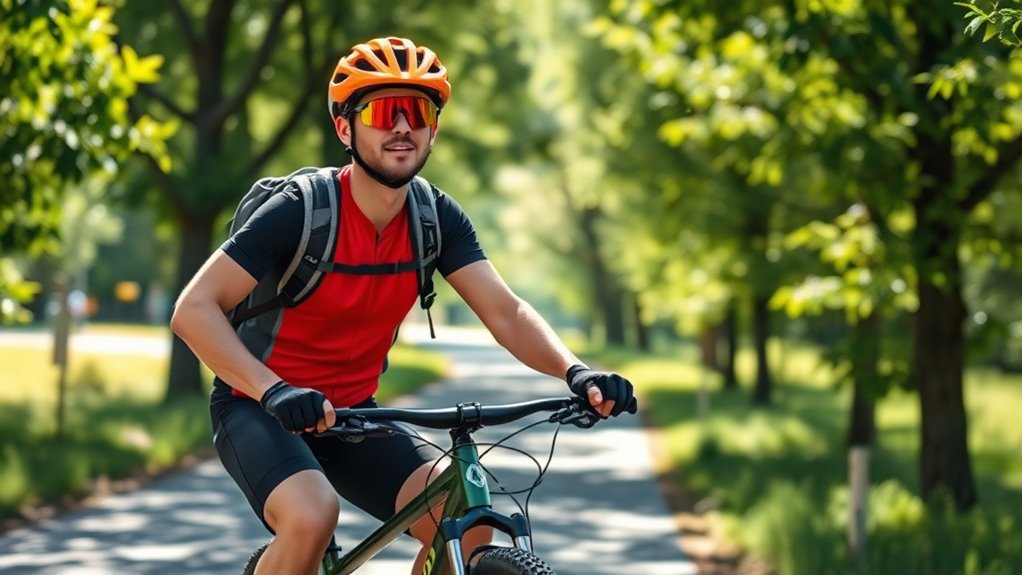
When cycling, wearing a helmet and protective gear keeps you safe in case of falls or accidents. Proper lighting and reflectors make sure you’re visible to others, especially at dawn, dusk, or night. Choosing comfortable clothing helps you ride longer without irritation or distraction. Additionally, selecting gear that is appropriate for your investment goals can improve your overall riding experience and safety. Being aware of your surroundings and practicing defensive riding techniques can also greatly reduce the risk of accidents. Staying informed about city dynamics and local traffic rules can further enhance your safety on the road. For example, understanding the horsepower of electric dirt bikes can help you choose the right bike for your skill level and terrain.
Helmet and Protective Gear
Wearing a helmet and protective gear is essential for staying safe while cycling, as they considerably reduce the risk of injury. Prioritize helmet safety by choosing a helmet that fits snugly and meets safety standards. Always wear protective gear like gloves, knee pads, and elbow pads to cushion falls and prevent scrapes. Proper gear not only shields you from injuries but also boosts your confidence on the road. Make sure your helmet is securely fastened and positioned correctly, covering your forehead. Protective gear should be comfortable and unobtrusive, so you stay focused on riding. Remember, safety gear is an investment in your well-being, especially as you build your cycling skills. Staying protected ensures you enjoy your rides without unnecessary risks. Additionally, understanding machine learning advancements can help improve your cycling experience through smarter navigation and performance tracking, leveraging AI-powered tools for better route planning. Being aware of cycling safety tips can further enhance your confidence and preparedness during rides, and staying informed about sound healing science can even help you relax after your rides with calming sound therapies. Incorporating innovative safety equipment can also provide additional layers of protection and peace of mind during your cycling adventures.
Proper Lighting and Reflectors
Have you ever considered how proper lighting and reflectors can make a difference during your ride? Lighting safety is essential, especially when cycling at dawn, dusk, or nighttime. A bright front light helps you see obstacles and signals your presence to others, while a red rear light ensures drivers notice you from behind. Proper reflector placement is equally important; reflectors should be on your pedals, wheels, and frame to maximize visibility from all angles. Make sure they’re clean and positioned correctly to catch light from vehicles’ headlights. Good lighting safety reduces accidents and boosts your confidence on the road. Investing in quality lights and strategically placing reflectors is a simple step that greatly enhances your safety during every ride. Recognizing soulmate angel numbers can also inspire a positive mindset, making you more alert and open to new connections while cycling or in daily life. Additionally, utilizing automation’s role in business intelligence can be a metaphor for how well-placed reflectors work together to create a safer and more visible cycling environment. Incorporating reflector technology can further improve your visibility in low-light conditions. Staying informed about the latest industry transformations can also help you choose the most innovative safety gear available.
Comfortable Clothing Choices
Choosing the right clothing and safety gear can make a significant difference in your comfort and security during rides. For active cycling, opt for athletic wear that wicks away sweat and fits snugly without chafing. This helps you stay dry and comfortable, especially on longer rides. If you’re riding casually or in warm weather, casual attire like breathable shirts and shorts work well, but avoid loose clothing that could get caught in the chain or wheels. Always wear a helmet and consider padded gloves and reflective gear for safety. Proper clothing not only enhances comfort but also protects you from the elements and potential injuries. Remember, well-chosen gear boosts your confidence and encourages consistent riding.
Basic Riding Techniques and Posture
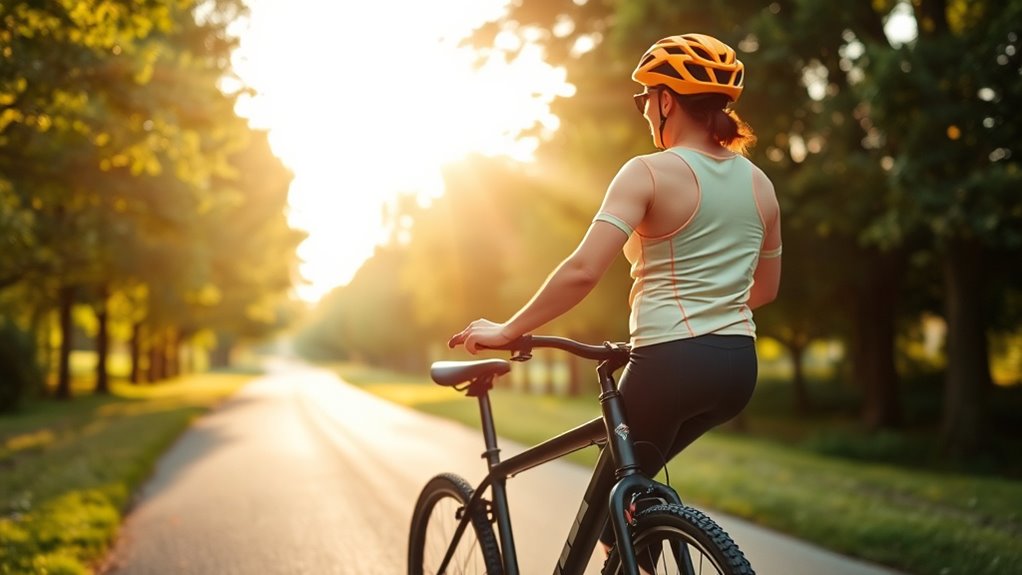
To ride safely and efficiently, you need to master basic riding techniques and maintain proper posture. Keep your hands relaxed with a comfortable hand position on the handlebars, avoiding tension. Your pedal technique should involve smooth, circular motions, applying power throughout the pedal stroke. Proper posture means keeping your back straight, elbows slightly bent, and weight balanced over the bike. This reduces fatigue and improves control. Here’s a quick overview:
| Hand Position | Pedal Technique | Posture |
|---|---|---|
| Relaxed grip on handlebars | Circular pedal motion | Back straight and relaxed |
| Hands lightly on drops | Push down and lift up smoothly | Elbows slightly bent |
| Avoid gripping too tight | Engage core for stability | Head up, looking ahead |
Maintaining proper bicycle fit ensures comfort and efficiency during your rides. Additionally, focusing on body alignment can enhance your riding experience and prevent injury, making your cycling more enjoyable and safe. For optimal performance, consider regularly checking your drivetrain components, such as gears and derailleurs, to keep your bike functioning smoothly. Regularly practicing balance exercises can also improve stability and boost confidence on the bike.
Planning Your First Rides

Before heading out on your first ride, it’s important to plan where and when you’ll ride. Start with route planning by choosing familiar, flat paths to build confidence and avoid busy streets. Map out your route in advance, considering potential stops or rest areas. Weather considerations are vital—check the forecast to avoid riding in rain, strong winds, or extreme heat, which can make your first experience uncomfortable or unsafe. Dress appropriately for the weather, and pack essentials like water and sunscreen if needed. Keep your ride manageable; don’t push too far or too fast initially. Proper planning helps you stay safe, comfortable, and motivated, making your first cycling experience enjoyable and encouraging you to keep riding. Additionally, understanding the basics of the cycling environment can help you navigate safely and confidently, especially when it comes to recognizing projector specifications that could be useful in different settings.
Building Endurance and Strength Gradually
To build your endurance and strength, start with short rides and gradually increase your distance over time. Remember to listen to your body and add rest days to recover and avoid burnout. Consistent, steady progress will help you improve without overdoing it.
Start With Short Rides
Starting with short rides is essential for gradually building your endurance and strength. By keeping rides manageable, you prevent burnout and stay motivated. Focus on consistent cycling sessions, and remember to consider cycling nutrition—fuel your body properly with snacks and hydration. As you progress, think about convenient bike storage options to keep your bike safe and accessible. Here are some tips to get started:
- Keep rides brief—around 30 minutes or less—to avoid fatigue.
- Choose flat routes to build confidence and avoid overexertion.
- Plan your cycling nutrition—carry water and light snacks.
- Keep your bike well-maintained and stored properly to prevent issues.
Starting small helps you develop endurance safely and sets a solid foundation for longer rides ahead.
Increase Distance Slowly
As you become more comfortable with cycling, gradually increasing your distance is key to building endurance and strength. Instead of pushing yourself too hard too soon, focus on a gradual progression that aligns with your current fitness level. Set clear distance goals for each ride, adding just a mile or two each week. This steady increase helps your body adapt without risking injury or burnout. Listen to your body, and if you feel tired or sore, slow down or take a rest day. Consistency is more important than speed or distance; over time, these small increases will boost your stamina and confidence. Remember, patience is essential—building endurance takes time, but steady progress will lead to longer, more enjoyable rides.
Incorporate Rest Days
Incorporating rest days into your cycling routine is essential for building endurance and strength gradually. Rest day benefits include preventing injuries, reducing fatigue, and giving your muscles time to recover. To optimize your cycling rest routines, consider these tips:
- Schedule at least one or two rest days each week to let your body heal.
- Use active recovery, like gentle walking or stretching, instead of complete inactivity.
- Listen to your body; if you’re feeling persistent soreness, take an extra rest day.
- Stay hydrated and maintain proper nutrition on rest days to support muscle repair.
Maintaining Your Bike for Smooth Rides
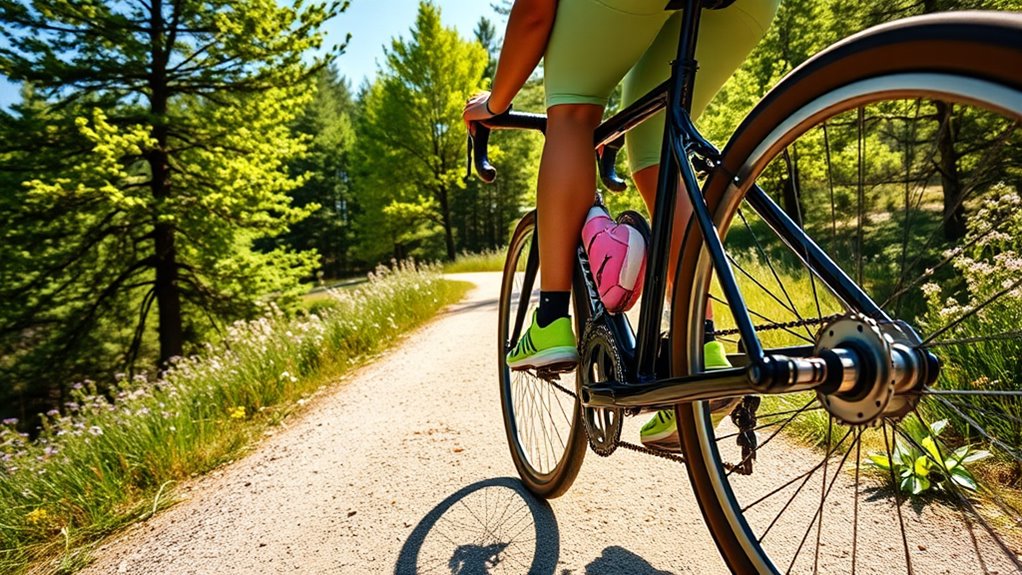
Regularly maintaining your bike is key to ensuring smooth and safe rides. Start by checking your tire pressure before each ride; properly inflated tires reduce flats and improve efficiency. Keep your tires at the recommended pressure for peak performance. Additionally, regularly lubricate your chain to prevent rust and ensure smooth gear shifting. Apply chain lube after cleaning the chain, and wipe off excess to avoid dirt buildup. Inspect brakes and cables for wear, replacing parts as needed. Tighten loose bolts and check wheel alignment for stability. By staying on top of these maintenance tasks, you’ll enjoy smoother rides, reduce the risk of breakdowns, and extend your bike’s lifespan. Consistent upkeep makes every ride safer and more enjoyable.
Frequently Asked Questions
How Do I Choose the Best Bike Size for My Height?
To choose the best bike size for your height, start by selecting a frame size that matches your measurement—usually, taller riders need larger frames. Guarantee your saddle height is adjustable so you can sit comfortably with a slight bend in your knee at the bottom of the pedal stroke. Test ride different bikes to find one that feels natural and supports good posture, making your ride enjoyable and safe.
What Should I Do if I Experience Discomfort During Rides?
Stop suffering from soreness by swiftly shortening saddle sessions and seeking solutions. To prevent saddle soreness, regularly adjust your saddle height and position for comfort. If discomfort persists, consider lowering or raising your handlebar height, which can dramatically diminish strain and discomfort. Keep consistent contact with your bike, listen to your body’s signals, and fine-tune your fit. Proper posture and proactive adjustments will make your rides more pleasurable, preventing pain and promoting progress.
How Can I Improve My Cycling Pace and Efficiency?
To improve your cycling pace and efficiency, focus on cadence training to maintain a steady, ideal pedal rhythm. Use gear optimization by shifting smoothly to find the right resistance, reducing fatigue and increasing speed. Incorporate interval training to challenge yourself and build stamina. Keep your posture aligned and stay relaxed, allowing for more efficient energy transfer. Regular practice with these techniques will help you ride faster and more comfortably over time.
What Are Common Signs My Bike Needs Maintenance?
Noticing your bike feels sluggish or makes strange noises? These are common signs your bike needs maintenance. Check for bike chain issues like slipping or squeaking, which signal lubrication or adjustment needs. Also, examine tire wear; if your tires are bald or uneven, it’s time for a replacement. Do you see cracks or embedded debris? Addressing these issues early keeps your ride smooth and safe. When in doubt, get a professional tune-up!
How Do I Handle Different Weather Conditions While Cycling?
When handling different weather conditions, you should always wear rain gear to stay dry during rain and apply sun protection like sunscreen and sunglasses on sunny days. Adjust your riding style—slow down in wet conditions to avoid slips and stay alert for slippery surfaces. Keep your bike well-maintained, especially tires and brakes, to guarantee safety. Being prepared helps you enjoy cycling year-round, no matter the weather.
Conclusion
Getting started with cycling is like planting a seed—you’ll grow stronger and more confident with each ride. Stick to the basics, stay safe, and enjoy the journey on two wheels. Remember, every ride builds your endurance just like a muscle, so be patient and persistent. Soon, cycling will feel as natural as breathing, opening up new adventures and health benefits. Keep pedaling, and you’ll see how far you’ll go!