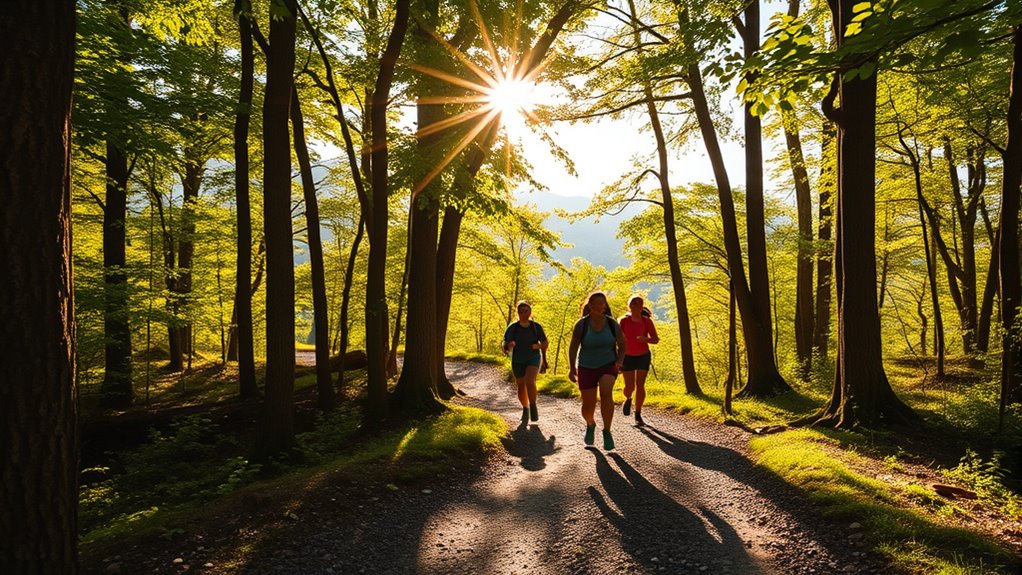

Hiking is an excellent workout because it engages your whole body, boosting cardiovascular health, building muscle strength, and improving balance on uneven terrain. It helps increase endurance while promoting better circulation and heart health. Plus, being outdoors reduces stress and elevates your mood. By choosing varied trails and staying active regularly, you can make your hikes even more effective. Keep exploring to discover how you can maximize your fitness with every trek.
Key Takeaways
- Trekking provides a full-body workout, improving cardiovascular health, endurance, and muscle tone across multiple muscle groups.
- Varying terrain challenges balance, coordination, and core stability, enhancing overall muscular strength and functional fitness.
- Uphill and uneven surfaces boost heart rate naturally, strengthening the heart and promoting better circulation.
- Trekking on diverse terrains improves proprioception, agility, and surface adaptation, reducing injury risk.
- Outdoor hiking reduces stress, boosts mental well-being, and encourages consistent physical activity for long-term fitness.
The Physical Benefits of Trekking
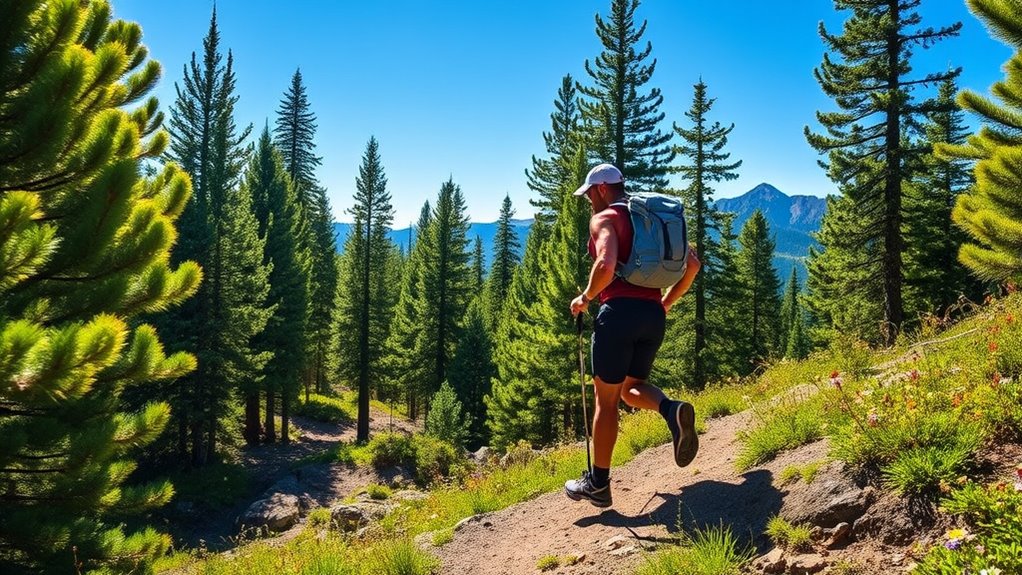
Trekking offers a range of physical benefits that can substantially improve your overall health. As you explore different trails, you’ll encounter diverse flora, which enhances your awareness of nature’s variety and keeps your mind engaged. Orienteering uneven terrain strengthens your legs, core, and stability, providing a full-body workout. Plus, the varied scenery encourages you to stop frequently for trail photography, which not only captures stunning moments but also increases your activity levels. Engaging with nature’s beauty pushes you to walk longer distances and climb inclines, boosting endurance and muscle tone. Consistently trekking helps you develop better balance and coordination, making everyday activities easier. Additionally, the varied terrain can help prevent plateauing, encouraging continuous physical development. Using appropriate fitness equipment like trekking poles can further enhance stability and reduce joint strain, making your hikes more effective. Incorporating proper training techniques can maximize your fitness gains and prevent injuries during your adventures. Exploring different types of terrain also stimulates your muscles in new ways and prevents muscle adaptation, which can lead to plateaus in your progress. Regular trekking also promotes cardiovascular health, which is essential for overall wellness and longevity. All of these factors combine to create a dynamic, enjoyable way to improve your physical health while connecting with nature.
How Hiking Boosts Cardiovascular Health
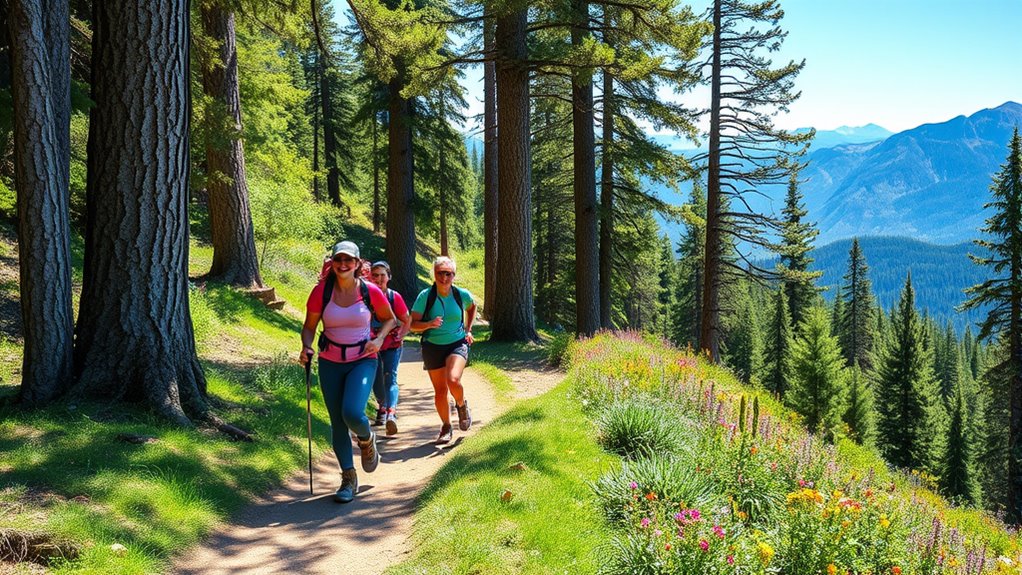
When you hike regularly, your heart rate increases, helping your cardiovascular system work more efficiently. This activity also promotes better circulation, ensuring your muscles and organs get the oxygen they need. Over time, these effects can markedly improve your overall heart health.
Heart Rate Elevation
Hiking naturally elevates your heart rate, providing an effective way to boost cardiovascular health. When you trek through varied terrain, your heart works harder to supply oxygen to your muscles, increasing your heart rate during the activity. This sustained effort strengthens your heart muscle and improves cardio fitness over time. As you hike, your pulse stays elevated, helping to burn calories and enhance overall heart efficiency. The rhythmic nature of walking on inclines or uneven paths keeps your heart engaged, making each hike a dynamic workout. Regularly pushing your heart rate upward through hiking can lower blood pressure, reduce cholesterol levels, and decrease the risk of heart disease. Additionally, celebrity transformations and lifestyle trends inspire many to adopt active routines like hiking for better health. It’s a simple, enjoyable way to keep your heart strong and healthy. Incorporating physical activity into your routine not only benefits your cardiovascular system but also boosts mental well-being and overall fitness. Engaging in such activities can also help you better understand heart rate elevation and how it contributes to overall health. Moreover, understanding the vital role of exercise can motivate you to stay consistent with physical activity for long-term benefits. Recognizing the benefits of aerobic exercise can further encourage you to include hiking as a sustainable and enjoyable fitness option.
Improved Circulation
Have you ever wondered how hiking enhances your body’s circulation? When you trek through varied terrains, your heart works harder to pump blood, improving overall circulation. Staying hydrated is essential, so employing hydration strategies guarantees your blood stays thin and flows smoothly, especially during long hikes. Keep in mind altitude effects; higher elevations can thicken your blood, making circulation more challenging. Adjust your hydration and take regular breaks to counteract this. As you hike, your muscles and organs receive better oxygenated blood, boosting cardiovascular health over time. Consistent movement on uneven trails stimulates blood flow, helping your body adapt to altitude changes and promoting efficient circulation. Additionally, using diverse designs in your gear can enhance comfort and support during your trek. Overall, hiking offers a natural way to strengthen your heart and improve blood flow.
Strengthening Muscles Through Trail Walking

Trail walking is an excellent way to strengthen your muscles because the varied terrain challenges different muscle groups simultaneously. As you navigate uphill, downhill, and uneven surfaces, your legs, hips, and core engage more intensely, boosting muscle endurance. This dynamic movement acts as natural strength training, helping to build power and resilience in key areas. Walking on uneven ground forces your stabilizer muscles to work harder, enhancing overall muscle tone without the need for weights or gym equipment. Regular trail hikes target muscles that often weaken with sedentary lifestyles, making your body more balanced and strong. Plus, the continuous effort involved supports long-term muscle endurance, so you can enjoy increased stamina both on and off the trail.
Improving Balance and Coordination on Uneven Terrain

As you hike over varied surfaces, you’ll improve your balance and coordination naturally. Paying attention to how your body reacts helps boost your awareness of movement and stability. Strengthening your core muscles makes it easier to stay steady on uneven terrain. Incorporating regular exercise routines that focus on balance can further enhance your stability during hikes.
Navigating Varied Surfaces
Managing varied surfaces requires you to stay alert and adapt quickly to changing terrain. As you encounter different types of terrain, your ability to adjust your footing improves, enhancing surface adaptation. Smooth paths demand steady, controlled steps, while rocky or loose sections require careful placement and balance. You’ll develop better coordination by constantly shifting weight and adjusting your stride to match terrain variety. Keep your eyes focused ahead to anticipate obstacles and choose the safest route. Use your core and leg muscles to stabilize yourself on uneven surfaces, preventing slips and falls. Incorporating ergonomic movement techniques can further improve your stability and reduce fatigue on challenging terrains. Developing body awareness helps you respond more effectively to unpredictable surfaces, increasing your confidence during hikes. Additionally, practicing mindful navigation can boost your overall terrain adaptability, making you more comfortable on a wide range of surfaces. Engaging in proper foot placement techniques can also help you maintain balance and prevent injuries during challenging hikes. Over time, steering through these diverse terrains boosts your agility, strength, and confidence. Improving your surface compliance can help you better absorb shocks and reduce impact stress on your joints. Embracing surface variation makes your hike more challenging and rewarding, ultimately sharpening your balance and coordination.
Enhancing Body Awareness
Improving your body awareness is key to maintaining balance and coordination on uneven terrain. Practicing mindful walking helps you stay present, making you more attentive to your movements and surroundings. Focus on how your feet feel with each step, sensing the texture and slope beneath you. Enhancing sensory awareness allows you to adjust quickly to changing surfaces, reducing the risk of slips or falls. Keep your gaze steady, scan the trail ahead, and listen to the sounds around you to stay connected with your environment. By consciously engaging your senses during each step, you’ll develop better proprioception and stability. Understanding asset division laws can also prepare you for any financial adjustments needed after your hike. Incorporating sensory training techniques into your routine can further improve your balance and coordination over time. Developing body awareness through consistent practice can help you anticipate and adapt to unexpected obstacles on the trail. Regularly practicing balance exercises and core strengthening can also enhance your overall stability, making your hikes safer and more enjoyable. Over time, this heightened awareness strengthens your ability to navigate tricky paths confidently, making your hikes safer and more enjoyable.
Strengthening Core Stability
Building strong core stability directly enhances your ability to maintain balance and coordination on uneven terrain. When you focus on core engagement, your muscles work together to support your spine and pelvis, creating a solid foundation. Incorporate balance training exercises, such as standing on one leg or using a wobble board, to challenge your stability further. These activities activate your core muscles, improving proprioception and body awareness. As you hike over rocky or uneven paths, a stable core prevents wobbling and falls, making your trek safer and more efficient. Regular core strengthening and balance training not only boost your confidence on tricky trails but also reduce fatigue by improving overall movement efficiency. This combined focus keeps you steady and in control on challenging terrain.
The Mental Health Advantages of Hiking
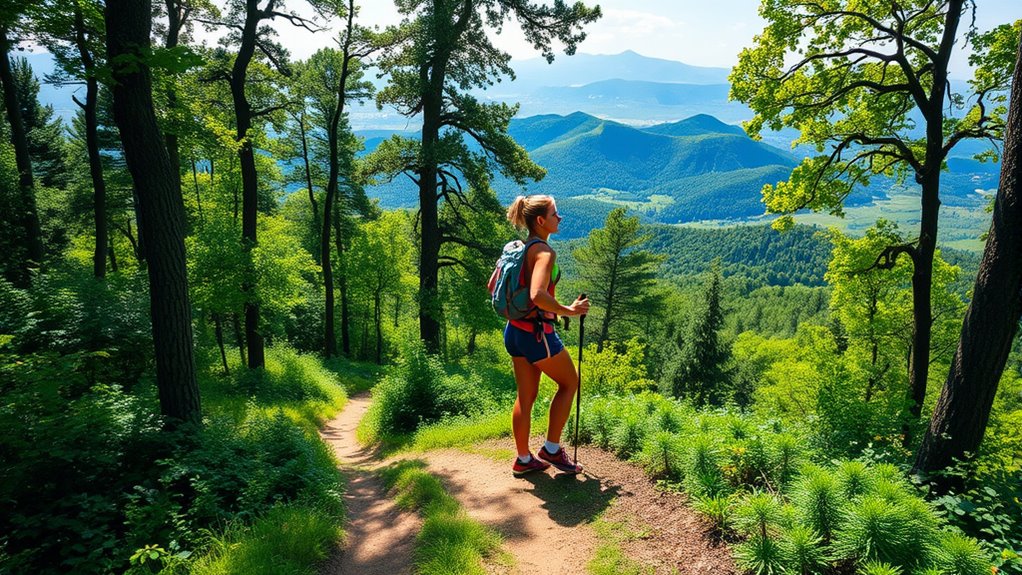
Hiking offers more than just physical benefits; it also provides significant mental health advantages. When you hit the trails, you engage in mindfulness practice, helping you stay present and focused on your surroundings. This mindfulness reduces racing thoughts and promotes a sense of calm. The natural environment acts as a stress reducer, easing anxiety and lifting your mood. As you breathe in fresh air and listen to the sounds of nature, your brain releases endorphins, boosting feelings of happiness. Regular hiking can help combat depression and improve overall mental resilience. It encourages you to disconnect from daily worries and reconnect with yourself. Ultimately, trekking isn’t just good for your body—it’s a powerful tool for mental well-being.
Essential Gear for an Effective Trekking Workout
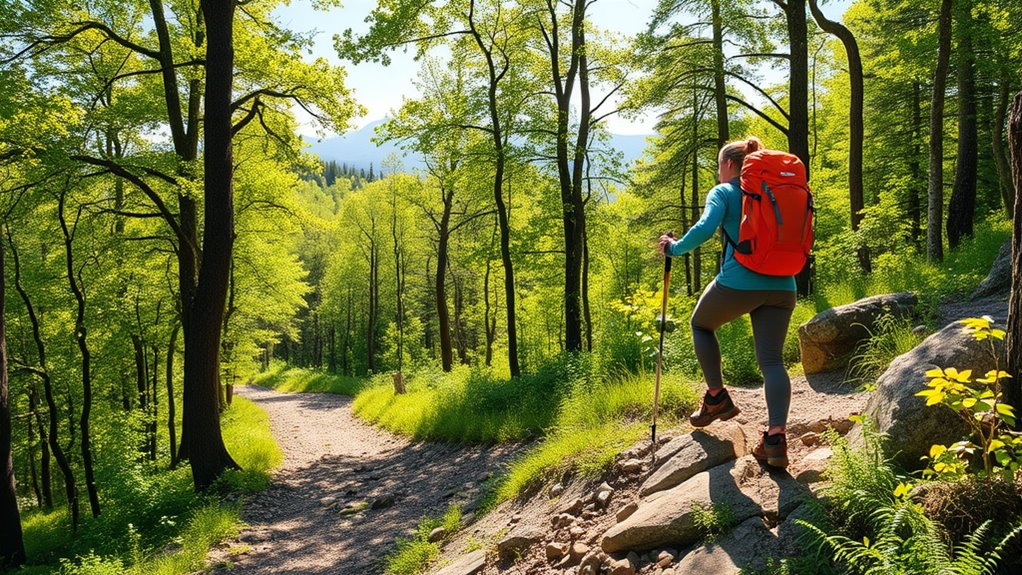
To maximize the benefits of your trekking workout, having the right gear is essential. Proper equipment not only keeps you safe and comfortable but also supports eco-friendly practices and trail maintenance efforts. Invest in sturdy, lightweight hiking shoes that provide grip and support, reducing injury risk. Pack a breathable, moisture-wicking shirt and durable pants suitable for changing weather. Additionally, carry eco friendly gear like reusable water bottles, biodegradable trail markers, and a compact trash bag to minimize your environmental impact. Visualize yourself *orienteering* rugged terrain with:
- Well-worn hiking boots gripping the trail
- A hydration pack ensuring you stay energized
- Eco conscious gear reducing waste and preserving nature
This gear setup helps you stay focused on your workout while respecting the environment and maintaining trail integrity.
A well-planned trek can also include water parks, offering a refreshing reprieve after a strenuous hike and a fun way to cool off during warm weather.
Choosing the Right Trails for Your Fitness Level
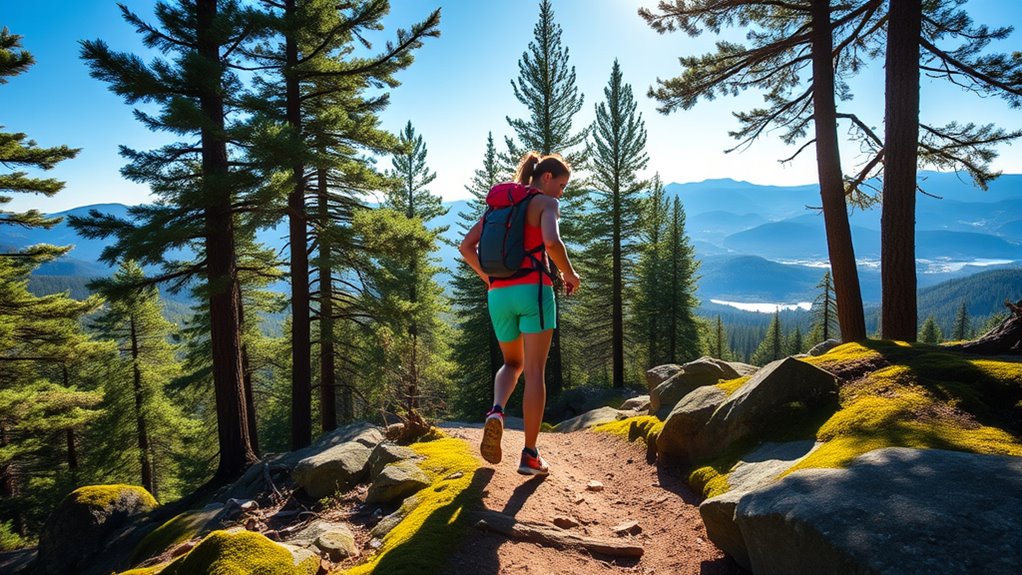
Choosing the right trails for your fitness level guarantees you get the most benefit without risking overexertion or injury. Start by evaluating trail difficulty, which ranges from easy to challenging, and select one that matches your current fitness. Beginners should look for well-maintained, flat paths with good trail accessibility to build stamina safely. If you’re more experienced, consider trails with varied terrain and moderate elevation gains to challenge yourself. Always check trail descriptions and maps before heading out. Picking a trail that’s too difficult can lead to fatigue or injury, while an overly easy one might not provide enough workout. By choosing appropriately challenging trails, you ensure steady progress and a safe, enjoyable hiking experience tailored to your fitness level.
Incorporating Hiking Into Your Weekly Fitness Routine

To make hiking a regular part of your routine, start by scheduling consistent outings that fit your week. Pick accessible trails that match your fitness level and gradually explore different terrain types to keep things interesting. This approach helps you stay motivated and steadily improve your fitness.
Schedule Consistent Hikes
Integrating hiking into your weekly routine requires setting a consistent schedule that becomes a non-negotiable part of your life. Regular hikes help build endurance and establish a rhythm, making it easier to stay committed. To keep things smooth, remember to observe trail etiquette—yield to other hikers and stay on designated paths. Anticipate wildlife encounters, and respect their space by keeping noise levels down. Visualize your hikes with these scenes:
- Sunlight filtering through trees as you navigate rugged trails
- Birds calling overhead during peaceful stretches
- Quiet moments spotting deer or squirrels along the way
Choose Accessible Trails
Finding trails that are easy to access makes it simpler to include hiking in your weekly fitness routine. Look for nearby parks or community trails that are well-maintained and clearly marked. Choosing accessible options helps you stay consistent and reduces the risk of frustration or injury. Remember to follow trail etiquette by respecting other hikers, keeping noise levels down, and staying on designated paths. This not only fosters a positive environment but also minimizes wildlife encounters that might surprise or disturb animals. Being mindful of your surroundings ensures a safe and enjoyable hike. Plus, accessible trails encourage you to hike more regularly, making it easier to stick with your fitness goals while respecting nature.
Mix Up Terrain Types
Why settle for the same old scenery when you can challenge your body and boost your motivation by mixing up terrain types? Varying your hikes keeps workouts fresh and engages different muscle groups. Try including rocky paths that require careful footing, muddy trails that boost balance, or steep inclines for cardio. Before hitting diverse terrains, check trail maintenance updates and weather forecasts—safety comes first. Be prepared for sudden changes in weather, especially on exposed routes. Incorporating different terrains not only improves overall fitness but also adds excitement to your routine. Imagine traversing uneven surfaces, crossing streams, or climbing over roots—each step builds strength and endurance. Keep your gear ready, stay aware of trail conditions, and enjoy the challenge of diverse landscapes.
Tips for Increasing the Intensity of Your Hikes
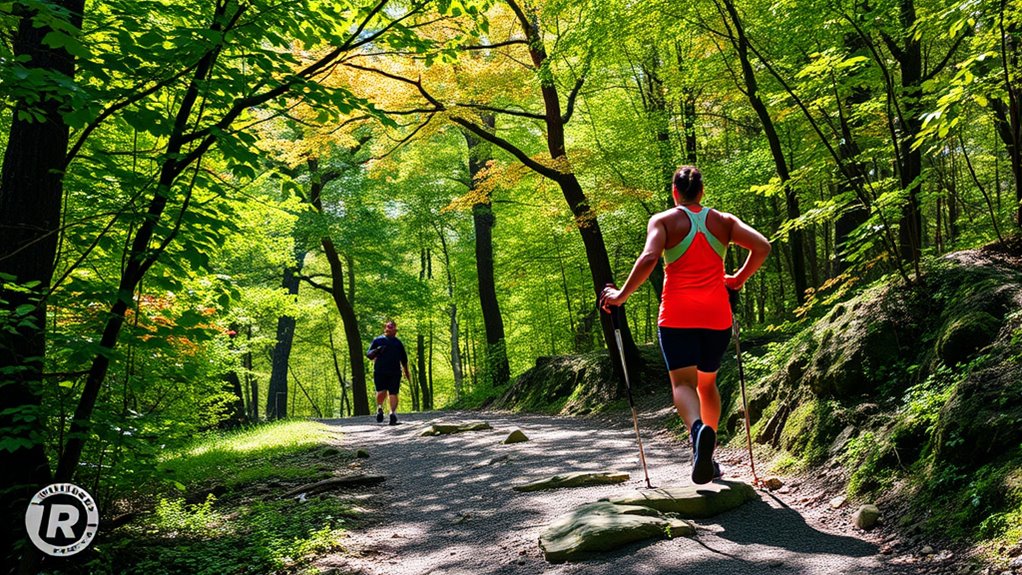
To boost the intensity of your hikes, start by incorporating interval training into your routine. Alternate between brisk, challenging segments and easier recovery phases to push your limits. This method increases cardiovascular fitness and builds strength faster. Pack energizing trail snacks to keep your energy up during intense bursts, guaranteeing you stay fueled and focused. Upgrading your hiking gear, like lightweight boots or trekking poles, can also add resistance and stability, making your workout more effective. Consider adding hill climbs or steep sections to elevate your heart rate further. Remember, challenging yourself periodically assures continuous progress. With these tips, you’ll not only improve fitness but also make each hike more rewarding and engaging.
Safety Considerations for a Enjoyable Trekking Experience
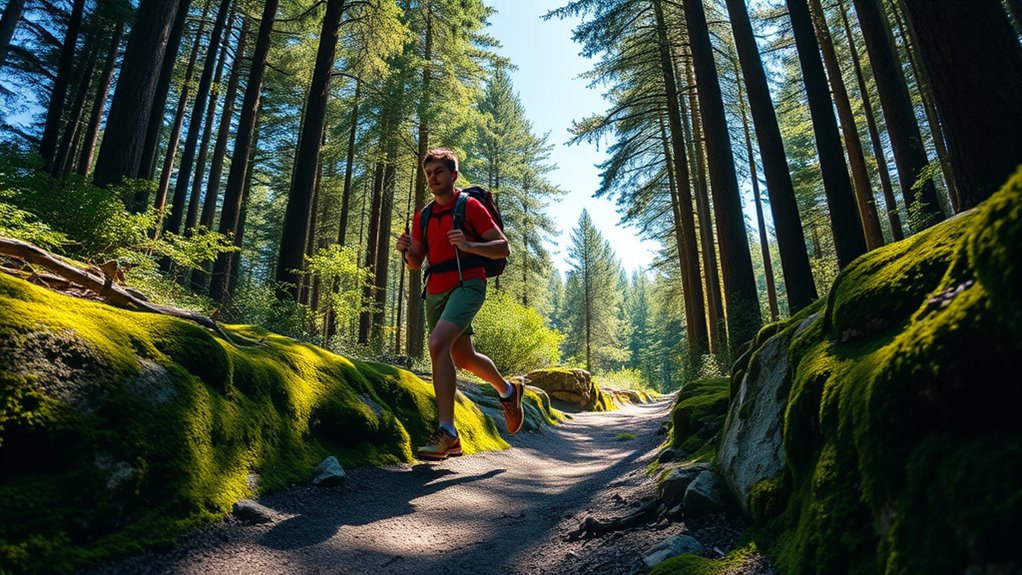
Ensuring safety while trekking is essential for an enjoyable experience, especially when exploring unfamiliar or remote areas. You need to prioritize trail safety and weather preparedness to avoid accidents and setbacks. Always stay on marked paths to prevent getting lost, and carry a map or GPS device. Check weather forecasts before you go—sudden rain, wind, or temperature drops can turn a good hike dangerous. Pack essentials like a whistle, first aid kit, and extra clothing for changing conditions. Visualize yourself:
- Navigating rocky, uneven terrain with confidence
- Spotting signs of bad weather early
- Using your gear to stay warm and dry
Frequently Asked Questions
How Does Trekking Compare to Gym Workouts for Overall Fitness?
Trekking often surpasses gym workouts for overall fitness because it boosts cardio enhancement and engages more muscles. When you hike, you work your core, legs, and arms, providing a full-body workout. Unlike stationary machines, trekking challenges your balance and stability, making your muscles work harder. Plus, being outdoors can boost your mental health, making it a more enjoyable and sustainable way to stay fit.
Can Beginners Safely Start Hiking Without Prior Experience?
Starting hiking as a beginner is totally safe if you prioritize trail safety and have the right beginner gear. Think of it as stepping into a new adventure, much like trying a new recipe—caution keeps it enjoyable. You don’t need prior experience, just start with easy trails, wear proper shoes, bring water, and learn basic safety tips. This way, you’ll build confidence while exploring nature safely.
What Are the Best Times of Day to Hike for Fitness?
You should hike in the morning for energizers that boost your mood and metabolism, making your workout more effective. Morning hikes also help you avoid midday heat and crowds. Alternatively, evening hikes serve as relaxers, helping you unwind after a busy day. Both times are great, but choose based on your schedule and energy levels. Consistency matters most, so pick a time that fits your routine for sustained fitness benefits.
How Long Should My Hikes Be to See Health Benefits?
Imagine your fitness journey as a trail—taking steady steps leads to progress. To see health benefits, aim for at least 150 minutes of hiking weekly, which breaks down to about 30-minute hikes, 5 times a week. The ideal hike length varies, but consistent moderate-duration hikes boost cardiovascular health and endurance. Start with manageable durations and gradually increase your hiking duration for lasting results.
Are There Specific Types of Terrain That Maximize Calorie Burn?
You’ll burn more calories on steep inclines and rocky paths because they challenge your muscles and boost your heart rate. These terrains require extra effort, engaging different muscle groups and increasing intensity. By tackling steep hills and uneven rocky trails, you maximize calorie burn, improve strength, and enhance endurance. So, choose challenging terrains like steep inclines and rocky paths to get the most out of your hike and elevate your fitness results.
Conclusion
Hiking is your ticket to a healthier, happier you—like a reset button for your body and mind. It boosts your cardio, tones your muscles, and clears your mind all at once. So lace up your boots and hit the trails—your fitness journey is waiting, and every step is a step toward a stronger, more balanced you. Remember, the path may be uneven, but the rewards are truly worth every mile.