
TL;DR

Get workout gear delivered free — and shop member deals
- Fast, free delivery on millions of items
- Access to Prime Big Deal Days deals on October 6–7
- Prime Video, Amazon Music and more included
A personal trainer writing for Fit&Well has published a 15-minute, four-exercise dumbbell circuit built around compound movements targeting the upper body, lower body and core. The routine pairs strength moves into combined exercises and is designed for people with limited time, with explicit form and safety guidance.
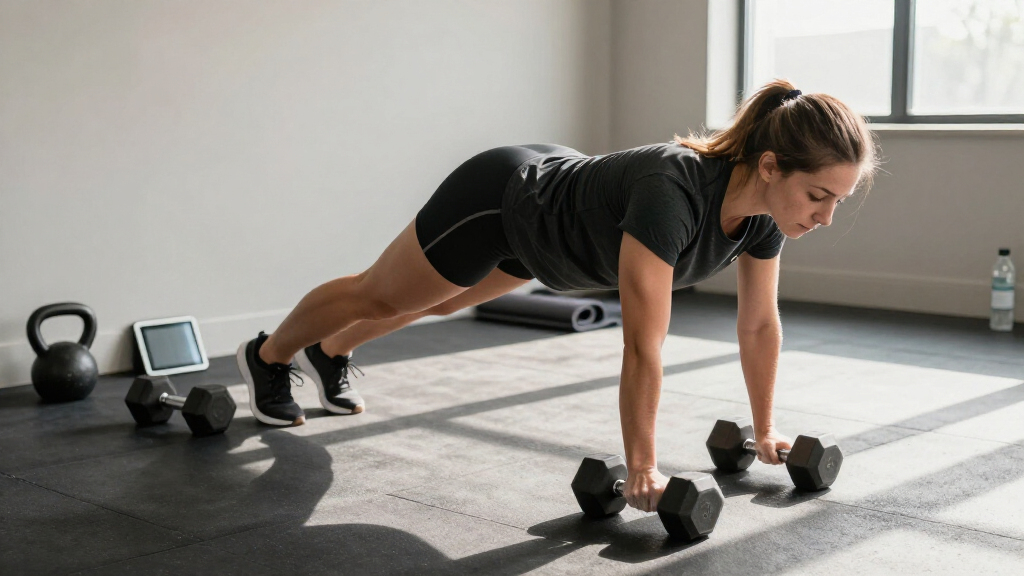
A personal trainer writing for fitness publication Fit&Well has published a 15-minute dumbbell routine for building full-body strength, aimed at people whose work and family commitments make longer gym sessions impractical. The workout consists of four compound exercises performed circuit-style, targeting the upper body, lower body and core with a single pair of dumbbells.
According to the trainer, most of their personal training clients struggle to find time to exercise, which motivated the shortened format. The routine is a circuit workout: each exercise is performed for 12 repetitions, moving from one movement to the next, then the full sequence is repeated for a total of three rounds. The trainer notes that beginners may need more than 15 minutes to complete it and advises moving at a comfortable pace with rest as needed, progressively shortening rest periods as strength and endurance improve.
The four exercises each combine two movements into one: a dumbbell squat to press, a dumbbell deadlift to row, a dumbbell lateral lunge to curl, and a dumbbell glute bridge to chest press. Each comes with form cues from the trainer — for example, avoiding a rounded spine or forward-leaning torso in the squat to press, keeping the spine neutral in the deadlift to row, and preventing excessive lower-back arching in the glute bridge to chest press. The trainer advises choosing a lighter dumbbell if form breaks down.
The article includes clear safety guidance: the exercises should feel challenging but should never cause sharp pain, and anyone experiencing pain beyond muscle fatigue should stop immediately and consult a doctor. Beginners are told to practice the deadlift pattern without weights first to master proper form, and to avoid sacrificing form for speed.
Why Time-Limited Strength Training Appeals
Time constraints are among the most commonly cited barriers to regular exercise, and routines like this one lower that barrier by requiring only one pair of dumbbells and 15 minutes. By using compound movements — exercises that work multiple muscle groups at once — the routine compresses full-body training into a short window, which matters for readers who cannot commit to hour-long gym sessions.
The published guidance also reflects a broader trend in fitness media toward short, equipment-minimal home workouts rather than gym-based splits. For readers, the practical value lies in the detailed form cues attached to each exercise, since improper form, as the trainer warns, can lead to muscle imbalance, pain and injury. Anyone with pre-existing joint, back or cardiovascular conditions should seek professional guidance before starting a new resistance-training routine.
How the Circuit Is Structured
The routine appeared on Fit&Well, a fitness and wellbeing publication that regularly features trainer-designed workouts. The format pairs a lower-body or posterior-chain movement with an upper-body movement in each exercise — squat with overhead press, deadlift with row, lateral lunge with bicep curl, glute bridge with chest press — which is how four exercises cover the whole body.
The trainer specifies three sets of 12 repetitions per exercise. Progression is handled through tempo and rest management rather than added exercises: as fitness improves, readers are encouraged to move more quickly between movements and rest less, while maintaining correct technique. The article forms part of Fit&Well’s regular output of achievable weekly workout ideas and health tips delivered to subscribers.
What the Routine Does Not Promise
The article does not cite research data on the routine’s effectiveness, nor does it specify what dumbbell weights readers should use — it only advises selecting a lighter weight if form deteriorates. It does not state expected strength outcomes, a timeline for results, or how often per week the circuit should be performed.
The claims about the routine’s benefits are the trainer’s professional opinion rather than independently verified findings. Individual results will vary based on fitness level, consistency, load selection and overall activity, and readers with injuries or health conditions should consult a qualified professional before beginning.
How Readers Can Use the Routine
Readers can try the four-exercise circuit with a pair of dumbbells at home, starting unweighted where the trainer recommends it — the deadlift pattern in exercise two — and progressing rest and tempo as endurance builds. Fit&Well publishes regular trainer-designed workouts, so similar short-format routines are likely to follow as part of its weekly workout content.
Anyone experiencing pain beyond normal muscle fatigue while following the routine should stop and seek medical advice, per the trainer’s own guidance. Beginners uncertain about form may benefit from a session with a qualified trainer before attempting the combined movements at speed.
Key Questions
How long does the 15-minute routine actually take beginners?
According to the trainer, beginners may need longer than 15 minutes at first. The guidance is to move at a comfortable pace, rest as needed, and gradually shorten rest periods as strength and endurance improve.
What equipment is needed?
Only a pair of dumbbells and a mat for the floor-based glute bridge to chest press. No other equipment is required, making the routine suitable for home use.
How many sets and repetitions does each exercise involve?
The trainer specifies three sets of 12 repetitions per exercise, performed circuit-style: complete 12 reps of each movement in sequence, then repeat the full routine from the beginning.
Is the routine safe for people new to strength training?
The trainer says beginners can do it but should pace themselves, and specifically advises practicing the deadlift pattern without weights first. Anyone with pre-existing conditions or injuries should consult a doctor or qualified professional beforehand, and stop immediately if sharp pain occurs.
What should I do if my form breaks down during the exercises?
The trainer’s advice is to choose a lighter dumbbell if the spine rounds, the torso leans forward, or shoulders shrug during the movements, and to prioritise correct technique over speed.
Source: rss
Fall Picks
fall essentials
As an affiliate, we earn on qualifying purchases.