A good power cage for serious strength work is built with reinforced steel and thick frames to handle heavy loads safely. Look for safety features like adjustable pins, safety bars, and spotter arms to catch failed lifts. Stability is key, so make certain the cage remains secure during intense lifts, and it should have a solid construction to last over time. Focusing on space, flexibility, and durability ensures your training stays safe and effective—keep exploring to learn more.

Get workout gear delivered free with Prime
- Fast, free delivery on millions of items
- Prime Video, Amazon Music and more included
- Member-only deals all year
Key Takeaways
- Sturdy, reinforced construction with thick steel frames ensures safety during heavy lifts.
- Adjustable safety pins and spotter arms provide customizable protection for various exercises.
- Stable, well-assembled design prevents wobbling under maximum loads.
- Adequate space and height accommodate a range of movements and accessories.
- Compatibility with additional attachments like pull-up bars enhances workout versatility.
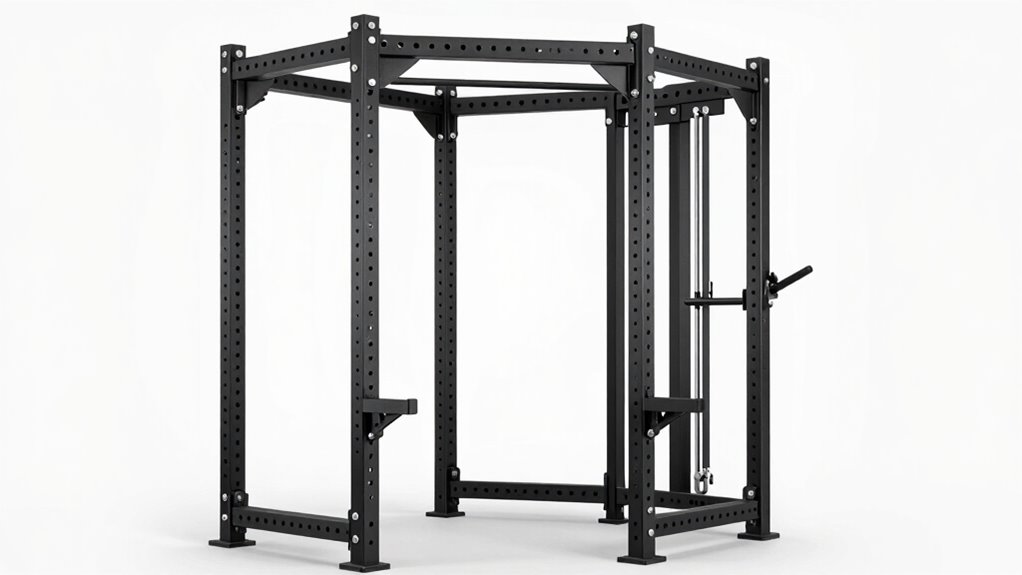
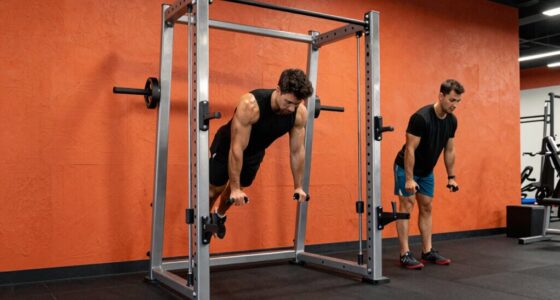
Are you looking to boost your strength training at home or in the gym? A good power cage is vital for serious lifting because it provides a safe and versatile environment. When choosing one, safety features should be your top priority. Look for a cage with sturdy, reinforced construction—thick steel frames and secure welds ensure stability under heavy loads. Safety bars or spotter arms are essential; they catch the barbell if you fail a lift, preventing injuries. Adjustable safety pins allow you to customize the height, so you can perform different lifts safely and comfortably. Some cages also include built-in safety locks or pins that are easy to operate, giving you peace of mind during intense sets. Safety features are not just about accident prevention—they help you push your limits with confidence, knowing you’re protected. Additionally, considering the stability of the power cage ensures it remains secure during heavy lifts, which is crucial for safety and effective training. The materials used in the construction can also influence the cage’s durability and longevity over time. A well-designed power cage often incorporates reinforced steel, which enhances its ability to withstand repeated heavy lifts without deforming. Proper assembly and maintenance are also vital to keep the cage in optimal condition and ensure safety during use. Regular checks on the structural integrity of the cage can prevent unforeseen accidents and prolong its lifespan. Space considerations are equally significant because a power cage needs to fit comfortably in your workout area without crowding your space. Before purchasing, measure your available room carefully. A good power cage should have enough clearance around it so you can move freely and perform exercises with proper form. If your space is limited, opt for a compact design or a model with a smaller footprint. However, don’t sacrifice stability for size; a sturdy, well-built cage might take up a bit more room but will last longer and support heavier weights safely. Consider whether the cage allows for other equipment or exercises you plan to do, like pull-ups or dips. Some cages come with additional attachments or modular features, making the most of limited space and increasing workout variety. Another factor related to space is the cage’s footprint versus its height. A taller cage offers more room for overhead lifts but might feel cramped if ceiling height is limited. Conversely, a shorter cage fits better in low-ceiling rooms but might restrict certain movements. Think about your main lifts and exercises, and choose a cage that accommodates those movements comfortably. Also, look into whether the cage is easily movable if you need to reconfigure your workout space later. Overall, a good power cage balances safety features and space considerations, making sure that you can train effectively without risking injury or overcrowding your gym area. By carefully evaluating these aspects, you’ll find a sturdy, safe, and space-efficient cage that supports your strength goals for years to come.
Products Worth Considering

Levoit Eleva 300X HEPA Air Purifier for Home and Bedroom

BowFlex Results Series SelectTech 552 Adjustable Dumbbell

Levoit Vital 100S-P Air Purifier
As an affiliate, we earn on qualifying purchases.
Frequently Asked Questions
Can I Customize a Power Cage to Fit My Specific Space?
Yes, you can customize a power cage to fit your space. Look for models with adjustable or custom dimensions to guarantee it fits perfectly. Many cages also offer aesthetic options, allowing you to choose finishes and styles that match your gym’s look. By selecting a customizable power cage, you’ll maximize your workout area, ensuring safety and comfort without sacrificing your gym’s overall design.
What Safety Features Should I Look for in a Power Cage?
You should look for safety features like sturdy safety bars and adjustable spotter arms to prevent injuries during heavy lifts. Make sure the power cage has clear safety protocols, like easy-to-access emergency stops. Material durability is essential—choose a cage made from high-quality steel to withstand intense training. These features protect you during serious strength work and give you peace of mind, so you can focus on your lifts confidently.
How Much Weight Can Different Power Cages Typically Support?
Most power cages support between 300 to 1,000 pounds of weight capacity, depending on their design. You should check the manufacturer’s specifications for exact figures. Material durability plays an essential role; high-quality steel ensures the cage can handle heavy loads without bending or breaking. For serious strength work, opt for a cage with a high weight capacity and robust construction, giving you safety and confidence during intense lifts.
Are There Portable or Foldable Power Cages Available?
Like a knight’s portable shield, some power cages feature portable design and foldable features, making them easier to transport and store. You’ll find models that collapse or fold flat, perfect for small spaces or taking to the gym or outdoor workouts. These cages maintain stability during use, ensuring safety while giving you the flexibility to set up your serious strength workouts anywhere. They’re ideal if you need convenience without sacrificing durability.
What Accessories Are Compatible With Most Power Cages?
Most power cages are compatible with common accessories like dip bars, safety spotter arms, and pull-up bars, thanks to standardized mounting points. Look for models with versatile accessory compatibility, including rack attachments like weight plate holders or storage pegs. Ensuring your cage supports these accessories helps you customize your workout, enhance safety, and target different muscle groups effectively, making your strength training more thorough and efficient.
Conclusion
Choosing the right power cage is essential for serious strength training. Imagine you’re pushing your limits, like Sarah did when she upgraded her home gym with a sturdy, versatile cage. Within months, she hit new personal bests consistently. A quality power cage not only boosts safety and confidence but also encourages consistent progress. Invest wisely, focus on durability and features, and you’ll see your strength soar—just like Sarah did.