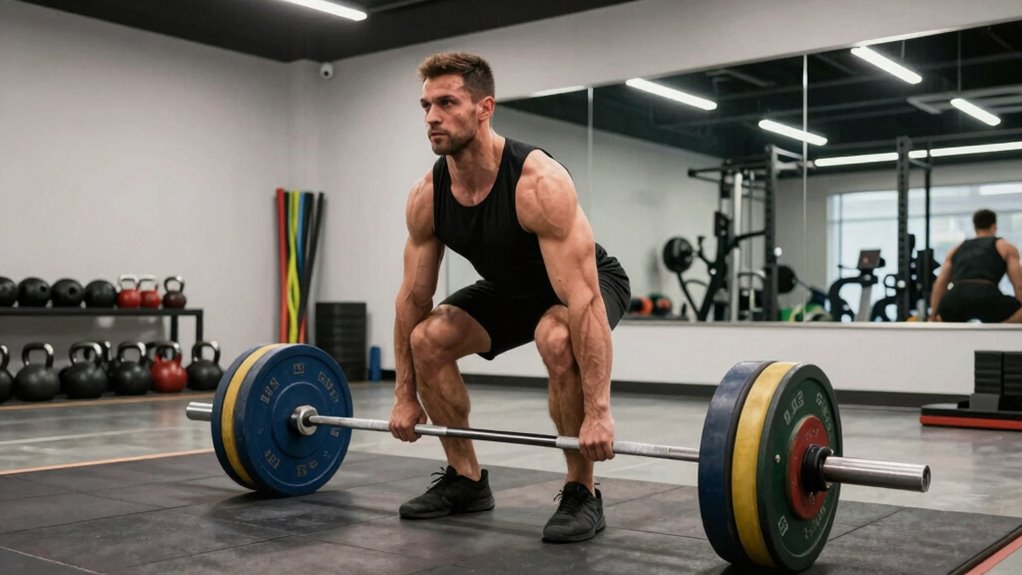

To train for both strength and size at the same time, focus on combining heavy lifts with high-volume work. Use compound movements like squats and deadlifts at 70-85% of your max, doing 4-8 reps for strength and 8-12 for hypertrophy. Alternate short and longer rest periods to target both goals. Mix heavy sets with lighter, high-rep exercises and progress gradually. Stick to a consistent routine, and you’ll discover even more ways to maximize your gains.
Key Takeaways
- Incorporate a mix of heavy lifts (70-85% 1RM) and higher-rep hypertrophy work (8-12 reps).
- Vary rest periods: short for hypertrophy, longer for strength to optimize both adaptations.
- Use progressive overload by gradually increasing weight, reps, or intensity over time.
- Combine compound movements with different angles and intensities to stimulate muscle growth and strength.
- Balance training volume and intensity with proper recovery, nutrition, and rest to prevent overtraining.
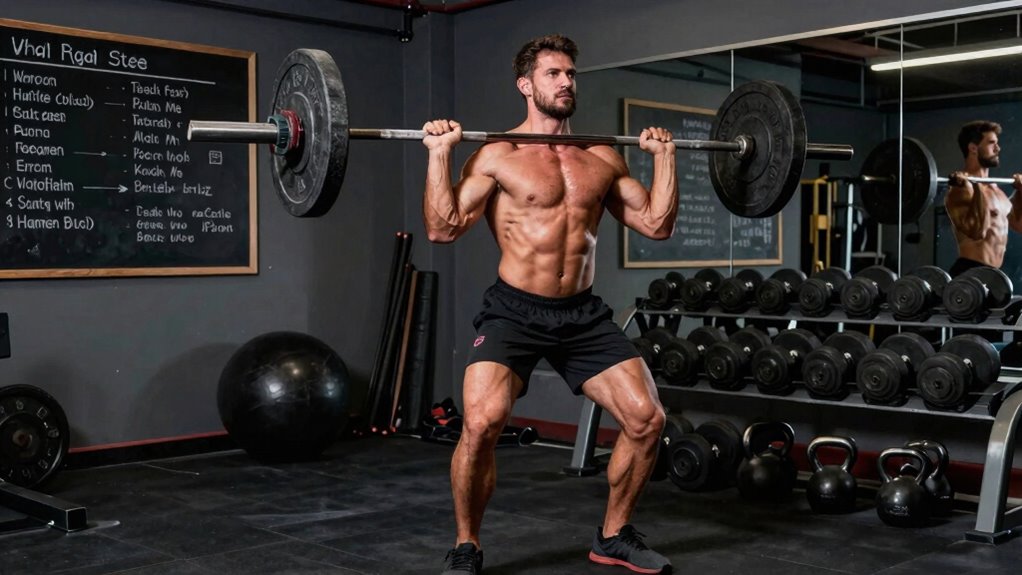
Building strength and size requires a focused and strategic approach to your training. To effectively develop muscle hypertrophy while also boosting your strength endurance, you need a plan that balances high-volume work with heavy lifting. Muscle hypertrophy, or muscle growth, occurs when you challenge your muscles with enough resistance and volume to cause microtears, prompting repair and growth. Meanwhile, strength endurance involves training your muscles to sustain effort over longer periods, which is essential for both athletic performance and overall fitness. Combining these goals means carefully selecting your exercises, reps, and rest periods to stimulate both muscle growth and endurance.
Start by structuring your workouts around compound movements like squats, deadlifts, and presses. These exercises engage multiple muscle groups and allow you to lift heavier weights, which is indispensable for building strength. Incorporate moderate to heavy loads—around 70-85% of your one-rep max—with a rep range of 4 to 8 for strength, emphasizing quality over quantity. To promote muscle hypertrophy, include higher-rep sets—say, 8 to 12 reps—using slightly lighter weights. This approach ensures you’re hitting the muscles from different angles and intensities, stimulating growth while also enhancing your ability to sustain effort over time.
Rest periods are a critical component. Shorter rest intervals of 30 to 60 seconds increase fatigue, challenging your strength endurance and encouraging muscle hypertrophy through metabolic stress. Conversely, longer rests of 2 to 3 minutes are better suited for heavier lifts aimed at maximizing strength gains. By alternating between these rest strategies within your workouts, you can target both hypertrophy and endurance simultaneously. For example, you might perform heavy sets of squats followed by lighter, higher-rep accessory work with minimal rest in between.
Progression is key. Gradually increase the weight, reps, or intensity over time to continually challenge your muscles. Incorporate techniques like supersets or circuit training to elevate your heart rate, further improving strength endurance. Consistency is essential—training multiple times per week with a mix of heavy and high-volume sessions ensures you hit your goals without overtraining. Remember, recovery is just as important as the workouts. Adequate sleep, proper nutrition, and rest days will support muscle repair and growth. Additionally, integrating outdoor training environments can enhance motivation and overall well-being.
adjustable dumbbell set for strength training
As an affiliate, we earn on qualifying purchases.
As an affiliate, we earn on qualifying purchases.
Frequently Asked Questions
Can I Train for Strength and Size With Only Bodyweight Exercises?
Yes, you can train for strength and size with only bodyweight exercises. Focus on progressive overload by gradually increasing difficulty—like adding reps, slowing down movements, or using advanced variations. Guarantee proper muscle activation by engaging targeted muscles fully during each move. Consistently challenge yourself, maintain good form, and vary your routines to stimulate growth and strength development without needing equipment.
How Often Should I Change My Workout Routine for Optimal Results?
Think of your workout routine as a garden that needs tending. You should change it every 6 to 8 weeks to keep progress blooming. Incorporate progression strategies to challenge your muscles, and add workout variety to prevent plateaus. By regularly tweaking your exercises, you’ll guarantee continuous growth and avoid stagnation, much like pruning a plant helps it grow stronger and healthier. Stay attentive, and your gains will flourish.
What Supplements Support Both Strength and Muscle Growth?
You should consider supplements like whey protein, creatine, and branched-chain amino acids (BCAAs) to support both strength and muscle growth. Take whey protein around your workout for ideal supplement timing, aiding muscle recovery. Creatine boosts strength and power, while BCAAs help reduce muscle soreness and promote recovery. Consistently prioritizing proper nutrition and rest enhances your progress, making these supplements effective tools for building muscle and strength simultaneously.
Is It Better to Train for Strength or Size First?
Think of this like choosing between a quill or a keyboard—you can excel at both, but it depends on your goals. It’s better to start with a strength focus if you want a solid foundation, then shift to size. Use periodization strategies to cycle between these goals, and prioritize recovery protocols to prevent injury and optimize gains. This approach balances progress and keeps your training dynamic and effective.
How Does Nutrition Differ When Training for Both Strength and Size?
When training for both strength and size, your nutrition needs a balanced macronutrient approach, emphasizing sufficient protein for muscle repair, carbs for energy, and healthy fats. You should also focus on meal timing; eating protein-rich meals around workouts boosts recovery and growth. Adjust your intake based on training intensity, ensuring you’re fueling your body properly to maximize gains in both strength and muscle size.
muscle hypertrophy resistance bands
As an affiliate, we earn on qualifying purchases.
As an affiliate, we earn on qualifying purchases.
Conclusion
Now that you know how to balance training for strength and size, remember, patience is your best mate—think of it like waiting for your favorite band to reissue that vintage vinyl. Stick with your plan, focus on progressive overload, and give your muscles time to adapt. Before you know it, you’ll be smashing those goals like a true modern-day gladiator, all while keeping your workouts as legendary as a tale from King Arthurs’ court.
barbell squat rack with safety bars
As an affiliate, we earn on qualifying purchases.
As an affiliate, we earn on qualifying purchases.
high-quality weightlifting gloves
As an affiliate, we earn on qualifying purchases.
As an affiliate, we earn on qualifying purchases.