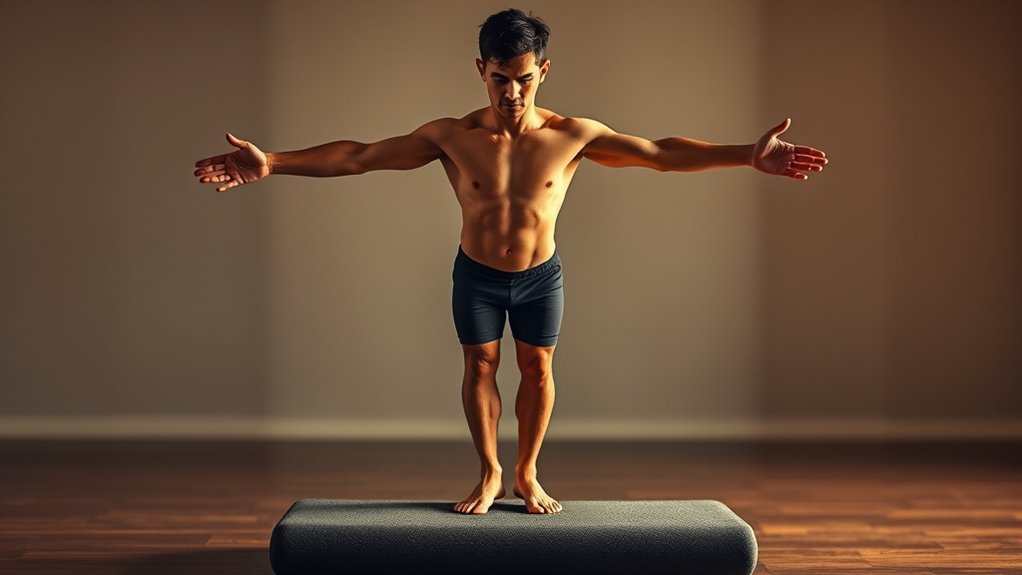

To improve your stability, focus on exercises that strengthen your core, like planks and bridges, while enhancing your proprioception with activities such as balancing on one foot or using a balance board. Incorporate dynamic movements like lunges on unstable surfaces to challenge your muscles further. Consistently engaging in these exercises helps boost coordination, control, and overall balance. Keep exploring to discover more effective techniques that can elevate your stability even more.
Key Takeaways
- Incorporate single-leg stands and reaching exercises to challenge static and dynamic balance.
- Use stability tools like balance boards and stability balls to enhance proprioception and core activation.
- Engage core muscles during exercises such as planks and bridges to improve overall stability.
- Progress difficulty by closing eyes or adding movement to traditional balance tasks.
- Consistently combine core strengthening and proprioceptive exercises for optimal balance improvement.
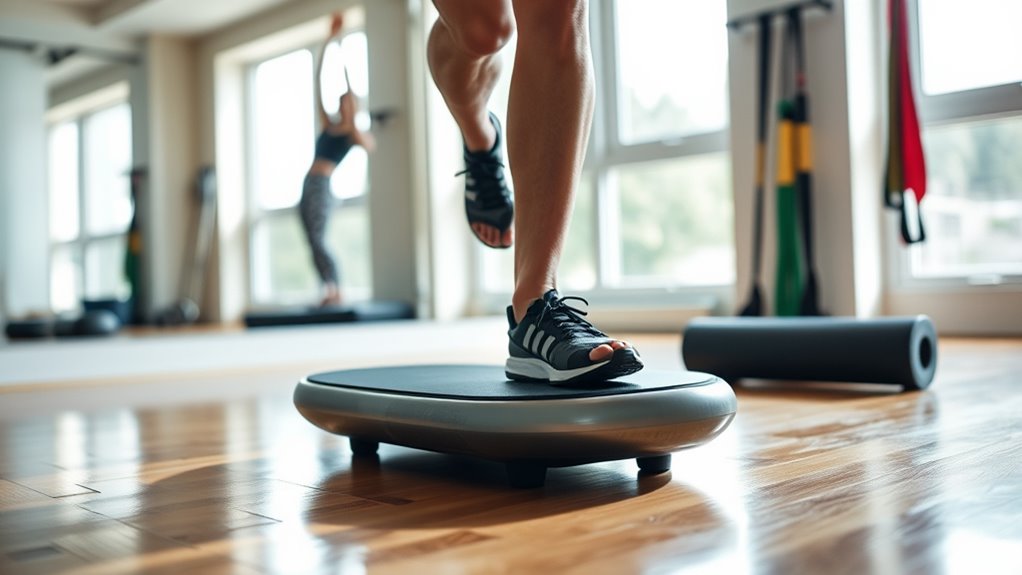
Have you ever wondered why balance training is essential for overall fitness? It’s because good balance isn’t just about standing still; it’s about maintaining stability during movement, preventing falls, and enhancing athletic performance. One of the key elements that contribute to your balance is core strength. When your core muscles—those in your abdomen, back, and pelvis—are strong, they act as a sturdy foundation that stabilizes your entire body. This stability allows you to react quickly and recover from imbalance more effectively. Incorporating core strengthening exercises into your routine can dramatically improve your ability to stay balanced in everyday activities and sports. Additionally, AP Tuning techniques for optimizing performance can be adapted to improve physical coordination and stability. Proprioception exercises are equally crucial for developing better balance. Proprioception is your body’s awareness of its position in space, and it involves sensory receptors located in your muscles, joints, and skin. When these receptors send signals to your brain about your body’s placement, your brain can make rapid adjustments to maintain stability. Practicing proprioception exercises enhances these signals, leading to improved coordination and quicker responses to uneven surfaces or unexpected shifts. Simple exercises like standing on one foot, using a balance board, or performing stability ball routines challenge your proprioception and help fine-tune your body’s ability to stay upright. To effectively improve your balance, start by focusing on exercises that engage your core and stimulate proprioception. For instance, try standing on one leg while engaging your core muscles, keeping your gaze fixed on a point in front of you. As you progress, add movement by reaching with one hand or closing your eyes, which forces your body to rely more on proprioception and core stability. A stability ball can also be a game-changer; sitting or performing gentle movements on it activates your core muscles and challenges your balance simultaneously. Incorporating dynamic movements, such as lunges or squats on an unstable surface, can further enhance these benefits.
Frequently Asked Questions
How Often Should I Perform Balance Exercises Weekly?
You should perform balance exercises at least 2-3 times weekly, as studies show consistent practice reduces fall risk by up to 30%. Follow the frequency guidelines to enhance stability effectively. However, consider injury considerations—if you’re recovering from an injury or new to exercise, start slowly and gradually increase. Regular sessions will help improve your core strength and coordination over time, making balance exercises a essential part of your fitness routine.
Can Balance Training Help Prevent Falls in Seniors?
Yes, balance training can markedly help prevent falls in seniors by improving stability and coordination. When you focus on fall prevention, these exercises strengthen your muscles and enhance your awareness of movement. Better balance reduces the risk of falls, promoting senior safety. Incorporating regular balance exercises into your routine can empower you to stay active and confident, decreasing the chances of accidents and maintaining your independence.
Are There Special Precautions for Beginners With Injuries?
Did you know that nearly 60% of injuries during balance exercises involve beginners? If you’re recovering from an injury, it’s essential to prioritize beginner safety. You should start slowly, avoid high-impact moves, and consult your healthcare provider before trying new exercises. Focus on gradual progress, listen to your body, and never push through pain. These precautions help prevent setbacks and support safe injury recovery during balance training.
What Equipment Is Best for Home Balance Workouts?
For home balance workouts, you should consider equipment options like a stability ball, balance board, or foam pads. These home workout tools help improve your stability and core strength effectively. You might also use a chair or wall for support when starting out. Choose equipment based on your space, budget, and comfort level, ensuring safety as you work on your balance.
How Long Does It Take to See Improvements in Stability?
Think of your stability like a tree growing roots—patience helps it flourish. Usually, you’ll notice progress within 3 to 4 weeks, but the progression timeline varies with individual differences. Consistent practice, just like watering and caring for a tree, strengthens your balance over time. Keep at it, and you’ll see improvements in stability, confidence, and control, transforming your foundation like a sturdy oak standing tall through storms.
Conclusion
By incorporating these balance exercises into your routine, you’ll build a solid foundation that keeps you steady on your feet. Remember, practice makes perfect, and with consistent effort, you’ll notice improvements in your stability and confidence. Don’t let your efforts go to waste—stay committed and keep pushing forward. After all, a little effort now can save you from a big tumble later. Stay balanced, and you’ll stay safe in every step you take.