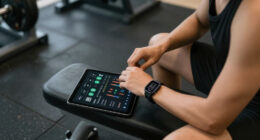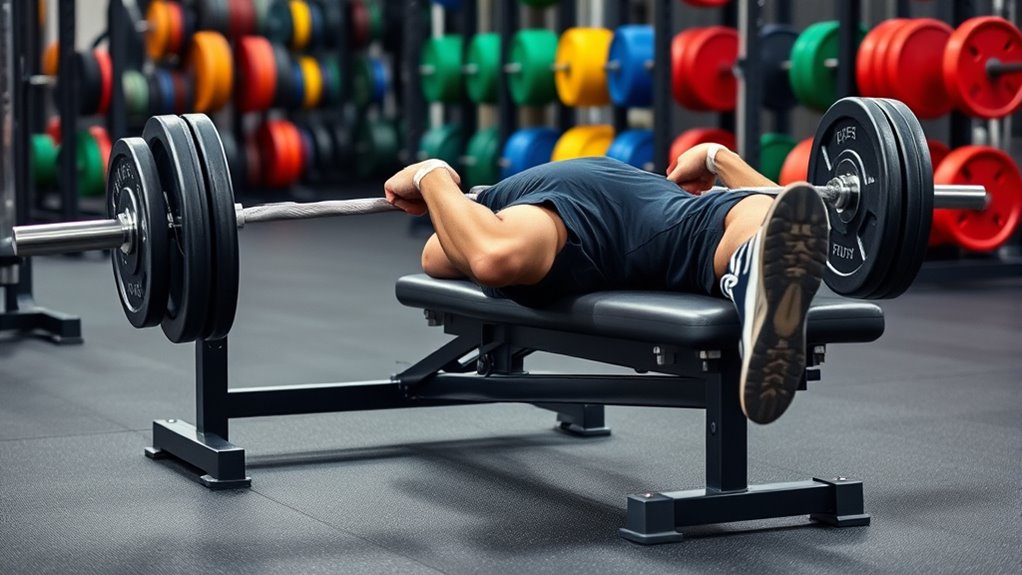

To bench press with proper form, lie back on a sturdy, adjustable bench with your eyes directly under the bar. Grip the bar evenly, keep your wrists straight, and tuck your elbows slightly. Plant your feet flat on the floor, tighten your core, and press the bar upward smoothly while fully engaging your chest, shoulders, and triceps. Focusing on precise hand placement and controlled movement helps prevent injury and maximizes muscle activation—continue exploring for more tips on perfecting your technique.
Key Takeaways
- Maintain proper hand placement and elbow angle to ensure effective muscle activation and prevent injury.
- Use a sturdy, adjustable bench and appropriate barbell weight for stability and safety.
- Position yourself so eyes align with the bar, keeping feet flat and core engaged before lifting.
- Keep wrists straight and grip evenly spaced to optimize muscle engagement and control.
- Focus on controlled movement, lowering the bar to the chest and pressing up fully for maximum gains.

Are you ready to master the basics of the bench press? Before you lift that barbell, it’s essential to understand how proper form and equipment choices impact your workout. One of the key factors in maximizing your gains and avoiding injury is muscle activation. When you perform the bench press correctly, you stimulate the right muscle groups—primarily your chest, shoulders, and triceps—ensuring each repetition effectively targets these areas. To achieve this, focus on engaging your muscles from the start, which involves proper hand placement, elbow angle, and maintaining a stable core. When you’re consciously activating your chest muscles during the lift, you’ll notice improved strength development and better overall results. Proper muscle activation also depends on your grip and positioning, which can be adjusted to optimize engagement and safety.
Equipment selection plays a crucial role in ensuring you can perform the bench press safely and efficiently. Starting with the right bench and barbell can make all the difference. Look for a sturdy, adjustable bench that provides stability and proper support for your back. The barbell should be of appropriate weight—neither too heavy nor too light—so you can focus on form without risking injury. Additionally, investing in quality weight plates and collars ensures everything stays securely in place during your lift. Don’t overlook the importance of grip options; using a grip that feels comfortable and allows for full muscle activation is vital. Some lifters prefer a wider grip to emphasize the chest, while others opt for a narrower grip to target the triceps more directly. Experimenting with your grip and equipment setup helps you find what works best for your body and goals.
Once you’ve selected the proper equipment, it’s time to set up your station correctly. Position the bench so that your eyes are directly under the barbell when lying flat. Ensure the bar rests evenly on the supports, and your hands are evenly spaced on the bar to promote balanced muscle activation. When you grip the bar, keep your wrists straight and elbows tucked slightly to optimize activation of your chest and triceps while minimizing strain. Before you lift, take a deep breath, brace your core, and keep your feet flat on the ground. This setup not only supports proper form but also engages the right muscles effectively, allowing you to lift safely and with maximum muscle engagement. Additionally, paying attention to equipment quality can significantly influence your safety and performance during the lift.

YOLEO Adjustable Weight Bench for Home Gym, ASTM-Certified 827LBS, 98% Pre-Assembled, Foldable Gym Bench with 84 Positions Incline Decline Flat, Wider Seat
- High Capacity and Stability: ASTM-certified 827LBS max load, 330LBS user weight
- Quick Setup: 98% pre-assembled, ready in 5 seconds
- Tool-Free Assembly: Insert pins to start lifting instantly
As an affiliate, we earn on qualifying purchases.
As an affiliate, we earn on qualifying purchases.
Frequently Asked Questions
How Often Should I Bench Press Weekly?
You should bench press about 2 to 3 times weekly, balancing your training frequency with adequate rest days. This schedule allows your muscles to recover and grow stronger without overtraining. Be sure to listen to your body, and if you experience fatigue or soreness, add more rest days. Consistent training combined with proper rest days optimizes your progress and minimizes injury risk.
What Are Common Mistakes to Avoid During Bench Press?
Watch out for technique errors that could lead to injury or hinder your progress. Don’t arch your back excessively or bounce the bar off your chest—these mistakes can be dangerous. Pay attention to your grip and bar path to avoid equipment mishaps. Keep control throughout the lift, and always use a spotter when lifting heavy. Staying mindful of these pitfalls helps you stay safe and maximize your gains.
How Can I Increase My Bench Press Max Safely?
To increase your bench press max safely, focus on gradual progress through progressive overload, adding small weight increments over time. Make sure you’re fueling your body with proper nutrition to support muscle growth and recovery. Prioritize proper form to prevent injuries and maximize efficiency. Incorporate rest days, listen to your body, and consider working with a trainer for personalized guidance. Consistency and patience are key to steady, safe gains.
Is It Necessary to Use a Spotter for All Bench Presses?
You don’t always need a spotter for bench presses, but spotter safety is vital, especially when lifting heavy. If you’re lifting near your max or using heavy weights, having a spotter ensures safety and helps prevent accidents. While equipment necessity varies, a spotter offers peace of mind and assistance if you struggle. Assess your strength level and the weight you’re lifting to determine when a spotter becomes essential.
What Are the Best Warm-Up Routines Before Bench Pressing?
Before bench pressing, you should start with dynamic stretching to loosen up your muscles and improve mobility. Incorporate foam rolling to target tight areas like your chest, shoulders, and back, helping prevent injuries. A good warm-up includes light cardio, such as rowing or jumping jacks, followed by specific warm-up sets with lighter weights. This routine prepares your muscles, enhances performance, and reduces the risk of strains during your workout.

CAP 100lb Economy Olympic Bumper Plate Weight Set
- Set Includes: Pairs of 10 lb, 15 lb, and 25 lb plates
- Center Hole Size: 2-inch for standard Olympic barbells
- Durable Steel Hub: Floating steel hub for reliability
As an affiliate, we earn on qualifying purchases.
As an affiliate, we earn on qualifying purchases.
Conclusion
Now that you’ve learned the basics, think of the bench press as your gateway to strength—each rep building a fortress of confidence and resilience. With proper form, you’re not just lifting weights; you’re shaping your inner warrior. Remember, every press is a step closer to revealing your true potential. Keep pushing forward, stay focused, and let the iron be your symbol of growth—because your best self is waiting on the other side of the bar.

HOZMOZ Ventilated Weight Lifting Gloves, Thick Padded Workout Gym Gloves with Full Palm Protection & Grip & Shock Absorption for Women & Men's Fitness Exercise Training
- Thick Padding for Shock Absorption: 6mm cushioning from palm to fingertips
- Enhanced Grip and Durability: Anti-slip silicone and abrasion-resistant microfiber
- Tear-Resistant Design: V-shaped cut for natural movement and durability
As an affiliate, we earn on qualifying purchases.
As an affiliate, we earn on qualifying purchases.

YIXUAN FITNESS Non Slip Bench Press Mat Bench Press Grip Pad Back (Red)
- Latex-Free and Odorless: Non-slip bench press mat
- Enhanced Grip Stability: 7x better grip with pad
- Compact and Portable: Fits easily in gym bag
As an affiliate, we earn on qualifying purchases.
As an affiliate, we earn on qualifying purchases.