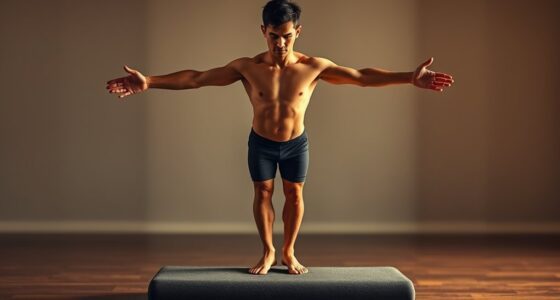
To master a handstand, start with wall exercises to build confidence and proper alignment. Focus on wrist stretches and flexibility to prevent injury, and engage your core for stability. Practice kicking up gently against the wall to develop balance and control. Consistency is key—aim for frequent, short sessions to boost strength and coordination. Keep small adjustments in mind, and if you stick with it, you’ll progress toward free-standing handstands and greater confidence.
Key Takeaways
- Start with wall-supported handstands to build confidence and proper alignment.
- Incorporate wrist stretches like wrist circles and palm stretches to improve flexibility.
- Practice core strengthening exercises such as planks and shoulder presses to enhance stability.
- Focus on small, controlled kick-ups and balance adjustments to develop free-standing handstands.
- Maintain consistent practice, gradually increasing hold time and reducing wall reliance for mastery.
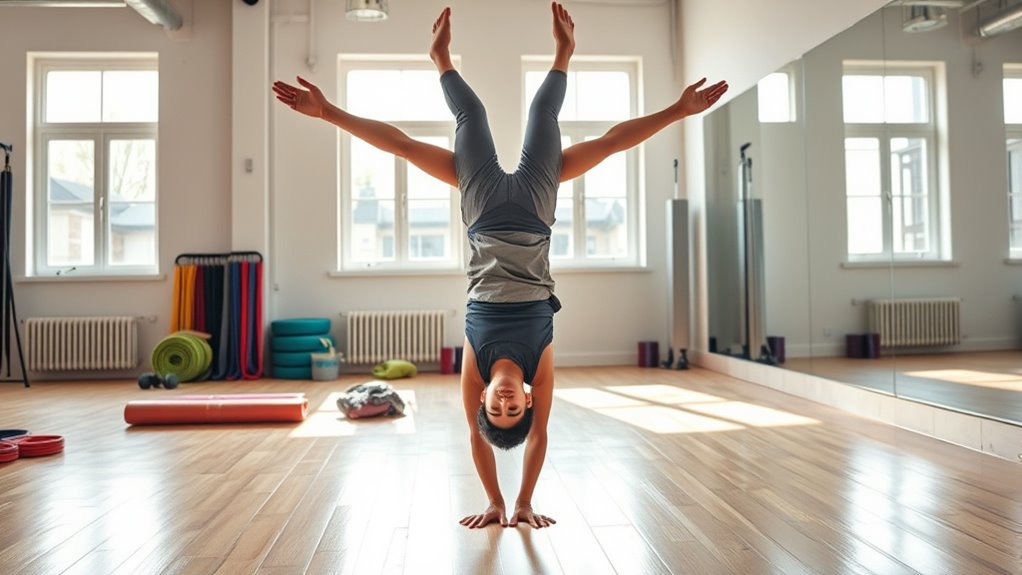
Learning to handstand may seem intimidating at first, but with consistent practice and proper technique, anyone can master it. The key is developing your handstand balance and improving wrist flexibility, two essential elements that support stability and control. When you’re starting out, focus on building strength and confidence in your handstand position rather than perfection. This way, you’ll set a solid foundation to progress safely and effectively.
To improve your handstand balance, begin by practicing against a wall. Place your hands shoulder-width apart on the ground, then kick up gently, aiming to press your feet against the wall. This helps you get comfortable being upside down while maintaining proper alignment. As you gain confidence, work on balancing without relying entirely on the wall. Focus on engaging your core to stay tight and keep your body aligned from your hands to your toes. Keep your gaze fixed slightly forward or between your hands to help with balance and orientation. Remember, balance in a handstand isn’t about being perfectly still; it’s about making small adjustments with your hands, shoulders, and core to stay upright.
Practice handstands against a wall, then shift to balancing freely by engaging your core and making small adjustments.
Wrist flexibility plays an important role in executing a safe and controlled handstand. Tight wrists can cause discomfort and limit your ability to hold the position for long periods. To enhance wrist flexibility, incorporate simple stretches into your warm-up routine. For example, perform wrist circles, extend your arms forward, and gently lean into your palms with fingers pointing back, stretching the wrists and forearms. Over time, this increased flexibility allows you to distribute your weight more evenly across your hands and reduces strain during handstands. This not only improves your comfort but also enhances your overall control and stability.
As you progress, practice holding the handstand for short periods, focusing on maintaining balance and keeping your wrists flexible. Incorporate shoulder-strengthening exercises like wall walks or plank holds to support your handstand efforts. Consistency is key; daily or every-other-day practice helps your muscles adapt and your coordination improve. Keep in mind that setbacks are normal, and patience is essential. With each session, you’ll notice improvements in your handstand balance and wrist flexibility, making your handstands more effortless and controlled. Additionally, understanding proper alignment can help you prevent injuries and improve your overall technique. Over time, you’ll develop the strength, flexibility, and confidence needed to hold a handstand independently, turning an intimidating skill into a remarkable achievement.

Tumbl Trak Handstand Homework Gymnastics Mat for Kids Home Training, Pink
INNOVATOR SPOTLIGHT – With a coaching career that spans multiple prestigious events, Tom Forster has established himself as…
As an affiliate, we earn on qualifying purchases.
As an affiliate, we earn on qualifying purchases.
Frequently Asked Questions
How Long Does It Typically Take to Master a Handstand?
It typically takes several months of consistent practice and patience to master a handstand. Your development depends on how often you practice, focusing on strength, balance, and technique. With dedication, you might see progress in a few weeks, but achieving a solid handstand can take six months or more. Stay committed, practice regularly, and trust the process; steady effort will lead to success over time.
Are There Specific Warm-Up Routines Before Practicing Handstands?
Yes, you should do specific warm-up routines before practicing handstands. Start with dynamic stretching to loosen your muscles and improve mobility. Focus on wrist mobilization to prevent strain and build strength. Incorporate arm circles, shoulder rolls, and gentle wrist stretches. These routines prepare your body, increase flexibility, and reduce injury risk, making your handstand practice more effective and enjoyable. Always warm up thoroughly before attempting any challenging moves.
Can I Learn Handstands Without Access to Gym Equipment?
Yes, you can learn handstands without gym equipment by focusing on bodyweight training and handstand exercises. Practice wall-supported handstands, shoulder taps, and plank holds to build strength and balance. Consistent practice helps improve your technique and confidence. Remember to warm up properly and listen to your body to prevent injury. With dedication, you can master handstands using just your body weight at home or anywhere.
What Common Mistakes Should Beginners Avoid During Practice?
Think of your handstand as building a sturdy bridge—you need a solid foundation. Avoid common mistakes like neglecting proper hand placement, which can destabilize you, and ignoring wrist flexibility, leading to discomfort or injury. Focus on keeping your hands shoulder-width apart and engaging your wrists gently. Don’t rush into full handstands; build strength gradually. Staying mindful of these details keeps your practice safe and helps you progress faster.
How Do I Safely Fall if I Lose Balance?
To fall safely if you lose balance, focus on protecting your wrists by keeping your hands open and relaxed, and try to roll onto your side or back instead of landing directly on your hands. Practice controlled falls on soft surfaces like mats to build confidence. Always stay aware of your surroundings, and avoid stiffening your arms. With consistent practice, you’ll learn to fall safely and minimize injury risk.
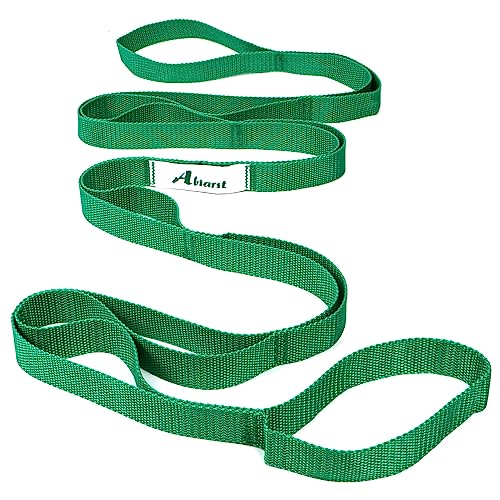
Abiarst Stretching Strap Yoga Straps for Physical Therapy, 10 Loops Non-Elastic Stretch Band for Pilates, Flexibility, Exercise and Gymnastics (Green)
Durable Materia: Our stretching straps are constructed of a durable high-quality fabric that will not fray or break….
As an affiliate, we earn on qualifying purchases.
As an affiliate, we earn on qualifying purchases.
Conclusion
Now that you’ve explored these beginner exercises, mastering a handstand becomes within your reach. Think of the journey like balancing on a tightrope—initially intimidating, yet exhilarating with each step. Just as a child learns to walk before running, your progress starts with small, steady efforts. Embrace the challenge, enjoy the wobbling moments, and celebrate each small victory. Soon, you’ll find yourself upside down, confident and steady, turning fear into freedom.

NTIUYOT Pedal Resistance Band with Handle, Upgraded Durable Thickened Latex Tubes and Soft Foam Fabric Foot Pedal, Sit Up Exercise Equipment for Abdomen, Waist, Arm, Core/ABS, Leg, Physical Therapy
【Burn Belly Fat Fast】 The upgraded durable resistance bands with handles is designed for those who want to…
As an affiliate, we earn on qualifying purchases.
As an affiliate, we earn on qualifying purchases.
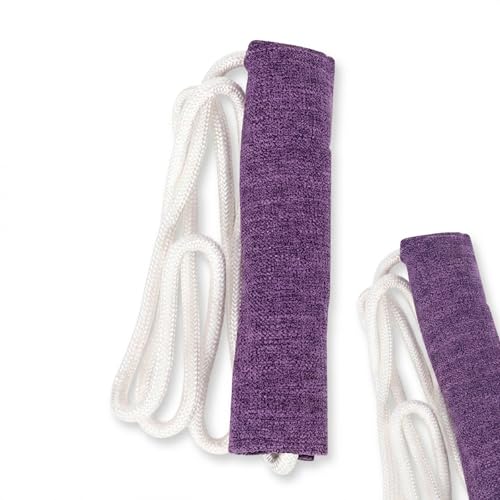
4 Pcs Handstand Trainer Rope 13mm Durable Yoga Wall Rope Set – Strong Hanging Strap for Flexibility, Stretching, Doorway Workouts, Yoga, Pole Dance & Aerial Training
[STRONG REINFORCED ROPE]: Crafted from 13mm diameter premium rope, this training set offers exceptional strength and durability, resisting…
As an affiliate, we earn on qualifying purchases.
As an affiliate, we earn on qualifying purchases.