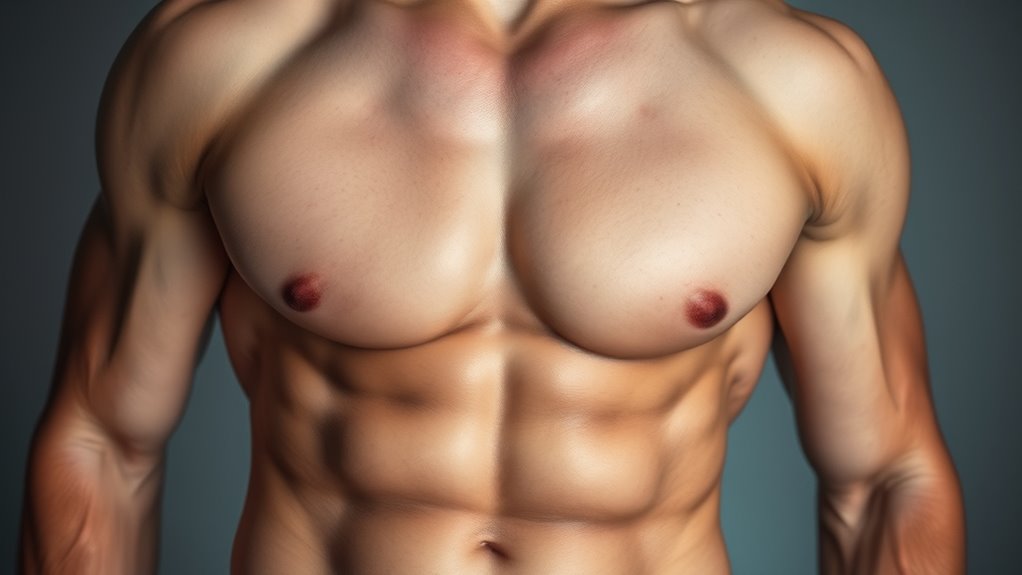

When you stop working out, your muscles don’t turn into fat. Instead, they shrink and weaken through a process called atrophy, which happens because your body no longer gets the demand to stay built. This loss of muscle tissue can make your body look softer and less toned, and it lowers your metabolism. If you want to understand why this isn’t the whole story, keep exploring how your body actually changes when you stop exercising.
Key Takeaways
- Muscle tissue does not convert into fat when you stop exercising.
- Muscle atrophy involves muscle shrinking, not transforming into fat.
- Loss of muscle can lead to a softer appearance but doesn’t create fat from muscle.
- The body may store more fat if activity decreases, but fat isn’t generated from muscle tissue.
- Maintaining some activity helps prevent muscle loss and supports healthier body composition.

Many people worry that their muscle will turn into fat if they stop working out, but that’s not how the process works. When you cease exercise, your muscles don’t directly convert into fat; instead, what happens is muscle atrophy. This means your muscles shrink and weaken because they aren’t being stimulated regularly. Muscle atrophy occurs when your body senses less demand for muscle activity, leading it to break down muscle fibers for energy. As a result, you lose muscle mass over time, which can make you appear softer and less toned.
Muscle atrophy occurs when muscles shrink due to lack of stimulation, not because muscles turn into fat.
This loss of muscle can contribute to a metabolic slowdown. Muscle tissue is metabolically active, meaning it burns calories even when you’re at rest. When you lose muscle, your resting metabolic rate decreases, which makes it easier to gain weight. This isn’t because muscle turns into fat, but because your body now requires fewer calories to maintain its lower muscle mass. So, if you stop working out, you might notice that you start to gain fat, but it’s a consequence of a reduced metabolic rate rather than a direct transformation of muscle into fat.
You might also notice your body composition changing. Without regular activity, your muscle tone diminishes, and fat can become more prominent, especially if your calorie intake remains the same. This shift might give the illusion that muscle is turning into fat, but in reality, it’s your muscle mass decreasing while fat stores stay the same or increase. Over time, this change in body composition can make you look less fit, even if you haven’t gained a significant amount of fat.
To prevent this, it’s important to understand that maintaining some level of activity can help preserve muscle mass and keep your metabolism higher. Even if you take a break from intense workouts, incorporating light activity or resistance exercises can help slow down muscle atrophy. The key is consistency and finding ways to stay active, so your body continues to burn calories efficiently and maintain a healthier composition.
Frequently Asked Questions
How Long Does It Take for Muscle Loss After Quitting Exercise?
After you stop working out, muscle atrophy can begin within a couple of weeks. Typically, noticeable muscle loss occurs around 3 to 4 weeks of workout cessation, especially if you remain inactive. Your muscles shrink because the body reduces muscle mass when it no longer needs to support activity. To minimize muscle atrophy, try to stay as active as possible, even if you’re not doing intense workouts.
Can Muscle Turning to Fat Be Reversed With Resumed Workouts?
Yes, resuming workouts can reverse muscle atrophy and reduce fat accumulation. When you stop exercising, your muscles may weaken, and fat can build up, but with consistent effort, you rebuild muscle mass and shed excess fat. Your body responds to activity by increasing muscle strength and metabolism. So, if you’ve experienced muscle atrophy and fat gain, returning to regular exercise helps restore your muscle tone and improves overall body composition.
Does Diet Affect Muscle Preservation When Stopping Exercise?
Your diet substantially impacts muscle preservation when you stop exercising. To prevent muscle atrophy, focus on diet strategies rich in protein, which helps maintain muscle mass. Adequate calorie intake also supports muscle health, while avoiding excessive carbs and fats that can lead to fat gain. Staying consistent with these nutrition habits ensures your muscles stay as healthy as possible, even if you temporarily halt your workouts.
Are There Specific Exercises That Prevent Muscle Loss Without Working Out Regularly?
Think of your muscles like a garden—if you don’t tend to it regularly, weeds take over. To prevent muscle loss without daily workouts, try isometric exercises and resistance training. Isometric exercises, like planks, strengthen muscles without movement, while resistance training uses weights or bands to maintain muscle mass. Doing these a few times weekly helps preserve your muscles, keeping your body strong and resilient even when you’re not exercising every day.
How Does Aging Influence Muscle Loss and Fat Gain After Stopping Workouts?
Aging effects cause muscle atrophy, making it easier for you to lose muscle when you stop working out. As you age, your metabolism slows, and your body tends to gain fat more quickly, especially without regular activity. When you stop exercising, your muscles shrink, and fat can accumulate, giving the impression that muscle has turned to fat. Staying active helps counteract these aging effects and preserves your muscle mass.
Conclusion
Remember, your muscles are like a garden that needs regular tending. When you stop working out, they don’t magically turn into fat; instead, they shrink and become less defined, making room for fat to settle in. Think of it as a once-vibrant landscape slowly being overtaken by weeds when neglected. Keep moving and stay consistent to keep your body thriving. Otherwise, that lush garden risks becoming a wild, unkempt field.