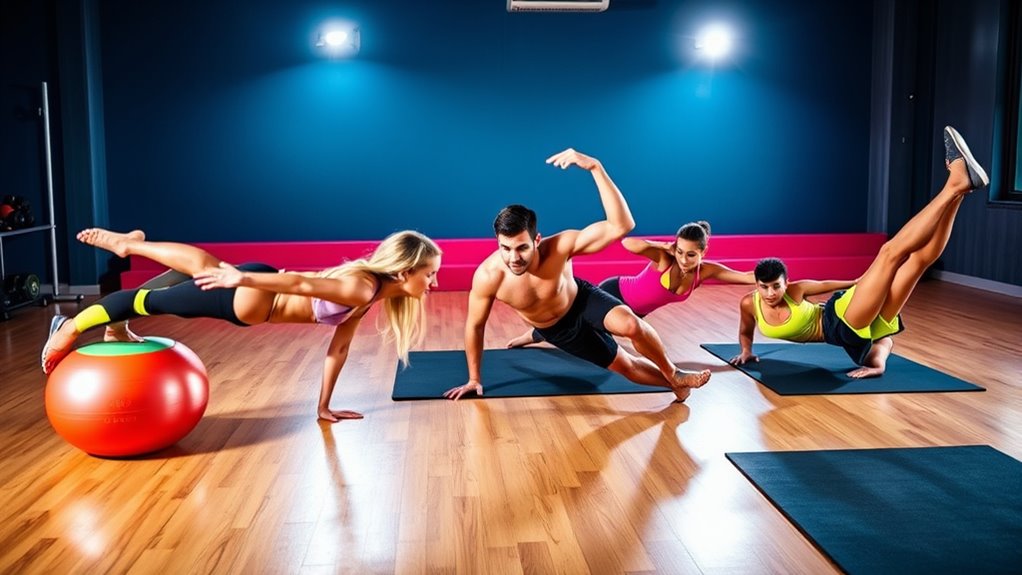

To build a stronger core, try planks with variations, Russian twists, bicycle crunches, leg raises, and mountain climbers to target all key muscles. Add side planks with hip dips, flutter kicks, Superman holds, and V-ups for all-encompassing development. Mixing these exercises keeps your routine fresh and effective, ensuring steady progress. Keep challenging yourself with different positions and repetitions—if you stick with it, you’ll soon notice impressive core strength. Curious what more you can do?
Key Takeaways
- Incorporate plank variations, including side planks and forearm planks, for comprehensive core stabilization and endurance.
- Use Russian Twists and bicycle crunches to target obliques and improve rotational core strength.
- Include leg raises and V-ups to strengthen lower abs and overall core musculature.
- Add mountain climbers and dead bugs for dynamic core engagement and functional stability.
- Regularly vary exercises and positions to prevent plateaus and promote balanced core development.
Plank Variations
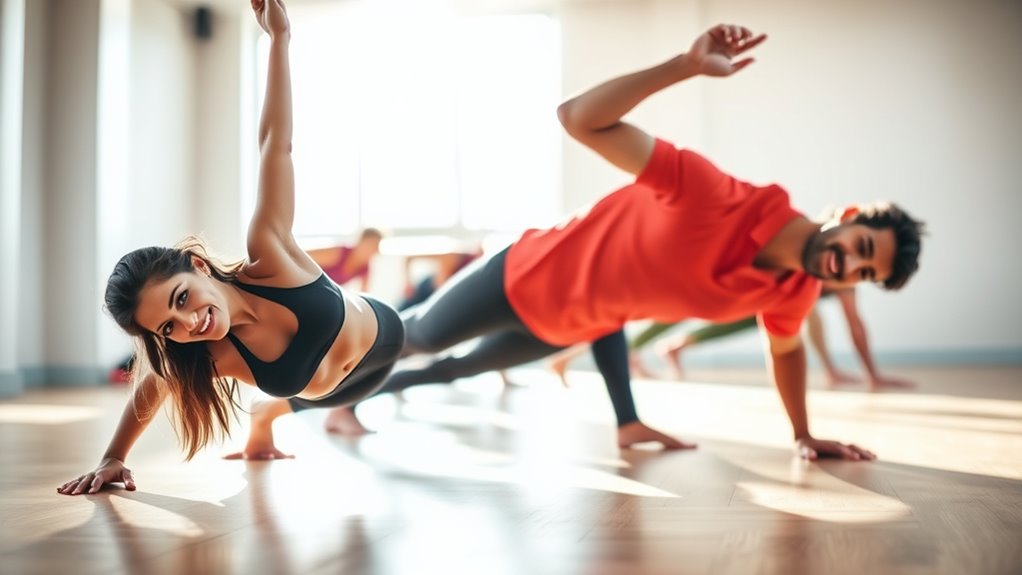
Plank variations are a versatile way to challenge your core muscles and prevent workout boredom. By incorporating different types of planks, you boost core activation and engage multiple muscle groups simultaneously. Side planks, for example, focus on oblique strength, while forearm and straight-arm planks enhance stability and endurance. These balance exercises help improve your overall coordination and posture, making everyday movements easier. Adjust the difficulty by lifting one leg or arm, or by shifting your weight, which intensifies the core engagement. Consistently changing your plank routine keeps your muscles guessing, preventing plateaus. Plus, they require minimal equipment and can be done anywhere. Incorporating plank variations into your workout ensures a well-rounded core workout that strengthens your stability and enhances functional movement. Using proper technique is essential for preventing injury and maximizing effectiveness. Additionally, understanding regional fitness trends can inspire new variations and motivate you to stay consistent. To keep your routine fresh and effective, consider exploring different exercise styles that complement plank progressions and target your core from various angles. Incorporating core-specific exercises can further enhance your overall strength and resilience.
Russian Twists
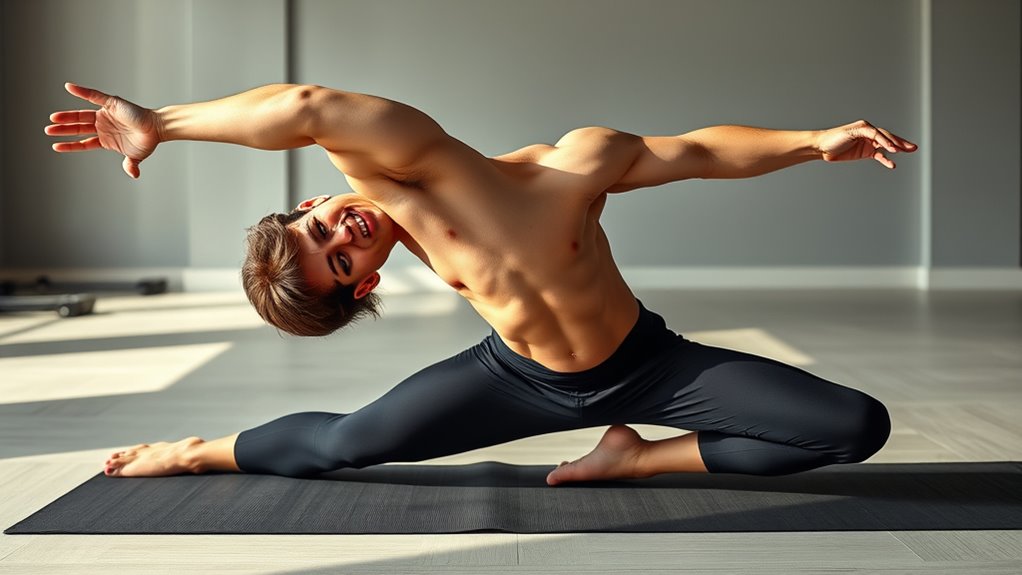
Russian Twists target your oblique muscles, helping you build a more defined waist. They also boost your rotational strength, making everyday movements easier. Plus, this exercise enhances overall core stability, supporting better posture and balance. Incorporating meal prep can further optimize your workout by providing the energy and nutrients needed for recovery and sustained strength.
Engages Oblique Muscles
To effectively target your oblique muscles, incorporating twists into your routine can be highly beneficial. Russian twists are excellent for oblique targeting because they involve rotational exercises that activate these muscles. By rotating your torso from side to side, you engage your obliques more deeply, helping to sculpt your waist and improve core stability. To maximize benefits, focus on controlled movements and proper form. Incorporating resistance can further enhance your overall core workout by adding resistance and variety. Proper form during twists is essential to prevent strain and optimize results. Additionally, understanding the importance of core stability can help you perform these exercises more effectively and reduce the risk of injury. Maintaining proper muscle engagement throughout the movement ensures optimal activation of the targeted muscles. Here’s a quick comparison:
| Exercise Aspect | Details |
|---|---|
| Focus | Oblique targeting |
| Type of Exercise | Rotational exercises |
| Key Benefit | Strengthens side abdominal muscles |
| Best For | Enhancing rotational core strength |
Incorporate Russian twists regularly to feel the burn and develop a more balanced, powerful core.
Improves Rotational Strength
Incorporating twists into your workout not only targets your oblique muscles but also considerably boosts your rotational strength. Russian Twists enhance your rotational power by engaging core muscles through controlled twisting movements. This exercise improves your ability to rotate your torso efficiently, which is essential for sports and daily activities. Incorporating core strengthening techniques can further optimize your results and stability. Additionally, understanding cryptocurrency investment principles can help you make more informed decisions about your financial health beyond the gym.
To maximize benefits:
- Focus on controlled, deliberate twists
- Keep your core engaged throughout
- Use added weights for increased resistance
- Breathe steadily during each twist
- Maintain proper posture to prevent strain
These twisting movements strengthen your core’s ability to generate and transfer force, making your entire midsection more resilient. Regularly practicing Russian Twists develops rotational power that enhances functional movement and athletic performance.
Enhances Core Stability
By engaging in twists that challenge your balance and control, you substantially enhance your core stability. Russian Twists require you to maintain proper posture while rotating your torso, which strengthens deep core muscles and improves posture correction. This exercise also promotes balance training, helping you stay steady during other movements. Incorporating core engagement techniques can further improve your results and help you prevent injuries. Additionally, incorporating flexibility training can further enhance your core function and prevent injuries. Practicing mindful breathing during each twist can also enhance mindfulness awareness and help you stay present throughout your workout. To optimize your training, understanding the importance of proper technique ensures safety and effectiveness. Incorporate Russian Twists into your routine for a more resilient core that supports your entire body. Here’s a quick overview:
| Benefit | Key Focus | Tips |
|---|---|---|
| Core Stability | Balance training | Keep your back straight |
| Posture Correction | Controlled twists | Engage your abs |
| Overall Strength | Proper form | Breathe steadily |
| Injury Prevention | Consistent practice | Avoid overextending |
Bicycle Crunches
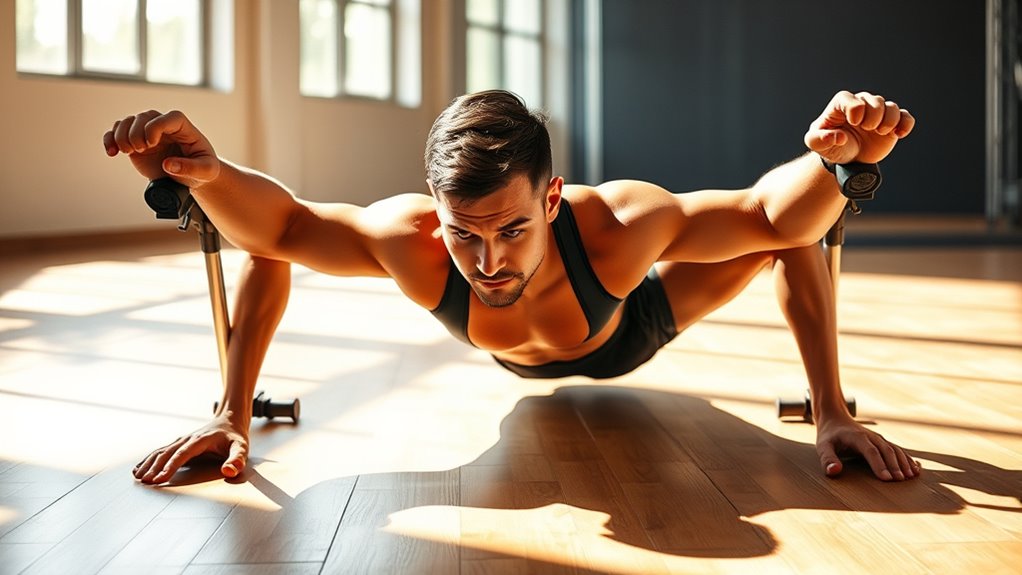
Bicycle crunches are a highly effective exercise for targeting your obliques and core muscles simultaneously. They promote muscle activation across multiple muscle groups, helping you build strength and endurance. To perform them correctly, lie on your back, lift your shoulders off the ground, and alternate bringing your elbow to the opposite knee in a pedaling motion. This movement enhances core stability and can aid in injury prevention by strengthening supporting muscles. Keeping your movements controlled is essential to maximize effectiveness and reduce strain. Incorporating core muscle activation techniques can further improve your workout results. Additionally, choosing the right home exercise equipment can help you perform these exercises more efficiently at home. Paying attention to weather patterns and natural signs can also motivate consistent workout routines by aligning your fitness goals with the natural environment. Being mindful of proper form during bicycle crunches ensures you target the muscles effectively while minimizing injury risk. Add bicycle crunches to your workout to develop a resilient, stronger core.
Leg Raises
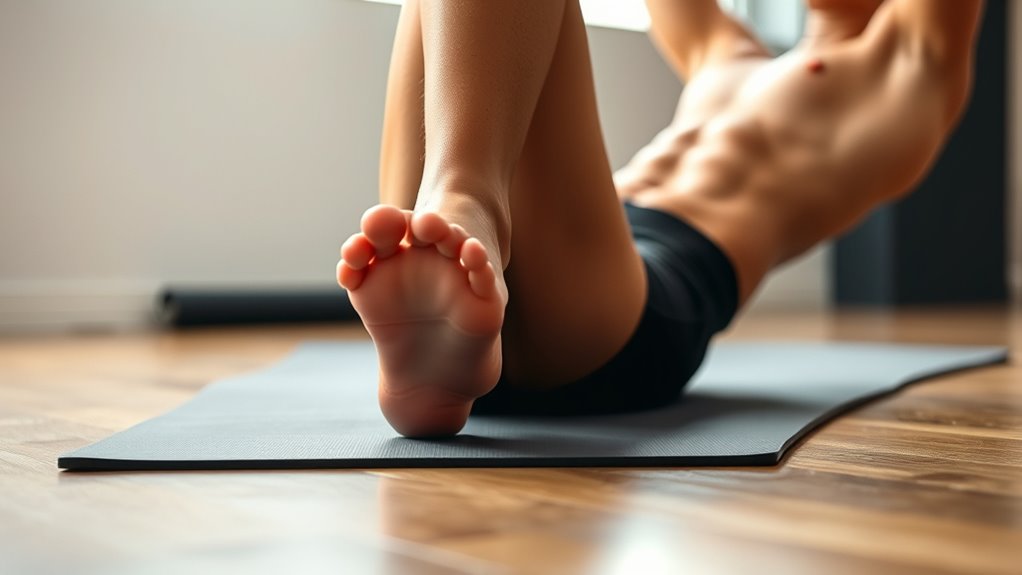
Are you looking for a simple yet effective way to target your lower abs? Leg raises are perfect for building core endurance and strengthening your lower abdominal muscles. To perform them, lie flat on your back with your legs straight, then lift your legs toward the ceiling while keeping them together. Lower them slowly without letting your heels touch the ground, and repeat. This exercise not only enhances core stability but also improves flexibility training by engaging your hip flexors and lower back muscles. Consistent practice increases muscle control and resilience, making your core more robust. Incorporate leg raises into your routine to challenge your lower abs and develop a solid foundation for other core exercises. Keep your movements controlled for maximum effectiveness and safety.
Mountain Climbers
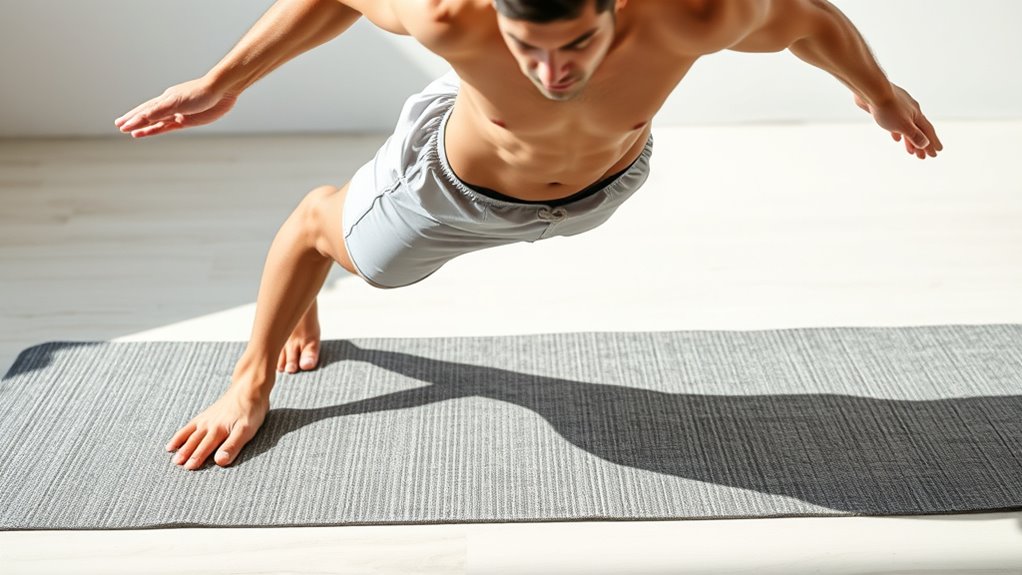
Mountain climbers are a dynamic exercise that effectively boost your core strength, cardiovascular endurance, and overall stability. To maximize benefits, focus on proper breathing techniques—inhale as you prepare, exhale as you drive your knees forward. You can perform mountain climbers with minimal equipment options, making them accessible anywhere. Keep your hands shoulder-width apart and engage your core throughout the movement. For variety, try different paces or add a slight twist for oblique engagement. Remember to maintain a straight back and avoid sagging hips. To enhance your workout, consider using a mat for comfort or a timer to track intervals. This exercise not only strengthens your core but also improves agility and stamina, making it a versatile addition to your fitness routine.
Dead Bug
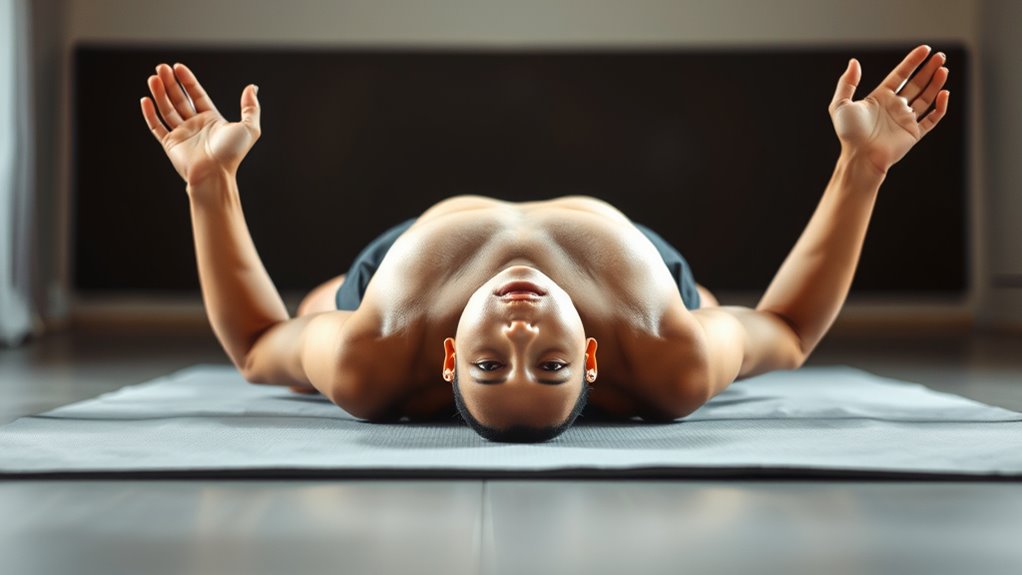
Since maintaining proper core stability is essential for overall strength and injury prevention, the Dead Bug exercise offers an effective way to target deep abdominal muscles. By engaging your core during this movement, you improve core activation, which helps stabilize your spine and pelvis. To perform the Dead Bug, lie on your back with arms extended toward the ceiling and knees bent at 90 degrees. Slowly lower your right arm and left leg toward the floor while keeping your back flat. Return to start and switch sides. This controlled exercise enhances muscle coordination and strengthens core muscles without putting stress on your joints. Incorporating Dead Bugs into your routine boosts core activation, supporting injury prevention and creating a solid foundation for all your physical activities.
Side Plank With Hip Dips

To get the most from the side plank with hip dips, focus on maintaining proper form, such as keeping your body in a straight line and engaging your core. Once you’re comfortable, try variations like adding leg lifts or increasing dip reps to challenge your stability. These tweaks help maximize strength gains while reducing the risk of injury.
Proper Form Tips
Maintaining proper form during the side plank with hip dips is essential to maximize benefits and prevent injury. Focus on keeping your body in a straight line from head to heels, engaging your core throughout. Use controlled breathing techniques—inhale as you prepare, exhale as you dip your hips—to enhance stability. Pay attention to your shoulder alignment, avoiding sagging or shrugging. Incorporate this exercise into your workout scheduling for consistency, ensuring you don’t rush through reps. To stay safe and effective, consider these tips:
- Keep your hips stacked directly above your shoulders
- Engage your core muscles firmly throughout
- Avoid over-rotating your torso during dips
- Maintain steady, controlled movements
- Use breathing techniques to improve stability and focus
Proper form enhances results and reduces injury risk.
Variations for Challenge
If you’re ready to push your side plank with hip dips further, trying some challenging variations can boost your strength and stability. Incorporate advanced techniques like slow, controlled dips or adding leg lifts to increase difficulty. For a more accessible option, beginner modifications involve supporting your knees on the ground while maintaining proper alignment, making it easier to hold the position. To challenge your core further, try extending your arm or adding a twist at the waist during each dip. These variations help target muscles more intensely and improve your overall balance. Remember, mastering the basic side plank first ensures proper form before progressing to these advanced techniques. Incorporating both beginner modifications and challenging variations keeps your core workouts effective and engaging.
Flutter Kicks
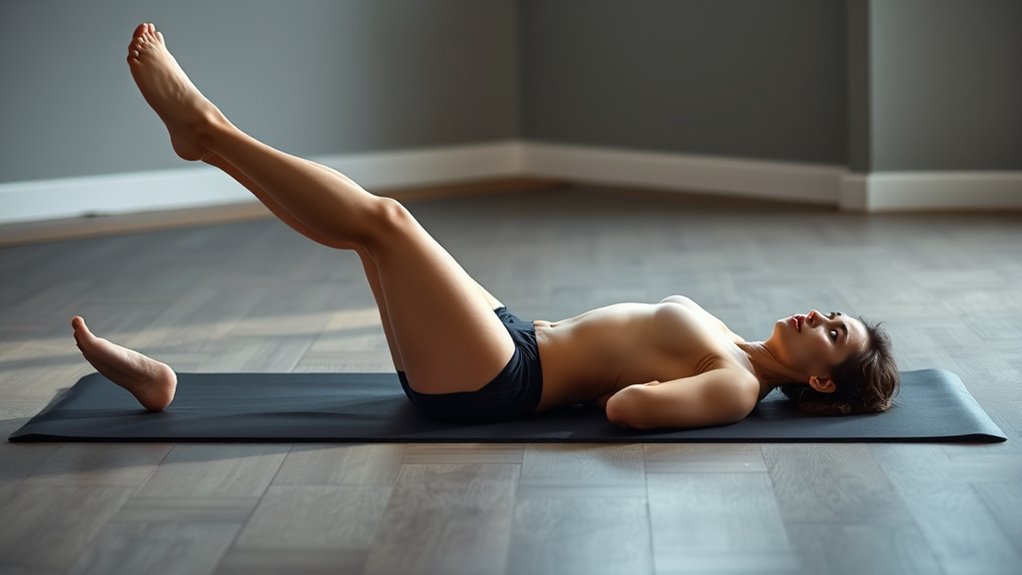
Flutter kicks are a simple yet highly effective exercise for strengthening your core muscles. They target core endurance by engaging your lower abs and hip flexors, helping you build stamina and stability. Incorporating flutter kicks as part of your routine also complements flexibility exercises, enhancing your overall mobility. To perform them correctly:
Flutter kicks strengthen your core, boost endurance, and enhance mobility with controlled, effective movement.
- Lie flat on your back with your hands under your hips
- Lift your legs slightly off the ground
- Alternately kick your legs up and down in small, quick motions
- Keep your core tight throughout
- Maintain a steady, controlled pace
This exercise boosts core endurance and improves your ability to hold other challenging positions. Consistently practicing flutter kicks helps develop a resilient core foundation, essential for overall strength.
Superman Hold

Building on the endurance you develop with flutter kicks, the Superman Hold focuses on strengthening your entire posterior chain, including your lower back, glutes, and shoulders. The superman hold benefits include improved posture, reduced lower back pain, and increased core stability. To perform it, lie face down, extend your arms forward, and lift your chest, legs, arms, and shoulders off the ground. Hold this position for several seconds, then lower carefully. If you find it challenging, superman hold modifications like lifting only your upper or lower body can help you build strength gradually. This exercise is excellent for targeting muscles often overlooked, enhancing overall core resilience. Consistent practice boosts muscle endurance and supports safer, more efficient movement in daily activities.
V-Ups
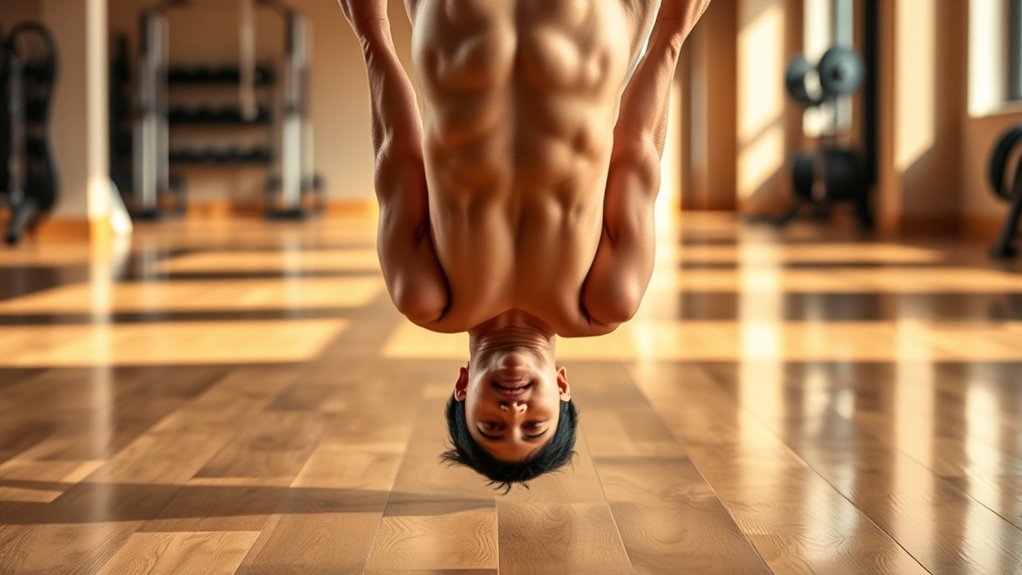
To get the most out of V-Ups, focus on maintaining proper form by engaging your core and avoiding momentum. Keep your movements controlled and start with variations like bent knees or smaller lifts if you’re a beginner. As you improve, challenge yourself with advanced options such as adding weights or extending your legs fully.
Proper Form Tips
Ensuring proper form during V-ups is essential to maximize effectiveness and prevent injury. Focus on controlled movements, engaging your core throughout the exercise. Keep your neck relaxed and avoid pulling on your head. Pay attention to your breathing techniques—inhale as you lower your legs and arms, exhale as you lift into the V position. Your footwear choices matter; wear supportive, non-slip shoes to stabilize your feet. Maintain a slight bend in your knees if needed to reduce strain. Keep your movements deliberate rather than rushing, and avoid arching your back. Check that your lower back stays pressed into the floor to protect your spine. Proper form ensures you target your core effectively while minimizing the risk of discomfort or injury.
Variations for Progress
If you’ve mastered the basic V-up, adding variations can help you challenge your core in new ways and prevent workout plateaus. Try incorporating slow, controlled movements to boost core endurance, focusing on maintaining stability throughout each repetition. You can also experiment with different arm positions, such as reaching overhead or across your chest, to engage different core muscles. Using proper breathing techniques, like exhaling as you lift and inhaling as you lower, enhances core activation and stability. Elevating your legs or performing V-ups on an incline increases difficulty, further building core endurance. By consistently varying your V-up routines, you train your core muscles more effectively, prevent adaptation, and develop greater overall strength and stability.
Frequently Asked Questions
How Often Should I Perform Core Exercises Weekly?
You should perform core exercises about three to four times a week, allowing at least one rest day in between. Keep your workout duration between 15 to 30 minutes to maintain intensity without overtraining. This training frequency helps build strength and endurance effectively. Remember, consistency matters more than duration, so stick to your schedule and gradually increase intensity for the best results.
Can Beginners Safely Do These Exercises at Home?
Ever wonder if you, as a beginner, can safely do core exercises at home? Absolutely! With proper guidance on core stability and beginner modifications, you can build strength safely. Start with simple moves like planks and bridges, paying attention to form and listening to your body. Gradually increase intensity and duration. Always consult a professional if you’re unsure, but home workouts are a great way to develop a strong core safely.
How Do I Prevent Lower Back Pain During Core Workouts?
To prevent lower back pain during core workouts, focus on maintaining core stability throughout each exercise. Engage your abs and avoid overarching your lower back. Incorporate proper form, start with gentle movements, and listen to your body. Consistently practicing safe techniques helps prevent injury, ensuring your core gets stronger without discomfort. Remember, injury prevention is key to building a resilient, effective core over time.
What Are Signs of Overtraining My Core Muscles?
You might notice signs of overtraining your core muscles if you experience persistent core fatigue and excessive muscle soreness that doesn’t improve with rest. You could also feel decreased performance, increased irritability, or difficulty sleeping. If you’re constantly sore or tired after workouts, it’s a clear sign to back off and allow your muscles to recover. Overtraining can lead to injury, so listening to these signals helps prevent setbacks.
Do I Need Special Equipment for These Exercises?
You don’t need special equipment for core exercises, but resistance bands and stability balls can boost your workout. Resistance bands add resistance, making moves more challenging, while stability balls improve balance and engage core muscles deeper. You can perform many effective exercises with just your body weight, but incorporating these tools can diversify your routine and deliver distinct, dynamic stimuli for stronger, steadier core muscles.
Conclusion
These exercises are your toolkit for sculpting a fortress around your core. Think of your abs as the foundation of a mighty castle—strengthen them, and everything else stands tall. With dedication, each move becomes a brick in your masterpiece, transforming your body into a resilient fortress. So, lace up, stay consistent, and watch your core become the unshakable anchor of your strength and confidence. Your journey to a stronger core starts now—build it like a master architect.