
To get your first pull-up, focus on building upper body strength with exercises like bodyweight rows and dead hangs to improve grip and shoulder stability. Incorporate eccentric movements such as negative pull-ups to strengthen muscles during control declines. Use assisted pull-up variations with resistance bands or machines to reduce the load as you develop confidence. Don’t forget to strengthen your core, which supports proper movement. Keep practicing consistently, and you’ll discover more effective ways to progress.
Key Takeaways
- Develop foundational upper body strength with rows, scapular stabilization, and kettlebell swings to prepare for pull-up movement.
- Improve grip strength and dead hang endurance through regular, gradual hang time increases and varied hand positions.
- Incorporate assisted pull-ups using resistance bands or machines to reduce load and practice proper form.
- Practice eccentric (negative) pull-ups to build control and strength during the lowering phase.
- Maintain consistent training, set milestones, and track progress for gradual improvement toward your first unassisted pull-up.
Mastering Bodyweight Rows for Upper Body Power

To build the upper body strength needed for your first pull-up, mastering bodyweight rows is an essential step. These exercises target your back, biceps, and shoulders, creating a solid foundation. To enhance your strength further, incorporate kettlebell swings into your routine; they boost explosive power and hip drive, translating to better pull-up performance. Plyometric push-ups also complement this by increasing your upper body explosiveness and muscular endurance. Focus on controlled, full-range rows, pulling your chest toward the bar or rings, feeling the contraction in your back muscles. Adding performance-focused modifications can help you target specific muscle groups more effectively, accelerating your progress. Incorporating proper recovery techniques is also crucial to allow your muscles to repair and grow stronger. Ensuring adequate nutrition supports muscle growth and recovery, helping you progress faster. Additionally, developing cultural intelligence can improve your motivation and adaptability during your training journey, especially when facing challenges or plateauing. Consistency is key—perform these exercises regularly, gradually increasing difficulty. Combining bodyweight rows with kettlebell swings and plyometric push-ups accelerates your progress toward that first pull-up, building strength and confidence along the way. Smart indoor gardens can also support your training by providing fresh herbs and vegetables to fuel your workouts and recovery.
Building Grip Strength With Dead Hangs
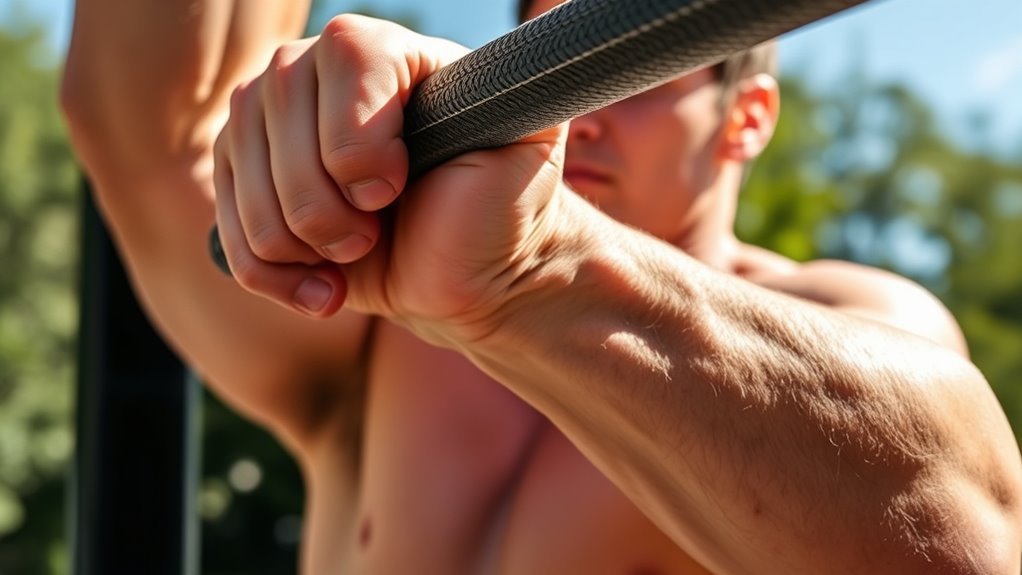
To build grip strength with dead hangs, focus on proper technique by engaging your shoulders and maintaining a firm grip. Gradually increase your hang duration to challenge your muscles without overexerting yourself. Try different grip variations and follow tips to maximize your progress and avoid plateaus. Incorporating proper placement of your hands and body can further improve your grip and overall hanging performance. Paying attention to muscle engagement during the exercise can enhance strength development and prevent injury. Additionally, ensuring your environment has good air quality can help maintain optimal respiratory health during your workout sessions. Developing long-term consistency in your training routine will also support your progress toward your first pull-up.
Proper Dead Hang Technique
Mastering the proper dead hang technique is essential for building grip strength and preparing your body for pull-ups. Focus on muscle engagement by activating your shoulder muscles and core to stabilize your body. Keep your grip firm but not overly tight to avoid unnecessary fatigue. Your grip positioning should be shoulder-width or slightly wider, with palms facing away from you for better engagement. Confirm your shoulders are not shrugged; instead, keep them down and engaged to prevent strain. Maintain a slight bend in your elbows and avoid swinging. Proper form maximizes muscle engagement and sets a strong foundation for progress. Additionally, practicing scapular stabilization during dead hangs can significantly improve shoulder health and enhance your pull-up performance. Regularly incorporating training consistency into your routine will lead to steady strength gains. Consistent practice with correct technique will gradually enhance your grip and stability, bringing you closer to your first pull-up. Developing muscle memory through repetition is key to mastering this foundational exercise. Incorporating proper equipment such as a sturdy pull-up bar can also make a difference in your training effectiveness. Moreover, understanding the importance of lifestyle factors like adequate rest and nutrition can support your overall strength development.
Increasing Hang Duration Gradually
Building grip strength through dead hangs requires gradually increasing how long you can hold onto the bar. To do this effectively, focus on muscle activation by engaging your forearm muscles and shoulder stabilizers during each hang. As you improve, extend your hang time in small, manageable increments, such as adding 5-10 seconds each session. Maintaining mental focus is vital—you need to stay concentrated on your grip and posture, avoiding unnecessary tension or fatigue. This mental discipline helps you push through discomfort and build endurance safely. Remember, consistency is key; patience and precise progression will gradually strengthen your grip, laying a solid foundation for your first pull-up. Over time, increased hang duration will translate into better muscle activation and overall pulling power. Incorporating training consistency into your routine further enhances your progress and helps you achieve your goal faster. Additionally, understanding muscle engagement can optimize your training effectiveness by targeting the right muscles during each hang. Regularly practicing Glycolic Acid exfoliation techniques can also improve your skin’s overall resilience, which is beneficial when training frequently and handling sweaty grips. Moreover, staying aware of precious metals’ market demand can inspire you to stay motivated and disciplined in your training journey. Furthermore, the growing emphasis on automation in business reflects how technological advancements can support your training routine through innovative tools and tracking devices.
Grip Variations and Tips
Varying your grip during dead hangs can considerably boost your grip strength and overall pulling power. Changing hand positioning—such as switching between overhand, underhand, or mixed grips—targets different muscles and enhances grip endurance. Using different grip variations also prevents your hands from adapting too quickly, making your grip more versatile and resilient. Focus on maintaining proper hand positioning to maximize the effectiveness of each variation. For example, a wider grip challenges your grip endurance differently than a narrow one, while a neutral grip can reduce strain on your wrists. Incorporate these variations regularly to build a well-rounded grip, which is essential for progressing toward that first pull-up. Remember, consistent practice with grip changes helps develop strength and confidence in your pulling motions. Additionally, understanding ex-relationships and the importance of patience and gradual progress can be applied to your training routine to ensure steady improvement over time. Furthermore, implementing tuning techniques such as adjusting your training intensity and volume can optimize your grip development and overall performance. Incorporating progressive overload into your grip training can lead to sustained gains and better transfer to pull-up strength.
Incorporating Negative Pull-Ups to Develop Eccentric Strength

To develop the eccentric strength needed for your first pull-up, incorporating negative pull-ups is highly effective. Focus on controlling your descent to maximize eccentric control, which strengthens the muscles involved. Begin by jumping or stepping up to the top position of a pull-up, then slowly lower yourself down over 3 to 5 seconds. This slow negative repetition forces your muscles to work harder during the eccentric phase, building strength for the concentric pull-up. Keep your movements deliberate and maintain tension throughout the descent. Incorporate negative pull-ups into your routine 2-3 times per week, gradually increasing the duration of your eccentric control. Over time, this will improve your overall pull-up strength and bring you closer to performing your first unassisted pull-up.
Enhancing Pull-Up Readiness With Assisted Variations
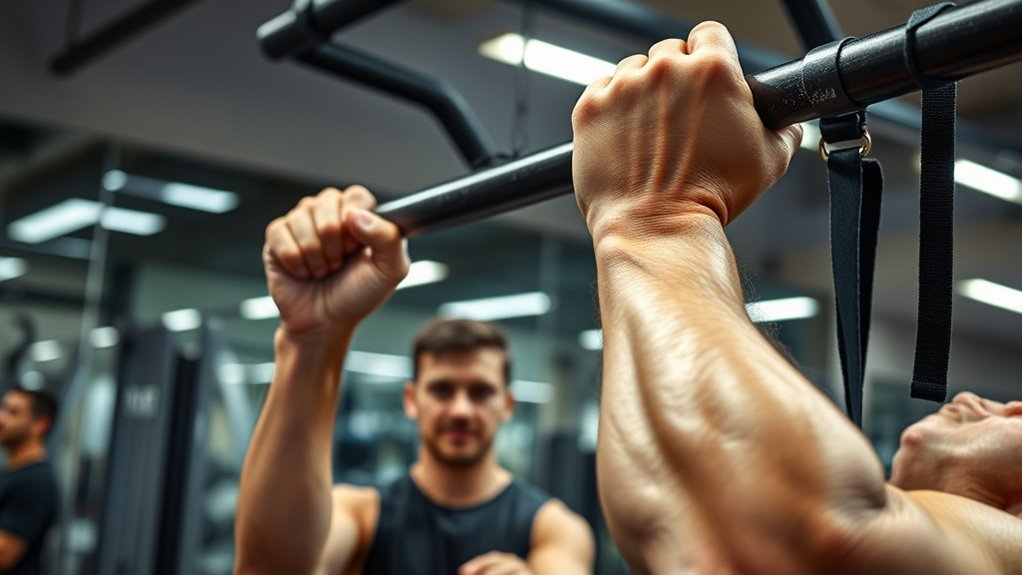
Using resistance bands, machine support, or a partner can make pull-ups more manageable as you build strength. These assisted variations reduce the load, allowing you to focus on proper form and muscle engagement. Incorporating them into your routine helps you progress safely toward unassisted pull-ups.
Resistance Bands Assistance
Resistance bands are a fantastic tool to help you build the strength needed for a pull-up by providing adjustable assistance. They reduce the load, allowing you to focus on proper form and gradually increase difficulty. Incorporate resistance band-assisted pull-ups into your routine alongside dumbbell exercises and flexibility training to enhance overall upper-body strength. As you progress, switch to lighter bands or decrease assistance to challenge yourself further. This method also helps prevent injury and builds confidence. Use the table below to compare resistance band options based on resistance level, durability, and ease of use:
| Resistance Level | Durability | Ease of Use |
|---|---|---|
| Light | High | Very Easy |
| Medium | High | Easy |
| Heavy | Moderate | Moderate |
| Extra Heavy | Moderate | Slightly Challenging |
| Ultra Heavy | Low | Challenging |
Machine-Based Support Training
Machine-based support systems offer a controlled way to build the strength needed for unassisted pull-ups. These machines allow you to adjust assistance levels, reducing your body weight gradually as you improve. Incorporating wearable technology can help track your progress, providing real-time feedback on reps, sets, and muscle engagement. As you train, remember that proper nutrition strategies—like consuming sufficient protein and staying hydrated—support muscle recovery and strength gains. Using these machines helps you focus on proper form and build confidence without the risk of injury. Over time, as your strength increases, you’ll rely less on assistance and more on your own muscles. Combining machine support with consistent nutrition and tracking tools accelerates your journey toward a successful, unassisted pull-up.
Partner-Assisted Pull-Ups
Partner-assisted pull-ups provide a practical way to build strength and confidence before attempting unassisted variations. With partner help, you can focus on proper form and gradually increase your effort. One effective method is using resistance band support, where your partner assists by holding or anchoring the band to reduce your body weight. This allows you to complete pull-ups with less resistance, helping you develop the necessary muscles.
| Assistance Type | How It Works | Benefits |
|---|---|---|
| Partner support | Your partner lifts or stabilizes | Builds confidence and form |
| Resistance band support | Band reduces load | Gradually increases strength |
| Body position | Partner aids in positioning | Ensures correct movement |
Developing Core Stability to Support Pull-Up Performance

A strong core is essential for performing pull-ups effectively because it provides the stability needed to control your movement and prevent swinging. Without proper core engagement, your body may sway, making pull-ups harder and less efficient. To develop this stability, focus on these key steps:
- Incorporate stability exercises like planks and side planks into your routine to strengthen your core muscles.
- Practice core engagement during other workouts by consciously tightening your abdominal muscles.
- Add dynamic movements such as leg raises or mountain climbers to enhance core control and coordination.
Progressing to Unassisted Pull-Ups With Consistent Practice

Building upon your core stability, consistent practice is key to progressing toward unassisted pull-ups. Focus on gradually increasing your repetitions and volume, promoting muscle hypertrophy to develop the necessary strength. Incorporate flexibility exercises, like shoulder and lat stretches, to improve your range of motion and prevent injury. As you become more comfortable with assisted pull-ups or negative reps, challenge yourself by reducing assistance and increasing reps each week. Track your progress to stay motivated and identify areas needing improvement. Remember, patience is essential—muscle adaptation takes time. By maintaining a steady routine that emphasizes incremental gains and flexibility work, you’ll build the strength and mobility needed to perform unassisted pull-ups confidently.
Structuring a Training Plan for Steady Gains

Creating a structured training plan is essential for making steady progress toward unassisted pull-ups. To optimize your gains, focus on effective progression strategies and smart workout scheduling. Here’s how to do it:
- Set clear milestones: Break your goal into achievable steps, like increasing reps or adding resistance.
- Prioritize consistency: Schedule workouts at regular intervals, such as 3-4 times weekly, to build momentum.
- Vary your exercises: Incorporate different pull-up variations and accessory movements to target supporting muscles and prevent plateaus.
Frequently Asked Questions
How Often Should I Train for Optimal Pull-Up Progress?
You should train for pull-up progress around 3 to 4 times a week, ensuring you maintain training consistency. This frequency allows you to build strength without overtraining. Remember to incorporate recovery strategies like rest days, stretching, and proper nutrition to optimize your progress. Listen to your body—if you feel excessive fatigue, give yourself extra time to recover before your next session. Consistent effort and good recovery are key to hitting your first pull-up.
Are There Any Common Mistakes to Avoid During Training?
Ignoring form correction and grip technique can turn your training into a recipe for disaster. You might find yourself with a pulled muscle or bad posture that sticks around for ages. Always focus on maintaining proper form, keep your grip firm but not death-grip tight, and avoid swinging or jerking your body. These mistakes can slow progress and increase injury risk, so stay vigilant and keep your technique sharp.
How Long Does It Typically Take to Achieve My First Pull-Up?
You can usually expect a training timeline of 4 to 8 weeks to achieve your first pull-up, depending on your starting strength and consistency. Progress expectations should be realistic; some might see quick gains, while others need more time. Focus on regular practice, proper form, and gradual strength building. Stay patient, keep pushing, and celebrate small improvements along the way to reach your goal.
Can Flexibility Exercises Help Improve Pull-Up Performance?
Yes, flexibility exercises like stretching routines and mobility drills can boost your pull-up performance. Improving shoulder, back, and arm flexibility helps you achieve a better range of motion, making pull-ups easier and more efficient. Incorporate dynamic stretches before workouts and static stretches afterward to enhance mobility. Over time, increased flexibility allows you to engage muscles more effectively, ultimately helping you to perform pull-ups with greater strength and control.
What Equipment Is Essential for Building Pull-Up Strength at Home?
You don’t need to reinvent the wheel; just grab essential equipment like a sturdy pull-up bar and pull-up bands. The bar provides a solid anchor for your workouts, while bands help you scale the exercise as you build strength. With these tools, you can do a variety of assisted pull-up exercises right at home. Keep at it, and you’ll be climbing your way to your first pull-up in no time!
Conclusion
Believe it or not, consistent practice and proper progression are key to achieving your first pull-up. Some say you need superhuman strength overnight, but science shows that gradual, targeted exercises build muscle and confidence over time. So stick with your routine, trust the process, and don’t be discouraged by setbacks. With patience and persistence, you’ll find that what once seemed impossible becomes your new reality—your first pull-up is within reach!