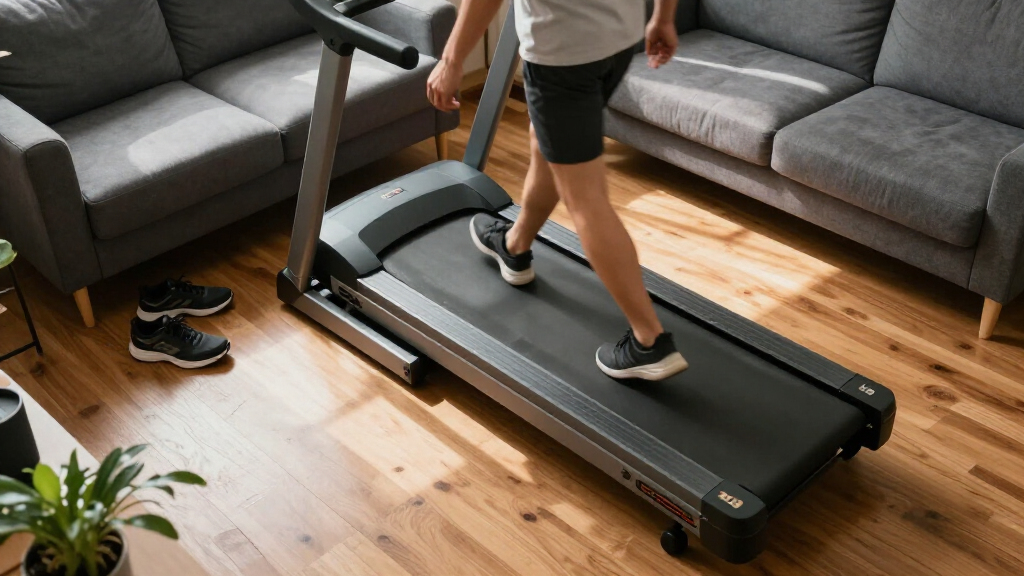

Finding a treadmill that genuinely fits a small apartment, bedroom, or home office comes down to one question: how much floor are you willing to give up when it’s in use, and how little when it’s folded? Most options here split into two camps — slim under-desk walking pads that slide under a sofa, and fuller folding treadmills with handrails and incline that take more room but support serious training. The 3-in-1 Walking Pad with 16% Manual Incline and Handrails earns my top spot because it bridges both worlds: a 16% incline for real calorie burn, handrails for confidence, and a fold-flat frame that stores vertically. The UREVO Strol 2E stands out for smart connectivity and app-based training in a compact chassis, while the NordicTrack T 6.5S is the pick if you want a traditional treadmill experience and can spare the folded footprint. The tradeoffs worth knowing: incline models cost you weight and thickness, and rail-equipped pads rarely slide under furniture. Keep reading for the full breakdown of all 15.

Get workout gear delivered free — and shop member deals
- Fast, free delivery on millions of items
- Access to Prime Big Deal Days deals on October 6–7
- Prime Video, Amazon Music and more included
Complete the kit


Key Takeaways
- Incline is the biggest differentiator in this lineup: models with 10–16% manual incline (3-in-1 Walking Pad, LONTEK, Cursor Fitness) deliver far more training variety than flat walking pads, but the incline mechanism makes them heavier and thicker when folded.
- Under-desk thinness only exists on the rail-less models — once a treadmill includes a handlebar, expect a folded depth too tall for sliding under most sofas, so check folded dimensions before buying, not just unfolded ones.
- Motor power only matters at the top end: the 3.0 HP Foldable Home Treadmill and NordicTrack T 6.5S support running, while the 0.6–6.2 MPH walking pads are walking-only by design — buyers who expect to jog on a walking pad are the most common source of disappointment.
- Handrails dramatically change the user profile: models with removable or foldable handlebars (Compact Folding Walking Pad, HevGlrm 380QM-2KY) serve older users and balance-conscious walkers far better than rail-less pads, at the cost of portability.
- The NordicTrack T 6.5S is the outlier in this roundup — it folds rather than flattens, so it suits small homes with a dedicated corner, not apartments where the machine must disappear between workouts.
| 3-in-1 Walking Pad Treadmill with 16% Manual Incline and Handrails |  | Best for Supported Incline Walking | Incline: Manual, up to 16% | Running surface: 35.8 × 15.2 in | Motor: 2.5 HP | VIEW LATEST PRICE | See Our Full Breakdown |
| UREVO Strol 2E Smart 2-in-1 Folding Treadmill |  | Best for Walking and Running Modes | Track size: 15 × 40.1 in | Running mode speed: 0.6–6.2 mph | Walking mode speed: 0.6–4 mph | VIEW LATEST PRICE | See Our Full Breakdown |
| Walking Pad Treadmill for Home – Under Desk Portable Compact Treadmill with Remote Control |  | Best for Under-Bed Storage | Motor: 2.5 HP (500+ W) | Speed range: 1–6 km/h | Weight capacity: 264 lb (120 kg) | VIEW LATEST PRICE | See Our Full Breakdown |
| Cursor Fitness Folding Treadmill with 16% Manual Incline and 3 LED Displays |  | Best for Higher Weight Capacity | Incline: Manual: 0%, 8%, and 16% | Motor: 3.0 HP peak brushless | Noise level: ≤45 dB | VIEW LATEST PRICE | See Our Full Breakdown |
| Compact Folding Walking Pad Treadmill with Removable Handlebar |  | Best for Switching Between Desk Walking and Short Runs | Speed modes: Walking: 0.6–1.2 MPH; jogging: 1.9–2.5 MPH; running: 3.1–4 MPH | Maximum user weight: 264 lb | Motor power: 440 W | VIEW LATEST PRICE | See Our Full Breakdown |
| HevGlrm 380QM-2KY Walking Pad Treadmill with Foldable Handle Bar |  | Best for Higher Weight Capacity | Motor: 3.5 HP | Speed range: 0.6–10 mph | Weight capacity: 400 lb | VIEW LATEST PRICE | See Our Full Breakdown |
| Foldable Walking Pad Treadmill with Handlebar, 0.6–6.2 MPH |  | Best for Easy Storage | Speed range: 0.6–6.2 mph (1–10 km/h) | Preset programs: 12 | Countdown modes: Time, distance, calories | VIEW LATEST PRICE | See Our Full Breakdown |
| Foldable Home Treadmill with 3.0 HP Motor and 12% Manual Incline |  | Best for Quiet Incline Walks | Motor: 3.0 HP brushless | Incline: 12% manual | Speed range: 0.6–6.2 mph | VIEW LATEST PRICE | See Our Full Breakdown |
| Foldable Walking Pad Treadmill with Manual Incline |  | Best for Under-Bed Storage | Running area: 35 × 14.4 in | Folded dimensions: 40.5 × 18 × 4.7 in | Speed range: 0.6–6.2 mph | VIEW LATEST PRICE | See Our Full Breakdown |
| WELLFIT Folding Treadmill with Incline and Handlebar | 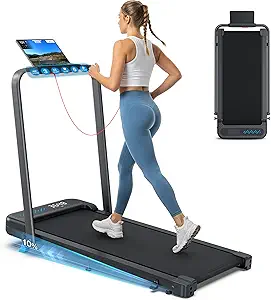 | Best for App-Based Control | Motor: 3.0 HP | Maximum incline: 10% | Running belt: 36 × 16 in, five-layer cushioned | VIEW LATEST PRICE | See Our Full Breakdown |
| LONTEK Walking Pad Treadmill with Handles and 15% Incline |  | Best for Incline Training | Motor: 3.0 HP brushless | Speed range: 0.6–6.2 MPH | Incline settings: Flat, 10%, and 15% | VIEW LATEST PRICE | See Our Full Breakdown |
| Cardirun Foldable Walking Pad Treadmill with 10% Manual Incline and Handle Bar |  | Best Walk-and-Run Versatility | VIEW LATEST PRICE | See Our Full Breakdown | |||
| Yagud Walking Pad Treadmill with Incline and Handle Bar |  | Best Budget Desk Walker | Speed range: 0.6–3.8 mph | Maximum weight capacity: 220 lbs | Dimensions: 47.2 × 19.6 × 4.6 in | VIEW LATEST PRICE | See Our Full Breakdown |
| Terluxra Foldable Walking Pad Treadmill for Home and Office |  | Best Lightweight Starter Pick | Motor: 2.0 HP | Speed range: 0.6–4 MPH | Maximum weight capacity: 242 lbs (110 kg) | VIEW LATEST PRICE | See Our Full Breakdown |
| NordicTrack T 6.5S Treadmill |  | Best Premium Full-Size Option | Speed range: 0–10 MPH | Incline range: 0–10% motorized | Cushioning: KeyFlex | VIEW LATEST PRICE | See Our Full Breakdown |
| foldable treadmills for small space | Speed range | Motor |
|---|---|---|
| 3-in-1 Walking Pad Treadmill w | 0.6–6.3 MPH | 2.5 HP |
| UREVO Strol 2E Smart 2-in-1 Fo | — | — |
| Walking Pad Treadmill for Home | 1–6 km/h | 2.5 HP (500+ W) |
| Cursor Fitness Folding Treadmi | 0.6–7.0 MPH | 3.0 HP peak brushless |
| Compact Folding Walking Pad Tr | — | — |
| HevGlrm 380QM-2KY Walking Pad | 0.6–10 mph | 3.5 HP |
| Foldable Walking Pad Treadmill | 0.6–6.2 mph (1–10 km/h) | — |
| Foldable Home Treadmill with 3 | 0.6–6.2 mph | 3.0 HP brushless |
| Foldable Walking Pad Treadmill | 0.6–6.2 mph | 480 W |
| WELLFIT Folding Treadmill with | — | 3.0 HP |
| LONTEK Walking Pad Treadmill w | 0.6–6.2 MPH | 3.0 HP brushless |
| Cardirun Foldable Walking Pad | — | — |
| Yagud Walking Pad Treadmill wi | 0.6–3.8 mph | — |
| Terluxra Foldable Walking Pad | 0.6–4 MPH | 2.0 HP |
| NordicTrack T 6.5S Treadmill | 0–10 MPH | — |
More Details on Our Top Picks
3-in-1 Walking Pad Treadmill with 16% Manual Incline and Handrails
The manual incline up to 16% gives this walking pad a hill-walking focus, while its padded handrails add support for users who want a steadier feel. Compared with the Cursor Fitness Folding Treadmill, it has a shorter walking surface and a lower stated capacity, so the Cursor is the stronger fit for buyers who want more room or a higher capacity. This model’s 35.8 × 15.2-inch belt is still a compact footprint for walking workouts, and its cushioned, slip-resistant construction adds comfort. The tradeoff is that incline changes require manual adjustment, which interrupts a workout, and the 6.3 MPH ceiling is better suited to brisk walking than sustained running. Its foldable design helps with storage, but the compact belt may feel restrictive for longer strides.
Pros:- Manual incline adjusts up to 16% for hill-style walking
- Padded side handrails provide added stability
- Foldable design supports compact storage
- Cushioned, slip-resistant belt and stated 330 lb capacity
Cons:- Incline must be adjusted manually
- 35.8 × 15.2-inch running surface may feel short for longer strides
- 6.3 MPH maximum speed limits running workouts
Best for: Walkers who want handrail support and steep manual incline sessions in a foldable home treadmill
Not ideal for: Runners or taller users who need a longer, wider belt and quick incline changes
- Incline:Manual, up to 16%
- Running surface:35.8 × 15.2 in
- Motor:2.5 HP
- Speed range:0.6–6.3 MPH
- Weight capacity:330 lb
- Belt:7-layer cushioned, slip-resistant
- Display:LED: speed, time, distance, and calories
- Design:Foldable
Our verdict“Choose this model for supported incline walking in a foldable footprint; skip it if you need a roomy belt or running-focused speed.”
UREVO Strol 2E Smart 2-in-1 Folding Treadmill
The two workout modes make the UREVO Strol 2E a more flexible choice than the walking-only Walking Pad Treadmill for Home, which tops out at 6 km/h. The UREVO reaches 6.2 mph in running mode and also offers a lower-speed walking mode, giving an office user a way to switch from desk walking to a faster session. Its 15 × 40.1-inch track is compact, though the 15-inch width calls for a fairly centered stride. App connectivity and a remote add convenient ways to track and adjust workouts; the one-key mute function may also suit shared spaces. Cushioning comes from eight silicone shock absorbers and two soft rubber pads. The main upkeep tradeoff is regular lubrication every 125 miles, and its speed range is less suited to serious runners than a full-size treadmill.
Pros:- Separate walking and running modes support varied home workouts
- Folds for compact storage
- UREVO Sport app and remote control support workout tracking and adjustment
- Eight silicone shock absorbers and two soft rubber pads provide cushioning
Cons:- Track is only 15 inches wide
- Requires lubrication every 125 miles
- 6.2 mph maximum speed may limit faster running
Best for: Home-office users who want one folding treadmill for desk walking and occasional running
Not ideal for: Runners who need a wider, longer deck or buyers who prefer equipment with minimal scheduled maintenance
- Track size:15 × 40.1 in
- Running mode speed:0.6–6.2 mph
- Walking mode speed:0.6–4 mph
- Belt:5-layer anti-slip
- Shock absorption:8 silicone shock absorbers and 2 soft rubber pads
- Display metrics:Time, calories, steps, speed, and distance
- App:UREVO Sport App
- Maintenance:Apply lubricant every 125 miles
Our verdict“Pick the UREVO for a compact walking-and-running option with app tracking, provided you are comfortable maintaining the belt.”
Walking Pad Treadmill for Home – Under Desk Portable Compact Treadmill with Remote Control
At about 11 cm tall and 16 kg, this is the most storage-oriented pick in this group: its slim form and transport wheels make it easier to tuck beneath a bed or sofa than the UREVO Strol 2E, which adds running modes and app features. The tradeoff is clear: this model is walking only, with a 6 km/h top speed, so it is a fit for steady movement while working rather than jogging. Its 38.5 × 94 cm walking area is narrow compared with the UREVO’s 15 × 40.1-inch track, and may feel confining if you take broad strides. A remote and LED display keep speed and basic workout metrics close at hand, while the product data says no assembly is required. The compact dimensions make storage its strongest argument, but buyers should check both the belt space and under-furniture clearance before choosing it.
Pros:- Slim 11 cm profile can fit under suitable beds, sofas, or desks
- Approximate 16 kg weight and transport wheels aid moving and storage
- No assembly required according to the product data
- Remote control and LED display provide convenient adjustments and basic tracking
Cons:- Maximum speed of 6 km/h makes it a walking-only option
- 38.5 × 94 cm walking area may feel narrow
- 264 lb capacity is lower than the stated capacities of the incline models
Best for: Apartment dwellers and desk workers who need a light walking pad that can slide under low furniture
Not ideal for: People seeking jogging or running speeds, or walkers who want a wide, open belt
- Motor:2.5 HP (500+ W)
- Speed range:1–6 km/h
- Weight capacity:264 lb (120 kg)
- Dimensions:109 × 50 × 11 cm
- Weight:Approx. 16 kg
- Walking area:38.5 × 94 cm
- Belt:5-layer anti-slip, diamond texture
- Display:LED: speed, distance, time, and calories
- Assembly:No assembly required
Our verdict“Choose this pad when under-furniture storage and desk walking matter most; choose the UREVO if you also want a running mode.”
Cursor Fitness Folding Treadmill with 16% Manual Incline and 3 LED Displays
The Cursor Fitness earns its place for combining a 400 lb stated capacity with a foldable frame and a speed ceiling of 7.0 MPH. Among these five, that capacity gives it a distinct advantage over the 3-in-1 Walking Pad, which is rated for 330 lb and has a slightly shorter belt. Cursor’s 37.5 × 15-inch surface remains compact, though it is not roomy by full-size treadmill standards. Three manual incline settings—0%, 8%, and 16%—offer hill-work options, but changing them means stopping to adjust the machine. The 40.8 lb weight and folded dimensions help with stowing it, while three LED displays keep workout metrics visible. This is a stronger walking and jogging pick than an under-desk pad, yet buyers seeking motorized incline or a wider running deck should look elsewhere.
Pros:- 400 lb stated weight capacity
- Three manual incline levels, including 16%
- Up to 7.0 MPH for brisk walking and light jogging
- Folds to 44.29 × 21.77 × 4.13 inches
Cons:- Incline adjustments require stopping and changing the setting manually
- 15-inch running width may constrain stride
- At 40.8 lb, it is heavier than the 16 kg under-desk walking pad
Best for: Buyers who need a foldable treadmill with a higher stated capacity for walking and light jogging
Not ideal for: Runners who want a wide deck, motorized incline, or a machine that is easy to lift frequently
- Incline:Manual: 0%, 8%, and 16%
- Motor:3.0 HP peak brushless
- Noise level:≤45 dB
- Speed range:0.6–7.0 MPH
- Running surface:37.5 × 15.0 in
- Weight capacity:400 lb
- Weight:40.8 lb
- Folded dimensions:44.29 × 21.77 × 4.13 in
- Displays:3 LED displays
Our verdict“Choose Cursor for its higher stated capacity and incline options in a foldable treadmill; pass if you need a wider deck or on-the-fly incline control.”
Compact Folding Walking Pad Treadmill with Removable Handlebar
The removable handlebar lets this model shift between a more supported treadmill setup and an under-desk walking pad, giving it a more adaptable footprint than the fixed-handrail 3-in-1 Walking Pad. Its walking, jogging, and running modes reach only 4 MPH, so “running” here means a modest pace rather than a workout for faster runners. The 90 × 38 cm area and 264 lb capacity also place it closer to compact home walking pads than full-size treadmills. A remote with a pause function that retains data for up to 10 minutes makes interruptions easier to manage, and built-in wheels help with repositioning. The space-saving tradeoff is that removing the handlebar requires unscrewing bolts, so switching configurations is not instant. This pick suits buyers who value flexible placement over speed or a generous running surface.
Pros:- Removable handlebar supports both under-desk and handrail configurations
- Three speed modes cover walking through modest jogging or running
- Compact folded dimensions and built-in wheels aid storage and movement
- Remote pause function retains workout data for up to 10 minutes
Cons:- Maximum speed is limited to 4 MPH
- Handlebar removal requires unscrewing bolts
- 90 × 38 cm running area may feel cramped for longer strides
Best for: Desk workers who want a compact pad that can be reconfigured with a handlebar for supported walking
Not ideal for: Runners who need speeds above 4 MPH or buyers who expect quick, tool-free handlebar changes
- Speed modes:Walking: 0.6–1.2 MPH; jogging: 1.9–2.5 MPH; running: 3.1–4 MPH
- Maximum user weight:264 lb
- Motor power:440 W
- Frequency:50–60 Hz
- Running area:90 × 38 cm
- Folded dimensions:104 × 48.7 × 10.5 cm
- Belt:5-layer non-slip
- Display:LED: time, speed, calories, and distance
- Controls and features:Remote with pause and 10-minute data retention; removable handlebar, detachable phone holder, built-in wheels
Our verdict“Pick this model if you want a compact walking pad that can convert to a handrail setup; skip it for faster running or frequent tool-free reconfiguration.”
HevGlrm 380QM-2KY Walking Pad Treadmill with Foldable Handle Bar
The HevGlrm pairs a foldable handle bar with a stated 400 lb capacity, making it a fit for buyers who want a compact treadmill with more supported user weight than the 264 lb Foldable Walking Pad Treadmill with Handlebar, 0.6–6.2 MPH. Its 0.6–10 mph range also leaves room to move from walking into faster running, while 12 preset programs add workout variety. Those capabilities make it less limited to walking than several small-space pads in this group. The tradeoff is that the supplied details give no folded dimensions or measured noise level, so it is harder to judge whether it will fit a particular bed or apartment. The claimed knee-impact reduction is not independently substantiated in the product information.
Pros:- Stated 400 lb weight capacity
- Speed range reaches 10 mph
- Foldable handle bar supports compact storage
- Includes 12 preset programs
Cons:- No folded dimensions are provided to check storage fit
- No measured noise level is stated
- The belt’s claimed knee-impact reduction is not independently substantiated in the supplied details
Best for: Buyers who need a stated 400 lb capacity and want one folding machine for walking through faster running
Not ideal for: Apartment dwellers who need verified noise data or exact folded dimensions before choosing a treadmill
- Motor:3.5 HP
- Speed range:0.6–10 mph
- Weight capacity:400 lb
- Programs:12 preset programs
- Handle bar:Foldable
- Belt:Multi-layer anti-slip belt with cushioning
Our verdict“Choose the HevGlrm if its higher stated capacity and broad speed range matter more than having verified noise and storage measurements.”
Foldable Walking Pad Treadmill with Handlebar, 0.6–6.2 MPH
At 48.5 lb with stated folded dimensions of 45.4 × 21.9 × 5.7 inches, this pad gives small-space buyers concrete details for planning storage and moving it between workouts. Built-in wheels help with that routine, while its 0.6–6.2 mph range covers walking and light jogging. Compared with the faster HevGlrm 380QM-2KY, it gives up running speed, but its known folded size and weight make storage planning easier. The 15 × 39.4-inch belt is also relatively compact, which helps keep the footprint down but may feel short or narrow for longer strides. Its 264 lb maximum user weight is another limit for households needing more capacity.
Pros:- Folded dimensions and product weight are specified
- Built-in wheels help move the 48.5 lb treadmill
- 12 preset programs and three countdown modes
- Speed range supports walking and light jogging
Cons:- Maximum speed of 6.2 mph rules out faster running
- 15 × 39.4-inch belt may feel narrow or short for some users
- 264 lb maximum user weight is lower than the HevGlrm’s stated capacity
Best for: Apartment residents who want a lightweight folding pad with stated dimensions for under-furniture storage planning
Not ideal for: Runners seeking faster workouts, a longer stride area, or a capacity above 264 lb
- Speed range:0.6–6.2 mph (1–10 km/h)
- Preset programs:12
- Countdown modes:Time, distance, calories
- Belt dimensions:15 × 39.4 in
- Maximum user weight:264 lb (120 kg)
- Folded dimensions:45.4 × 21.9 × 5.7 in
- Weight:48.5 lb (22 kg)
- Belt cushioning:5-layer belt, 6 silicone pads, 8 shock-absorbing elements
Our verdict“Pick this model if easy storage and a known folded footprint matter more than faster speeds or a larger belt.”
Foldable Home Treadmill with 3.0 HP Motor and 12% Manual Incline
The listed below-50 dB noise level and 12% manual incline give this folding treadmill a clear use case: indoor hill-style walking where noise matters. Its brushless 3.0 HP motor and folding frame with wheels support home use, while the display saves workout data when paused, a useful touch if a session gets interrupted. Compared with the Foldable Walking Pad Treadmill with Manual Incline, it offers a larger 38 × 15-inch running surface and a stated 300 lb capacity rather than 220 lb. The incline requires manual adjustment, so changing intensity mid-session is inconvenient. The running surface remains compact, and the 6.2 mph ceiling favors walking and light jogging over faster running.
Pros:- Noise level is stated below 50 dB
- 12% manual incline supports hill-style sessions
- Display saves workout data when paused
- Folds and rolls for storage
Cons:- Incline adjustment is manual
- 38 × 15-inch running surface may feel compact
- 6.2 mph maximum speed is limiting for faster running
Best for: Home walkers who want a quieter stated operating level, manual hill training, and workout tracking that survives pauses
Not ideal for: Runners who need a longer belt or want to change incline without stopping to adjust it
- Motor:3.0 HP brushless
- Incline:12% manual
- Speed range:0.6–6.2 mph
- Maximum user weight:300 lb
- Noise level:Below 50 dB
- Running surface:38 × 15 in
- Belt:Six-layer non-slip belt with shock absorption
- Storage:Folding design with built-in wheels
Our verdict“Choose this treadmill for quieter incline walking and pause-saving display data if its compact belt and manual adjustment suit your routine.”
Foldable Walking Pad Treadmill with Manual Incline
With folded dimensions of 40.5 × 18 × 4.7 inches, this is the lowest-profile option in this five-product group, a practical advantage for buyers measuring space beneath a bed or sofa. It adds 12 preset programs, countdown modes, and a manual incline, so it offers more workout structure than a basic under-desk pad. The 35 × 14.4-inch running area is smaller than the Foldable Home Treadmill with 3.0 HP Motor and 12% Manual Incline, and its stated 220 lb capacity is lower too. That compact footprint comes with a real fit tradeoff: longer strides may feel constrained. Manual incline adjustment also means intensity changes require stopping, and the supplied information does not state an incline percentage.
Pros:- Low 4.7-inch folded profile
- Folded dimensions are specified for storage planning
- 12 preset programs and three countdown modes
- Transport wheels support moving it after folding
Cons:- 220 lb maximum user weight is the lowest stated capacity among these five products
- 35 × 14.4-inch running area may constrain stride
- Incline is manual and its percentage is not specified
Best for: Space-constrained walkers who need a low folded profile for storage under a bed or sofa
Not ideal for: Taller or heavier users who need a longer belt, more than 220 lb capacity, or quick incline changes
- Running area:35 × 14.4 in
- Folded dimensions:40.5 × 18 × 4.7 in
- Speed range:0.6–6.2 mph
- Motor:480 W
- Maximum user weight:220 lb
- Programs:12 preset programs
- Incline:Manual
- Running belt:5-layer non-slip belt with shock absorption
- Portability:Foldable design with transport wheels
Our verdict“This is the fit for buyers prioritizing under-bed storage who can work within its smaller belt and 220 lb capacity.”
WELLFIT Folding Treadmill with Incline and Handlebar
The WELLFIT stands apart through four control methods—handlebar buttons, remote, app, and app voice control—plus connections to WELLFIT, KINOMAP, and Apple Health. That can make workout tracking and adjustments more convenient than on the Foldable Home Treadmill with 3.0 HP Motor and 12% Manual Incline, which emphasizes a pause-saving display instead. A 10% incline and 36 × 16-inch cushioned belt make this a walking and jogging choice, while folding and built-in wheels help with storage. Its belt is wider but shorter than the 38 × 15-inch surface on that other incline model, so stride length remains a consideration. The supplied details omit the speed range and folded dimensions, making workout suitability and storage fit harder to confirm.
Pros:- Handlebar, remote, app, and voice controls
- Compatible with WELLFIT, KINOMAP, and Apple Health
- 10% incline and a five-layer cushioned belt
- Folding design and wheels aid storage
Cons:- Speed range is not specified in the supplied details
- Folded dimensions are not provided for storage planning
- 36-inch belt length may not suit users with longer strides
Best for: Buyers who want app-connected activity tracking and several ways to control a folding treadmill during walks or light jogs
Not ideal for: Runners who need a confirmed speed range or small-space shoppers who require exact folded dimensions before buying
- Motor:3.0 HP
- Maximum incline:10%
- Running belt:36 × 16 in, five-layer cushioned
- Controls:Handlebar buttons, remote, app, and app voice control
- App compatibility:WELLFIT, KINOMAP, Apple Health
- Storage:Foldable design with built-in wheels
- Support:3-year frame support, 1-year motor or parts support, lifetime tech support
Our verdict“Choose WELLFIT if app connections and flexible controls matter most, after confirming its speed range and folded fit meet your needs.”
LONTEK Walking Pad Treadmill with Handles and 15% Incline
Most walking pads in this roundup treat incline as an afterthought, but the LONTEK makes it the headline. With flat, 10%, and 15% settings, it lets you simulate hill walking without leaving your apartment — something the Yagud Walking Pad, which has no incline at all, simply can’t do. The 3.0 HP brushless motor keeps things quiet and supports speeds up to 6.2 MPH, so light jogging is on the table, not just strolling.
The tradeoff is that the 15% setting is manual: you physically place pads under the front legs. That’s a hassle compared with the NordicTrack T 6.5S, where incline adjusts automatically — but the LONTEK slides under a sofa when you’re done, and the NordicTrack does not. A 350 lb weight capacity also beats most pads here by a wide margin. The 15-inch belt width is the main compromise; runners with a wide stride may feel boxed in.
Pros:- Three incline levels including a steep 15% option
- 350 lb weight capacity, well above typical walking pads
- Quiet brushless motor under 45 dB with cushioned, shock-absorbing belt
- Stores flat under furniture or upright in a closet
Cons:- Incline is set manually by placing pads under the front legs
- Narrow 15-inch running surface feels tight for jogging
Best for: Walkers who want serious hill training and a high weight capacity in a pad that still stores under furniture
Not ideal for: Anyone expecting motorized incline — repositioning pads between every workout gets tedious fast
- Motor:3.0 HP brushless
- Speed range:0.6–6.2 MPH
- Incline settings:Flat, 10%, and 15%
- Maximum weight capacity:350 lbs
- Running surface:37.4 × 15 in
- Dimensions:46.9 × 22.6 × 4.4 in
- Noise level:Below 45 dB
- Special feature:Foldable, detachable device holder
Our verdict“This is the pick if steep incline walking is your priority and you can live with a manual setup process.”
Cardirun Foldable Walking Pad Treadmill with 10% Manual Incline and Handle Bar
The Cardirun splits the difference between dedicated walking pads and full treadmills better than almost anything else in this lineup. It offers separate walking (0.6–3.8 MPH) and running (up to 6.2 MPH) modes, which puts it ahead of the Terluxra, whose 4 MPH ceiling rules out anything faster than a brisk walk. Folding down to 5 inches tall and arriving fully assembled, it’s about as low-friction as a purchase gets — open the box, plug it in, start walking.
Its 10% manual incline adds intensity, though unlike the LONTEK there’s no steeper option, and it also requires physical adjustment rather than a button press. The app connectivity and one-touch mute remote are nice touches for office users who don’t want beeps interrupting calls. Just know that 6.2 MPH is a jog, not a sprint — dedicated runners should look at the NordicTrack T 6.5S instead.
Pros:- Separate walking and running modes up to 6.2 MPH
- Folds to just 5 inches tall with transport wheels
- Arrives fully assembled with no setup
- 10% manual incline for harder workouts
Cons:- Incline must be adjusted manually
- Top speed too low for tempo or interval running
Best for: Users who alternate between desk walking and light jogging and want one machine for both
Not ideal for: Runners training at pace — the 6.2 MPH ceiling caps serious training
Our verdict“A sensible two-mode machine for anyone whose routine mixes slow walking days with occasional jogs.”
Yagud Walking Pad Treadmill with Incline and Handle Bar
Where the Cardirun tries to be a walker and a runner, the Yagud commits to one job: quiet, low-speed walking at a desk or beside one. Its 0.6–3.8 MPH range and slim 4.6-inch-high frame make it a genuine under-desk candidate, and transport wheels mean it tucks into a corner between meetings. The five-layer non-slip belt and silicone shock absorbers keep footsteps soft enough for shared living spaces.
The compromises are real, though. The 220 lb weight limit is the lowest tier here — the LONTEK handles 350 lbs — and there’s no incline setting to speak of, so calorie burn per hour stays modest. Compared with the Terluxra, you get a sturdier-feeling belt and simpler operation, but fewer workout modes. For a pure walking workflow, that simplicity is arguably a feature rather than a flaw.
Pros:- Ultra-slim 4.6-inch profile fits under desks and sofas
- Quiet five-layer belt with silicone shock absorbers
- Simple remote operation with clear LED feedback
- Transport wheels make repositioning easy
Cons:- 220 lb maximum weight capacity excludes many buyers
- 3.8 MPH top speed limits workout variety
Best for: Remote workers under 220 lbs who want quiet walking-pad steps during the workday
Not ideal for: Heavier users or anyone wanting incline or jogging — neither is possible here
- Speed range:0.6–3.8 mph
- Maximum weight capacity:220 lbs
- Dimensions:47.2 × 19.6 × 4.6 in
- Display:LED; speed, distance, time, calories
- Running belt:Five-layer non-slip belt
- Shock absorption:Silicone shock absorbers
- Portability:Transport wheels
Our verdict“A straightforward, no-frills walking pad for desk work — check the weight limit before buying.”
Terluxra Foldable Walking Pad Treadmill for Home and Office
The Terluxra is the entry point of this lineup — a light, foldable pad that covers walking, jogging, and running modes, even if its 4 MPH top speed means “running” is generous phrasing. Its 2.0 HP motor is the smallest here, which translates to lower power draw and quieter operation but less headroom for heavier users or fast paces.
Compared with the Yagud, it accepts more weight (242 lbs vs. 220) and offers mode variety, though its belt needs occasional adjustment and regular silicone oil maintenance — a small recurring chore the Yagud’s build largely avoids. Front rollers help with sliding it under a bed. This pick makes the most sense for someone testing whether a walking pad fits their routine at all, before committing to something like the more capable LONTEK or Cardirun.
Pros:- Compact folding frame with front rollers for easy storage
- Three workout modes give structure to beginners
- LED display and remote control included
- Shock-absorbing belt keeps noise down in apartments
Cons:- 4 MPH maximum speed excludes genuine running
- Belt requires periodic adjustment and silicone oil maintenance
Best for: First-time buyers experimenting with a home walking routine on a tight budget
Not ideal for: Anyone wanting real running capability or a maintenance-free machine
- Motor:2.0 HP
- Speed range:0.6–4 MPH
- Maximum weight capacity:242 lbs (110 kg)
- Display:LED; speed, distance, time, calories
- Controls:Remote control
- Running belt:Multi-layer PVC, anti-slip pattern
- Storage:Foldable with front rollers
Our verdict“A reasonable toe-in-the-water walking pad, as long as you accept modest speeds and some upkeep.”
NordicTrack T 6.5S Treadmill
Everything else in this roundup is a walking pad; the NordicTrack T 6.5S is a proper treadmill, and that difference defines who should buy it. With speeds to 10 MPH and motorized 0–10% incline, it outclasses the LONTEK on convenience — no manual pads to reposition — and outpaces the Cardirun by nearly 4 MPH. The KeyFlex cushioned deck genuinely softens joint impact for daily runners, and the assisted-lowering foot bar makes folding the frame manageable for one person.
But “foldable” here means hinged upright, not slide-under-the-sofa. It still claims floor space that no walking pad demands, so studio-apartment dwellers should think hard before choosing it. And the smart experience is paywalled: iFIT membership is required for most connected features, and a heart rate monitor costs extra. You’re buying a training platform, not just a machine.
Pros:- Motorized 0–10% incline with no manual adjustment
- 10 MPH top speed supports real running
- KeyFlex deck cushioning reduces joint impact
- Syncs with Strava, Garmin, and Apple Health
Cons:- Most smart features require a paid iFIT membership
- Heart rate monitor sold separately
- Folded footprint still far larger than a walking pad
Best for: Home users with room for a full-size machine who want structured, trainer-led running workouts
Not ideal for: Small-apartment residents — even folded, it takes up far more space than any walking pad here
- Speed range:0–10 MPH
- Incline range:0–10% motorized
- Cushioning:KeyFlex
- Display:LCD
- Folding:Yes, with assisted lowering foot bar
- Connectivity:Bluetooth; iFIT; Strava, Garmin, Apple Health sync
Our verdict“The clear choice for serious home training if you have the square footage and accept the subscription.”
How We Picked
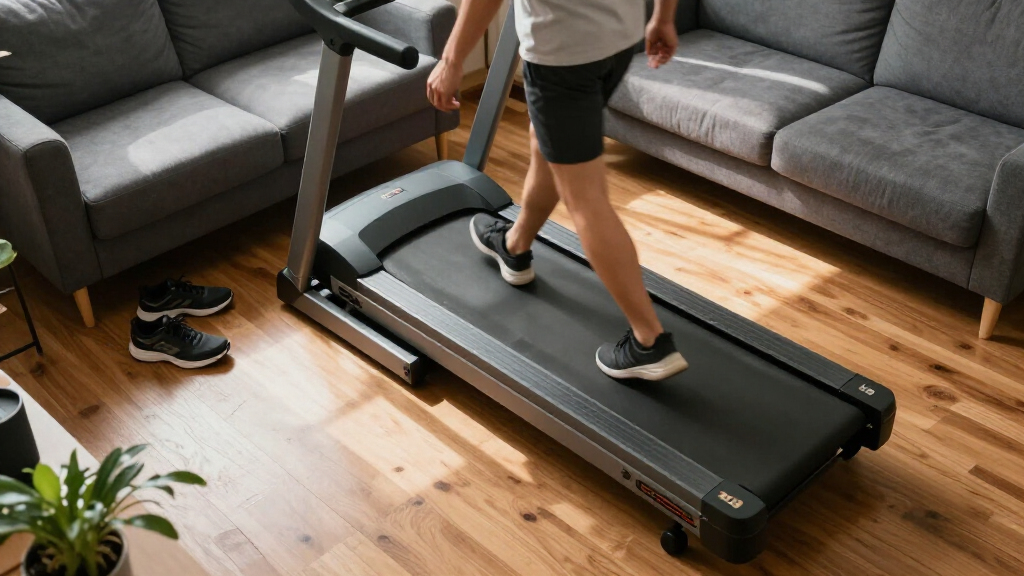
I evaluated every model against the constraints that actually define small-space living: folded footprint, unfolded footprint, weight and portability (wheels, lift assist, whether one person can move it), and whether it fits under standard furniture when stored. Beyond dimensions, I compared speed range and motor rating to separate walking-only pads from run-capable folders, and judged incline systems by their real training value — a 16% manual incline changes what a workout can be, while a flat belt limits you to pace-based progressions.
Stability and safety weighed heavily in the ranking: handrails, belt width, and deck length determine who can actually use each machine confidently, which is why rail-equipped models rank higher for beginners and older walkers despite their bulk. Finally, I factored in usability details that decide daily satisfaction — remote control reliability, display readability, assembly burden, and noise at walking speeds, since a loud belt under a desk or in an upstairs apartment quickly becomes unusable. Models ranked highest balance the most of these factors at once; lower-ranked picks still serve specific buyers, and I say exactly who in each entry.
Factors to Consider When Choosing Foldable Treadmills For Small Spaces
The reviews tell you which treadmill to buy; this section tells you how to avoid the mistakes that make small-space treadmills get returned. Before you pick, work through these six factors in order — the first two eliminate more wrong purchases than everything else combined.Measure Folded Dimensions, Not Marketing Ones
The single most common mistake in this category is buying based on the unfolded footprint and discovering the folded machine doesn’t fit anywhere. Manufacturers often quote folded height and depth separately, which hides the real storage question: can the machine stand on its end, and how much wall does it occupy? A pad that folds to 6 inches tall slides under a bed; one that folds to 14 inches with a raised tail does not. Also check whether the folded unit is freestanding or needs to lean against a wall, because leaning units can tip if bumped. Measure the actual storage spot — under the sofa, beside a bookcase, inside a closet — and compare it against the folded specs with two inches of clearance to spare. And remember that folded weight matters as much as folded size: a 60-pound slab you must wrestle upright twice a day gets abandoned, no matter how slim it is.
Decide Now: Walking Pad or Run-Capable Folder
This is the fork in the road for the whole category, and being honest here saves the most money. Walking pads top out around 4–6.2 MPH, which covers brisk walking and light jogging for shorter strides — but anyone over roughly six feet tall may find even the top speed uncomfortably choppy for anything beyond walking. Run-capable folders like the 3.0 HP model and the NordicTrack T 6.5S need longer, wider belts, stronger motors, and heavier frames, which means they never slide under furniture and always claim a corner of the room. A useful gut check: if you currently run outdoors weekly, a walking pad will frustrate you within a month. If your goal is hitting step counts during work hours or adding incline walking, a pad does everything you need at half the footprint. Buyers who try to split the difference usually end up replacing their first machine within a year.
Why Incline Changes Everything — and What It Costs
Manual incline is the sleeper feature of this roundup because it converts a flat pad into a genuine training tool: walking at 12–16% incline burns dramatically more calories and builds glute and hamstring strength at slow, joint-friendly speeds. But incline mechanisms have real costs beyond price. They raise the deck height, which matters under a desk because your knees may hit the desktop at steeper settings. They add weight, typically 10–20 pounds over flat pads, making daily relocation harder. And a manually set incline is fixed for the whole session — you step off and reposition pins or levers to change it, unlike the motorized auto-incline on traditional treadmills. My advice: choose incline if fat-loss or hill-hiking preparation is a goal, skip it if you only want movement during the workday. A flat pad used daily beats an incline pad that stays folded because it’s cumbersome.
Handrails, Stability, and Who Is Actually Using It
Handrails look like a bonus feature until you consider who benefits: older walkers, anyone with balance concerns, and users at higher weight capacities gain real safety value from something to grip, especially at incline. Removable or foldable handlebars — as on the Compact Folding Walking Pad and HevGlrm models — offer a smart compromise, though the attachment hardware adds setup steps and slight deck wobble in cheaper implementations. Rail-less pads, by contrast, are stable only at walking paces and only for users with confident balance; a moment of vertigo at 3.5 MPH with nothing to grab is genuinely dangerous. Belt dimensions tie into this: decks under 16 inches wide feel fine at 2 MPH and cramped at 4. If the treadmill will be shared across a household with mixed ages and abilities, prioritize rails and a wider belt over thinness — the folded footprint penalty is usually just a few inches.
Noise, Motors, and Apartment Reality
In an apartment or upstairs condo, noise decides whether the treadmill gets used or becomes a source of neighbor complaints. Two noise sources exist: the motor whine, which is minimal in quality walking pads at low speeds, and footstep impact, which no motor spec fixes. Heavier flywheels and higher HP ratings generally mean smoother, quieter belt operation at a given speed, which is one reason the run-capable models feel calmer underfoot. Belt quality also varies — thicker, multi-layer belts dampen thudding better than thin ones. If noise is a top concern, plan on a thick interlocking mat underneath regardless of model; it cuts transmitted impact more than any brand choice does. Check the stated decibel rating where available, but treat anything under 60 dB at walking speed as apartment-friendly and be skeptical of unspecified figures on unbranded pads.
Smart Features, Remotes, and Long-Term Reliability
App connectivity — as on the UREVO Strol 2E — adds workout tracking, programmed sessions, and sometimes auto speed control from your phone, which genuinely improves adherence if you’re motivated by data. But smart features fail differently than mechanical ones: apps get abandoned by manufacturers, Bluetooth pairing drops mid-session, and a dead app can take settings with it. Prioritize models where the remote or console works fully without the app. Remotes deserve specific scrutiny — small credit-card remotes are easily lost under furniture, so magnetic storage or lanyard holes are worth having. For reliability, look at motor warranty length as a proxy for confidence, the availability of replacement belts, and whether the brand sells parts at all. Unbranded pads with 12-month coverage are fine for light daily walking; anyone planning daily incline sessions or running should insist on longer motor warranties and a recognizable service network.
Frequently Asked Questions
Can I use a walking pad treadmill under a standing desk at incline?
Only at mild settings, and only if your desk adjusts high enough. A 12–16% manual incline raises the rear of the deck several inches, which lifts your standing height and pushes your knees closer to the desktop — at steep settings, most users find their stride is compromised or their legs hit the desk edge. If under-desk incline walking is your main goal, look at models where the incline is achieved with a low-profile wedge rather than a tall rear riser, and measure your desk’s maximum height against your own while standing on an incline. A practical pattern many home-office users adopt: flat walking under the desk during work hours, then stepping the pad out and raising the incline for a separate focused session. That hybrid approach lets one machine serve both purposes without desk modifications.
Is a foldable treadmill stable enough without handrails, or should I only buy rail-equipped models?
It depends entirely on your pace and balance profile. At typical walking speeds of 2–3 MPH, a quality rail-less pad on a level floor is stable, and thousands of daily desk-walkers use them without issue. The risk appears at higher speeds, when you glance away at a screen, or if you have any balance, inner-ear, or mobility considerations — and at those moments there is nothing to grab. Handrails also expand who else in the household can safely use the machine, which matters if parents or older family members will walk on it. If you want flexibility, the removable-handlebar models in this lineup are the smart middle path: rails when you or guests want them, removed and stored when you need the slim under-sofa profile. What I’d avoid is assuming you’ll be fine rail-less because you’re healthy today — dizziness, a phone distraction, or a shoelace issue can happen to anyone.
How much speed do I really need — is a 6.2 MPH cap enough?
A 6.2 MPH top speed equals a roughly 9.5-minute mile, which is a genuine jog — but whether it works for you depends on your height and natural stride. Taller walkers over six feet often find that anything above 5 MPH on a short walking-pad belt forces an abbreviated, uncomfortable stride, because the deck isn’t long enough for full running mechanics. Shorter users frequently jog comfortably at 5–6 MPH on these same machines. If you plan to run regularly, or you’re tall, a run-capable folder with a longer belt and a 3.0 HP-class motor is the safer choice even though it sacrifices the slide-under-furniture storage. A good self-test: find your comfortable outdoor jog pace, and if it exceeds 5.5 MPH, treat walking pads as walking-only for your body. Buying more speed than your stride can use on a short belt wastes money and sets up disappointment.
Do manual inclines hold their position, and can I change incline mid-workout?
Manual incline systems on walking pads typically use fixed locking positions — often two or three steps such as flat, moderate, and steep — and they hold those positions solidly, which is a genuine advantage over cheap motorized systems that drift. What you cannot do is change incline while walking: you step off, reposition the deck or insert a pin, and step back on. That limitation shapes how you train. Interval-style incline workouts are clunky, but sustained hill sessions work perfectly — set it steep, walk 30–45 minutes, done. Some users keep two sessions a day for this reason: flat in the morning under the desk, incline in the evening. If you want incline that shifts automatically during programmed workouts, only a motorized auto-incline machine like the NordicTrack T 6.5S delivers that, and you accept its larger footprint in exchange. For most small-space buyers, the simplicity and reliability of manual positions outweighs the convenience of auto-incline.
What’s the maintenance difference between walking pads and folding treadmills?
Walking pads are generally lower-maintenance because their motors work less hard and their belts move slower, but both types share the same core care routine: keep the belt centered and tensioned, lubricate the deck underside every few months with silicone oil, and keep dust and pet hair out of the mechanism. The differences show up over years. Run-capable folders with stronger motors handle heavier loads but consume belts and deck padding faster if used for running regularly, and their folding hinges add a joint that can develop squeaks or play over time. Walking pads rarely fail mechanically, but their lighter frames can crack at the fold line if repeatedly dropped during storage — a real risk given how often they get moved. Whichever type you buy, put it on a mat: it keeps floor grit out of the belt, dampens noise, and makes the twice-yearly lubrication routine the only maintenance you’ll realistically do. Buy from a brand that sells replacement belts and lists lubricant specs, because a maintenance orphan is a dead machine waiting to happen.
Conclusion
After comparing all 15, the right choice maps cleanly to what you’re willing to store and how you plan to move. Best overall goes to the 3-in-1 Walking Pad with 16% Manual Incline and Handrails — it is the only compact option here that combines steep incline training, safety rails, and a fold-flat frame, making it the most complete small-space machine. Best value is the Yagud Walking Pad with Incline and Handle Bar, which covers the incline-plus-rails formula for buyers who don’t need the top pick’s extras. Best premium pick is the NordicTrack T 6.5S: it gives you motorized incline, a run-capable deck, and iFit compatibility, provided you have a corner that can host its folded frame permanently.
For beginners and older walkers, I’d point to the Compact Folding Walking Pad with Removable Handlebar or the HevGlrm 380QM-2KY — the removable rails lower the barrier to starting, and the walking-only speed range keeps things safe while habits form. Under-desk workers should choose the UREVO Strol 2E for app-guided sessions or the Terluxra Home and Office pad for a slim always-out profile. And if running is the goal, skip the walking pads entirely and go with the Foldable Home Treadmill with 3.0 HP Motor. Whatever you pick, measure your storage space first — in this category, the best treadmill is the one that’s already out and ready when you feel like moving.
Fall Picks
fall essentials
As an affiliate, we earn on qualifying purchases.