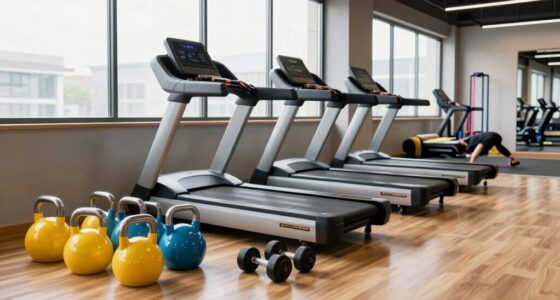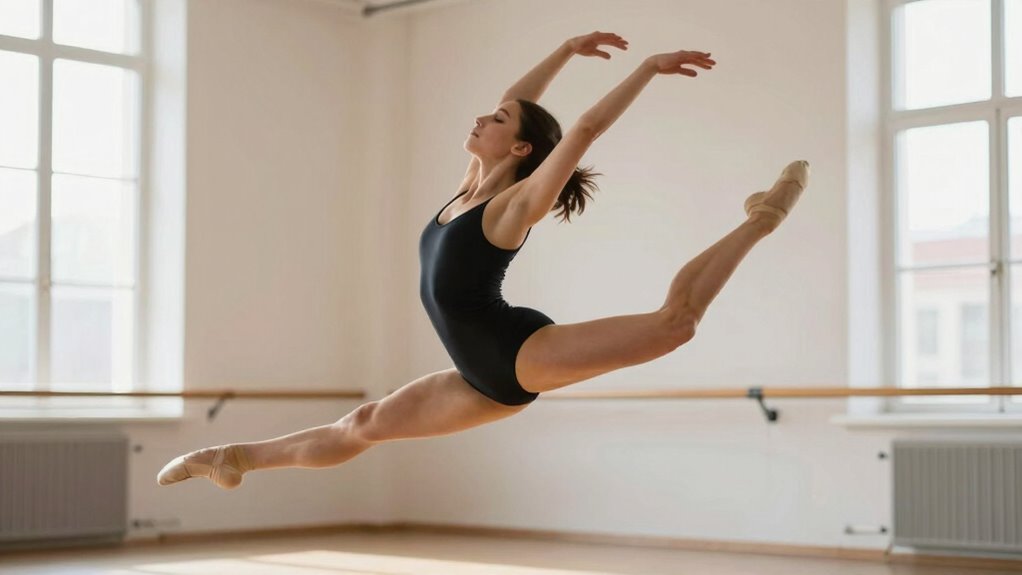

By focusing on quality movement, you improve strength without max effort. Movement practices like squatting, hinging, and lunging develop neuromuscular control, stability, and coordination, all essential for strength. Proper mechanics activate stabilizing muscles and enhance muscular balance, making daily tasks easier. Environment and controlled movement reinforce safer, more effective training. Keep exploring how mindful practice can reveal your full potential without heavy loads—there’s more to discover.

Get workout gear delivered free with Prime
- Fast, free delivery on millions of items
- Prime Video, Amazon Music and more included
- Member-only deals all year
Key Takeaways
- Movement practice enhances neuromuscular control, leading to more efficient muscle activation during everyday activities.
- Prioritizing proper mechanics improves muscular balance and stability, supporting strength development naturally.
- Focus on quality over quantity ensures optimal joint and muscle engagement, promoting strength gains without heavy loads.
- Consistent movement patterns strengthen stabilizer muscles, essential for functional strength and injury prevention.
- Environmental factors like air quality and recovery conditions optimize bodily functions, indirectly supporting strength improvements.
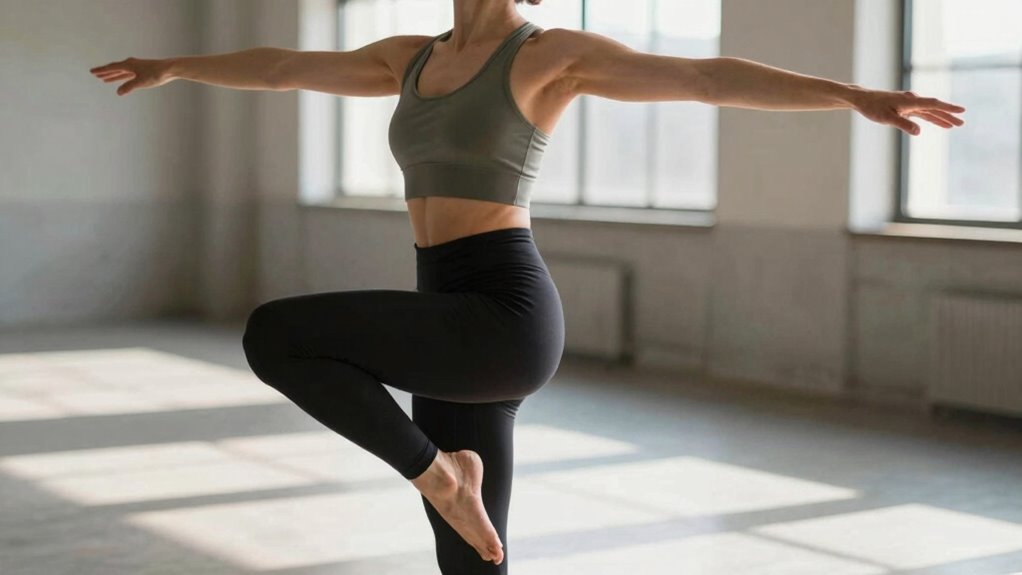
Movement practice is fundamental to building and maintaining strength, as it enhances your body’s ability to move efficiently and safely. When you focus on mobility patterns, you’re training your body to perform everyday movements with ease and precision. These patterns, such as squatting, hinging, and lunging, form the foundation of functional training, which aims to mimic real-life activities. By practicing these movements regularly, you develop neuromuscular control and coordination, allowing you to activate muscles more effectively without necessarily lifting heavy weights or pushing for max effort. This shift from isolated strength exercises to integrated movement patterns helps your body become more resilient and adaptable, reducing the risk of injury and enhancing overall strength.
Through consistent engagement in functional training, you emphasize quality over quantity. This means you’re not just aiming for brute force but focusing on how efficiently your muscles and joints work together during each movement. When you practice mobility patterns, you improve joint range of motion and muscular control, which directly contributes to strength gains over time. These improvements enable you to generate more power and stability during both daily tasks and athletic pursuits, even when you’re not exerting maximum effort. Your nervous system becomes better at recruiting the right muscles at the right time, leading to more effective movement and stronger performance. Additionally, understanding movement efficiency can further enhance your training outcomes by emphasizing proper technique and biomechanics.
Even without lifting heavy loads, movement practice helps you build strength by reinforcing proper movement mechanics. When you execute mobility exercises with attention to form, you activate stabilizing muscles that might otherwise be neglected during traditional strength training. This activation enhances your overall muscular balance and coordination, making your body more capable of handling stress and load. Over time, this results in increased strength and endurance, especially in functional contexts like lifting groceries, climbing stairs, or reaching overhead. The key is that you’re training your body to move most effectively, which naturally translates into improved strength, without the need for maximal effort. Incorporating a mindful approach to movement also fosters better movement patterns, leading to long-term functional benefits. Furthermore, paying attention to environmental factors such as indoor air quality and humidity can support optimal recovery and performance by maintaining a healthy environment that promotes better sleep and reduced inflammation.
movement practice resistance bands
As an affiliate, we earn on qualifying purchases.
As an affiliate, we earn on qualifying purchases.
Frequently Asked Questions
Can Movement Practice Replace Traditional Strength Training Routines?
Yes, movement practice can replace traditional strength training routines. It enhances functional mobility and promotes neuromuscular activation, which builds strength naturally. Instead of lifting heavy weights, you focus on controlled, purposeful movements that engage multiple muscle groups. This approach improves overall strength, flexibility, and coordination, making it a sustainable and effective alternative for long-term fitness. Plus, it reduces injury risk and supports better daily movement.
How Often Should I Incorporate Movement Practice Into My Week?
Think of your movement practice as your personal Pandora’s box—unlocking strength gradually. You should incorporate it 3 to 5 times a week, blending recovery strategies and intensity variations. This balance prevents burnout and promotes continuous progress. Like a well-orchestrated symphony, consistent practice keeps your muscles engaged, boosts strength, and enhances recovery, all without needing max effort every session. Stay flexible, listen to your body, and enjoy the journey.
Is Movement Practice Suitable for All Fitness Levels?
Yes, movement practice suits all fitness levels. You can adapt it with progression strategies, gradually increasing complexity or intensity to match your abilities. This approach helps prevent injuries by ensuring you don’t push too hard too soon. Whether you’re a beginner or advanced, consistent movement practice enhances strength, flexibility, and coordination while supporting injury prevention. Listen to your body, progress gradually, and enjoy the benefits at your own pace.
What Types of Movements Are Most Effective for Building Strength?
Mobility drills and functional exercises are highly effective for building strength because they mimic real-life movements, engaging multiple muscle groups. These movements improve your stability, flexibility, and coordination, which translate to greater strength over time. You might find that incorporating dynamic stretches, bodyweight squats, and kettlebell swings enhances your overall power without maximal effort. Consistently practicing these functional movements helps you develop a resilient, stronger body naturally.
How Long Before I See Strength Improvements From Movement Practice?
You’ll start noticing strength improvements within a few weeks of consistent movement practice. As you engage regularly, you’ll build muscle endurance and see flexibility enhancement, which contribute to overall strength gains. Keep in mind, progress varies based on your effort and consistency. With dedication, you’ll feel stronger, more resilient, and more flexible in just a short period, making your movement routine a powerful tool for long-term strength development.
functional training mobility exercises
As an affiliate, we earn on qualifying purchases.
As an affiliate, we earn on qualifying purchases.
Conclusion
By embracing movement practice, you plant seeds of strength that grow steadily, even without pushing for maximum effort. Think of it as tending a garden — consistent, mindful activity nurtures your overall power and resilience over time. When you prioritize movement, you’re not just building muscles; you’re cultivating a foundation that supports you through life’s ebbs and flows. So keep moving, and watch your strength blossom like a well-watered flower, steady and unstoppable.
stability and balance training equipment
As an affiliate, we earn on qualifying purchases.
As an affiliate, we earn on qualifying purchases.
neuromuscular control workout tools
As an affiliate, we earn on qualifying purchases.
As an affiliate, we earn on qualifying purchases.
Halloween Picks
halloween
As an affiliate, we earn on qualifying purchases.