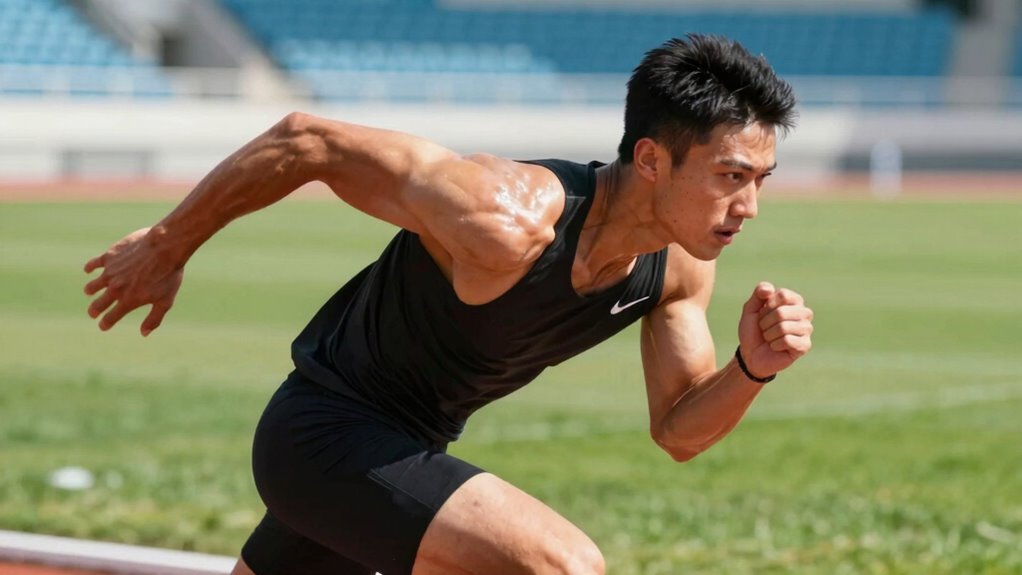

Training specificity is a big deal because it helps you focus your efforts on the skills, muscles, and energy systems needed for your goals. By tailoring your workouts to mimic actual movements or activities, you improve efficiency, reduce injury risk, and create meaningful progress. It keeps you disciplined and prevents wasteful exercises that don’t contribute to your results. If you keep going, you’ll discover how to make your training even more effective and aligned with your ambitions.

Get workout gear delivered free with Prime
- Fast, free delivery on millions of items
- Prime Video, Amazon Music and more included
- Member-only deals all year
Key Takeaways
- Training specificity ensures adaptations directly improve performance in targeted skills, movements, or energy systems.
- It helps prevent injuries by strengthening muscles and joints involved in specific activities.
- Focusing on specific exercises maximizes efficiency and accelerates progress toward goals.
- Systematic progression and proper technique enhance results and reduce stagnation or setbacks.
- Tailored routines improve motivation and safety by aligning training with individual needs and objectives.

Have you ever wondered why your training routines sometimes don’t lead to the expected results? The answer often lies in the concept of training specificity. When you focus your workouts on the specific skills, movements, or energy systems needed for your goals, you stimulate targeted muscle adaptation. This means your muscles, tendons, and nervous system adapt precisely to the demands you place on them, making your training more effective. If you’re training for strength, your program should emphasize heavy lifts and low repetitions. If endurance is your goal, then longer cardio sessions and higher repetitions are more appropriate. Without this focus, you risk wasting time on exercises that don’t produce meaningful progress.
Training specificity isn’t just about improving performance; it’s also about injury prevention. When you tailor your workouts to mimic the actual movements of your sport or activity, you strengthen the muscles and joints involved, reducing the chance of injury. For example, a runner who incorporates specific leg and core exercises will better support their running pattern, decreasing the likelihood of strains or overuse injuries. Conversely, neglecting specific training can lead to muscle imbalances or weaknesses that make you more vulnerable to injury. That’s why understanding which muscles need targeted development is essential for both progress and safety. Incorporating seasonal flavors from gelato or frozen yogurt can also add a fun, refreshing element to your recovery routine.
Tailoring workouts to mimic sport movements reduces injury risk and strengthens key muscles and joints.
Another reason training specificity is indispensable is that it optimizes your time and effort. Instead of doing random exercises that don’t align with your goals, you direct your energy toward activities that produce results. This focus helps you avoid plateaus, as your body constantly adapts to the specific stimuli you give it. Over time, this targeted approach not only enhances performance but also ensures steady progress. When your workouts are aligned with your objectives, you’re more motivated because you see tangible improvements. Additionally, understanding the principles of training adaptation can help you better plan your progression over time. Incorporating proper technique is crucial for maximizing muscle engagement and minimizing injury risk, which further underscores the importance of deliberate, goal-oriented training.
In addition, training specificity encourages smarter training progression. By gradually increasing the demand on the specific muscles and energy systems involved, you promote continued muscle adaptation. This systematic overload helps you avoid stagnation and keeps your training challenging yet safe. Integrating specificity into your routines also means paying close attention to proper technique, which is crucial for effective muscle engagement and injury prevention. Proper form ensures you’re working the right muscles and not placing unnecessary stress on joints or tendons.
Ultimately, understanding and applying training specificity allows you to make smarter choices in your workouts, leading to better results and fewer setbacks. You become more efficient, safer, and more aligned with your goals. Whether you want to boost strength, improve endurance, or prevent injuries, tailoring your training to meet those specific needs makes all the difference.
strength training weights for muscle growth
As an affiliate, we earn on qualifying purchases.
As an affiliate, we earn on qualifying purchases.
Frequently Asked Questions
How Quickly Can Training Specificity Improve Performance?
Training specificity can lead to noticeable performance improvements in as little as a few weeks. You’ll see faster muscle adaptation and better skill transfer when your workouts closely mimic your target activity. Consistent, tailored training prompts your muscles to adapt efficiently, boosting strength and endurance. Over time, this focused approach enhances your overall performance, making gains more rapid and relevant to your athletic goals.
Can Training Specificity Prevent Injuries?
Think of your body as a finely-tuned machine; training specificity can help prevent injuries by strengthening the exact muscles and joints used in your activity. Cross training benefits, like varied movement patterns, bolster your overall resilience. Injury prevention strategies, such as targeted exercises and proper technique, reduce strain and overuse. By aligning your training with your sport’s demands, you create a sturdy foundation that keeps you moving safely and confidently.
Does Training Specificity Apply to All Sports Equally?
Training specificity doesn’t equally apply to all sports because each sport demands unique skills and movements. You benefit from cross-training benefits by incorporating exercises that enhance your sport’s specific abilities, but too much sport versatility might dilute your focus. To optimize performance and prevent injuries, tailor your training to your sport’s specific demands. Balance your training to include sport-specific drills and cross-training, ensuring you develop well-rounded strength and skills.
How Should Beginners Incorporate Training Specificity?
You might wonder how beginners should approach training specificity—it’s more than just exercises. Start with a solid general warmup to prepare your body and focus on proper nutrition timing to fuel your progress. As you build a foundation, gradually tailor your workouts to your goals, but don’t overlook the basics. This cautious start creates a strong, adaptable base, revealing that even the simplest steps hold the key to lasting improvement.
What Are Common Mistakes in Applying Training Specificity?
One common mistake is neglecting muscle adaptation by doing too much variety without focusing on specific movements, which hampers progress. Another mistake is losing mental focus during workouts, leading to less effective effort. You might also overlook the importance of consistent intensity and volume tailored to your goals. To improve, stay dedicated to specific exercises, maintain mental focus, and gradually increase stress to optimize muscle adaptation.
cardio endurance training equipment
As an affiliate, we earn on qualifying purchases.
As an affiliate, we earn on qualifying purchases.
Conclusion
Think of your training as planting seeds in a garden. The more precisely you choose your seeds—your exercises—the more vibrant and fruitful your garden becomes. When you tailor your workouts to match your goals, you’re guiding a steady stream of nourishment directly to where it’s needed most. Remember, just like a gardener’s care shapes a lush landscape, your focused training shapes your strength and skills, turning your effort into a flourishing masterpiece.
sport-specific training exercises
As an affiliate, we earn on qualifying purchases.
As an affiliate, we earn on qualifying purchases.
As an affiliate, we earn on qualifying purchases.
Fall Picks
fall essentials
As an affiliate, we earn on qualifying purchases.