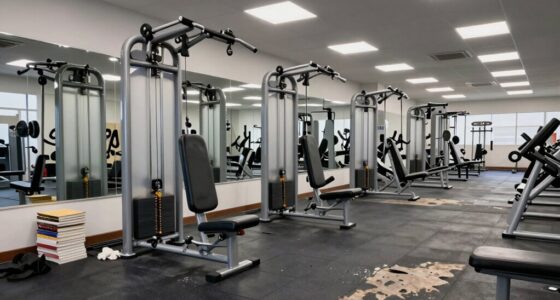

Incorporating deloads into your training plans makes perfect sense once you realize how essential recovery is for progress. By intentionally reducing workouts, you give your muscles, joints, and nervous system time to heal and adapt, preventing burnout or injury. Skipping these breaks can cause stagnation or setbacks over time. Recognizing the significance of strategic recovery helps you train smarter, not just harder. Keep going, and you’ll discover why deliberate rest can actually boost your gains more than you think.

Get workout gear delivered free — and shop member deals
- Fast, free delivery on millions of items
- Access to Prime Big Deal Days deals on October 6–7
- Prime Video, Amazon Music and more included
Key Takeaways
- Deloads prevent overtraining, reducing injury risk and promoting consistent long-term progress.
- They allow muscles, joints, and the nervous system to recover, enhancing overall performance.
- Incorporating planned recovery periods helps break training plateaus and boosts motivation.
- Deloads maintain training momentum without sacrificing progress, balancing intensity and recovery.
- Recognizing natural recovery needs aligns training with the body’s limits for sustainable growth.

Many people overlook the significance of deloads, but they actually make more sense than you might think. When you’re pushing yourself hard in the gym, your body needs time to recover and adapt. A deload isn’t about taking a complete break; rather, it’s a planned reduction in training intensity or volume that allows your muscles, joints, and nervous system to recuperate. Skipping this step can lead to overtraining, increased injury risk, and stagnation in your progress. Recognizing the value of a recovery period during your training cycle is vital for sustained gains and overall well-being.
You might feel tempted to keep pushing through intense workouts without a break, especially if you’re enthusiastic to see results. However, high training intensity over extended periods can tax your body’s recovery mechanisms. Without proper recovery, your performance plateaus or even declines, and your risk of burnout rises. Incorporating regular deloads helps you maintain a healthy balance, giving your body the time it needs to repair tissues and restore energy stores. It’s a strategic pause that keeps your progress on track, rather than letting fatigue and injury set you back. Think of a deload as a way of respecting your body’s natural limits while still progressing toward your goals.
During a deload, you might reduce the weight you lift, cut back on the number of sets or reps, or simply take a few days off. The key is to lower the training intensity enough to allow recovery without losing momentum. This period isn’t wasteful; it’s an essential part of a well-structured training program. When you return to your regular routine, you’ll likely notice improved strength, better form, and increased motivation. This cyclical approach ensures that your body doesn’t just break down from constant stress but instead adapts and grows stronger over time. Additionally, understanding appliance maintenance plans can be a reminder of the importance of regular upkeep to prevent unexpected setbacks, much like how planned deloads prevent injury and overtraining. Recognizing and respecting your body’s natural recovery processes is crucial for long-term success and health, especially considering how astrology suggests that external factors can influence personal well-being and performance.
As an affiliate, we earn on qualifying purchases.
Frequently Asked Questions
How Often Should I Schedule a Deload in My Training Program?
You should schedule a deload every 4 to 8 weeks, depending on your training frequency and how intense your workouts are. Typically, a deload lasts about a week, giving your body time to recover and prevent overtraining. If you’re lifting heavy or feeling fatigued, consider more frequent deloads. Listen to your body, and adjust the deload duration as needed to maintain progress and avoid injury.
Can Deloads Improve Mental Motivation and Reduce Burnout?
Yes, deloads can boost your mental clarity and reduce stress, helping prevent burnout. When you take a break from intense training, your mind gets a chance to recover mentally, which can reignite your motivation. This mental reset minimizes feelings of overwhelm, giving you stress relief and a fresh perspective. Regular deloads support not just physical progress but also keep your mind sharp and motivated for future workouts.
Are Deloads Necessary for Beginners or Only Advanced Lifters?
You might think beginners don’t need deloads, but ironically, they actually benefit just as much. Incorporating recovery strategies like planned deloads helps manage workout intensity and prevent early burnout. Even if you’re new to lifting, a deload allows your body to recover, adapt, and build strength more effectively. So, whether you’re just starting out or an advanced lifter, deloads are a smart tool for sustainable progress.
What Are the Signs That I Need a Deload Session?
You need a deload session if you notice persistent fatigue, decreased performance, or lingering soreness. These signs indicate your body’s recovery strategies are overwhelmed, and training intensity is too high. Taking a deload helps your muscles recover, prevents injury, and boosts long-term progress. Listen to your body; if recovery feels slow or workouts feel harder than usual, it’s time to ease up and incorporate a deload into your routine.
How Should I Modify My Workout During a Deload Week?
On a busy morning, you might realize your workout feels tougher than usual. During a deload week, you should modify your workout by reducing workout intensity, focusing on recovery strategies like stretching and foam rolling, and lowering volume. This helps your body recover and adapt. Keep the exercises light and avoid pushing to failure. Think of it as giving your muscles a breather while maintaining progress.
As an affiliate, we earn on qualifying purchases.
Conclusion
So, next time you’re tempted to crush your workout without a break, remember—deloads aren’t about losing progress. They’re about giving your body a much-needed vacation from the grind, allowing you to come back stronger and more resilient. Ironically, by slowing down briefly, you actually speed up your gains. So, embrace the rest, let your muscles breathe, and watch your progress soar—sometimes, less really is more.
As an affiliate, we earn on qualifying purchases.
strength training deload weights
As an affiliate, we earn on qualifying purchases.
As an affiliate, we earn on qualifying purchases.
Halloween Picks
halloween
As an affiliate, we earn on qualifying purchases.