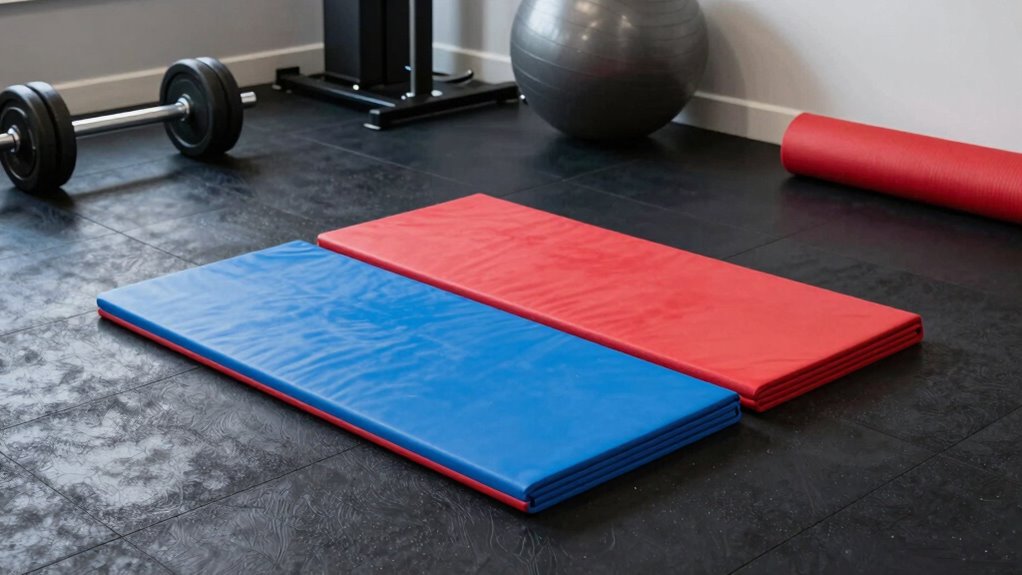

For a safer home gym, rubber flooring is your best choice as it absorbs impact, reduces noise, and supports heavy equipment, making workouts safer and more comfortable. Foam flooring offers cushioning for low-impact exercises and is easy to move around, while vinyl provides durability and easy maintenance for a stylish space. Your ideal pick depends on your workout style and space. Keep exploring to discover the perfect flooring options tailored to your needs.
Key Takeaways
- Opt for rubber flooring to absorb impact, reduce noise, and support heavy equipment safely.
- Use foam flooring for cushioning and low-impact exercises, enhancing comfort and injury prevention.
- Choose durable vinyl flooring for easy maintenance and moisture resistance in high-traffic workout areas.
- Consider layered flooring with sound-absorbing underlays to minimize noise and vibrations.
- Match flooring type to workout activities, space layout, and safety needs for an optimal home gym environment.
Creating a safe home gym starts with choosing the right flooring. Your flooring sets the foundation for everything you do, whether you’re lifting weights, doing cardio, or practicing yoga. It needs to be sturdy enough to support portable equipment like kettlebells, dumbbells, and resistance machines without risking damage or instability. A good gym floor also helps protect your joints and minimizes noise, making your workouts more comfortable and less disruptive. When considering flooring options, focus on those that offer sound absorption, reducing the noise from dropped weights or high-impact movements. This is especially important if your home gym is in a shared space or apartment, where noise can easily disturb others.
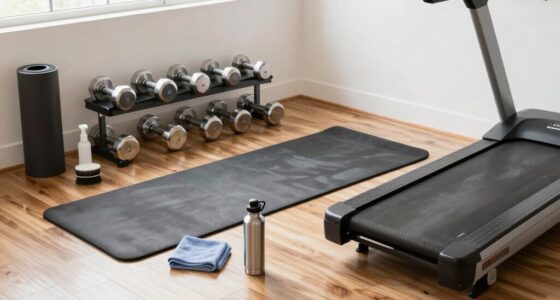
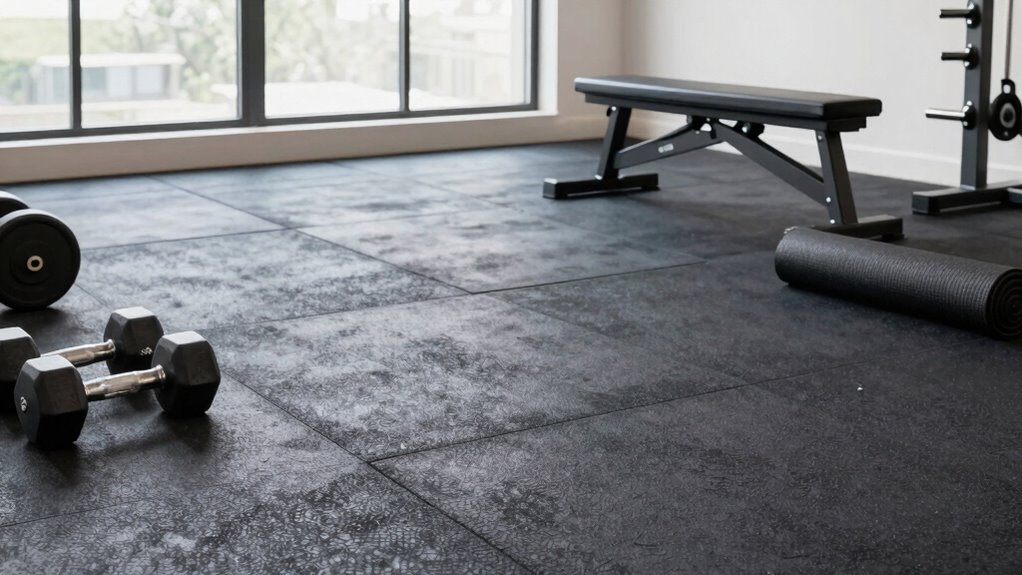
Rubber flooring is a popular choice because it offers excellent sound absorption. It reduces the impact sound of weights hitting the floor and dampens vibrations from cardio equipment like treadmills or ellipticals. Its resilience makes it ideal for supporting portable equipment, absorbing shocks, and preventing equipment from slipping or causing damage. Rubber mats are also easy to install and maintain, and they come in various thicknesses and sizes to suit your space. Thicker rubber flooring provides more cushioning, which can help protect your joints during high-impact exercises, while thinner options are suitable for areas with lighter activity. Additionally, rubber flooring’s durability makes it a cost-effective long-term solution for a home gym. Incorporating natural materials can also enhance the sustainability of your workout space, aligning with eco-friendly practices. Using environmentally friendly options can further reduce the overall carbon footprint of your home gym setup.
Rubber flooring absorbs shocks, reduces noise, and supports equipment for a safer, quieter home gym.
Foam flooring is another option, especially if you’re focusing on bodyweight exercises, stretching, or yoga. It provides good sound absorption and cushioning, making it comfortable for your joints and ideal for low-impact routines. Foam tiles are lightweight and portable, so you can easily rearrange or remove them as needed. This portability allows you to adapt your gym layout for different workouts or to store equipment when not in use. However, keep in mind that foam flooring might not withstand heavy weights or high-impact activities as well as rubber, so it’s better suited for light exercises and activities that demand less support. Selecting shock-absorbing materials like foam can help minimize fatigue and injury risk during your workouts.
Vinyl flooring offers a sleek, durable surface that’s resistant to moisture and scratches. It’s a low-maintenance option that also provides decent sound absorption, especially if you choose thicker versions or add underlayments. Vinyl is a good choice if you want a stylish look combined with functionality, and it can support portable equipment fairly well. It’s also easy to clean, which is a plus when your home gym gets a lot of use. When combined with sound-absorbing underlayments, vinyl can significantly enhance the acoustic comfort of your workout space. Proper installation and additional underlayments can further improve its durability and soundproofing qualities.
Ultimately, your choice depends on your workout style, space, and noise considerations. But choosing flooring that supports portable equipment and offers sound absorption makes your home gym safer, quieter, and more enjoyable. Each option has its benefits, so weigh them against your needs to create a space that encourages consistent, safe workouts.

AIRHOP 0.56in Thick 48 Sq Ft Exercise Equipment Mats, 12 Tiles Upgraded Rubber Top with High Density EVA Foam, Large Interlocking Puzzle Gym Flooring for Home Gym, Heavy Weight Workout, 24 x 24in
- Dual-Layer Design: Rubber top with high-density EVA foam base
- Easy Assembly: Interlocking tiles for quick setup and removal
- Large Coverage: 48 sq ft with 12 tiles, 24×24 inches each
As an affiliate, we earn on qualifying purchases.
As an affiliate, we earn on qualifying purchases.
Frequently Asked Questions
How Do I Maintain Gym Flooring to Ensure Durability?
To maintain gym flooring and guarantee durability, follow simple maintenance tips and cleaning routines regularly. Sweep or vacuum the surface to remove dirt and debris, and use a damp mop with mild detergent for deeper cleaning. Avoid harsh chemicals that can damage the material. Promptly clean spills to prevent stains or warping. Consistent upkeep preserves the flooring’s integrity, keeping your home gym safe and in great shape for years to come.
Are Certain Flooring Types More Eco-Friendly Than Others?
Yes, certain flooring types are more eco-friendly than others. You should look for sustainable flooring options made from eco-friendly materials like cork, bamboo, or recycled rubber. These materials are renewable, reduce environmental impact, and often have low VOC emissions, making them healthier for your home gym. Choosing sustainable flooring helps protect the environment while providing durable, safe surfaces for your workouts.
Can I Install Gym Flooring Myself or Should I Hire a Professional?
You can definitely try a DIY installation for your gym flooring if you’re comfortable with basic tools and follow the manufacturer’s instructions carefully. However, for complex or large projects, hiring a professional guarantees expert guidance, precise fitting, and a safer, more durable result. Consider your experience level and the flooring type you’re installing—if in doubt, investing in professional expertise can save you time and prevent costly mistakes.
What Is the Average Lifespan of Different Gym Flooring Options?
Ever wondered how long your gym flooring will last? Generally, rubber mats last 8-15 years, vinyl flooring about 10-20 years, and foam tiles roughly 5-10 years. Consider material durability and cost comparison when choosing; rubber offers excellent longevity at a higher price, while foam is budget-friendly but less durable. Your choice impacts your gym’s safety, so pick wisely based on your workout intensity and maintenance efforts.
How Do I Choose Flooring That Minimizes Injury Risk?
To minimize injury risk, prioritize mat safety and cushioning options. Choose flooring that provides ample shock absorption, reducing impact during high-intensity moves. Look for materials like rubber or foam, which offer both safety and comfort. Guarantee the surface is non-slip to prevent falls. Regularly inspect your flooring for wear, and consider layering mats for extra cushioning, creating a safer workout environment that minimizes injury risks.
As an affiliate, we earn on qualifying purchases.
Conclusion
Choosing the right flooring transforms your home gym into a safer space. It’s not just about style or comfort; it’s about protection and peace of mind. The soft cushion beneath your feet cushions your falls and absorbs impact, while the sturdy surface keeps you grounded. Together, they create a sanctuary where your workouts are safe and your confidence grows. Because in the end, the best flooring isn’t just a surface—it’s your foundation for success.
As an affiliate, we earn on qualifying purchases.
soundproof gym flooring underlay
As an affiliate, we earn on qualifying purchases.
As an affiliate, we earn on qualifying purchases.