To make healthy movement feel more natural, start by approaching changes gradually and with awareness. Focus on slow, deliberate motions and use breath control to promote relaxation and presence. Pay attention to your posture, keeping your spine long and core engaged, to support efficiency. Practice mindful routines daily, with relaxed shoulders and an open chest, until it becomes second nature. If you stay consistent, you’ll discover how fluid and instinctive healthy movement can truly become.

Get workout gear delivered free with Prime
- Fast, free delivery on millions of items
- Prime Video, Amazon Music and more included
- Member-only deals all year
Key Takeaways
- Practice movements slowly and deliberately to build familiarity and reduce awkwardness.
- Use deep, diaphragmatic breathing to enhance relaxation and connection with your body.
- Incorporate free-floating principles to promote fluidity and instinctive motion.
- Maintain proper posture alignment to support comfort and efficient movement.
- Dedicate daily time to mindful movement, focusing on awareness, breathing, and routine consistency.
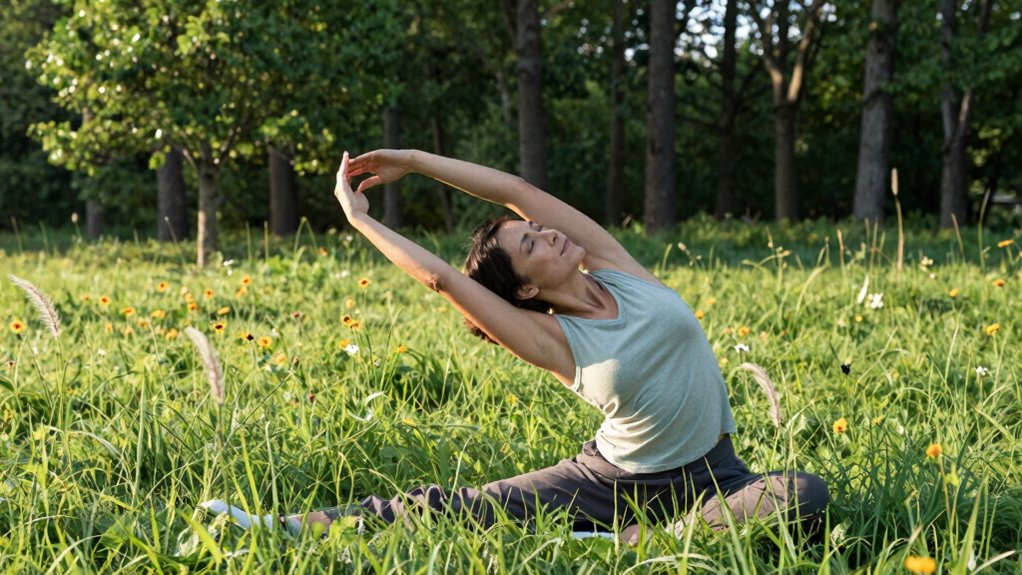
Moving your body in healthy ways often feels unnatural at first, especially if you’re trying to establish new habits. Your muscles might feel awkward, and your movements may seem stiff or forced. The key is to approach these changes gradually and with awareness. One effective way to do this is by focusing on breathing techniques. When you consciously control your breath, you help your body relax and stay present in each movement. Deep, diaphragmatic breathing encourages oxygen flow and reduces tension, making movement feel more fluid and less strained. Instead of holding your breath or rushing through exercises, take slow, deliberate inhales and exhales. This not only calms your nervous system but also enhances your mind-body connection, helping the movements become more natural over time. Incorporating Free Floating principles can also promote a sense of ease and fluidity in your movements, making them feel more instinctive and less constrained. Additionally, understanding the importance of posture alignment can significantly improve how natural your movements feel, as proper alignment supports your body’s efficiency and comfort. Good posture also helps prevent injuries and reduces fatigue, making it easier to maintain consistent habits.
Alongside breathing, paying attention to posture alignment plays an essential role. Poor posture often leads to discomfort and inefficient movement, which can discourage you from staying consistent. When you align your spine, shoulders, and hips properly, you create a stable foundation for every movement. Proper posture isn’t about rigid perfection but about maintaining a balanced position that supports your body’s natural curves. For example, when you stand or walk, imagine lengthening your spine and gently engaging your core. This helps distribute your weight evenly and reduces strain on your joints. As you practice these adjustments, your movements start to feel more effortless, and your body becomes more accustomed to the correct postural habits. Research also indicates that good posture can positively influence your confidence and overall well-being. Developing awareness of body mechanics can further enhance your ability to move naturally and comfortably.
Integrating breathing techniques and posture alignment into your routine takes time and patience. Start by dedicating a few minutes each day to mindful movement, focusing on slow, controlled breaths and checking your posture. For instance, during simple stretches or walks, remind yourself to breathe deeply and keep your shoulders relaxed, chest open, and back straight. Over days and weeks, these practices become second nature, making healthy movements feel less like effort and more like a natural part of your daily life. Remember, consistency is key. The more you tune into your breath and alignment, the more your body will adapt, and the easier it will be to move comfortably and confidently.
mindful movement exercise equipment
As an affiliate, we earn on qualifying purchases.
As an affiliate, we earn on qualifying purchases.
Frequently Asked Questions
How Long Does It Take to Feel Comfortable With New Movements?
It typically takes a few weeks to a couple of months to feel comfortable with new movements, depending on your consistency. By maintaining regular movement consistency, you reinforce muscle memory, making the actions feel more natural over time. Keep practicing regularly, and you’ll notice improvements as your body adapts. Remember, patience is key—your muscles need time to learn and remember the new patterns, so stay committed.
Can Natural Movement Prevent Injuries Effectively?
Yes, natural movement can effectively prevent injuries. For example, a runner who incorporates a movement assessment, focusing on proper gait and posture, reduces stress on joints and minimizes injury risk. By aligning movements with your body’s natural patterns, you strengthen muscles and improve flexibility. This proactive approach helps you avoid strains and sprains, making injury prevention an integral part of your fitness routine.
Are There Specific Exercises for Improving Movement Fluidity?
Yes, focusing on movement sequencing and flexibility training can improve your movement fluidity. Incorporate exercises that gradually increase in complexity, like dynamic stretches and controlled movements, to enhance coordination. Regular flexibility training helps your joints move smoothly, reducing stiffness and preventing injury. By practicing these exercises consistently, you’ll notice your movements becoming more natural and effortless, making daily activities easier and safer.
How Do I Stay Motivated to Maintain Natural Movement Habits?
To stay motivated to maintain natural movement habits, focus on cultivating mindful awareness during your daily activities. Celebrate small victories and track your progress to reinforce movement consistency. Remember why you started—whether for health, energy, or enjoyment—and visualize your improvements. Making movement a regular, enjoyable part of your routine helps it feel more natural, encouraging you to stick with it and stay motivated over the long term.
Is Professional Guidance Necessary for Proper Movement Techniques?
While professional guidance isn’t always necessary, it can be highly beneficial. A movement assessment helps identify your strengths and weaknesses, ensuring proper technique. Personalized coaching provides tailored feedback, corrects form, and prevents injuries. If you’re serious about making movement feel natural and safe, investing in a qualified coach can boost your confidence and effectiveness, making it easier to integrate healthy habits into your daily routine.
As an affiliate, we earn on qualifying purchases.
Conclusion
Remember, making healthy movement feel natural takes consistency and patience. When you listen to your body and choose enjoyable activities, it becomes easier to stay active. Did you know that people who incorporate daily movement are 30% more likely to stick with their routines long-term? So, prioritize enjoyable, gentle movements that fit your lifestyle. Over time, these habits will feel less like a chore and more like a natural part of your day, leading to lasting health benefits.
posture correction support brace
As an affiliate, we earn on qualifying purchases.
As an affiliate, we earn on qualifying purchases.
As an affiliate, we earn on qualifying purchases.
Halloween Picks
halloween
As an affiliate, we earn on qualifying purchases.