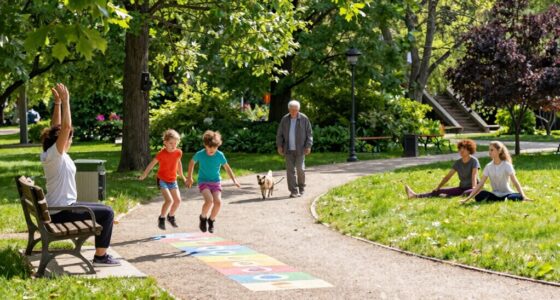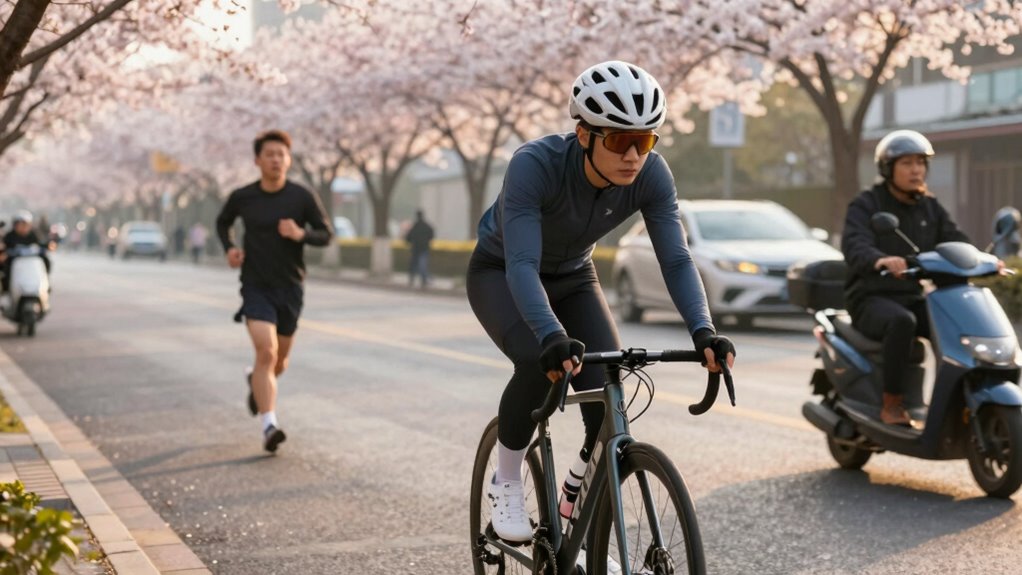

Active commuting effortlessly boosts your fitness by integrating movement into your daily routine. It strengthens muscles, improves cardiovascular health, and gradually increases stamina and endurance. Plus, it helps you avoid feeling sluggish and reduces the risk of health issues like obesity and heart disease. By cycling or walking regularly, you also support sustainability efforts and promote safer urban infrastructure. If you keep exploring, you’ll discover even more ways active commuting can transform your overall health and community environment.

Get workout gear delivered free with Prime
- Fast, free delivery on millions of items
- Prime Video, Amazon Music and more included
- Member-only deals all year
Key Takeaways
- Incorporates regular movement, gradually enhancing muscle strength and cardiovascular health.
- Boosts stamina and endurance through consistent physical activity during commutes.
- Reduces lethargy, promoting a more active and health-conscious daily routine.
- Encourages sustainable habits that contribute to long-term fitness improvements.
- Reinforces a baseline of physical activity, making fitness gains more attainable over time.
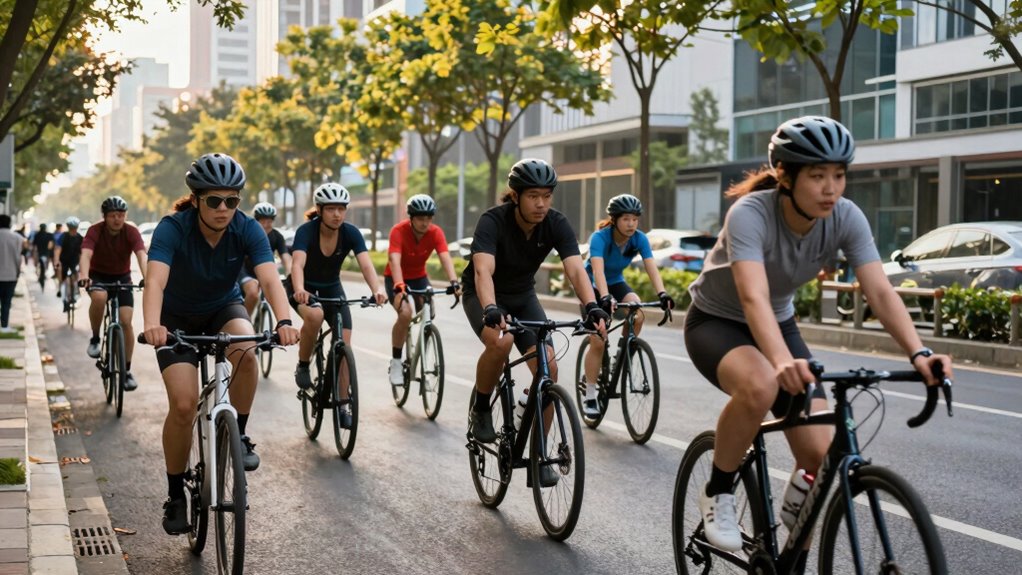
Active commuting offers an effective way to boost your fitness without extra time dedicated to exercise. When you choose to walk, bike, or use other forms of active transportation, you integrate movement into your daily routine effortlessly. This approach not only improves your physical health but also supports broader goals like commuting sustainability. By reducing reliance on cars, you lower your carbon footprint, contributing positively to the environment. Additionally, active commuting can influence urban infrastructure development, prompting cities to prioritize safer bike lanes, wider sidewalks, and better public transit options. These improvements make it easier and safer for you to move actively, reinforcing your commitment to a healthier lifestyle.
Active commuting boosts fitness, supports sustainability, reduces carbon footprint, and encourages safer urban infrastructure.
As you adopt active commuting, you notice your fitness baseline gradually shifts. Simple activities like walking to the bus stop or cycling to work become more than just transit choices—they turn into opportunities to strengthen your muscles, improve cardiovascular health, and increase overall stamina. Over time, these small movements add up, leading to noticeable gains in your endurance and energy levels. The more you incorporate physical activity into your daily routine, the less likely you are to feel sluggish or lethargic. Plus, by choosing active options, you avoid the sedentary lifestyle that often accompanies traditional commuting methods, which can contribute to health issues like obesity and cardiovascular disease.
Engaging in active commuting also encourages you to be more connected with your environment. As you navigate urban infrastructure designed to support sustainable transportation, you become more aware of your surroundings. This increased awareness can lead to a greater appreciation for community spaces and the need for ongoing improvements in urban design. Plus, active commuting often fosters social interactions—say, chatting with fellow cyclists or pedestrians—enhancing your sense of community and motivation to keep moving. These social and environmental benefits reinforce your commitment to staying active and can make your routine feel more enjoyable and sustainable over the long term. Recognizing the importance of urban infrastructure can motivate you to advocate for better pathways and safer routes in your community.
Incorporating active commuting into your daily life isn’t just about physical health; it’s a conscious choice that influences larger societal and environmental factors. It promotes a shift toward more sustainable urban infrastructure, which benefits everyone by reducing congestion and pollution. As cities increasingly support active transportation, you’ll find it easier and safer to maintain this habit, creating a positive feedback loop. Over time, these changes can redefine your fitness baseline, making physical activity a natural and integral part of your daily routine. Strong problem-solving skills and adaptability are also essential traits that support consistent engagement in active commuting, helping you overcome obstacles and stay motivated. Being aware of the impact of contrast ratio on visual clarity can also motivate you to choose routes with better lighting and safer pathways, further supporting your active lifestyle. Incorporating knowledge about portable power solutions and solar technology can even help you stay connected and powered up while on the move, making your active routines more convenient and efficient. Not only do you improve your health, but you also contribute to creating healthier, more sustainable communities for the future.
As an affiliate, we earn on qualifying purchases.
Frequently Asked Questions
Can Active Commuting Replace All Traditional Workouts?
Active commuting can’t fully replace traditional workouts, but it considerably boosts your fitness. It helps you overcome commuting challenges by keeping you active daily, while also offering environmental benefits by reducing your carbon footprint. Incorporating walking or cycling into your routine adds consistent exercise, improving overall health. However, for targeted training and muscle building, you’ll still need dedicated workouts. Combining both approaches maximizes health benefits and supports your fitness goals.
How Does Active Commuting Impact Mental Health?
Active commuting boosts your mental health by increasing mindfulness practices and reducing stress. As you cycle or walk, you focus on your surroundings, which helps clear your mind and promotes relaxation. Regularly engaging in physical activity during your commute can lower anxiety levels and improve mood. This daily routine becomes a natural form of stress reduction, making you feel more energized, focused, and emotionally balanced throughout your day.
What Are the Best Routes for Safe Active Commuting?
Choosing your routes is like finding a well-lit trail through a dark forest. Look for bike lanes and pedestrian pathways that are separated from traffic, offering safety and peace of mind. Opt for routes with good visibility, smooth surfaces, and minimal intersections. Local maps or cycling apps can help identify safe, dedicated lanes. Prioritize well-maintained paths that keep you visible and protected, making your commute safer and more enjoyable.
How Can Beginners Start Active Commuting Safely?
To start active commuting safely, follow beginner tips like planning your route carefully, choosing well-lit, low-traffic paths, and wearing visible clothing. Always prioritize commuting safety by obeying traffic rules, using protective gear, and staying alert. Gradually increase your distance and pace to build confidence. These steps help you enjoy active commuting while minimizing risks, making it a safe, effective way to boost your fitness.
Are There Gear Recommendations for Different Weather Conditions?
For different weather conditions, you should choose appropriate weather gear and clothing layers. In cold weather, layer up with moisture-wicking base layers, insulating mid-layers, and waterproof outer shells. During rain, wear a waterproof jacket and quick-drying pants. In hot weather, opt for lightweight, breathable fabrics and a hat. Always carry extra gear like gloves or sunglasses as needed. Proper clothing keeps you comfortable, safe, and motivated for your active commute.
comfortable walking shoes for daily commute
As an affiliate, we earn on qualifying purchases.
As an affiliate, we earn on qualifying purchases.
Conclusion
So, next time you opt for that brisk walk or bike ride to work, don’t just think of it as a simple commute. Ironically, it might be the easiest way to boost your fitness without hitting the gym. You might find yourself fitter and more energized, all while saving time and money. Who knew that the secret to better health was just a few steps or pedals away? Sometimes, the simplest change truly makes the biggest difference.
compact bike lock for urban cycling
As an affiliate, we earn on qualifying purchases.
As an affiliate, we earn on qualifying purchases.
ergonomic backpack for active commuting
As an affiliate, we earn on qualifying purchases.
As an affiliate, we earn on qualifying purchases.
Halloween Picks
halloween
As an affiliate, we earn on qualifying purchases.