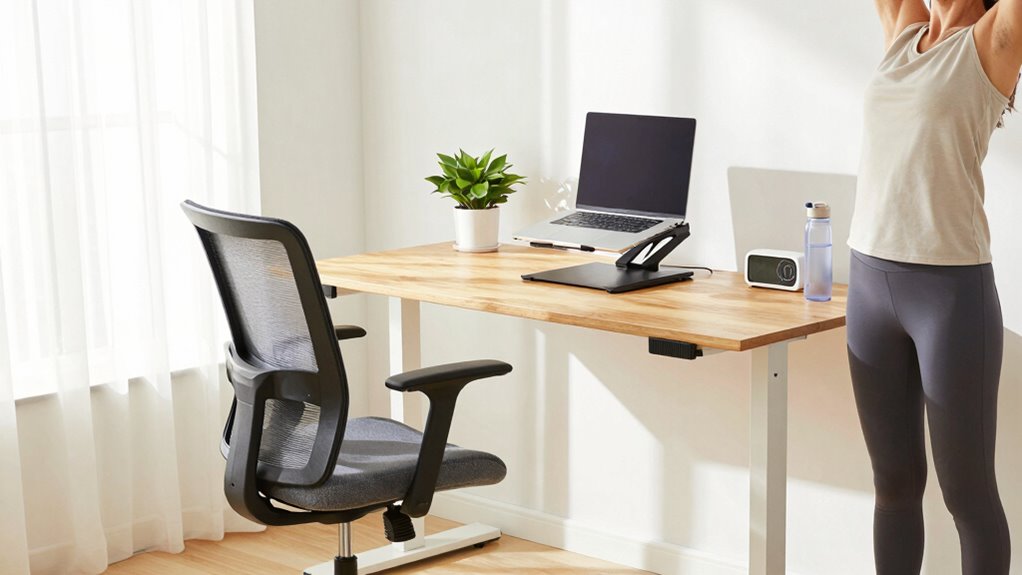

If you sit most of the day, try to incorporate simple habits like standing up every hour to stretch your arms, bending your torso side to side, and reaching for your toes to loosen tight muscles. Keep a water bottle nearby and set reminders to stay hydrated, which boosts energy and encourages movement. Pay attention to your posture and adjust your workspace for comfort. Maintaining these small actions can make a big difference in your health—so keep going to learn more.

Get workout gear delivered free with Prime
- Fast, free delivery on millions of items
- Prime Video, Amazon Music and more included
- Member-only deals all year
Key Takeaways
- Incorporate regular stretching routines to relieve muscle tightness and improve circulation.
- Keep a water bottle nearby and set reminders to stay hydrated throughout the day.
- Maintain good posture and ergonomics to reduce musculoskeletal discomfort.
- Take frequent movement and break periods to boost energy and prevent stiffness.
- Make small, mindful lifestyle choices that support overall comfort and health during prolonged sitting.
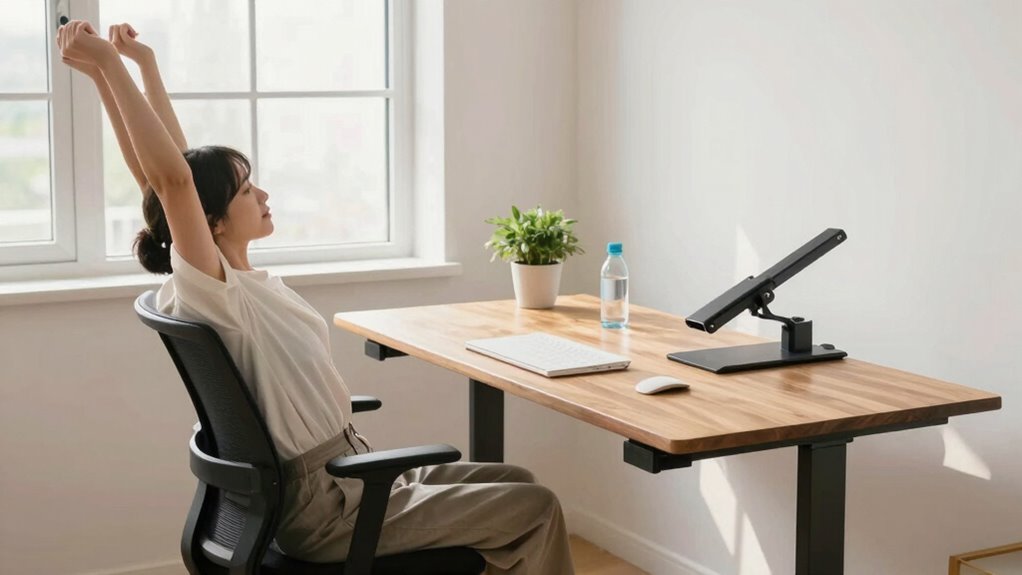
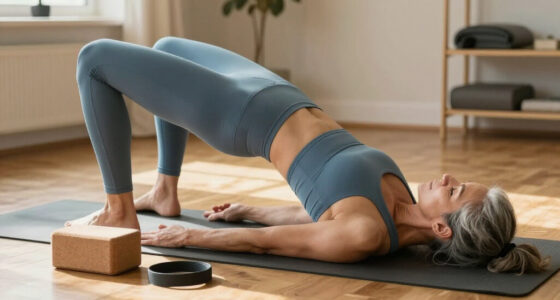
If you spend most of your day sitting at a desk or in front of a screen, staying active can feel like a challenge. Long hours of sitting can lead to stiffness, poor posture, and fatigue, but small, consistent habits can make a big difference. One of the easiest ways to counteract the effects of sitting is by incorporating simple stretching routines into your day. Every hour, stand up and stretch your arms overhead, gently bend your torso side to side, and stretch your hamstrings by reaching for your toes. These quick movements improve circulation, loosen tight muscles, and reduce the risk of discomfort. You don’t need elaborate routines; even a few minutes of stretching can refresh your body and mind, making it easier to stay focused and productive.
Stretch every hour to boost circulation, improve posture, and stay energized during long desk sessions.
Along with stretching routines, paying attention to your hydration habits is essential. Drinking enough water not only keeps your body functioning properly but also encourages you to move more frequently. When you’re well-hydrated, you tend to feel more alert and energized, reducing the temptation to stay sedentary. Make it a habit to keep a water bottle nearby and set reminders to sip regularly throughout the day. Proper hydration also helps prevent common issues associated with prolonged sitting, such as headaches and muscle cramps. As you hydrate, you naturally take breaks to refill your bottle or visit the restroom, giving you additional opportunities to stand and stretch. Additionally, understanding water damage and rug cleaning can help you protect your space from issues caused by spills or leaks that may occur during long periods of inactivity, such as in offices or homes. Incorporating ergonomic workspace setup can further enhance your comfort and reduce strain during extended sitting sessions.
Furthermore, being mindful of your posture and alignment can significantly decrease your risk of developing musculoskeletal problems over time. Research indicates that poor posture can contribute to long-term discomfort and injury, making proper setup and awareness crucial. Over time, these small actions can appreciably improve your posture, circulation, and overall comfort. It’s important to listen to your body—if you feel tight or achy, extend your stretching routines or increase your hydration. Regularly engaging in movement breaks not only sustains your energy levels but also helps prevent the negative effects of prolonged sitting. Remember, consistency is key; the more you integrate these habits into your daily routine, the easier they become, and the greater the benefits you’ll notice.
Ultimately, staying active doesn’t mean dedicating hours to exercise. Instead, it’s about making mindful choices—stretching regularly and maintaining good hydration habits—that support your health amid a sedentary lifestyle. These simple habits are accessible, easy to implement, and highly effective in making your workday more comfortable and healthier.
ergonomic sit-stand desk converter
As an affiliate, we earn on qualifying purchases.
As an affiliate, we earn on qualifying purchases.
Frequently Asked Questions
How Often Should I Take Breaks During Long Sitting Periods?
You should take a break every 30 to 60 minutes during long sitting periods. Use this time for posture correction, stretching, and walking around to prevent stiffness and improve circulation. Remember to stay hydrated by drinking water regularly and set hydration reminders. Frequent breaks help reduce muscle strain and boost energy, making your sitting sessions healthier and more comfortable overall.
Are Specific Stretches More Effective for Desk Workers?
Absolutely, focusing on specific stretches can be a game-changer. Incorporate stretching routines that target your neck, shoulders, and back to loosen tight muscles. Posture adjustments, like sitting upright and engaging your core, also make a big difference. These targeted stretches are more effective than generic ones, helping you stay limber and prevent discomfort. Think of it as tuning your body’s engine—regular tune-ups keep everything running smoothly.
Can Ergonomic Furniture Reduce Health Risks From Sitting?
Yes, ergonomic furniture can considerably reduce health risks from prolonged sitting. By promoting ergonomic design, it helps improve your posture, reducing strain on your neck, back, and shoulders. When you use ergonomic chairs and desks, you support proper alignment, which minimizes discomfort and prevents long-term issues like musculoskeletal problems. Investing in ergonomic furniture encourages better posture improvement, making your workday healthier and more comfortable.
What Are Quick Exercises I Can Do at My Desk?
Did you know sitting for over 8 hours a day increases health risks by 60%? To combat this, try quick exercises at your desk, focusing on posture correction and desk yoga. Stretch your arms overhead, do seated twists, or shoulder rolls to loosen tight muscles. These small movements can improve circulation and reduce stiffness, helping you stay energized and focused throughout your workday.
How Does Sitting Affect Mental Health and Focus?
Sitting for long periods can decrease mental clarity and impair focus, making it harder to stay alert. Poor posture worsens these effects by causing discomfort and reducing blood flow to your brain. To improve mental health and focus, take regular breaks to stand and stretch, which enhances posture and boosts blood circulation. These simple habits help clear your mind, increase mental clarity, and support overall well-being during long sitting hours.
As an affiliate, we earn on qualifying purchases.
Conclusion
So, there you have it—your foolproof plan to stay healthy while glued to your desk. Just remember, standing up every hour, stretching like a cat, and sneaking in a quick walk isn’t just good advice; it’s your new secret weapon against the sedentary life. Who knew that tiny habits could save you from turning into a chair-bound potato? Now go forth, conquer your day, and maybe—just maybe—avoid turning into the office zombie!
hydration water bottle with reminders
As an affiliate, we earn on qualifying purchases.
As an affiliate, we earn on qualifying purchases.
As an affiliate, we earn on qualifying purchases.
Halloween Picks
halloween
As an affiliate, we earn on qualifying purchases.