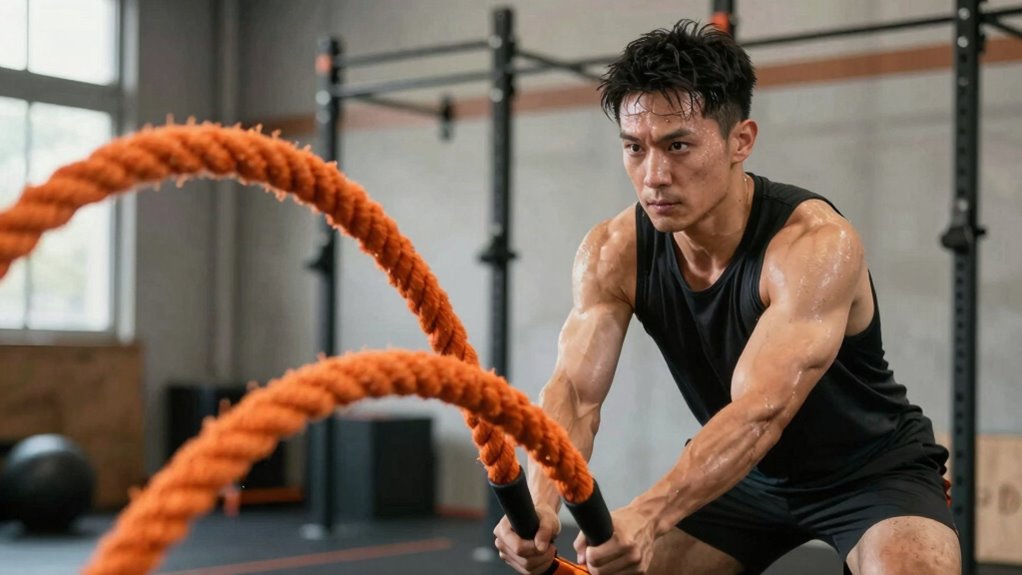

As a beginner, start with simple wave movements, gripping the ropes firmly and focusing on engaging your core. Keep your back straight and knees slightly bent to avoid strain. Begin with short sessions of 10-15 minutes, gradually increasing intensity and duration as you build strength and endurance. Rest when needed, and listen to your body to prevent injury. Staying consistent and proper form will boost your progress—if you continue exploring, you’ll find even more ways to improve.

Get workout gear delivered free with Prime
- Fast, free delivery on millions of items
- Prime Video, Amazon Music and more included
- Member-only deals all year
Key Takeaways
- Start with short, controlled sessions focusing on proper wave techniques to build foundational skills.
- Engage your core and maintain good posture to prevent injury and maximize workout effectiveness.
- Incorporate rest periods and gradually increase duration and intensity to promote safe progression.
- Combine battle ropes with jump rope and resistance bands for a balanced, full-body conditioning routine.
- Prioritize consistency and proper form to improve strength, endurance, and coordination over time.
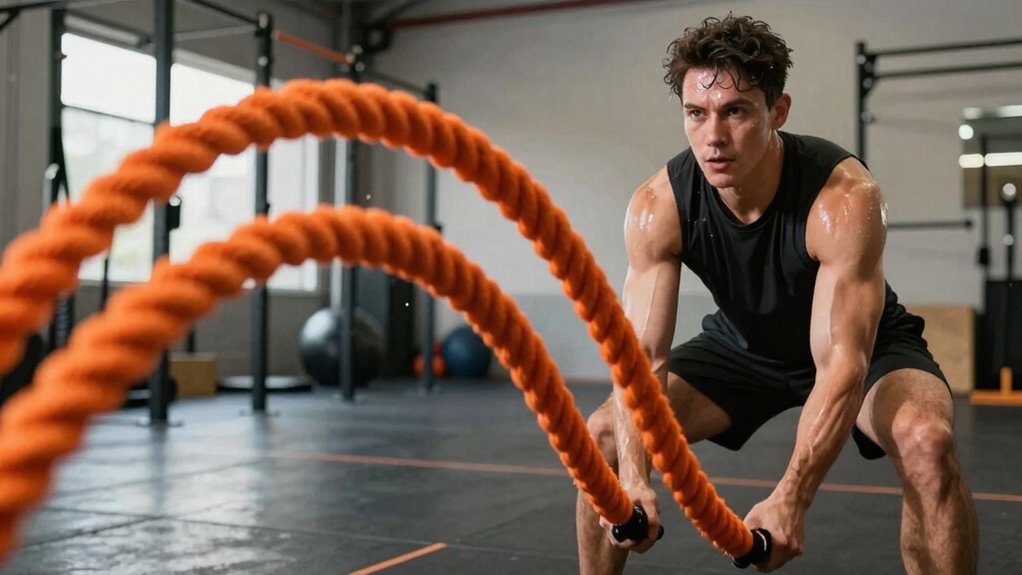
Battle ropes are a versatile and highly effective tool for conditioning that can elevate your fitness routine to the next level. When you’re just starting out, it’s helpful to understand how battle ropes compare to other equipment like jump ropes and resistance bands. Each offers unique benefits, but battle ropes bring a dynamic, full-body workout that boosts strength, endurance, and coordination. Incorporating a jump rope into your warm-up can prepare your muscles and improve your cardio, while resistance bands help target specific muscle groups for added strength. Battle ropes, on the other hand, combine these elements into high-intensity, engaging movements that challenge multiple muscle groups simultaneously.
If you’re new to battle ropes, focus on mastering basic movements first. Start with simple waves, where you grip the ends and rock the ropes in a rhythmic, controlled manner. This helps build technique and endurance without overwhelming your muscles. Keep your core engaged to maintain stability and avoid unnecessary strain. As you become more comfortable, you can incorporate variations like double waves, slams, or circles to increase intensity. These movements mimic the explosive power needed in many sports and functional activities. Remember to maintain proper posture by keeping your back straight and knees slightly bent, ensuring you don’t strain your lower back. Additionally, understanding proper form can help prevent injury and maximize the effectiveness of your workouts.
Using jump ropes before your battle rope session can also be beneficial. Jump ropes improve your coordination, footwork, and cardiovascular health, all of which enhance your ability to perform high-intensity battle rope exercises. Resistance bands can be used as a supplementary tool to target specific muscles that support your core and arms, helping to improve your overall strength and stability. For example, incorporating resistance band exercises for your shoulders and back can make your battle rope movements more effective and reduce the risk of injury. Additionally, understanding the emerging trends in digital publishing can help you find new resources and tutorials to refine your technique and stay motivated. Staying aware of these trends can also provide insights into accessible fitness resources, making it easier for seniors to participate safely and effectively.
As a beginner, it’s important to start slow and listen to your body. Limit your initial sessions to 10-15 minutes, focusing on proper form rather than speed or power. Rest periods are essential, especially when you’re learning new movements, so don’t hesitate to take breaks. Incorporating progressive overload can help you steadily increase your strength and endurance without risking injury. Over time, as your endurance and technique improve, you can increase the duration and intensity of your workouts. Consistency is key, and combining battle ropes with jump rope drills and resistance band exercises offers a balanced approach to building your conditioning. Stick with it, and you’ll notice your strength, stamina, and overall fitness improve steadily.
As an affiliate, we earn on qualifying purchases.
Frequently Asked Questions
What Is the Ideal Length and Thickness for Beginner Battle Ropes?
For beginners, a battle rope length of 30-40 feet and thickness of 1.5 to 2 inches work well. These dimensions provide enough resistance without overwhelming you. Duration tips include starting with 15-20 seconds of continuous movement, gradually increasing. Focus on grip techniques like firm, controlled grips to prevent fatigue. This setup helps build endurance and strength safely while mastering proper form.
How Often Should Beginners Incorporate Battle Ropes Into Their Training?
You should incorporate battle ropes into your training about two to three times a week to boost your cardio endurance and muscle engagement. Think of your workouts as tending a garden—consistency helps your gains grow strong and steady. Starting with 15-20 minute sessions allows your body to adapt without overloading, helping you build stamina and strength gradually. Adjust frequency based on how your body responds and progress over time.
Are There Any Safety Precautions for Using Battle Ropes at Home?
Yes, there are safety precautions when using battle ropes at home. You should maintain a proper grip to prevent slipping and guarantee control during exercises. Check your ropes regularly for wear and tear, replacing them if needed to avoid accidents. Clear your workout area of obstacles to prevent tripping. Also, warm up beforehand and start with shorter sessions to build strength safely. Proper technique and maintenance keep your workouts safe and effective.
Can Battle Ropes Help Improve Specific Sports Performance?
Like a skilled sculptor shaping a masterpiece, battle ropes carve strength and agility into your athletic form. They can boost specific sports performance by enhancing power, endurance, and coordination. Incorporating them into your training offers cross-training benefits, preparing your muscles for diverse movements. Plus, the varied, dynamic nature of rope exercises helps prevent injuries by strengthening stabilizer muscles, ensuring you’re ready to perform at your best and stay resilient in your sport.
What Common Mistakes Should Beginners Avoid With Battle Rope Exercises?
You should avoid common mistakes like using a improper grip, which can lead to strain or injury. Always hold the ropes firmly but comfortably, and focus on controlled, powerful movements. Don’t neglect rope maintenance; inspect it regularly for frays or damage to prevent accidents. Also, avoid overusing your arms alone—engage your core and legs for better stability. Proper form and care help maximize your workout and prevent setbacks.
As an affiliate, we earn on qualifying purchases.
Conclusion
Now that you’ve learned the basics of battle ropes, it’s funny how timing often aligns—just when you’re about to give up, a new wave of energy kicks in. Remember, consistency is key, and every swing brings you closer to your goals. So, keep the momentum going, and you might find that the very ropes you doubted become your favorite workout partner. Sometimes, the right moment and effort turn everyday workouts into unexpected victories.
resistance bands for strength training
As an affiliate, we earn on qualifying purchases.
As an affiliate, we earn on qualifying purchases.
full-body conditioning battle ropes
As an affiliate, we earn on qualifying purchases.
As an affiliate, we earn on qualifying purchases.
Halloween Picks
halloween
As an affiliate, we earn on qualifying purchases.