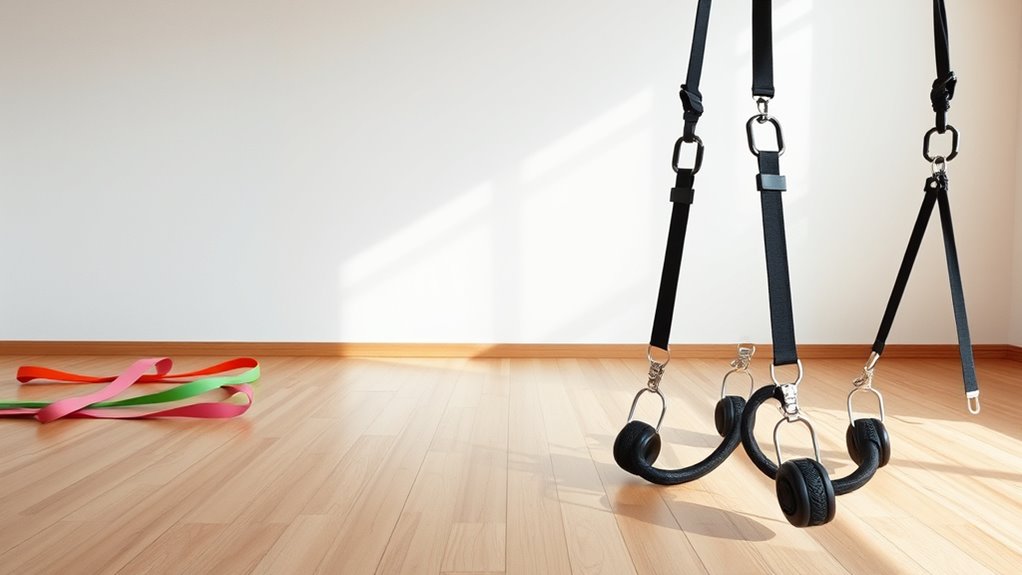

Resistance bands and TRX are both portable tools that boost your workout by targeting different fitness goals. Resistance bands are ideal for controlled, specific muscle activation and are super easy to carry around. TRX suspension trainers engage multiple muscle groups simultaneously, improving core stability and functional strength. While bands focus on targeted exercises, TRX offers dynamic, full-body movements. If you want to learn how each can fit into your routine, keep exploring these versatile options.
Key Takeaways
- Resistance bands offer targeted, controlled exercises ideal for small spaces and portability, while TRX promotes full-body, functional movements with multiple muscle engagement.
- Resistance bands are lightweight, compact, and easy to carry, whereas TRX requires an anchor point but still remains portable and foldable.
- TRX enhances core stability, coordination, and overall functional fitness through dynamic, multi-muscle workouts, unlike resistance bands which focus on isolated muscle activation.
- Resistance bands are best for quick, precise sessions and muscle-specific training, while TRX suits comprehensive, full-body routines with a focus on stability.
- Both tools are versatile and complement each other, but resistance bands excel in portability and targeted training, whereas TRX emphasizes dynamic, functional strength.
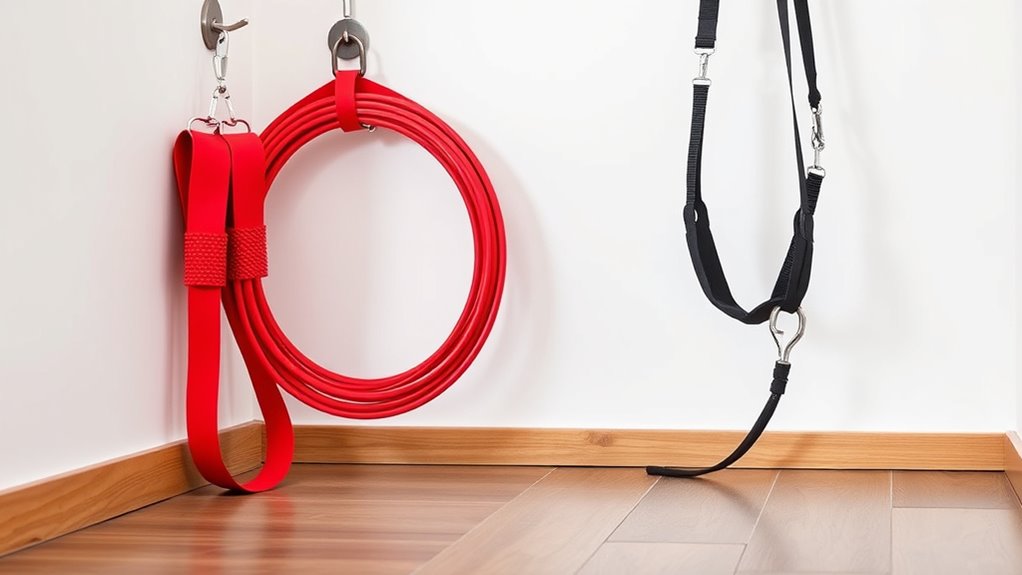
When choosing between resistance bands and TRX suspension trainers, understanding their differences can help you make an informed decision. Both tools are popular for home workouts and can effectively build strength, but they vary in how they engage your muscles and their portability benefits. Resistance bands are simple elastic loops or tubes that provide constant tension throughout movements. When you use them, you’ll notice significant muscle activation because they challenge your muscles through multiple ranges of motion, especially when you incorporate different angles and resistances. This makes them ideal for targeting specific muscle groups with controlled, precise movements. Their lightweight and compact design mean you can easily pack them in a bag or store them in a drawer, making them highly portable. Whether you’re traveling or working out in small spaces, resistance bands give you the flexibility to exercise virtually anywhere.
On the other hand, TRX suspension trainers use adjustable straps anchored to a stable point, allowing you to leverage your body weight for resistance. They excel at engaging multiple muscle groups simultaneously, promoting functional strength and stability. When performing exercises like rows, squats, or planks with TRX, your muscles activate more muscles at once, improving coordination and balance. The dynamic nature of TRX workouts encourages muscle activation in a way that mimics real-life movements, which can be beneficial for overall fitness. Although TRX systems tend to be bulkier than resistance bands, they still offer excellent portability benefits. Their straps are lightweight and foldable, so you can carry them in a bag or suitcase, making them suitable for travel or quick sessions at the park. Additionally, understanding the muscle activation patterns involved can help you optimize your workout effectiveness.
Both resistance bands and TRX trainers are versatile, but your choice depends on your workout goals and lifestyle. Resistance bands are fantastic if you want a lightweight, space-saving option that allows for targeted muscle activation. They’re especially useful if you prefer quick, focused sessions or need equipment you can take anywhere. TRX suspension trainers are better if you’re looking to engage multiple muscle groups simultaneously, improve core stability, and enjoy a more dynamic workout. Their portability benefits still make them convenient for travel, but they also require a sturdy anchor point, which might limit where you can set them up. Ultimately, both tools can complement each other in a well-rounded fitness routine, but understanding how they activate muscles and their portability benefits helps you choose the right one for your needs.
Frequently Asked Questions
Can Resistance Bands Replace a Full Gym Workout?
Yes, resistance bands can replace a full gym workout for muscle hypertrophy and cardiovascular fitness. They provide versatile resistance training that targets major muscle groups, promoting muscle growth. While they may not fully replace heavy weights or machines, combining resistance bands with cardio exercises can effectively improve your overall fitness. You just need to make certain your workouts are challenging enough to stimulate muscle hypertrophy and elevate your heart rate.
Are TRX Suspension Trainers Suitable for Beginners?
Yes, TRX suspension trainers are suitable for beginners. They offer adjustable resistance, making it easy to learn resistance band basics while progressing safely. As a TRX beginner, you can start with simple exercises that focus on proper form and build strength gradually. The versatile design allows you to modify intensity, helping you develop confidence and fitness without feeling overwhelmed. With consistent practice, you’ll quickly see improvements.
How Do Durability and Material Quality Compare?
Imagine a vintage leather saddle—durable and well-crafted. Similarly, TRX straps are made from high-quality materials that meet strict manufacturing standards, ensuring superior durability and resistance to material wear. Compared to resistance bands, which may degrade faster over time, TRX’s robust build provides long-lasting performance, making them a reliable choice for consistent workouts. You’ll appreciate their ability to withstand frequent use without losing strength or integrity.
Which Tool Offers Better Portability for Travel?
You’ll find resistance bands offer better travel ease and packing convenience because they’re lightweight and flexible, easily fitting into a small bag or suitcase. TRX suspension trainers are bulkier and require more space, making them less ideal for travel. If portability is your priority, resistance bands are the clear choice, allowing you to maintain your workout routine effortlessly even when you’re on the go.
Are There Any Safety Concerns With Either Tool?
You should be aware that both resistance bands and TRX suspension trainers have minimal safety concerns if you use proper technique. The injury risk is low, but improper form or overexertion can lead to strains or sprains. Visualize yourself maintaining control and steady movements, ensuring your body stays aligned. Always inspect your equipment before use, and start with lighter resistance to build confidence and reduce injury risk during your workout.
Conclusion
Ultimately, whether you choose resistance bands or TRX, remember that both are tools to unlock your strength. Like two different paths leading to the same summit, your commitment and consistency are what truly matter. Don’t let the tool define your journey—let your determination be the guiding force. After all, it’s not the equipment that shapes you, but your willingness to push beyond limits that makes all the difference.