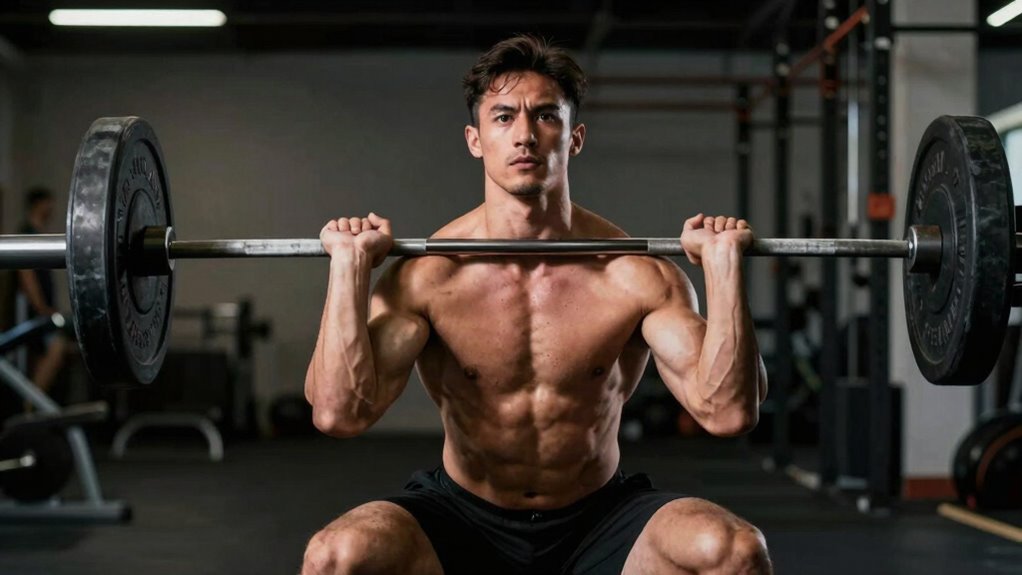
To learn proper bracing for safer strength training, focus on mastering diaphragmatic breathing—breathe deeply into your belly and fill your lungs fully. Activate your core by tightening abdominal muscles and maintaining tension during lifts. Practice these techniques consistently before each set to develop a strong mind-muscle connection and build confidence. Using proper support and form protects your spine and prevents injuries. Keep practicing, and you’ll discover more ways to train safer and stronger.

Get workout gear delivered free — and shop member deals
- Fast, free delivery on millions of items
- Access to Prime Big Deal Days deals on October 6–7
- Prime Video, Amazon Music and more included
Key Takeaways
- Practice diaphragmatic breathing by inhaling deeply into your belly before lifting.
- Engage your core muscles by tightening your abdominal muscles during each set.
- Hold your breath briefly during lifts to increase intra-abdominal pressure and stabilize your spine.
- Maintain consistent core tension and controlled movement throughout the exercise.
- Use training tools and regular drills to reinforce proper bracing techniques and build muscle memory.
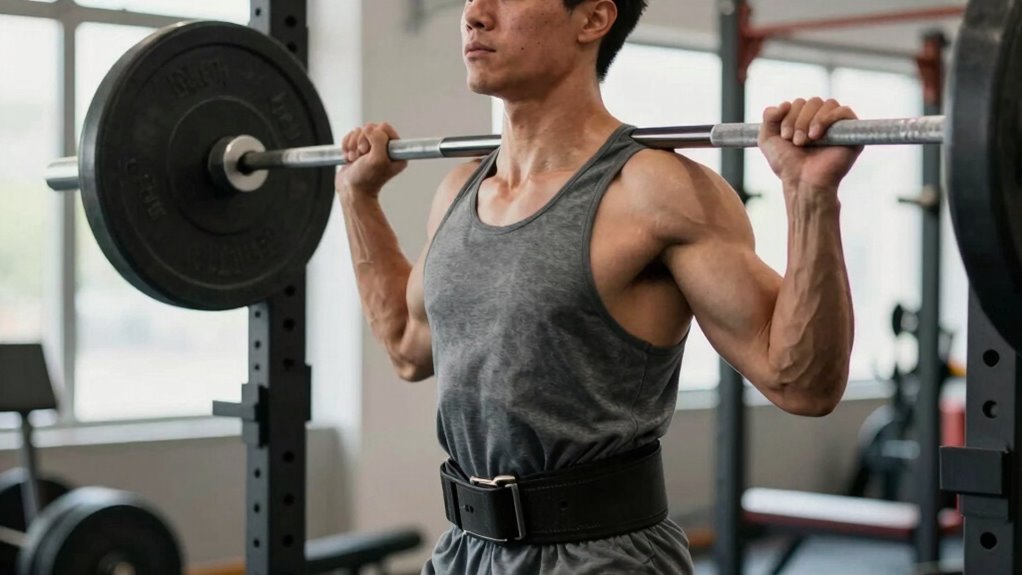
Proper support is essential for maintaining safety and maximizing your strength during training. When you learn to brace correctly, you create a solid foundation that protects your spine and allows you to lift heavier with confidence. The key to effective bracing lies in mastering breathing techniques and core activation. These two elements work together to stabilize your entire body, helping you generate more power and prevent injuries.
Proper bracing protects your spine, boosts strength, and prevents injuries through effective breathing and core activation.
Start by focusing on your breathing. Deep, diaphragmatic breathing is fundamental to proper bracing. Instead of shallow chest breaths, breathe deeply into your belly, filling your lungs fully. As you inhale, imagine your stomach expanding outward. This type of breathing increases intra-abdominal pressure, which is essential for core stability. When you lift, hold your breath momentarily to maintain this pressure, then exhale smoothly after completing the lift or when you reset. Proper breathing not only enhances your core activation but also prevents you from holding your breath in a way that could cause unnecessary strain or dizziness. Incorporating proper breathing techniques with core activation creates a powerful bracing strategy. As you take a deep breath and fill your belly, brace your core by tightening your abdominal muscles. Keep this tension as you lift, ensuring your spine remains supported, and your movement stays controlled. Developing a mind-muscle connection through consistent practice can further enhance your ability to activate your core effectively. Additionally, understanding the importance of natural pools and their eco-friendly features can motivate you to create a safe and sustainable workout environment at home. Recognizing that proper form is fundamental to injury prevention, practicing these techniques regularly will help ingrain them into your training routine. Being aware of training technology innovations can also assist in tracking your progress and refining your technique. Practice this sequence before each set to build the habit. Remember, consistency is key—over time, proper bracing becomes second nature, allowing you to lift heavier safely and with greater confidence.
diaphragmatic breathing for strength training
As an affiliate, we earn on qualifying purchases.
As an affiliate, we earn on qualifying purchases.
Frequently Asked Questions
How Long Does It Take to Master Proper Bracing Techniques?
It typically takes a few weeks to master proper bracing techniques, but it varies with consistency and focus. You’ll improve through practicing breathing techniques and core activation during each session. As you become more familiar, bracing will feel natural, offering better stability and safety. Remember, patience is key—regularly refine your technique, and over time, proper bracing will become an instinctive part of your strength training routine.
Can Improper Bracing Cause Long-Term Injuries?
Improper bracing can indeed cause long-term injuries by leading to poor muscle engagement and uneven stress on your joints and spine. When you don’t maintain technique consistency, you risk developing chronic issues like strains or herniated discs. Focus on mastering proper muscle engagement and consistently practicing the correct technique to safeguard your body. Over time, this ensures safer, more effective strength training and reduces injury risk.
Is Bracing Necessary for All Strength Training Exercises?
Is bracing necessary for all strength training exercises? Not necessarily, but proper bracing improves safety and performance. You should focus on breathing techniques to maintain core activation, which helps stabilize your spine during lifts. For heavy or complex movements, bracing becomes essential to prevent injury. Always listen to your body and adjust your technique accordingly; effective core activation and controlled breathing are key to safe, successful training.
How Can I Tell if I’M Bracing Correctly During Lifts?
You can tell if you’re bracing correctly during lifts by focusing on your breathing coordination and core activation. When you brace properly, your breathing should be controlled—inhale before the lift, then hold your breath and tighten your core as if you’re preparing to be punched. Feel your abs and lower back engage firmly, providing stability. If you notice your core is tight and your breathing is steady, you’re bracing correctly.
Are There Specific Exercises to Improve Bracing Strength?
You can improve your bracing strength through exercises that boost core activation and refine breathing techniques. Planks, dead bugs, and bird dogs are excellent choices, as they target core stability. Incorporate controlled breathing, like diaphragmatic breathing, to enhance your bracing. As you strengthen your core and master proper breathing, you’ll find it easier to brace correctly during lifts, making your training safer and more effective.
As an affiliate, we earn on qualifying purchases.
Conclusion
Now that you understand the fundamentals of proper bracing, you’re on the verge of unleashing your true strength potential. But remember, mastering this technique is a journey—one that demands focus and consistency. Are you ready to push past your limits and elevate your training to new heights? Keep practicing, stay vigilant, and the results will surprise you. The next breakthrough could be just a breath away—are you prepared to take it?
spine support weightlifting belt
As an affiliate, we earn on qualifying purchases.
As an affiliate, we earn on qualifying purchases.
abdominal muscle tightening aids
As an affiliate, we earn on qualifying purchases.
As an affiliate, we earn on qualifying purchases.
Fall Picks
fall essentials
As an affiliate, we earn on qualifying purchases.