

To improve your rowing form for better back training, focus on maintaining a relaxed but firm grip, engaging your fingers and palms without squeezing too tightly. Keep your posture upright, with a neutral spine and shoulders stable, while initiating each stroke with a leg push and controlled back movement. Breathe rhythmically, inhaling during preparation and exhaling during drive to maintain core stability and reduce tension. Perfecting these techniques can dramatically enhance your back strength and reduce injury risk—if you explore further, you’ll find even more tips to optimize your form.

Get workout gear delivered free — and shop member deals
- Fast, free delivery on millions of items
- Access to Prime Big Deal Days deals on October 6–7
- Prime Video, Amazon Music and more included
Key Takeaways
- Maintain a relaxed but firm grip to promote fluid movement and effective back engagement.
- Synchronize your breathing with each stroke to support core stability and prevent tension.
- Keep your posture upright with proper body alignment to enhance technique and reduce injury risk.
- Initiate each stroke by pushing with your legs, keeping your back straight and chest up throughout.
- Ensure smooth, controlled movements and regularly adjust form for consistent, safe training.
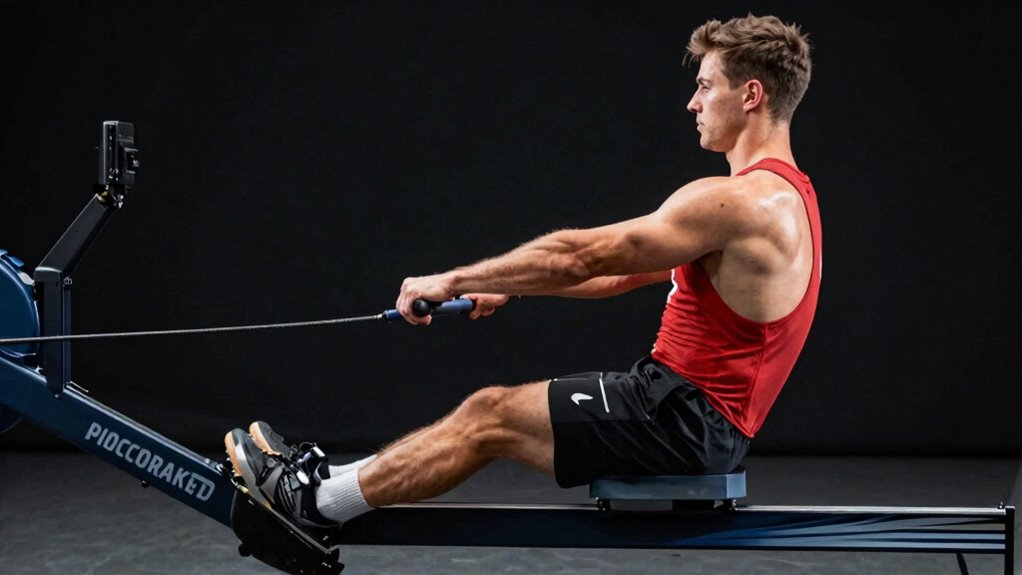
Are you looking to boost your rowing efficiency and reduce the risk of injury? Improving your rowing form isn’t just about moving faster or harder; it’s about mastering the basics to protect your back and maximize your workout. One of the first things to focus on is your proper grip. Gripping the handle too tightly can cause unnecessary tension in your arms and shoulders, which often leads to poor form and back strain. Instead, hold the handle firmly but gently, allowing your fingers and palms to do the work without squeezing excessively. This relaxed grip helps you engage your back muscles more effectively and keeps your shoulders stable throughout the stroke. When your grip is correct, you’ll notice a more fluid movement, and your back will be less prone to fatigue and injury.
A relaxed grip engages your back muscles and stabilizes your shoulders for safer, more efficient rowing.
Alongside your grip, paying attention to your breathing techniques is equally essential. Many rowers underestimate how critical proper breathing is to maintaining energy and stability. Inhale as you prepare to drive back, filling your lungs fully, and exhale steadily as you complete the drive phase. This rhythmic breathing supports core stability and helps you stay relaxed during intense efforts. When you breathe properly, you prevent unnecessary tension from building up in your neck and shoulders, which can compromise your back position. It’s essential to synchronize your breath with your strokes, so you’re not holding your breath or breathing irregularly, which can lead to fatigue and form breakdown. Additionally, focusing on proper posture during each stroke ensures your back remains in a safe, aligned position. Developing awareness of your body alignment can further improve your technique and reduce injury risk. Paying attention to your body positioning throughout each stroke can help reinforce good habits and prevent common mistakes. Maintaining a consistent technique can also help minimize fatigue and improve overall efficiency.
As you set your body into the rowing motion, focus on engaging your core and back muscles rather than relying solely on your arms. Initiate each stroke by pushing with your legs, keeping your back straight and chest up. Avoid hunching your shoulders or collapsing your back at the finish. Instead, maintain a neutral spine position, which distributes force evenly and reduces strain on your lower back. Keeping your hips and shoulders aligned helps prevent injury risk and ensures more efficient power transfer. Keep your movements smooth and controlled, avoiding jerky or rushed motions that can throw off your alignment and increase injury risk. Regularly checking your form and making small adjustments can have a significant impact on your progress and safety.
Frequently Asked Questions
How Often Should I Practice Rowing to See Improvements?
You should practice rowing 3 to 4 times a week to see improvements in your back training. Focus on maintaining proper rowing technique during each session, which helps prevent injury and boosts effectiveness. Consistent training is key; don’t skip sessions, but also allow time for recovery. By staying dedicated and practicing regularly, you’ll strengthen your back muscles and improve your overall rowing performance.
What Are Common Mistakes That Cause Back Strain?
You might strain your back if you neglect proper rowing technique, like arching your back during the pull. For example, a beginner who leans back excessively engages lower back muscles incorrectly, risking injury. Focus on maintaining a straight spine and engaging your back muscles properly throughout the movement. This guarantees correct back muscle engagement, reduces strain, and makes your workout safer and more effective.
Can Rowing Help With Lower Back Pain?
Rowing can help with lower back pain if you focus on proper form. Engage your core throughout the movement to support your spine and prevent strain. Incorporate flexibility exercises into your routine to improve mobility and reduce stiffness. By maintaining core engagement and increasing flexibility, you strengthen supporting muscles, alleviate existing discomfort, and lower the risk of future pain during rowing. Always listen to your body and avoid overexertion.
Should I Use a Rowing Machine or Do Outdoor Rowing?
You should choose based on your goals and preferences. Indoor rowing machines offer controlled environments, making it easier to focus on proper form and consistent workouts, which benefits your back training. Outdoor rowing provides a more dynamic experience, engaging stabilizer muscles and offering fresh air. When selecting equipment, consider your space, budget, and comfort. Both options can improve back strength if you prioritize proper technique and gradually increase intensity.
How Can I Tell if My Form Is Correct During Rowing?
Your form should feel smooth and controlled, like gliding on glass. To assess your technique, focus on posture correction—keep your back straight, core engaged, and shoulders relaxed. Use mirrors or record yourself to observe subtle movements, ensuring your technique assessment is accurate. A proper form prevents injury and maximizes results, so stay attentive to your posture, and make quick adjustments if you notice any slouching or uneven movements.
Conclusion
By fine-tuning your rowing form, you’ll gently release the full potential of your back muscles, allowing them to flourish with each stroke. Remember, it’s about finding that smooth, harmonious rhythm—like a dance—where every movement feels natural and effortless. Stay patient and attentive to your technique, and you’ll notice your strength and endurance gradually blossom. With consistent practice and mindful adjustments, you’ll turn your rowing routine into a truly rewarding journey of growth and resilience.
Fall Picks
fall essentials
As an affiliate, we earn on qualifying purchases.