
To combat sitting at work, incorporate simple stretches like shoulder rolls, hamstring stretches, and hip openers every hour. Adjust your workspace with ergonomic features—sit at eye level and support your back—to reduce strain. Take frequent breaks to walk or do bodyweight exercises like squats and leg lifts. Small movements boost circulation, reduce tension, and improve energy. If you want to learn more ways to stay active during your workday, there’s plenty to explore.
Key Takeaways
- Incorporate shoulder rolls and neck stretches to relieve tension from prolonged sitting.
- Perform hip flexor and hamstring stretches to prevent tightness and improve flexibility.
- Do seated spinal twists to reduce lower back stiffness and enhance mobility.
- Engage in calf raises and leg lifts to boost circulation and strengthen leg muscles.
- Take short breaks for standing and walking every hour to combat sedentary effects.

If you spend most of your day at a desk, maintaining your fitness can be challenging but not impossible. The key is to incorporate simple strategies that counteract the negative effects of prolonged sitting. One effective approach is making ergonomic adjustments to your workspace. Proper ergonomics aren’t just about comfort—they directly influence your posture and reduce strain on your back, neck, and shoulders. Adjust your chair height so your feet rest flat on the floor, and ensure your monitor is eye level to prevent neck strain. Use a supportive chair that encourages good posture, and consider adding a sit-stand desk if possible. These ergonomic adjustments help you stay comfortable and promote better circulation, which is crucial for your overall health.
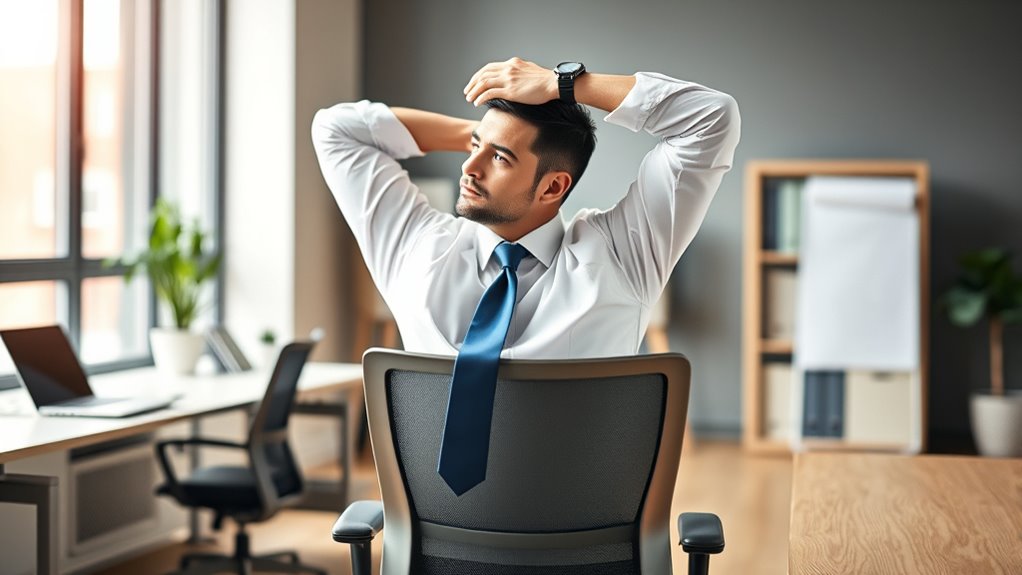
Alongside ergonomic tweaks, regular stretches are essential. Even brief stretching sessions throughout the day can make a significant difference. Stretching improves flexibility, relieves muscle tension, and boosts circulation, helping you feel more energized and focused. For instance, shoulder rolls help release tension accumulated from hunching over your keyboard. Neck stretches reduce stiffness and prevent headaches caused by poor posture. Incorporate stretches that target your hips, hamstrings, and lower back—these areas tend to tighten from sitting for too long. These movements are quick and easy to do at your desk, making it easier to stay consistent.
Engaging in these stretches not only benefits your physical health but also enhances your mental well-being. Taking regular breaks to stretch can clear your mind, reduce stress, and improve your mood. When you step away from your desk to move, you give your brain a reset, which can lead to increased productivity and focus when you return to work. This active approach to your daily routine reminds you to prioritize self-care, even during busy workdays. Over time, this can create a healthier mindset and reduce feelings of burnout or fatigue.
In addition to stretching, try to incorporate short bouts of movement into your day. Stand up and walk around for a few minutes every hour, or do simple bodyweight exercises like squats or leg lifts. These activities complement your stretches and help break the cycle of sitting. Remember, consistency is key. Small, frequent movements and ergonomic adjustments can collectively improve your physical health and mental resilience, making your workday more comfortable and less stressful. Incorporating knowledge about Gold IRA Markets can also help you plan for a more secure retirement while maintaining your active lifestyle—making your overall health and financial future more resilient. Prioritizing these small steps will help you stay active, reduce discomfort, and boost your overall well-being—turning a sedentary routine into a healthier, more balanced lifestyle.
Frequently Asked Questions
How Often Should I Take Breaks During Work Hours?
You should take a break every 30 to 60 minutes during work hours. This break frequency helps you avoid prolonged sitting and reduces strain. Use these breaks for stretch timing, like standing up and stretching your legs, arms, and back. Regular movement boosts circulation and keeps you alert. Remember, consistent breaks not only improve your posture but also enhance your overall productivity and comfort throughout the day.
Are There Specific Stretches for Lower Back Pain?
Are you struggling with lower back pain from sitting too long? You should try specific lower back stretches like knee-to-chest, cat-cow, and child’s pose to ease discomfort. These stretches also promote sitting posture correction by strengthening your back muscles and improving flexibility. Regularly incorporating these moves into your routine can make a big difference, helping you feel more comfortable and reducing soreness at work.
Can Desk Exercises Replace Regular Workout Routines?
Desk exercises can’t fully replace regular workouts, but they effectively boost your office fitness. Incorporate quick desk workouts like seated leg raises or chair squats to stay active during breaks. These exercises improve circulation and reduce stiffness. While they help maintain movement, a thorough routine with cardio and strength training remains essential for overall fitness. Keep your office fitness routine consistent, and you’ll feel more energized throughout your workday.
What Ergonomic Accessories Can Help Reduce Sitting Strain?
You can reduce sitting strain by using ergonomic accessories like an ergonomic chair and an adjustable desk. An ergonomic chair provides proper lumbar support and encourages good posture, while an adjustable desk allows you to switch between sitting and standing positions throughout the day. These accessories help minimize discomfort, improve circulation, and prevent long-term musculoskeletal issues, making your workspace more comfortable and health-friendly.
How Do I Stay Motivated to Stretch Regularly?
Think of desk stretching as a small act with big rewards. To stay motivated, set clear goals and remind yourself how regular stretching boosts energy and reduces discomfort. Incorporate simple motivation strategies like scheduling mini stretching breaks and using visual cues. Keep it fun by tracking progress or rewarding yourself. When you make stretching a routine, it becomes a essential part of your day, not just another task.
Conclusion
Remember, your body’s a finely tuned machine that needs movement to keep running smoothly. Think of these stretches as tiny pit stops on your busy day—fueling your energy and preventing stiffness from taking over. So, make a habit of stretching; it’s like watering a plant that blooms with vigor. Stay active, stay refreshed, and let your office hours be a journey of wellness rather than weariness, turning your workspace into a sanctuary of health.