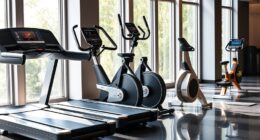
Choosing between at-home and in-class workouts depends on your needs. At-home workouts offer flexibility and convenience—you can exercise anytime without commuting, and equipment options are adaptable to your space and budget. In-class sessions provide expert guidance, motivation, and social interaction, which can enhance your commitment and safety. Each has its pros and cons, but exploring your options further can help you find the best fit for your lifestyle.
Key Takeaways
- At-home workouts offer greater flexibility and convenience, fitting into diverse schedules without commute or limited class times.
- Online fitness classes provide professional instruction, motivation, and social interaction, enhancing engagement and proper form.
- Classes may be limited by equipment availability and less personalized, while at-home routines can be tailored to individual equipment and space.
- In-person classes foster community, accountability, and immediate feedback, which can boost motivation and safety.
- Both options require self-motivation; choice depends on personal preferences for social engagement, environment, and convenience.

Deciding between at-home and class workouts depends on your personal goals, schedule, and motivation levels. When you’re considering an at-home workout, one of the main advantages is the flexibility it offers. You can choose equipment options that suit your space and budget, whether that’s resistance bands, dumbbells, or even bodyweight exercises. Having your own setup means you don’t need to commute or adhere to a class schedule, so you can fit exercise into your day whenever it’s most convenient. However, a potential downside is that you might miss out on social interaction, which can be a motivating factor for some people. Without the presence of others, it’s easy to feel isolated or less accountable, especially if you struggle with sticking to routines on your own.
At-home workouts offer flexibility and convenience but may lack social motivation.
On the other hand, attending live or online fitness classes provides a different experience. These classes often foster social interaction, giving you the chance to connect with instructors and fellow participants. This sense of community can considerably boost your motivation and commitment. When you’re part of a group, there’s a shared energy that pushes you to work harder and stay consistent. Additionally, many online classes come with professional instructors who guide you through workouts, ensuring proper form and safety. This guidance can be especially valuable if you’re new to exercising or trying unfamiliar routines. High-quality instruction in classes can help prevent injuries and enhance your overall results.
That said, class workouts do have their limitations. You’re generally bound by a schedule, which might not always align with your personal timetable. If you have a busy or unpredictable schedule, missing a class might become discouraging. Also, while many online classes are interactive, they often lack the personal touch of in-person sessions, which can impact motivation for some individuals. Equipment options in class workouts are sometimes limited to what the studio or gym provides, so you might not have access to the same variety of tools you could incorporate at home. Still, many classes adapt to limited equipment or even bodyweight exercises, making it easier to participate regardless of your setup.
Ultimately, the choice hinges on what motivates you most and fits into your lifestyle. If you thrive on social interaction and expert guidance, class workouts—whether in person or virtual—could be more effective. If you prefer privacy, control over your environment, and flexible scheduling, at-home workouts might be better. Both options have their pros and cons, but understanding your needs helps you pick the right approach to stay active and committed.
Frequently Asked Questions
What Equipment Is Needed for Effective Online Workouts?
For effective online workouts, you only need basic equipment like a home gym setup or portable fitness gear. Items such as dumbbells, resistance bands, a yoga mat, and a stability ball work well. You can also incorporate bodyweight exercises if you prefer minimal equipment. Keep your space open and organized, so you can move freely. These essentials help you stay motivated and get a full workout regardless of your fitness level.
How Do I Stay Motivated During Home Workouts?
To stay motivated during your home workouts, focus on exercise variety to keep things fresh and exciting. Set clear goals and track your progress to see improvements. Find accountability partners who can encourage you and hold you responsible. Creating a dedicated workout space and establishing a consistent schedule also helps build discipline. Remember, mixing up your routines and having support makes it easier to stay committed and motivated over time.
Are Online Fitness Classes Suitable for Beginners?
Yes, online fitness classes can be perfect for beginners, especially when they focus on beginner friendly exercises. They help build your confidence by offering step-by-step guidance you can follow at your own pace. Many classes are designed specifically for newcomers, making the experience less intimidating. Plus, you can replay videos if needed, which further supports your progress and helps you develop a solid foundation in fitness.
How Do I Ensure Proper Form in Virtual Sessions?
Think of your virtual workout as a mirror in a dance studio. To guarantee proper form, focus on visual cues from your instructor and record your sessions to compare your technique. Pause and replay demonstrations for clarity, and don’t hesitate to ask for feedback. Paying close attention to proper technique helps prevent injuries and maximizes your results, making your online workouts as effective as in-person sessions.
Can Online Workouts Replace In-Person Personal Training?
Online workouts can replace in-person personal training if you choose virtual coaching that offers personalized programs tailored to your goals and fitness level. You’ll benefit from real-time feedback, customized guidance, and accountability, just like in person. While some might miss hands-on adjustments, many find virtual coaching convenient and effective, especially when supported by clear instructions and regular check-ins. It’s a flexible, accessible way to stay committed and achieve results.
Conclusion
Ultimately, both at-home and class workouts offer unique benefits that can gently guide you toward your fitness goals. While one provides the comfort of your own space, the other offers a touch of community and structure. Whichever path you choose, remember that consistency and enjoyment are your true companions. Embrace the journey, trusting that each step, no matter how small, brings you closer to a healthier, happier you.