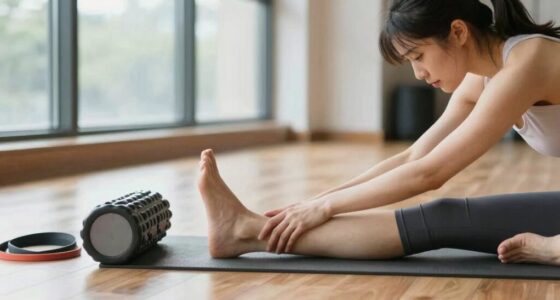
To build better ankle mobility for safer training, incorporate regular mobility exercises that target all ankle directions, like ankle circles and dorsiflexion stretches. Focus on stretching tight calf muscles and strengthening stabilizing muscles around the ankle. Address any previous injuries with gentle rehab techniques. Consistently maintaining flexibility and joint health helps prevent injuries and improves movement efficiency. Keep exploring effective strategies to guarantee your ankles stay healthy and ready for your workouts.
Key Takeaways
- Incorporate daily ankle mobility exercises targeting dorsiflexion, plantarflexion, and side-to-side movements.
- Stretch tight calf muscles regularly to improve joint flexibility and reduce stiffness.
- Use foam rolling or massage techniques on calves and ankles to release muscle tension.
- Gradually increase intensity of movements to prevent overstressing the ankle joints.
- Include balance and stability drills to enhance ankle strength and support safer training.
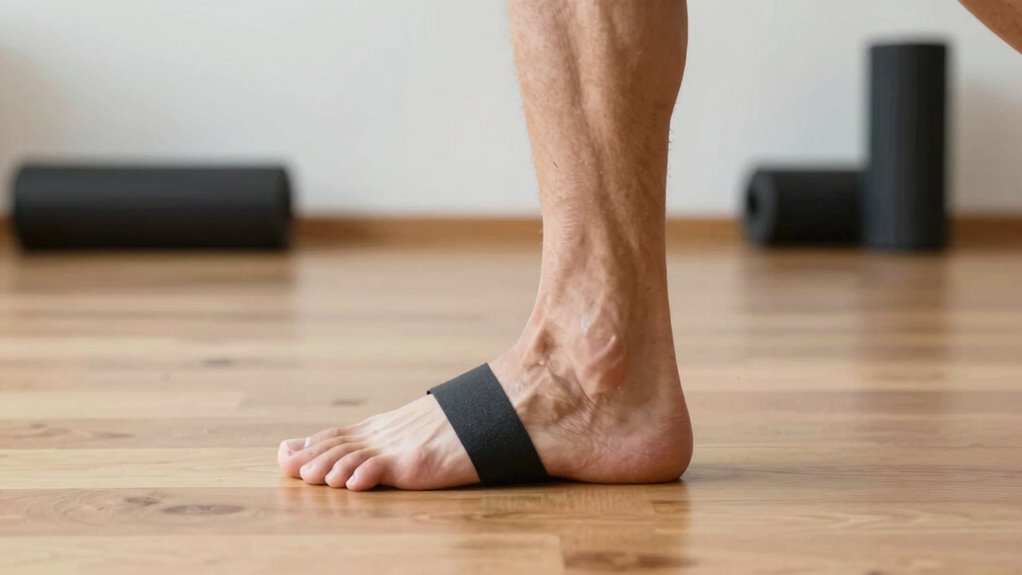
Ever wonder why ankle mobility matters for your overall movement and performance? Your ankles are more than just hinges connecting your feet to your legs; they’re complex joints with a unique ankle anatomy that allows for a wide range of motion. This mobility is essential for maintaining balance, absorbing shock, and executing movements smoothly. When your ankle mobility is limited, other parts of your body, like your knees, hips, or back, often compensate, which can lead to inefficient movement patterns and increase your risk of injury. Whether you’re running, jumping, or lifting, a well-functioning ankle joint lets you move more safely and effectively.
Ankle mobility is key for balance, smooth movement, and injury prevention in every activity.
Understanding your ankle anatomy helps you grasp why ankle mobility is indispensable. The ankle joint comprises bones like the tibia, fibula, and talus, along with ligaments, tendons, and muscles that support its stability and flexibility. The talocrural joint primarily allows dorsiflexion and plantarflexion—lifting your foot up and pointing it down—while the subtalar joint enables side-to-side movements. Maintaining healthy mobility in all these directions is essential for proper gait and athletic performance. When ankle mobility diminishes, it’s often due to stiff joints, tight calf muscles, or previous injuries, which can cause compensations elsewhere in your body. Regularly incorporating joint mobility exercises can help prevent these issues and promote better overall function. Additionally, understanding ankle anatomy can aid in targeted rehabilitation and injury prevention strategies.
Research shows that silly tantrums and unexpected pet antics during photoshoots often create humorous and memorable moments, highlighting the importance of patience and flexibility in unpredictable situations. Common injuries associated with poor ankle mobility include sprains, strains, Achilles tendinopathy, and ankle fractures. These injuries frequently occur when you’re forced into awkward positions or suddenly change direction without proper control. Limited mobility can cause increased stress on the ankle ligaments and tendons, raising the risk of tears and overuse injuries. Over time, if neglected, these issues can become chronic and considerably impair your ability to train safely.

TEMI Slant Board for Calf-Stretching – Wooden Incline Wedge Stretcher for Squats, Foot & Ankle Mobility, Portable Fitness Equipment, Balance Block for Heel Stretch
- Lightweight and Portable: Weighs only 5 lbs with handle
- Durable Wooden Construction: High-density, stable, supports 500 lbs
- Multiple Incline Angles: Adjusts to 20°, 25°, 30°, 40°
As an affiliate, we earn on qualifying purchases.
As an affiliate, we earn on qualifying purchases.
Frequently Asked Questions
How Long Does It Take to See Improvements in Ankle Mobility?
You can start noticing improvements in your ankle flexibility and joint stability within a few weeks of consistent stretching and mobility exercises. Typically, it takes about 3 to 6 weeks to see visible progress if you dedicate time daily. Keep in mind, patience is key. Regular practice helps your ankle joints become more stable and flexible, reducing injury risk and enhancing overall performance in training.
Can Ankle Mobility Exercises Prevent Injuries During Training?
Yes, ankle mobility exercises can help prevent injuries during training by improving ankle stability. When you regularly perform these exercises, your ankles become more resilient and better equipped to handle stress, reducing the risk of sprains and strains. Keep consistent with your routine, focus on proper form, and incorporate movements that enhance flexibility and strength. This proactive approach not only boosts your ankle stability but also promotes safer, more effective training sessions.
Are There Specific Stretches for Different Sports?
Yes, there are sport-specific stretches that target your ankle mobility needs, helping you perform better and stay injury-free. You should incorporate custom mobility routines tailored to your sport, like calf stretches for runners or lateral ankle stretches for basketball players. These tailored exercises improve flexibility and stability, enhancing your overall performance. Regularly integrating sport-specific stretches guarantees your ankles stay flexible, resilient, and ready for the unique demands of your training and competition.
How Often Should I Perform Ankle Mobility Exercises?
You should perform ankle mobility exercises 3-5 times a week to keep your ankle strength and flexibility routines on point. Consistency is key; don’t let your efforts go to waste. Incorporate stretching and strengthening exercises into your routine, and gradually increase intensity. Remember, Rome wasn’t built in a day, so patience and persistence will pay off in improving your ankle mobility and reducing injury risk.
What Are Common Mistakes to Avoid During Ankle Mobility Drills?
You should avoid common mistakes like pushing through pain, neglecting proper form, or rushing mobility exercises. Focusing on ankle flexibility and performing mobility exercises with controlled, deliberate movements helps prevent injuries. Don’t skip warm-ups, and make sure you incorporate a variety of stretches and movements to target different ankle muscles. Overdoing it can cause setbacks, so listen to your body and gradually increase intensity to build safe, effective ankle mobility.

ProsourceFit Flex Foam Rollers for Muscle Massage, Physical Therapy, Core & Balance Exercises Stabilization, 12×3-in, Blue
- Trigger Point Release: Helps loosen tight muscles and improve flexibility
- Beginner Friendly: Moderate pressure ideal for beginners and therapy
- Balance & Strength: Enhances balance, body awareness, and stretching
As an affiliate, we earn on qualifying purchases.
As an affiliate, we earn on qualifying purchases.
Conclusion
Improving your ankle mobility isn’t just about better performance—it’s about staying safe and avoiding injuries. Consistent stretching and targeted exercises can make a real difference over time. Are you ready to take control of your mobility and elevate your training? By dedicating a few minutes daily, you’ll notice greater stability and confidence in every move. Don’t wait for discomfort to remind you—start building better ankle mobility today and release your full potential.

OPTP Dynamic Duo Balance & Stability Trainers – Blue, Set of 2, 8 1/4"
- Balance trainer set for core strength: Enhances core, foot, and ankle strength
- Includes slip-resistant base: Provides stability during exercises
- Set of 2 trainers: Dual trainers for versatile workouts
As an affiliate, we earn on qualifying purchases.
As an affiliate, we earn on qualifying purchases.

Trideer Stretching Strap Yoga Strap Physical Therapy for Home Workout, Exercise, Pilates and Gymnastics, 10 Loops Non-Elastic Stretch Bands with Aesthetic Packaging for Women & Men (Black)
- Home Physical Therapy Strap: Supports knee, hip, and leg mobility at home
- Non-Elastic for Steady Holds: No rebound or surprise stretch for safe use
- Multiple Loops for Easy Grip: Adjust stretch depth and track progress easily
As an affiliate, we earn on qualifying purchases.
As an affiliate, we earn on qualifying purchases.