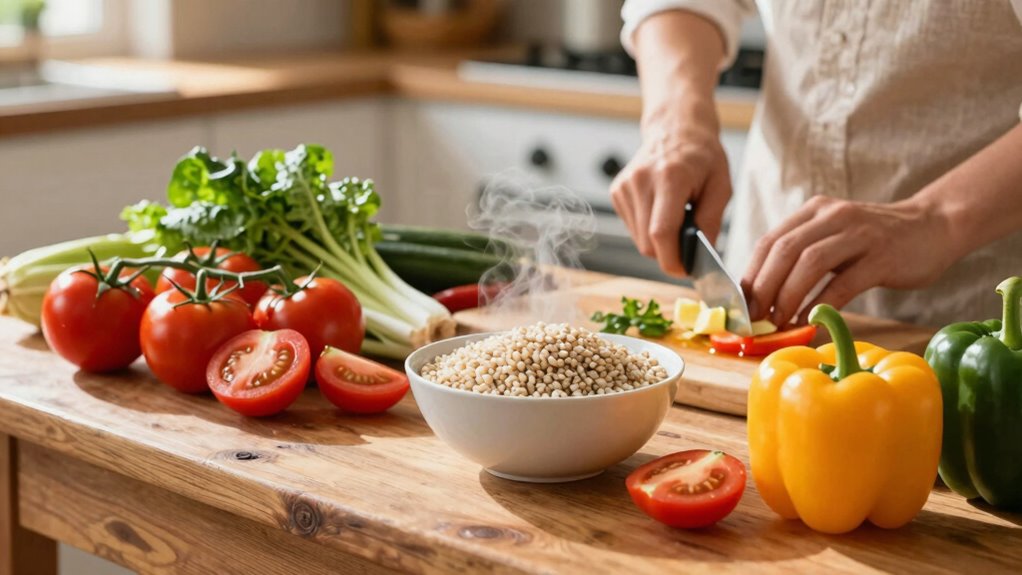

To build better eating habits without falling for fads, focus on simple, sustainable strategies like meal planning and mindful eating. Control what you eat by preparing nutritious meals ahead of time and savor each bite to notice your hunger and fullness cues. Avoid restrictive diets that lead to deprivation and aim for consistency rather than perfection. By adopting these practical methods, you’ll develop a healthier relationship with food that lasts — and there’s more to discover if you keep going.
Key Takeaways
- Focus on simple, sustainable strategies like meal planning and mindful eating instead of chasing quick-fix diet trends.
- Incorporate a variety of nutritious foods to create balanced, enjoyable meals that support long-term habits.
- Practice paying full attention to your meals to enhance satisfaction and recognize true hunger and fullness cues.
- Use visual appeal, such as color and presentation, to make healthy foods more attractive and motivate better choices.
- Prioritize consistency and awareness over perfection, building habits gradually for lasting positive change.

Have you ever felt overwhelmed by the endless stream of diet trends promising quick fixes? It’s easy to get caught up in the hype, but building sustainable eating habits doesn’t have to be complicated or restrictive. Instead of chasing after the latest fad, focus on developing a balanced approach rooted in simple, effective strategies. One of the most impactful ways to do this is through meal planning. When you plan your meals ahead of time, you gain control over what you eat, reduce impulsive choices, and ensure your diet includes a variety of nutritious foods. Meal planning doesn’t mean you have to cook elaborate dishes every day; even preparing a few healthy options in advance can make a significant difference. It helps you avoid last-minute takeout or processed snacks and encourages you to think about your nutritional needs. Over time, consistent meal planning can foster a healthier relationship with food, making it easier to stick to your goals without feeling deprived.
Alongside meal planning, practicing mindful eating can transform how you relate to your food. Mindful eating means paying full attention to your meals — savoring each bite, noticing flavors, textures, and smells, and recognizing your body’s hunger and fullness cues. This practice helps you slow down, preventing overeating and encouraging you to enjoy your food more fully. Instead of eating mindlessly in front of screens or rushing through meals, take a moment to appreciate what you’re eating. When you listen to your body, you learn to differentiate between physical hunger and emotional cravings, leading to healthier choices overall. Mindful eating also promotes gratitude for your food, fostering a positive attitude toward nourishment rather than viewing eating as a chore or a source of guilt. Over time, this awareness can help you develop a more intuitive eating style that supports your long-term health. Additionally, understanding the importance of color accuracy and contrast ratio in visual presentation can make your meals more appealing and satisfying, encouraging healthier choices through enhanced enjoyment. Recognizing the role of visual presentation in food can also influence how appetizing and satisfying your meals appear, further supporting your healthy habits. Incorporating visual aesthetics can boost motivation to choose nutritious foods by making them look more tempting. Paying attention to visual communication can help you create an inviting eating environment that encourages mindful and pleasurable eating experiences. Moreover, paying attention to visual cues can reinforce positive habits by making healthy foods more visually appealing and motivating.
Building better habits isn’t about perfection or strict rules; it’s about consistency and awareness. Integrating meal planning into your routine sets a solid foundation, making nutritious choices easier and more automatic. Pairing that with mindful eating sharpens your ability to enjoy your meals and understand your body’s signals. Neither strategy requires drastic changes or expensive products—just a commitment to being present and intentional with your food. As you develop these habits, you’ll find that your relationship with food becomes healthier and more balanced, free from the pressure of fads. Instead of chasing quick fixes, you create a sustainable path that supports your well-being now and in the future.

The Healthy Meal Prep Cookbook: Easy and Wholesome Meals to Cook, Prep, Grab, and Go
As an affiliate, we earn on qualifying purchases.
As an affiliate, we earn on qualifying purchases.
Frequently Asked Questions
How Long Does It Take to See Results From New Eating Habits?
You can start noticing results from new eating habits in about 2 to 4 weeks. Focusing on meal timing and portion control helps your body adjust gradually. Consistently eating at regular intervals and controlling portions can lead to increased energy, better digestion, and gradual weight changes. Remember, patience is key—your body needs time to adapt, so stay committed, and you’ll see progress over time.
Can I Still Indulge in Treats Without Ruining Progress?
Yes, you can still indulge in treats without ruining progress by practicing treat moderation and mindful indulgence. You don’t have to eliminate your favorite foods; instead, enjoy them in small portions and savor each bite. This balanced approach helps prevent guilt and keeps your habits sustainable. Remember, occasional indulgences are part of a healthy lifestyle, as long as you stay consistent and mindful about your overall eating patterns.
What Are Common Mistakes When Trying to Improve Eating Habits?
A common mistake is skipping meal planning, which leads to impulsive choices. For example, if you don’t plan your meals, you might grab fast food when hungry, undoing progress. Also, neglecting mindful eating causes overeating or missing hunger cues. To avoid this, focus on planning balanced meals and paying attention to your body’s signals, making intentional choices that foster healthier habits without falling for fads.
How Do I Stay Motivated During Setbacks?
When setbacks happen, focus on mindset shifts to stay motivated. Remember that progress isn’t linear, and setbacks are part of the journey. Lean on your support networks—friends, family, or accountability partners—who can encourage you and remind you of your goals. Celebrate small wins to boost your motivation, and be kind to yourself. This positive mindset helps you bounce back faster and stay committed to building healthier habits.
Is It Necessary to Count Calories or Macros?
Counting calories or macros isn’t a must; think of your eating journey as a garden. Meal planning helps you plant the right seeds, and portion control ensures you don’t overwater or undernourish. Instead of obsessing over every number, listen to your body’s signals and select balanced foods. This approach nurtures sustainable habits, letting your health bloom naturally, like a garden thriving without rigid rules dictating every step.

The Well Journal: A Guided Journal for Mindful Eating and Better Living
As an affiliate, we earn on qualifying purchases.
As an affiliate, we earn on qualifying purchases.
Conclusion
Building better eating habits takes time and consistency, not chasing every new fad. Focus on nourishing your body with balanced meals and listening to your hunger cues. Remember, Rome wasn’t built in a day, and sustainable change comes from steady, mindful choices. Trust the process, stay patient, and you’ll find your habits naturally improve. After all, slow and steady wins the race—so keep your eyes on progress, not perfection.

Selamica 8 inch Porcelain Dinner Plates, Large Size Serving Plate for Salad, Pancakes, Steak, Set of 6, Assorted Colors
- Material: High-grade, lead-free porcelain
- Microwave Safe: Suitable for microwave use
- Dishwasher Safe: Dishwasher compatible for easy cleaning
As an affiliate, we earn on qualifying purchases.
As an affiliate, we earn on qualifying purchases.

Veratify Healthy Mixed Snack Box (66 Count) Snacks Gift Basket Granola Bars Bulk Variety Grab and Go Men Women Adults Office Work Travel Employee Appreciation School College
- All-Inclusive Mixed Snack Pack: 66 varieties of healthy bars
- Individually Sealed for Freshness: Enjoy a variety of flavors
- Perfect for Any Occasion: Ideal for travel, work, and events
As an affiliate, we earn on qualifying purchases.
As an affiliate, we earn on qualifying purchases.