
To get started in tennis, focus on mastering proper grips—using a light hold for better control and relaxation. Practice your strokes by establishing a comfortable grip and perfecting serves, forehands, and backhands with smooth, controlled movements. Work on your footwork by staying on the balls of your feet, maintaining good stance, and doing agility drills. Keep practicing these basics, and you’ll build a strong foundation to improve your game as you go along.
Key Takeaways
- Choose a comfortable grip that promotes control and relaxation, avoiding tight squeezing to prevent tension.
- Master basic strokes like serve, forehand, backhand, and volley with proper technique and consistent follow-through.
- Develop good footwork by practicing agility drills, proper stance, and weight shifting for better reach and shot accuracy.
- Use light grip pressure to enhance shot power, control, and overall relaxation during play.
- Incorporate professional movement techniques and lateral drills to improve responsiveness and mobility on the court.
Understanding Tennis Grips

Choosing the right tennis grip is essential because it affects how you hit the ball and control your shots. Your racquet selection plays a role in finding a comfortable grip style, but grip pressure is equally important. You want to hold the racquet firm enough to maintain control without squeezing too tightly, which can lead to tension and reduce your shot accuracy. Experiment with different grips to see which feels most natural and allows for smooth swings. Light grip pressure helps you stay relaxed, giving you better control and power. Remember, a good grip isn’t just about the hand position but also about how you hold the racquet during play. Finding the right combination of racquet selection and grip pressure will improve your overall performance. Additionally, understanding grip techniques used by players can help you refine your style and enhance your game. Being aware of equipment choices can further optimize your comfort and effectiveness on the court. Proper grip maintenance ensures your racquet remains comfortable and effective over time. Incorporating proper technique into your practice can also prevent injuries and improve consistency, especially when you pay attention to the essential oils you might use to stay relaxed and focused during matches.
Mastering Basic Tennis Strokes

Once you’ve established a comfortable grip, the next step is to learn and practice the basic tennis strokes. Focus on mastering:
- The serve technique: Start with a smooth toss, then strike the ball with an upward motion to generate power and accuracy.
- Forehand stroke: Swing from low to high, keeping your eye on the ball and using your hips for momentum.
- Backhand stroke: Use either one or two hands, maintaining a steady follow-through to control shot direction.
- Volley strategies: Practice quick, punchy movements near the net, keeping your racket up and ready for fast exchanges.
These strokes form the foundation for consistent play, helping you develop confidence and control on the court.
Developing Effective Footwork Techniques
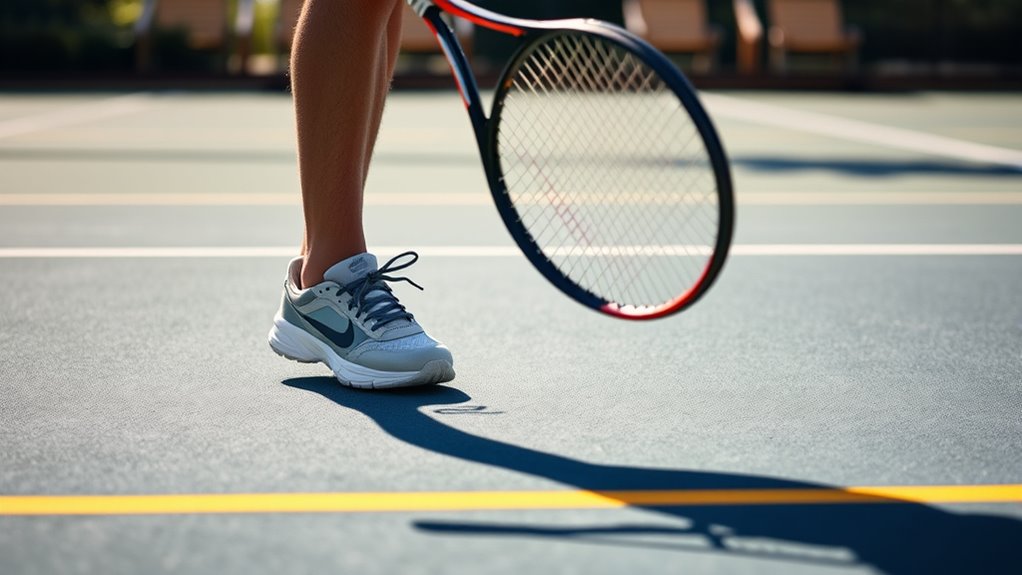
Good footwork is essential for reaching and controlling the ball effectively during a match. To develop this, focus on agility drills that improve your speed and coordination. These drills help you move smoothly across the court, allowing quicker responses to your opponent’s shots. Proper foot positioning is key; always keep your feet shoulder-width apart and stay on the balls of your feet. This stance prepares you to pivot, turn, and accelerate in any direction. Practice shifting your weight efficiently and maintaining balance, especially when progressing between strokes. Consistent practice of agility drills and mindful foot positioning will enhance your overall movement, making you more agile, precise, and ready to react swiftly during rallies. Additionally, understanding regional legal resources can help you access expert guidance for training or injury prevention. Developing effective footwork techniques not only improves your mobility but also increases your confidence and performance on the court. Incorporating proper stance and positioning techniques from tennis professionals can further refine your movement skills. Paying attention to training methods specific to tennis footwork can also optimize your progress and reduce the risk of injury. Incorporating drills focused on lateral movement can further enhance your agility and responsiveness.
Frequently Asked Questions
How Do I Choose the Right Tennis Racket for My Skill Level?
To choose the right tennis racket for your skill level, start by considering your grip selection—opt for a grip that feels comfortable and suits your playing style. Next, check the racket’s string tension; lower tension offers more power, while higher tension provides better control. As a beginner, look for a racket with a lighter weight and larger head size to improve your accuracy and reduce fatigue.
What Are Common Mistakes Beginners Make With Footwork?
Don’t worry if you stumble over footwork pitfalls; everyone makes common mistakes at first. Many beginners tend to stay rooted or take too many small steps instead of moving efficiently. You might also neglect proper positioning or rush your steps, which slows down your game. Focus on staying light on your feet, practicing smooth, deliberate movements, and you’ll improve quickly. Overcoming these common mistakes helps you enjoy tennis more and play confidently.
How Can I Improve My Serve Consistency?
To improve your serve consistency, focus on establishing a steady serve rhythm, practicing a smooth, repeatable motion. Pay close attention to your toss accuracy; a consistent toss helps you hit the ball at the right height and position. Incorporate drills that reinforce these elements, like practicing your toss separately and timing your motion. With regular practice, you’ll develop a more reliable serve that feels natural and confident.
What Exercises Help Develop Better Agility on the Court?
To boost your agility on the court, focus on agility drills and footwork exercises like ladder drills, cone shuffles, and side-to-side sprints. These activities help improve your quickness, coordination, and balance, making you more responsive during play. Incorporate them into your routine regularly, aiming for 15-20 minutes, to see noticeable improvements in your court movement and overall agility.
How Do I Prevent Injuries While Learning Tennis?
Did you know that proper warm-up routines can reduce tennis injuries by up to 70%? To prevent injuries, always start with a proper warm-up to loosen muscles and improve flexibility. Wear protective gear like supportive shoes and wristbands, and listen to your body—don’t push through pain. Taking these steps helps you stay safe, avoid strains, and enjoy the game longer.
Conclusion
As you start your tennis journey, remember that mastering grips, strokes, and footwork is key. With consistent practice, you’ll see improvements quickly—did you know that players who focus on footwork can move up to 50% faster on the court? Keep practicing, stay patient, and enjoy each step of your progress. Before long, you’ll be rallying confidently and feeling the thrill of the game. Your tennis skills are just beginning to take shape!