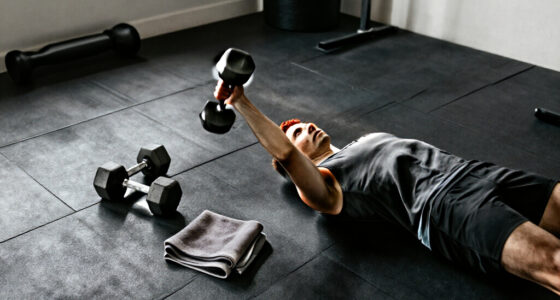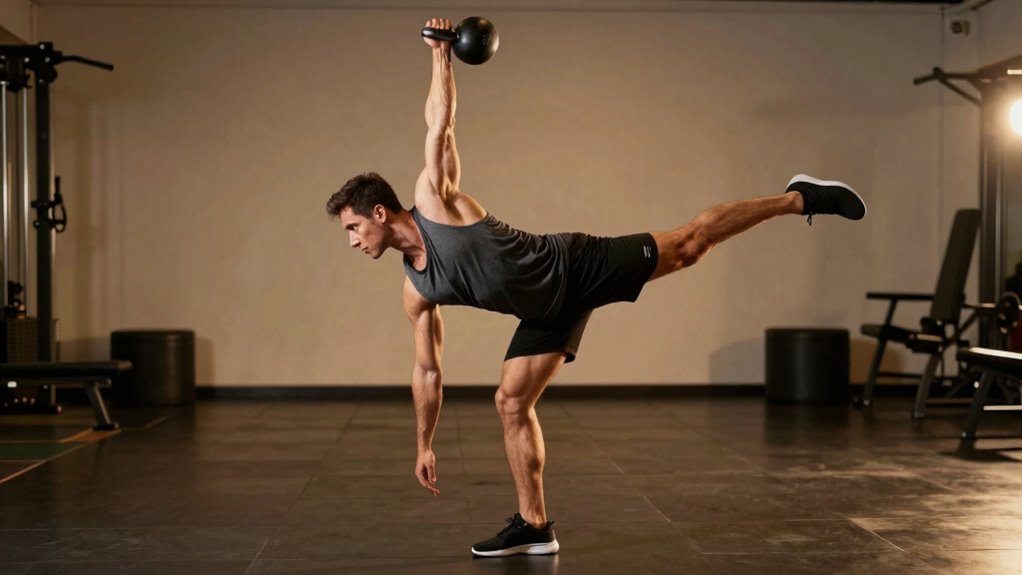

Unilateral training deserves a place in every program because it helps you correct muscle imbalances, improve balance, and enhance functional strength for everyday activities. It also promotes better coordination, control, and core stability, reducing your injury risk. These exercises allow you to focus on proper technique, preventing overcompensation and uneven load distribution. Incorporating unilateral movements leads to a more balanced physique and safer workouts, and if you continue, you’ll discover how to maximize these benefits effectively.

Get workout gear delivered free with Prime
- Fast, free delivery on millions of items
- Prime Video, Amazon Music and more included
- Member-only deals all year
Key Takeaways
- It corrects muscle imbalances, promoting balanced strength and preventing injury.
- Enhances functional movement, stability, and coordination for real-world tasks.
- Reduces injury risk by improving joint stability and proper movement patterns.
- Focuses on proper technique and core stability, minimizing compensatory movements.
- Supports injury recovery and safe progression in training programs.
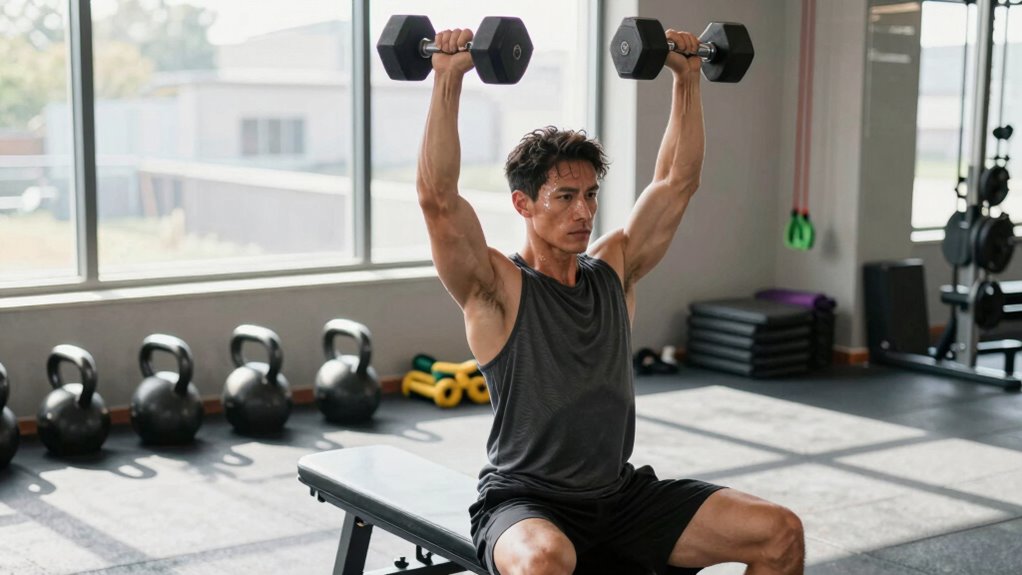
Have you ever considered how unilateral training can enhance your workout routine? This approach focuses on working one limb at a time, which might seem simple but offers powerful benefits. When you incorporate unilateral exercises, you challenge your muscles individually, leading to notable improvements in balance and coordination. Better balance isn’t just about standing steady; it translates into everyday movements, sports, and other physical activities, making you more agile and reducing the risk of falls or awkward slips. By training each side independently, you identify and address strength imbalances that often go unnoticed in bilateral exercises. Over time, this leads to a more balanced physique, which not only boosts your performance but also minimizes the risk of injury caused by uneven muscle development.
Unilateral training improves balance, addresses muscle imbalances, and enhances overall strength and coordination.
Injury prevention is another key reason to add unilateral movements to your routine. Imbalances or weaknesses in one limb can place excessive strain on joints or muscles during complex movements, increasing the likelihood of strains, sprains, or overuse injuries. Unilateral training helps correct these imbalances by forcing each limb to work independently, ensuring that both sides develop evenly. It also allows you to control the movement more precisely, giving you the chance to focus on proper technique and form. This heightened awareness reduces the chance of compensatory movements that could lead to injury. Whether you’re recovering from an injury or simply looking to prevent one, unilateral exercises serve as a safe, effective way to strengthen vulnerable areas. Additionally, muscle imbalance can be a significant factor in injury risk, making unilateral training especially valuable for injury prevention. Incorporating functional movements into your routine can further enhance your overall strength and stability, making daily activities easier and safer. Moreover, understanding the return policies of gyms or fitness equipment providers can help you plan your workouts and equipment upgrades more effectively, ensuring safety and compliance. To maximize the benefits, integrating core stability exercises during unilateral training sessions can provide enhanced support for your entire kinetic chain.
As an affiliate, we earn on qualifying purchases.
Frequently Asked Questions
Can Unilateral Training Replace Bilateral Exercises Entirely?
Unilateral training can’t replace bilateral exercises entirely, but it’s essential for muscle isolation and injury prevention. You benefit from improved balance, stability, and addressing muscle imbalances with unilateral movements. While bilateral exercises are great for building overall strength, incorporating unilateral training helps target muscles more precisely and reduces injury risks by strengthening stabilizers. So, including both guarantees a well-rounded, effective workout program.
How Often Should Unilateral Exercises Be Incorporated Into a Workout?
Think of your workout as a symphony, and unilateral exercises as the delicate, balancing notes. You should incorporate them 2-3 times a week to foster balance improvement and injury prevention. By giving each side of your body equal attention, you prevent imbalances that could lead to injury, ensuring your performance remains harmonious. Regular inclusion keeps your muscles synchronized, making your entire routine more effective and resilient.
Are Unilateral Exercises Suitable for Beginners?
Yes, unilateral exercises are suitable for beginners because they help improve core stability and address muscle imbalances early on. By focusing on one side at a time, you develop better control and coordination, which can prevent injuries and enhance overall strength. Start with simple movements and gradually increase intensity. Incorporating unilateral exercises into your routine builds a solid foundation, making your workouts more effective and balanced as you progress.
What Equipment Is Needed for Effective Unilateral Training?
Picture yourself in a gym of yore, wielding simple equipment to conquer balance challenges and muscle imbalances. For effective unilateral training, you mainly need a pair of dumbbells or kettlebells, a resistance band, or a stability ball. These tools help target asymmetries and improve stability, making your workout more balanced. Minimal equipment means you can train anywhere, whether at home or outdoors, honing strength and coordination simultaneously.
How Do Unilateral Exercises Impact Athletic Performance?
Unilateral exercises boost your athletic performance by addressing muscle imbalances and improving joint stability. When you focus on one limb at a time, you challenge your muscles more evenly, reducing weaknesses that could lead to injury. This enhanced balance and stability translate into better coordination, strength, and agility during sports or physical activities. Incorporating unilateral movements helps you perform more efficiently and safely, elevating your overall athletic potential.
As an affiliate, we earn on qualifying purchases.
Conclusion
Incorporating unilateral training into your routine can boost balance, correct imbalances, and improve overall strength. Imagine you’re working on your squat, and by focusing on one leg at a time, you notice better stability and power. For example, a runner might use single-leg exercises to enhance stride and prevent injuries. Don’t overlook these effective moves; they’re a game-changer for balanced, functional fitness that helps you perform better in daily life and sports.
As an affiliate, we earn on qualifying purchases.
core stability workout equipment
As an affiliate, we earn on qualifying purchases.
As an affiliate, we earn on qualifying purchases.
Halloween Picks
halloween
As an affiliate, we earn on qualifying purchases.