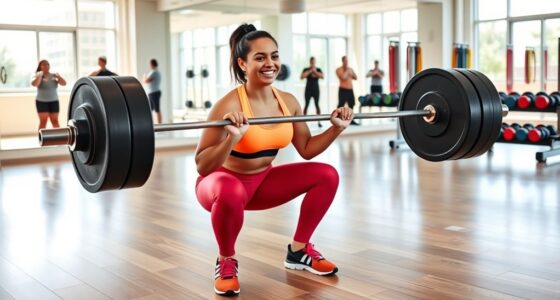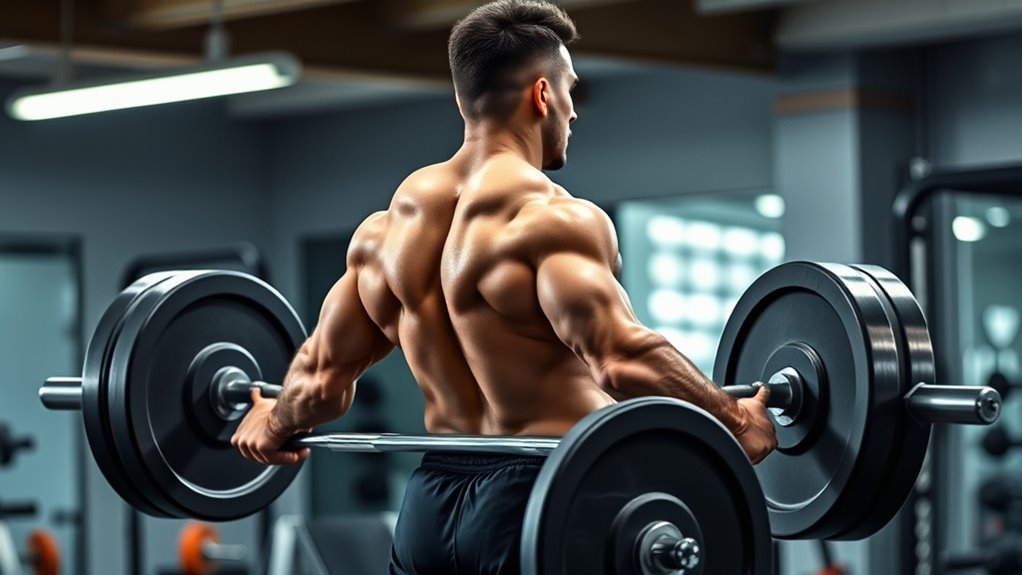

To master the deadlift safely, focus on proper setup by positioning your feet shoulder-width apart, gripping the bar firmly, and maintaining a neutral spine. Engage your core and keep your chest up as you lift, driving through your heels and extending hips and knees simultaneously. Avoid rounding your back and use controlled movement throughout. Refining your technique with patience and consistency guarantees safety and strength gains—continue to explore these tips for lasting progress.
Key Takeaways
- Maintain a neutral spine by visualizing it as a balanced stack of coins, avoiding rounding or excessive arching.
- Set feet shoulder-width apart with toes slightly outward, grounding firmly to improve stability and force transfer.
- Engage core and back muscles before lifting to create a stable, protected spine and prevent injury.
- Use proper grip and hand positioning directly over your feet for balanced, efficient lifting mechanics.
- Control the movement with steady, deliberate lifts, avoiding rushing or excessive weight that compromises form.
Understanding the Basics of Deadlift Anatomy and Mechanics
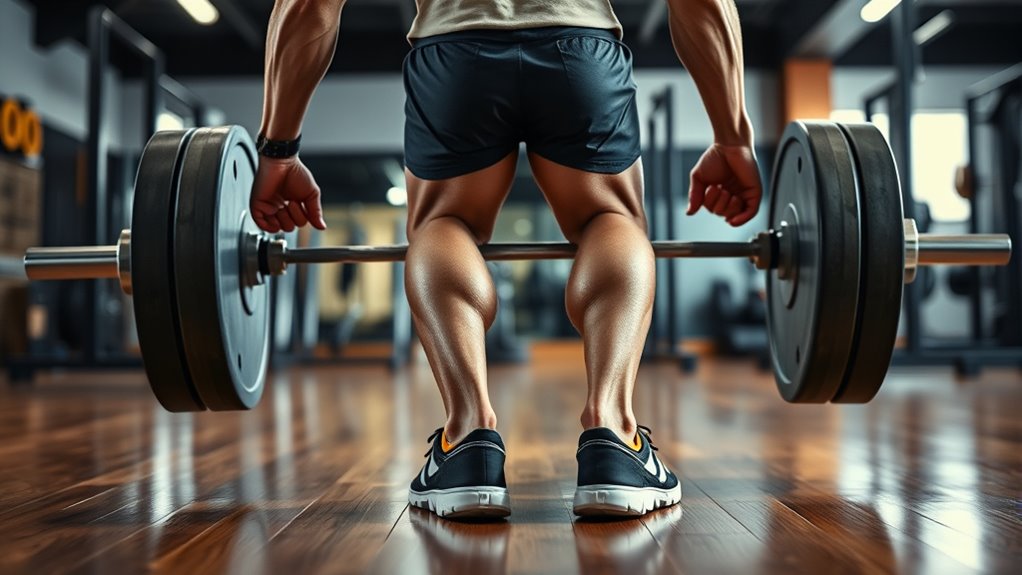
To master the deadlift, you first need to understand its anatomy and mechanics. Deadlift biomechanics involves the coordinated movement of your hips, knees, and back as you lift the bar from the ground. Proper form ensures efficient muscle activation, engaging key muscles like your glutes, hamstrings, lower back, and quads. When you initiate the lift, your hips and knees extend simultaneously, driving the bar upward while maintaining a neutral spine. Recognizing how these muscles work together helps prevent injury and improves strength development. Focus on maintaining a strong core and proper posture throughout the movement. Understanding the underlying mechanics allows you to optimize your deadlift technique, making each lift safer and more effective as you build power and stability. Additionally, understanding deadlift anatomy can help identify and target specific muscle groups for improved performance, and paying attention to movement patterns ensures you’re lifting with proper technique. Developing awareness of your muscle engagement can further enhance your lifting efficiency and reduce the risk of strain. Incorporating knowledge of performance kits similar to those used in vehicle tuning can also help optimize your training setup for better results. Furthermore, integrating these principles into your routine can lead to more consistent progress and injury prevention.
Setting Up Your Deadlift Station for Safety and Efficiency
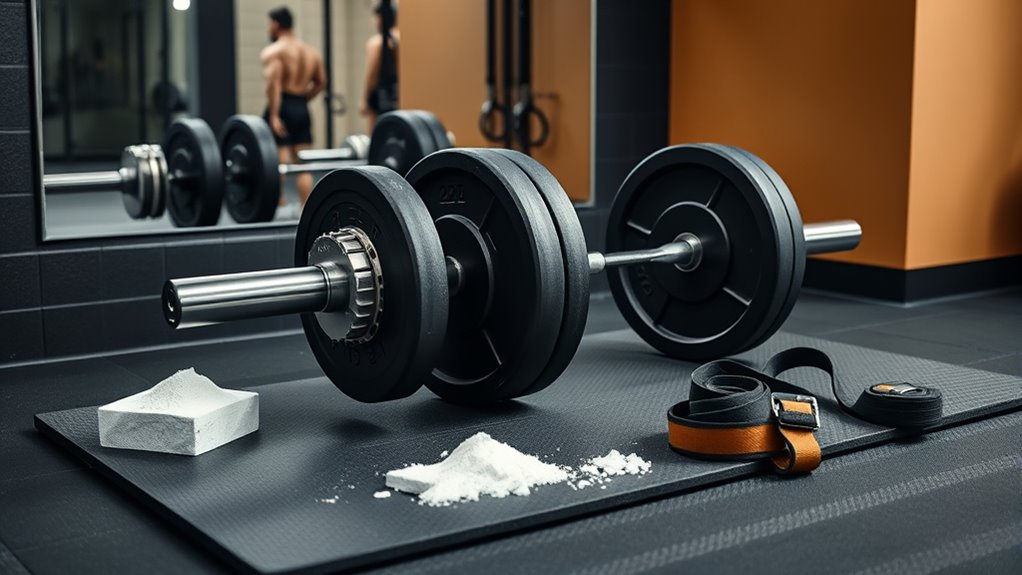
Setting up your deadlift station correctly can make a significant difference in your safety and performance. Start by selecting the right barbell—choose one with the appropriate diameter and weight capacity for your strength level. Make certain the barbell is free of rust or damage. Next, focus on footwear choice; wear flat, stable shoes like lifting shoes or weightlifting slippers to maintain solid contact with the ground. Avoid running shoes or anything with cushioning, as they can compromise stability. Clear the area of obstructions and place the barbell on a non-slip surface to prevent slipping. Adjust the height of the barbell to align with your mid-shin when standing upright. Proper station setup minimizes injury risk and helps you lift more efficiently. Additionally, considering home security systems such as surveillance cameras and alarm systems can enhance safety during late-night training sessions or when leaving your equipment unattended. Incorporating safety protocols like proper warm-up routines and using collars on the barbell can further reduce the risk of injury during heavy lifts. Ensuring proper lighting in your workout area also helps prevent accidents and allows you to focus on your form. Adding appropriate flooring, like rubber mats, can also protect both your equipment and your joints during lifts.
Proper Foot Placement and Grip Techniques
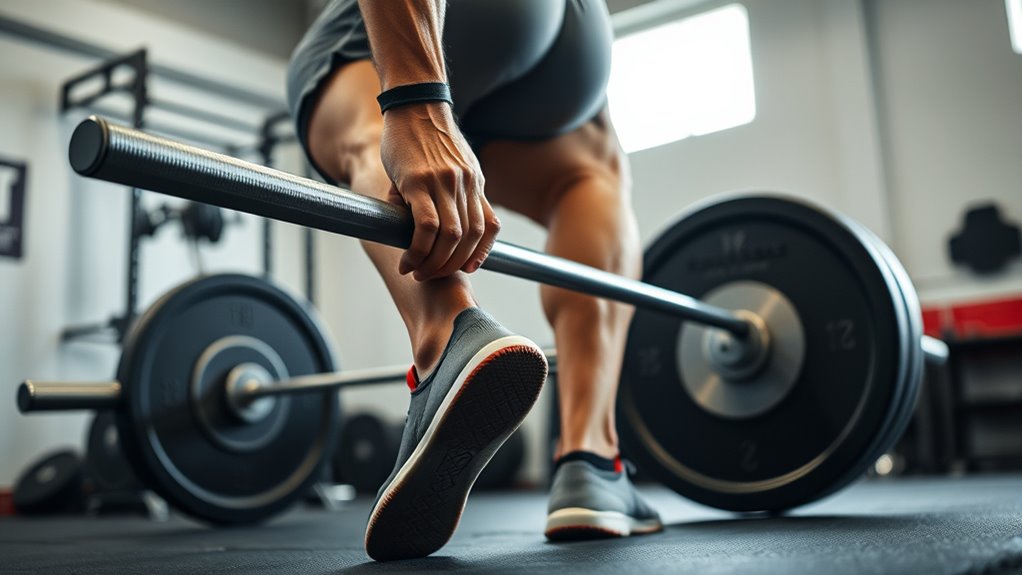
Your foot placement sets the foundation for a strong deadlift, so start by positioning your feet shoulder-width apart or slightly narrower. Next, choose a grip variation—overhand, mixed, or hook—that feels most secure and comfortable for you. Finally, align your hands directly over your feet to maintain balance and maximize power during the lift. Incorporating proper lifting biomechanics ensures a safer and more efficient deadlift. Additionally, paying attention to your core engagement can help stabilize your spine and prevent injury during the lift, and developing proper technique is essential for long-term strength and safety. Focusing on positive energy and maintaining a confident mindset can also enhance your performance and reduce hesitation during lifts. Ensuring your setup includes consistent head and neck positioning can further improve lift stability and safety.
Foot Positioning Basics
Getting your foot placement right is essential for a strong and safe deadlift. You want your feet shoulder-width apart or slightly narrower, with toes pointed slightly outward. This stance helps improve ankle stability, allowing you to maintain balance as you lift. Focus on grounding your feet firmly, ensuring your foot arch is engaged, which distributes weight evenly and enhances control. Proper foot positioning allows for maximal force transfer from your legs through your hips and back. Keep your weight centered over the midfoot, not the heels or toes, to prevent unnecessary strain. Remember, your stance should feel natural and stable, giving you a solid foundation to execute the lift safely and efficiently. Proper foot placement is the key to unleashing better deadlift performance. Foot stability is crucial for maintaining control and avoiding injury during the lift. Additionally, maintaining a balanced stance can support the engagement of proper biomechanics and improve overall lifting safety. Recognizing the importance of cultural approaches in training can also enhance your technique by integrating diverse training philosophies. Incorporating your body’s unique biomechanics can further optimize your deadlift form and prevent overuse injuries.
Grip Variations Explained
Choosing the right grip can considerably affect your deadlift performance and safety. Your barbell grip influences control, power, and injury risk. The most common options are overhand, mixed grip, and hook grip. The mixed grip, where one hand overhand and the other underhand, helps prevent bar rotation on heavier lifts. Here’s a quick comparison:
| Grip Type | Pros | Cons |
|---|---|---|
| Overhand | Symmetrical, easier to adjust | Less grip strength for heavy lifts |
| Mixed Grip | Better grip security | Can cause muscle imbalances |
| Hook Grip | Secure, reduces grip fatigue | Discomfort for some |
Choose your barbell grip based on comfort and lifting goals, and remember, practicing proper grip techniques enhances safety and performance. Additionally, understanding proper foot placement can improve your overall deadlift technique and stability. Incorporating grip strengthening exercises can also help prevent fatigue and improve your lifting capacity over time, which is especially important for managing beneficial grip variations as you progress.
Hand and Foot Alignment
Proper hand and foot alignment are essential for maximizing deadlift performance and maintaining safety. Your hand grip should be firm yet comfortable, with options like overhand or mixed grip depending on your preference. Your foot stance influences stability; a shoulder-width or slightly narrower stance is common.
Visualize:
- Planting your feet firmly, toes pointed slightly outward for balance
- Ensuring your hand grip is secure, with palms facing your body
- Keeping your feet and hands aligned to create a strong, stable base
A proper foot stance helps you generate power, while the right hand grip prevents slipping. Focus on consistency to improve form and lift safely. Proper alignment minimizes injury risks and boosts your deadlift results.
Aligning Your Body for Optimal Lifting Posture
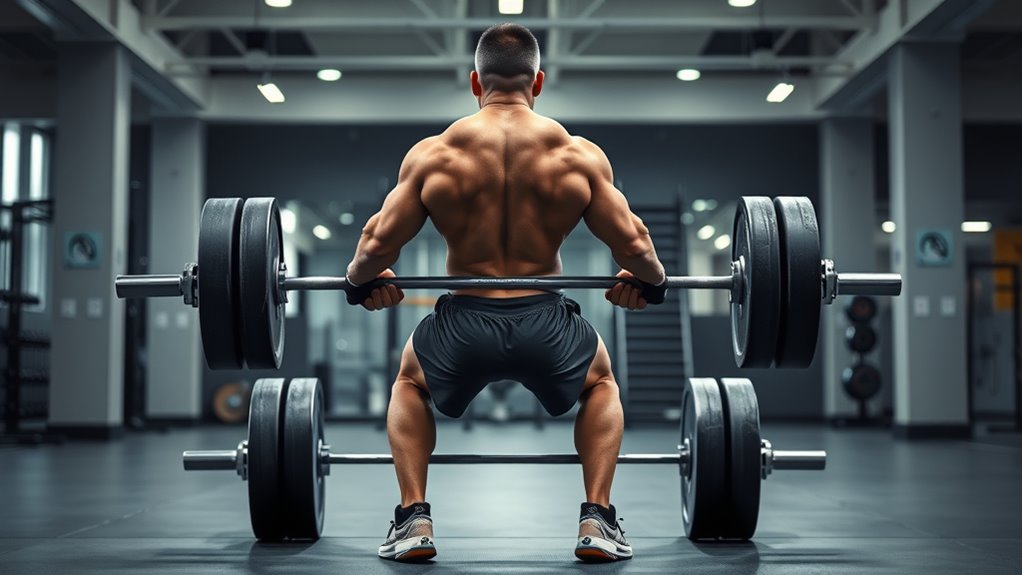
To lift safely and effectively, you need to focus on proper spine alignment and foot placement. Keep your back straight and your hips in the right position before gripping the bar. When your body is aligned correctly, you’ll generate more power and reduce injury risk.
Proper Spine Alignment
Maintaining a straight and neutral spine is essential for safe and effective deadlifting. When your spine stays aligned, you protect your vertebral health and optimize power transfer. Focus on keeping your back flat, avoiding rounded shoulders or a hunched upper back. To achieve proper spine alignment, visualize:
- A stack of coins along your vertebral column, keeping them balanced as you lift
- Your chest elevated, preventing collapse or excessive arching
- Your neck in line with your spine, avoiding craning or tilting
This alignment enhances spinal flexibility, allowing you to move smoothly through the lift while reducing injury risk. Proper spine positioning keeps your core engaged, supporting your entire body during the deadlift. Always prioritize maintaining a strong, neutral spine for safe lifting and long-term vertebral health.
Foot Placement Technique
Your foot placement sets the foundation for a strong, safe deadlift. Proper stance width and foot placement help you maintain balance and optimize power. Typically, your feet should be roughly shoulder-width apart, with toes slightly pointed outward for stability and proper hip alignment. Adjust your stance based on your body mechanics; wider stances activate different muscle groups, while narrower ones emphasize others. Here’s a visual guide:
| Stance Width | Foot Placement | Body Alignment |
|---|---|---|
| Narrow | Feet close together | Lean slightly forward |
| Shoulder-width | Feet under hips | Neutral spine |
| Wide | Feet wider than shoulders | Hips pushed back |
| Very wide | Sumo stance | Chest up, hips low |
| Custom | Personal comfort | Adjust as needed |
Focus on consistent foot placement for safe, effective lifts.
Engaging Core and Back Muscles Correctly
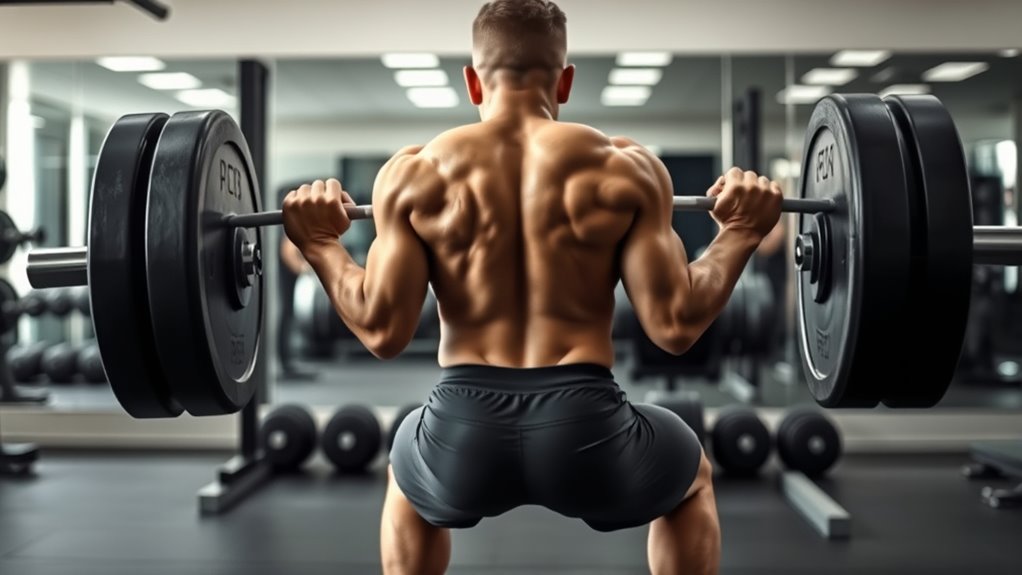
Engaging your core and back muscles correctly is essential for a safe and effective deadlift. Proper core stability and back engagement protect your spine and improve lifting power. To do this, imagine:
- Squeezing your abs as if bracing for a punch, creating a tight, stable midsection.
- Pulling your shoulder blades back and down to activate your upper and mid-back muscles.
- Maintaining a slight arch in your lower back, ensuring it stays aligned with your hips.
These actions help you maintain proper posture, prevent rounding, and transfer force efficiently through your posterior chain. Focus on tightening your core and engaging your back muscles before lifting, so your body becomes a solid, controlled unit. This foundation is key to lifting safely and maximizing strength.
Executing the Deadlift With Controlled Movement

Executing the deadlift with controlled movement requires focusing on the lift’s rhythm and precision. Your deadlift psychology plays a fundamental role here—staying calm and deliberate helps you maintain proper form throughout each phase. Motivation strategies, like visualizing success or setting small goals, keep you engaged and focused on controlled execution. Moving slowly and intentionally allows you to better feel the lift, ensuring you don’t rush and compromise safety. Concentrate on a steady pace from lift-off to lockout, avoiding jerky or abrupt motions. This mindful approach not only enhances safety but also reinforces muscle memory, making your deadlift more efficient over time. Remember, controlled movement builds confidence and helps prevent injury, turning each lift into a disciplined and effective practice.
Common Mistakes to Avoid During Lifting
One of the biggest mistakes you can make is rounding your back, which increases the risk of injury. Using too much weight can cause you to compromise your form and lift unsafely. To lift safely and effectively, stay mindful of your posture and choose a manageable weight.
Rounding the Back
Rounding your back during a deadlift is a common mistake that can lead to serious injury and reduce your lifting efficiency. When you allow back rounding, you increase spinal flexion, putting unnecessary stress on your spine. This can cause strains or herniated discs if ignored. To avoid this, keep your back flat and engaged throughout the lift. Visualize your spine as a straight line from your head to your hips. Remember these key points:
- Maintain a neutral spine, avoiding spinal flexion at all costs.
- Engage your core to stabilize your torso.
- Keep the bar close to your body to prevent back rounding.
Focusing on proper form ensures safe lifting and optimizes your strength. Don’t let back rounding compromise your progress or safety during deadlifts.
Using Too Much Weight
Using too much weight is a common mistake that can compromise your form and increase the risk of injury. When you lift too heavy, you might sacrifice proper technique, leading to overtraining issues and strained muscles. It’s essential to prioritize mental focus, ensuring you stay attentive to your body’s signals. Pushing too hard can also diminish your ability to maintain control and stability.
| Tip | Benefit |
|---|---|
| Start with manageable weights | Prevents overtraining issues and injuries |
| Focus on form over load | Builds strength safely and effectively |
Incorporating Progressive Overload Safely
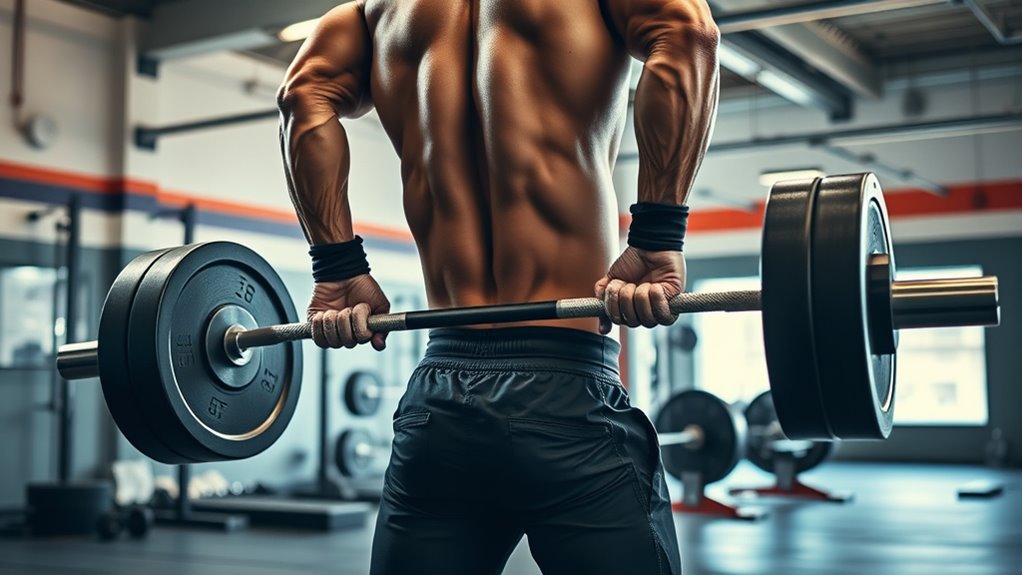
To incorporate progressive overload safely into your deadlift routine, you need to increase the intensity gradually rather than making sudden jumps in weight. This guarantees you build strength without risking injury. Focus on these safety considerations:
- Incremental weight increases: Add small plates or 5-pound increments to avoid overstressing your muscles and joints.
- Consistent form: Maintain proper deadlift form with each lift, especially as you increase weight.
- Listening to your body: Recognize signs of fatigue or discomfort and adjust your training accordingly.
Using Equipment and Accessories to Enhance Safety
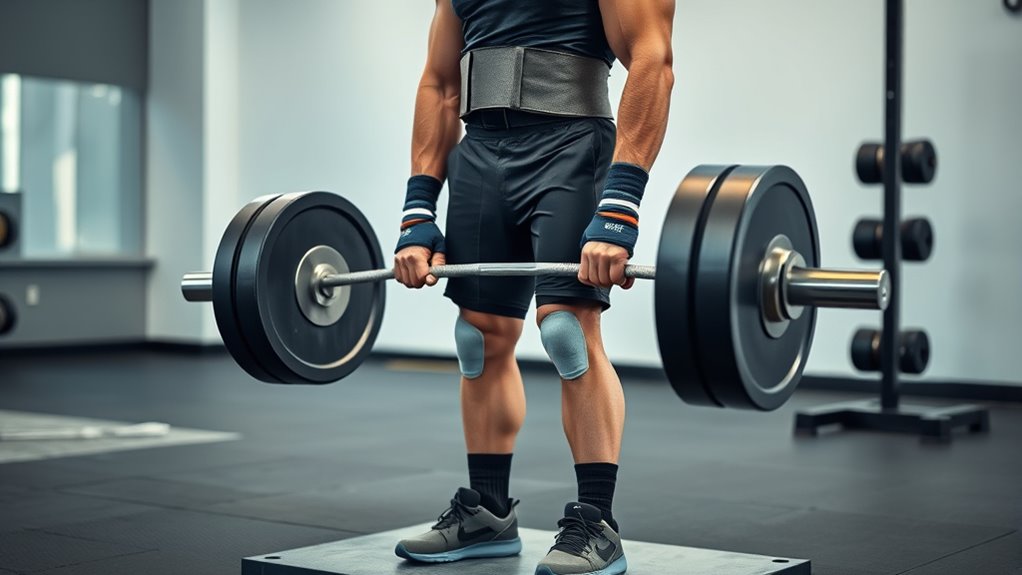
Equipping yourself with the right gear can substantially reduce the risk of injury during deadlifts. Lifting accessories like weightlifting belts, wrist straps, and knee sleeves provide additional support and stability, helping you maintain proper form under heavy loads. A well-fitting safety equipment setup can prevent strain on your lower back and joints, especially during high-intensity lifts. Using lifting accessories correctly allows you to focus on technique while reducing fatigue and injury risk. Make sure your safety equipment is comfortable and suited to your body size, and don’t rely solely on gear—combine it with proper technique. Remember, gear enhances your safety, but it doesn’t replace good form and cautious lifting practices. Proper use of safety equipment keeps you safer and more confident during each deadlift session.
Tips for Recovery and Preventing Injuries
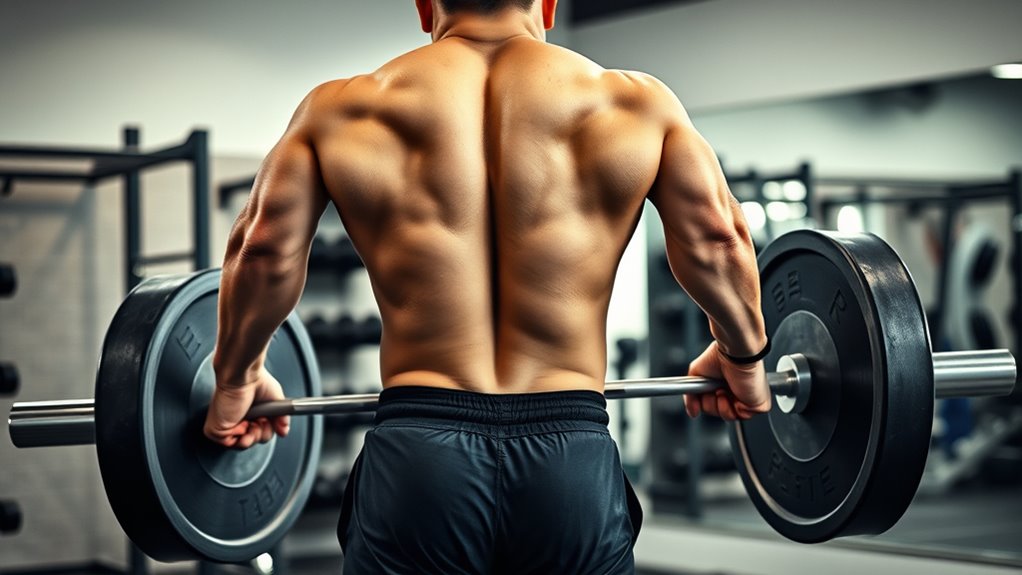
Proper recovery and injury prevention start with listening to your body and incorporating smart habits into your routine. After deadlifting, prioritize post workout stretching to loosen tight muscles and improve flexibility. Focus on nutrition for recovery by consuming protein-rich foods, hydrating well, and including anti-inflammatory options like berries or leafy greens to reduce soreness. To prevent injuries, avoid overtraining by scheduling rest days and varying your workouts. Use foam rolling to release muscle tension and promote blood flow. Paying attention to these habits helps your body heal faster and stay strong, ensuring safer lifts in the future. Remember, recovery isn’t just about resting; it’s about actively caring for your muscles and joints to keep your deadlift progress sustainable.
Frequently Asked Questions
How Can I Improve My Deadlift Technique With Limited Equipment?
To improve your deadlift technique with limited equipment, focus on form drills in your home gym. Use resistance bands to mimic the resistance of the barbell, helping you develop proper movement patterns and strength. Practice hip hinge and core engagement exercises, and record yourself to analyze your form. Consistent practice with resistance bands will boost your confidence and technique, even without heavy weights or a fully equipped gym.
What Are Signs of Overtraining or Injury From Deadlifts?
Like a fragile glass about to shatter, your body whispers warnings when overtraining or injury loom. Watch for signs of fatigue, like sluggish lifts or shaky confidence, and pain indicators, such as persistent soreness or sharp discomfort. If these signals echo louder each session, it’s time to tune your training. Ignoring them risks cracking your progress and risking injury, so listen closely and rest when needed.
How Do I Modify Deadlifts for Specific Injuries or Limitations?
If you have injuries or limitations, you should focus on injury-specific modifications and limited equipment adjustments. For example, use lighter weights or resistance bands if you have joint issues, and adjust your stance or grip to reduce strain. Consult a healthcare professional for personalized guidance. Always listen to your body, and avoid exercises that cause pain, ensuring you stay safe while maintaining your strength routine.
What Warm-Up Routines Best Prepare My Body for Deadlifting?
To prepare your body for deadlifting, start with dynamic stretches like leg swings and hip circles to loosen up your muscles. Incorporate core activation exercises such as planks or bird dogs to stabilize your spine. Warming up with these routines boosts blood flow, increases flexibility, and primes your muscles for the lift, helping you lift safely and effectively while reducing injury risk.
How Often Should I Incorporate Deadlifts Into My Training Program?
You should incorporate deadlifts into your training program 2 to 3 times a week, balancing training frequency with your recovery strategies. This allows your muscles to adapt without overtraining. Pay attention to how your body responds, and include rest days to prevent injury. Adjust your deadlift volume and intensity based on your progress, and always prioritize proper form to maximize gains and minimize risks.
Conclusion
Mastering the deadlift transforms you into an unstoppable lifting machine—your muscles will roar like thunder, and your spine will stay as safe as a fortress. With perfect form, you’ll lift with the power of a superhero, avoiding injuries and crushing every weight in your path. Keep practicing, stay safe, and soon you’ll be the legend of the gym, bending bars and breaking limits like it’s child’s play. Now go conquer those deadlifts!