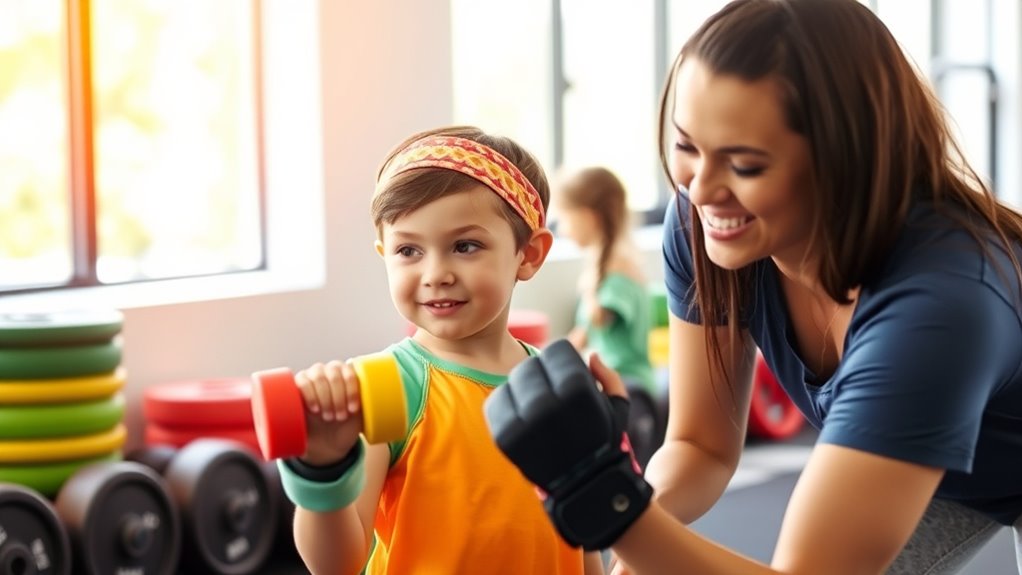

You can help kids develop strength safely by focusing on age-appropriate activities, proper technique, and supervision. For children under 8-10, activities like climbing, jumping, and body-weight exercises are ideal, while older kids can use light resistance and weights under guidance. Emphasizing proper form and avoiding heavy lifting guarantees safety and long-term healthy habits. If you want to learn more about encouraging safe strength training for children, there’s helpful information below.
Key Takeaways
- Children can safely lift weights when supervised and using proper technique appropriate for their age.
- Focus on body-weight exercises, coordination, and motor skills before introducing resistance training.
- Use light weights or resistance bands for children aged 8-12 to promote safe strength development.
- Avoid heavy lifting in very young children; prioritize fun, skill-building, and gradual progression.
- Supervision by knowledgeable adults ensures safety, correct form, and prevents overexertion during strength training.
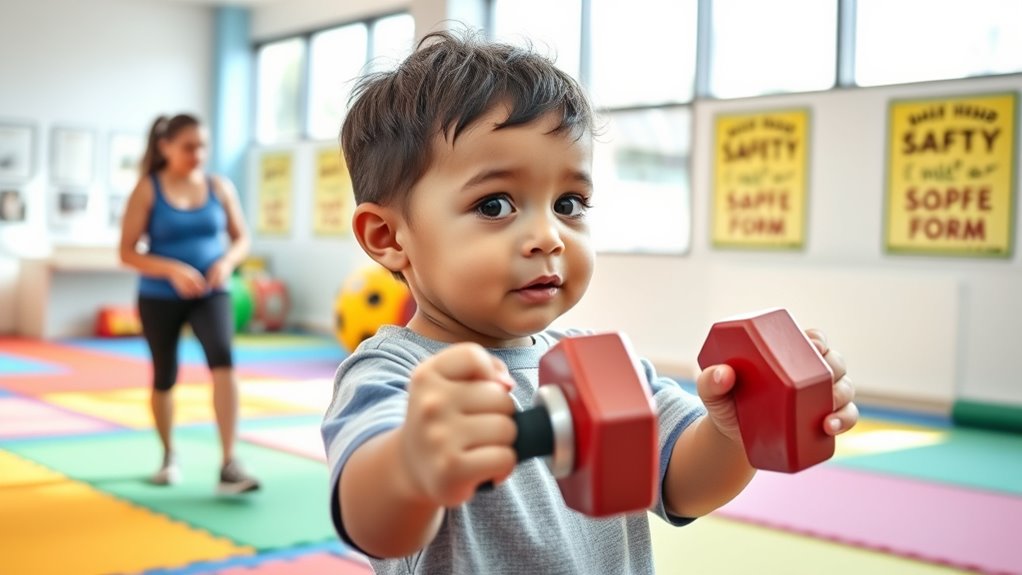
Strength training can be safe and beneficial for children when approached correctly, but it’s essential to prioritize proper techniques and supervision. When you’re considering whether your child should lift weights, understanding the importance of proper technique is vital. Proper technique ensures that your child performs exercises safely, reduces the risk of injury, and helps build a solid foundation for future strength development. Kids are still growing, so focusing on correct form instead of heavy weights is crucial. Encourage your child to learn the proper way to perform each exercise, emphasizing controlled movements, correct posture, and avoiding any jerky or rapid motions. This not only prevents strain but also promotes good habits that can last a lifetime. Additionally, incorporating elements of sound healing science such as mindful breathing can help children develop focus and relaxation during workouts.
Age considerations play a significant role in determining what type of strength training is appropriate. Younger children, especially those under the age of 7 or 8, typically don’t need to lift weights at all. Instead, their focus should be on developing coordination, balance, and overall motor skills through activities like climbing, jumping, and body-weight exercises. As children grow older, around 8 to 12 years, they can safely begin light resistance training, provided they’re guided properly and supervised. The emphasis should be on using light weights or resistance bands and mastering proper technique. For adolescents, who are more physically mature, strength training can be more structured, but it still requires attention to proper form and gradual progression.
Supervision is key at every age. Kids need a knowledgeable adult or trainer to oversee their workouts, ensuring they’re using correct form and not overexerting themselves. This supervision helps catch mistakes early and keeps the focus on safety rather than just lifting heavier weights. It’s also important to tailor strength training programs to your child’s age and physical development. Programs should be designed with age considerations in mind, emphasizing fun, skill development, and safe progressions.
Frequently Asked Questions
When Should Kids Start Lifting Weights Safely?
You should wait until your child is at least 7 or 8 years old before starting weight training, focusing on age considerations. Make certain safety guidelines are followed, such as using light weights, proper form, and supervision. It’s important to avoid heavy lifting and prioritize fun and technique over intensity. Always consult a pediatrician or qualified trainer to create a safe, age-appropriate program that promotes healthy growth and confidence.
What Types of Exercises Are Best for Children?
Think of your child’s workout as a balanced garden in full bloom. Focus on fun, safe exercises like balance exercises that strengthen stability and flexibility routines that keep muscles limber. These activities act as the roots of a strong foundation, helping kids grow healthy and confident. Incorporate playful movements and gradual progressions, ensuring they enjoy the process while building strength, coordination, and flexibility in a safe, nurturing way.
How Can Parents Ensure Proper Technique?
You can guarantee proper technique by actively supervising your child’s workouts and emphasizing proper form. Use clear technique cues, like “keep your back straight” or “bend your knees,” to guide them. Demonstrate exercises yourself or consult a qualified trainer to model correct movements. Regularly watch their form to correct any mistakes early, and encourage them to listen to their body, making sure they perform exercises safely and effectively.
Are There Risks of Growth Plate Injuries?
You should know that growth plate injuries are rare, accounting for less than 1% of all childhood sports injuries. While the risk assessment shows that proper supervision and technique greatly reduce the chance, it is crucial to avoid excessive weights or improper form. By ensuring children lift with appropriate loads and under expert guidance, you minimize the risk of growth plate injuries and support safe strength development.
How Often Should Kids Train to See Benefits?
You should aim for exercise frequency of about 2-3 times per week, allowing for rest days in between. Consistent training is key to seeing benefits, so keep a regular schedule that fits your child’s age and ability. Focus on proper technique and gradual progress to avoid injuries. Over time, this consistent approach will enhance strength, coordination, and confidence, making strength training both safe and effective for your child’s development.
Conclusion
As you watch your child confidently lift a light weight, it’s easy to see how safe strength training can build more than muscles—confidence, discipline, and joy. When done properly, it’s a natural part of growing up, much like discovering a new favorite sport or hobby. Just like the first time they ride a bike without training wheels, safe strength training becomes a memorable step in their journey to strength and independence.