

After your workout, consuming carbs is key to restoring your energy and speeding up muscle recovery. Carbs replenish glycogen stores used during exercise, helping you recover faster and prepare for your next session. Simple, easily digestible options like fruits or white rice work best when eaten within an hour. Skipping this step can lead to longer soreness and slower progress. Keep going to discover more about optimizing your post-exercise nutrition.
Key Takeaways
- Replenish glycogen stores to restore energy levels and prevent fatigue.
- Accelerate muscle recovery and repair, supporting muscle growth and strength gains.
- Consume easily digestible carbs within 30-60 minutes post-exercise for optimal absorption.
- Adequate carbs enhance performance in subsequent workouts by maintaining energy reserves.
- Neglecting post-workout carbs prolongs soreness, impairs recovery, and reduces overall progress.

After a workout, consuming carbohydrates is essential for replenishing your glycogen stores and speeding up recovery. When you exercise, especially during intense or prolonged sessions, your muscles use glycogen—the stored form of glucose—as their primary fuel source. As these stores deplete, your muscles become less efficient, and your recovery process slows down. By eating carbs soon after your workout, you give your body the nutrients it needs to restore those glycogen levels quickly, helping you bounce back faster for your next training session.
Glycogen replenishment is vital because it directly impacts your muscle recovery. When glycogen levels are low, your muscles struggle to repair and rebuild effectively, which can lead to fatigue, soreness, and even decreased performance over time. Consuming the right carbs after exercise ensures that your muscles are supplied with the glucose they need to recover, repair tiny tears in muscle fibers, and reduce soreness. This process not only restores your energy but also supports muscle growth and strength gains, making post-workout carbs a key part of your fitness routine.
You don’t need to overcomplicate your carbohydrate intake. Simple, easily digestible carbs like fruits, honey, or white rice are excellent options because they quickly spike your blood sugar levels and deliver glucose to your muscles. Combining these with a small amount of protein can further enhance recovery by promoting muscle repair and synthesis. Timing is also important; aim to consume your post-workout carbs within 30 to 60 minutes after exercising to maximize glycogen replenishment. During this window, your muscles are most receptive to nutrient uptake, so providing carbs at this time can considerably improve your recovery process.
Eat simple carbs like fruit or rice within 30-60 minutes post-workout for optimal recovery.
Keep in mind that the amount of carbs you need depends on the intensity and duration of your workout. For moderate sessions, a handful of fruit or a small bowl of rice might suffice. For longer or more intense workouts, you might require more carbs to fully restore glycogen levels. Staying consistent with your post-exercise nutrition helps maintain your energy levels and keeps your muscles primed for upcoming workouts. Remember, neglecting carbohydrate intake after exercise can prolong recovery, increase soreness, and hinder your progress. Hence, making carbs a regular part of your post-workout routine is one of the smartest choices you can make to support muscle recovery and guarantee you’re always ready for your next challenge. Incorporating proper nutrition into your routine aligns with the principles of self-sufficiency and preparedness, ensuring you are well-equipped to handle physical stress and maintain optimal health.
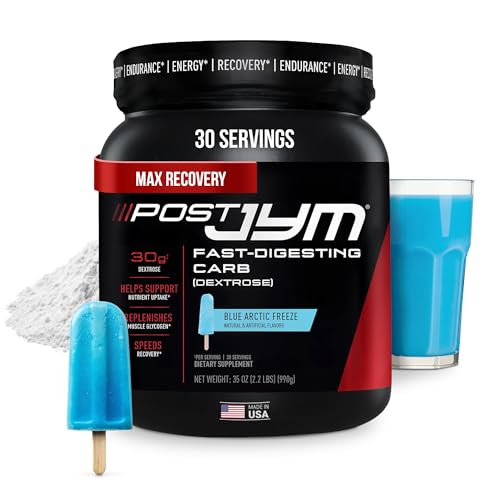
Post JYM Carb Fast Digesting Post Workout Recovery Powder
- Muscle Glycogen Replenishment: Supports quick glycogen recovery after workouts
- Great Taste: Delicious flavor that makes recovery enjoyable
- Fast Absorption: Contains high-glycemic dextrose for rapid replenishment
As an affiliate, we earn on qualifying purchases.
As an affiliate, we earn on qualifying purchases.
Frequently Asked Questions
How Quickly Should I Consume Carbs After Exercising?
You should aim to consume carbs within 30 to 45 minutes after exercising because timing importance affects how quickly your body absorbs carbs. During this window, your muscles are primed for glycogen replenishment, so eating soon after helps maximize carb absorption. Waiting longer can slow recovery, so don’t delay—grab a carbohydrate-rich snack or meal promptly to support ideal muscle repair and energy restoration.
Can I Eat Fruit Instead of Processed Carbs Post-Workout?
Yes, you can enjoy fruit as a delightful alternative to processed carbs after your workout. Fruits provide natural sugars that help replenish glycogen stores efficiently, fueling your recovery. Opt for options like bananas, berries, or apples to satisfy your sweet tooth while nourishing your muscles. These fruit alternatives offer a wholesome, tasty way to support your post-exercise needs, ensuring you get quick energy without sacrificing nutrition.
Are Carbs Necessary for Muscle Recovery if I’M on a Low-Carb Diet?
If you’re on a low-carb diet, carbs aren’t strictly necessary for muscle recovery, but carb timing can influence how your muscles replenish glycogen. While reducing carbs may slow recovery slightly, the low-carb impact means your body can still repair muscles using stored fat and protein. Focus on consuming adequate protein and healthy fats, and if you need quicker recovery, small amounts of carbs post-workout can help without breaking your low-carb routine.
Does the Type of Exercise Affect Post-Workout Carb Needs?
Sure, if you’re doing light yoga or a leisurely walk, your post-workout carb needs are probably minimal—think recovery protocol, not carb fest. But if you’re crushing intense interval training or heavy lifting, your body screams for carbs to refill glycogen stores. Different exercise variations demand tailored recovery strategies. So, yes, the type of exercise definitely influences how many carbs you should chow down afterward—your muscles will thank you!
Can Excessive Carbs After Exercise Lead to Weight Gain?
Yes, eating excessive carbs after exercise can lead to weight gain if it creates a calorie surplus. When you consume more carbs than your body needs to replenish glycogen, the extra calories are stored as fat. To avoid this, match your carb intake to your activity level and keep an eye on your total calorie intake. Maintaining a healthy metabolic rate helps prevent unnecessary weight gain from overeating carbs.

ProMix Nutrition Whey Isolate Powder, Unflavored – 2.5 Pound
- Build Muscle & Recovery: Supports muscle growth and recovery
- Cold-Processed & Acid-Free: Preserves bioactivity and purity
- Contains Natural L-Carnitine & Lactoferrin: Enhances absorption and immune support
As an affiliate, we earn on qualifying purchases.
As an affiliate, we earn on qualifying purchases.
Conclusion
So, don’t underestimate the power of carbs after your workout. They’re your secret weapon to refuel, recover, and turn you into an unstoppable force. Without them, you’re like a superhero running on empty—missing essential fuel to conquer your next challenge. Make carbs your post-exercise best friend, and watch your recovery skyrocket. Trust me, your muscles will thank you, and you’ll feel like you’ve just gained access to a new level of energy you never knew existed!

Axe & Sledge GDA+ Glucose Disposal Agent | Supports Nutrient Absorption, Stable Blood Glucose, and Muscle Glycogen Replenishment | 30 Servings
- Carb Management Support: Helps manage carbohydrate metabolism
- Premium Ingredient Blend: Includes GlucoVantage, alpha lipoic acid, and more
- Suitable for Active Lifestyles: Supports high-carb diets and training routines
As an affiliate, we earn on qualifying purchases.
As an affiliate, we earn on qualifying purchases.

Dymatize Performance Protein Shake, Cocoa Pebbles, 30g Protein, 6.1g BCAA for Muscle Recovery, No Added Sugar, Low Fat, 24 Vitamins and Minerals, Gluten-Free, Ready to Drink, On-the-Go Snack, 11.5fl oz, 12 pack
- Ready-to-Drink Shake: Convenient on-the-go beverage
- High-Quality Protein: 30g of premium protein per serving
- Supports Muscle Recovery: Contains 6.1g BCAAs for recovery
As an affiliate, we earn on qualifying purchases.
As an affiliate, we earn on qualifying purchases.