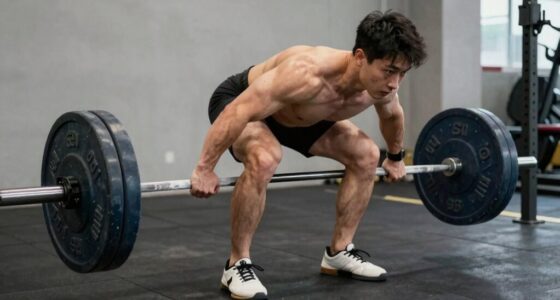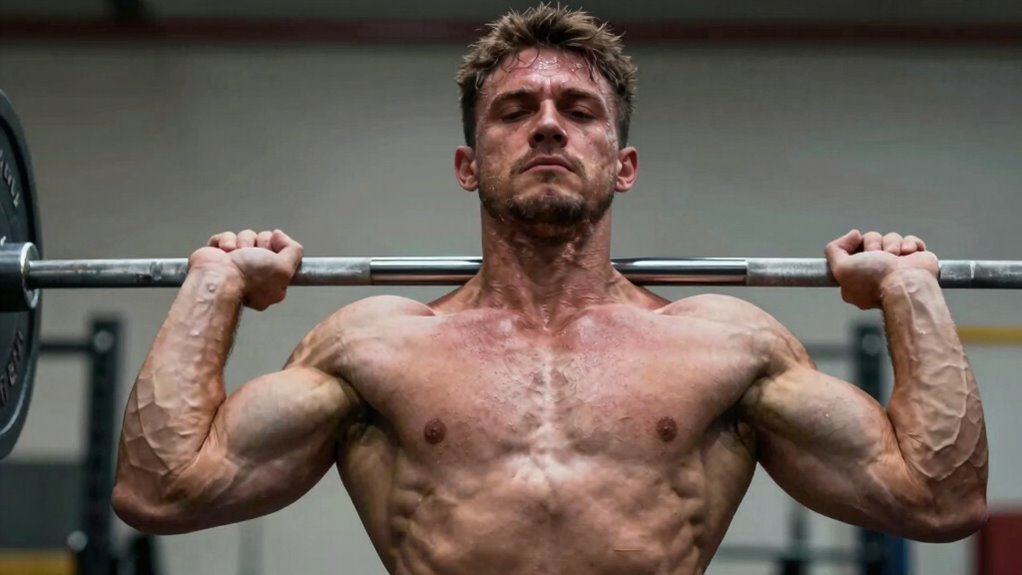

You work together with proper breathing and bracing to stay stable, generate maximum power, and avoid injury during heavy lifts. When you breathe deeply and brace your core, you increase intra-abdominal pressure, creating a strong support for your spine. This combined effort helps you control your movement, improve efficiency, and protect your back. Mastering how these work together is key to lifting safely and effectively—keep going to discover more about optimizing this essential technique.

Get workout gear delivered free — and shop member deals
- Fast, free delivery on millions of items
- Access to Prime Big Deal Days deals on October 6–7
- Prime Video, Amazon Music and more included
Key Takeaways
- Proper breathing increases intra-abdominal pressure, providing core stability during heavy lifts.
- Bracing stabilizes the spine by engaging core muscles through controlled breathing.
- Coordinated breathing and bracing create a rigid support system for safe, efficient lifting.
- Inhaling before the lift fills the diaphragm, aiding in effective core engagement and stability.
- Exhaling during or after the lift maintains tension while preventing loss of intra-abdominal pressure.
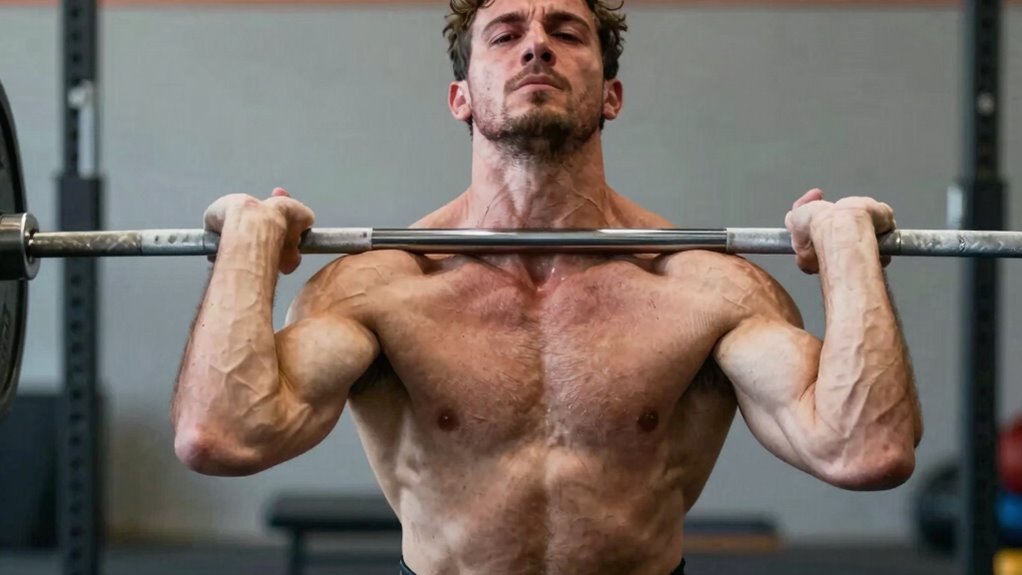
When tackling big lifts like squats, deadlifts, or bench presses, mastering proper breathing and bracing techniques is indispensable for both safety and performance. These techniques work together to stabilize your core, allowing you to generate maximum force while reducing the risk of injury. Proper core activation is key here; it creates a solid foundation that supports your spine and maintains intra-abdominal pressure, which is essential during heavy lifts. When you breathe correctly, you engage your diaphragm and abdominal muscles, helping you brace effectively and maintain stability throughout the movement.
Muscle coordination plays a significant role in guaranteeing your body functions as a unified system during lifts. As you prepare to lift, you want to synchronize your breath with the activation of the muscles that support your core. When you take a deep breath into your belly—sometimes called the “big breath” or diaphragmatic breath—you increase intra-abdominal pressure. This pressure acts like an internal brace, stabilizing your spine and reducing strain on your back. As you tighten your core muscles, you create a more rigid and supportive cylinder around your spine, enabling you to lift heavier weights safely. This coordination between breathing and muscle engagement makes your entire movement more efficient and controlled.
It’s important to understand that your breathing pattern influences your muscle coordination, especially during the exertion phase of the lift. Inhale deeply before initiating the movement, filling your diaphragm and expanding your abdomen. Then, brace your core by tightening your abs and lower back muscles as you begin to lift. This combination of breath and muscle engagement ensures your core remains activated throughout the lift, providing stability and power. When you exhale at the top or during a controlled phase of the lift, it’s imperative to maintain some tension in your core—this ongoing muscle activation preserves stability as you finish the movement. Additionally, understanding the role of intra-abdominal pressure can help you optimize your lifting technique for both safety and strength gains. Incorporating proper breathing and bracing techniques is also supported by core stabilization practices, which enhance overall lift safety and efficiency.
As an affiliate, we earn on qualifying purchases.
Frequently Asked Questions
Can Breathing Techniques Improve Overall Lifting Performance?
Yes, breathing techniques can improve your overall lifting performance. Proper breathing patterns help you maintain core stability, which allows you to lift heavier and more safely. Additionally, controlled breathing boosts mental focus, reducing anxiety and distractions during lifts. When you synchronize your breath with your movements, you enhance your strength and endurance, making each lift more efficient. Incorporating mindful breathing into your routine makes a noticeable difference in your results.
How Does Bracing Differ During Various Types of Lifts?
Think of your body as a fortress—bracing changes with each lift. During heavy squats, you activate your diaphragm to increase intra-abdominal pressure, boosting core stability. For overhead presses, you tighten your core more deliberately to support the shoulder joint. Different lifts demand tailored bracing techniques, but always focus on diaphragm activation to maintain stability. This strategic adjustment guarantees your body’s fortress remains resilient, no matter the challenge.
Are There Risks Associated With Improper Breathing and Bracing?
Yes, improper breathing and bracing can lead to risks like muscle fatigue, increased injury risk, and loss of technique consistency. When you don’t brace correctly or hold your breath, you may strain your muscles or compromise your spine’s stability, risking injury. Maintaining proper technique helps guarantee your muscles aren’t overworked and keeps your lifts safe. Focus on consistent breathing and bracing to prevent these issues and optimize your performance.
How Quickly Should I Learn to Coordinate Breathing and Bracing?
You should learn to coordinate breathing and bracing as quickly as possible, ideally within a few training sessions. Focus on breath timing to maintain core stability throughout each lift, which helps prevent injury and improves performance. Practice diaphragmatic breathing during lighter sets, gradually integrating it into your heavier lifts. Consistent effort will help you develop instinctive control, ensuring your core stays stable and your breathing supports your strength efforts.
Does Breathing Technique Vary for Different Body Sizes or Strengths?
Breathing techniques are like tailored suits—they adapt to your body size and strength. Smaller or less strong lifters might focus on a more controlled, steady breath, while larger athletes may need powerful, forceful breaths to stabilize. Body size adaptations influence breathing pattern variations, but the core principle remains: breathe deeply and brace tightly. Adjust your technique to your body’s needs, ensuring your core stays as solid as an unbreakable fortress during lifts.
core stability training equipment
As an affiliate, we earn on qualifying purchases.
As an affiliate, we earn on qualifying purchases.
Conclusion
By mastering how to breathe and brace effectively, you set a solid foundation for every big lift. When you synchronize these techniques, you enhance your stability, strength, and safety—so why not make them your secret weapons? Think about it: can you really afford to skip out on optimizing your breathing and bracing? Next time you lift, remember that combining these skills isn’t just smart—it’s essential for revealing your full potential.
diaphragmatic breathing exercise device
As an affiliate, we earn on qualifying purchases.
As an affiliate, we earn on qualifying purchases.
As an affiliate, we earn on qualifying purchases.
Fall Picks
fall essentials
As an affiliate, we earn on qualifying purchases.