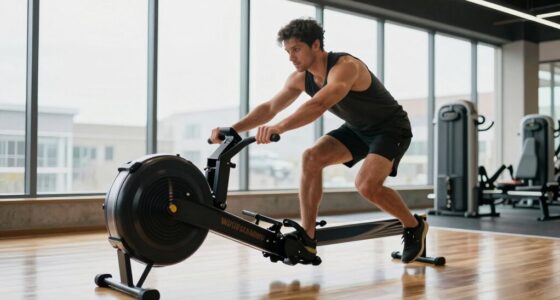

Your breathing efficiency directly boosts your cardio performance by improving oxygen intake and delivery to your muscles. When you breathe deeply and control your breathing patterns, you reduce fatigue, stabilize your heart rate, and sustain higher intensities longer. Respiratory training strengthens your lungs and breathing muscles, making your workouts more effective. Keep exploring to discover how specific techniques can make a real difference in your endurance and overall fitness journey.

Get workout gear delivered free with Prime
- Fast, free delivery on millions of items
- Prime Video, Amazon Music and more included
- Member-only deals all year
Key Takeaways
- Efficient breathing maximizes oxygen intake, enhancing endurance and stamina during cardiovascular exercise.
- Improved respiratory muscle strength increases lung capacity, supporting sustained higher-intensity workouts.
- Controlled breathing patterns reduce heart strain, promoting stable heart rate and better cardio performance.
- Respiratory training delays fatigue by reducing lactic acid buildup and optimizing oxygen utilization.
- Long-term respiratory improvements contribute to quicker recovery and overall cardiovascular health.

Breathing efficiency plays an essential role in how well your heart performs during exercise. When you breathe effectively, your body maximizes oxygen intake and delivery, directly impacting your endurance and overall cardio performance. One way to improve this is through respiratory training, which focuses on strengthening your breathing muscles and enhancing your breathing patterns. By training your respiratory system, you can increase your oxygen utilization, meaning your body becomes more effective at extracting and using oxygen from each breath. This not only enhances your stamina but also reduces fatigue, allowing you to push harder and longer during workouts.
As you engage in respiratory training, you learn to breathe more deeply and slowly, which can stabilize your heart rate and improve your lung capacity. Better oxygen utilization means your muscles receive a more consistent supply of oxygen, which delays the buildup of lactic acid and other fatigue-inducing byproducts. When your lungs are working efficiently, you don’t waste energy on shallow or rapid breathing, so more energy is directed toward movement and effort. This improved breathing pattern helps you sustain higher intensities for longer periods, directly boosting your cardiovascular fitness. Additionally, respiratory muscles can be strengthened through targeted exercises, further enhancing your overall breathing efficiency.
You may notice that with consistent respiratory training, your breathing becomes more controlled even during intense activity. This control allows you to maintain ideal oxygen intake without overexerting yourself. As a result, your heart doesn’t have to work as hard to circulate oxygen-rich blood, reducing strain and increasing efficiency. Over time, this adaptation enhances your overall cardio performance, making workouts feel easier and more effective. Incorporating breathing techniques such as diaphragmatic breathing can also help you develop better control and efficiency in your respiratory system. Developing these techniques can lead to a more sustainable breathing pattern that benefits your entire workout.
Incorporating breathing exercises into your routine is straightforward and can be done anywhere. Techniques such as diaphragmatic breathing or pursed-lip breathing can greatly improve your respiratory efficiency. Focus on slow, deliberate inhales through your nose, expanding your diaphragm, and controlled exhales. As your respiratory muscles strengthen, you’ll notice an improvement in how well your lungs function, which translates into better oxygen utilization during exercise. Additionally, respiratory training can help you develop better breathing patterns that support sustained effort. This synergy between enhanced breathing and cardiovascular function creates a powerful feedback loop—better breathing leads to improved heart performance, which, in turn, supports more efficient oxygen delivery.
Ultimately, by prioritizing respiratory training and optimizing your oxygen utilization, you set yourself up for sustained, high-quality cardio workouts. The more you practice, the more natural efficient breathing becomes, leading to increased endurance, quicker recovery, and a stronger, healthier heart. Enhancing your breathing efficiency can also contribute to overall stress reduction, benefiting your physical and mental health.
As an affiliate, we earn on qualifying purchases.
Frequently Asked Questions
How Does Breathing Technique Affect Long-Term Cardiovascular Health?
Your breathing technique directly influences long-term cardiovascular health by promoting respiratory adaptation and increasing lung capacity. When you breathe properly, your lungs become more efficient at oxygen exchange, reducing strain on your heart. Over time, this can lower blood pressure and improve circulation. Consistently practicing good breathing habits strengthens your respiratory system, supporting overall heart health and enhancing endurance for physical activities.
Can Breathing Exercises Replace Traditional Cardio Workouts Effectively?
Breathing exercises can’t completely replace traditional cardio workouts, but they come close. Your breathing patterns directly influence oxygen intake, which fuels your heart and muscles. Regular practice improves lung capacity and efficiency, giving you a superhero-like edge in endurance. While they’re a powerful addition, combining breathing exercises with aerobic activity maximizes your cardiovascular health, making your body a well-oiled machine capable of incredible feats.
What Are Common Breathing Mistakes During Intense Exercise?
During intense exercise, you often make breathing mistakes like holding your breath or failing to focus on proper breath control. You might also neglect inhalation focus, which leads to shallow breaths that limit oxygen intake. To improve, consciously practice deep, controlled breaths, ensuring your inhalation is steady and efficient. By maintaining breath control, you enhance oxygen delivery, boost endurance, and prevent fatigue, ultimately improving your overall cardio performance.
How Does Breathing Efficiency Vary Across Different Age Groups?
As you age, your breathing efficiency changes due to age-related lung capacity decline and breathing pattern variations. Younger individuals typically have higher lung capacity and more efficient breathing patterns, allowing better oxygen intake during exercise. As you get older, these factors can decrease, making it harder to maintain ideal breathing during intense activity. Staying active and practicing breathing exercises can help improve your breathing efficiency at any age.
Are There Specific Breathing Methods for Athletes With Respiratory Issues?
You might think respiratory issues make athletic performance impossible, but specific breathing methods can help. By practicing targeted breathing patterns and engaging in respiratory training, you strengthen your lungs and improve airflow. Techniques like diaphragmatic breathing or pursed-lip breathing are effective for athletes with respiratory issues. Incorporating these methods into your routine can enhance endurance, reduce fatigue, and boost overall performance, regardless of your respiratory challenges.
diaphragmatic breathing exerciser
As an affiliate, we earn on qualifying purchases.
As an affiliate, we earn on qualifying purchases.
Conclusion
Improving your breathing efficiency boosts your cardio performance like tuning a finely crafted instrument. When you breathe better, your body gets more oxygen, fueling your muscles and enhancing endurance. It’s a simple change that can make a big difference—think of it as giving your engine the right kind of fuel. So, focus on your breathing, stay consistent, and watch your stamina grow stronger, just like a plant reaching for the sun.
As an affiliate, we earn on qualifying purchases.
As an affiliate, we earn on qualifying purchases.
Fall Picks
fall essentials
As an affiliate, we earn on qualifying purchases.