

The idea of an immediate “anabolic window” after workouts is a myth. You don’t need to rush to eat right after exercising because your body keeps repairing and replenishing glycogen for hours afterward. Your overall daily nutrition matters more than perfect timing. Consuming enough protein and carbs throughout the day supports your recovery goals. Keep going—there’s more to understand about how flexible post-workout nutrition really is.
Key Takeaways
- The “anabolic window” is a myth; immediate post-workout nutrition is not strictly necessary for muscle growth.
- Total daily protein and carbohydrate intake are more important than exact timing after exercise.
- Muscles can recover and replenish glycogen effectively within several hours post-workout.
- Flexibility in nutrient timing allows for balanced, consistent eating aligned with individual schedules.
- Prioritizing overall nutrition quality and daily intake supports optimal recovery more than focusing solely on the immediate post-exercise period.
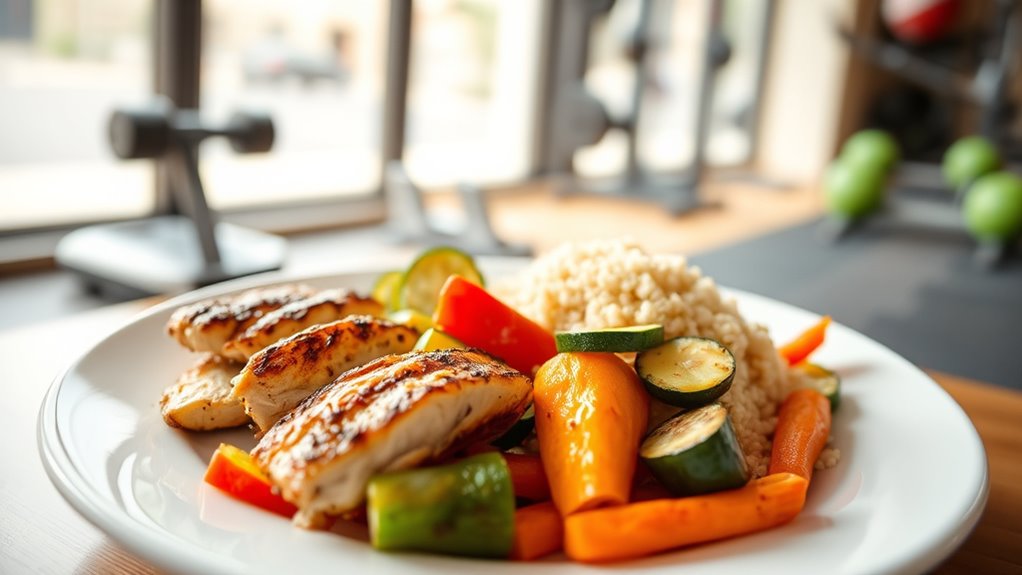
After a workout, many people wonder whether grabbing a specific meal or supplement is essential to optimizing their results. The idea of an “anabolic window”—a narrow timeframe immediately after exercise where nutrition is supposedly critical—has become a popular focus. But is it truly necessary to rush for protein shakes or carbs within a short period? The truth is, your body is more adaptable than many believe, and while timing can influence certain aspects of recovery, it’s not the only factor.
Muscle recovery is a key part of post-exercise nutrition. When you lift weights or do intense cardio, your muscles sustain microscopic tears, and your body needs nutrients to repair and grow stronger. Consuming protein soon after your workout supplies amino acids that facilitate muscle synthesis. But you don’t need to overthink the exact minute—what matters most is that you meet your daily protein needs consistently. If you can’t eat immediately, your muscles will still recover effectively as long as you get adequate protein within a few hours.
Muscle recovery depends on consistent daily protein intake, not immediate post-workout timing.
Glycogen replenishment is another essential element, especially after endurance sessions or long workouts. When you exercise intensely, your body depletes glycogen stores stored in muscles and the liver. Replenishing these stores helps you recover faster and prepares you for your next workout. Carbohydrates are the main drivers of glycogen synthesis. While some believe that timing your carbohydrate intake immediately post-workout maximizes glycogen replenishment, research shows that the total amount you consume over the next several hours is more important than the precise timing. If you have a meal with carbs and protein within a couple of hours, you’re still optimizing glycogen restoration, even if not immediately afterward.
In reality, the concept of a strict “anabolic window” has been overstated. Your body doesn’t shut down its ability to recover just because you missed the 30-minute mark. Instead, focus on your overall daily nutrition—making sure you’re getting enough protein for muscle recovery and enough carbs for glycogen replenishment. Ensuring your nutrient timing aligns with your individual schedule can be helpful, but flexibility is key; prioritize consistent, balanced eating patterns that support your training goals. By doing so, you’ll support muscle recovery and glycogen replenishment effectively, without stressing over the clock.

BowFlex Results Series 552 SelectTech Dumbbells (Pair)
- Quick Adjustment Dials: Easily change weights from 5 to 52.5 lbs
- Space-Saving Design: Replace 15 weights with one set
- Premium Metal Components: Durable plates with secure locking system
As an affiliate, we earn on qualifying purchases.
Frequently Asked Questions
How Long Does the Anabolic Window Actually Last?
The anabolic window actually lasts about 1 to 2 hours after your workout, but recent research suggests this timing myth isn’t strict. Your body can effectively utilize nutrients for muscle repair and growth within a broader timeframe. Rather than stressing over exact timing, focus on consistent nutrient timing throughout the day, ensuring you get enough protein and carbs to support recovery and progress.
Does Protein Type Affect Muscle Recovery?
Think of protein type as the paintbrush for your muscle masterpiece. Different proteins, like whey or casein, influence your muscle repair timing, delivering amino acids at varying speeds. Fast-absorbing proteins promote quick recovery, while slow-digesting ones support sustained repair. So, yes, protein timing and type matter—they help you optimize muscle repair, ensuring your muscles rebuild stronger and faster after every workout. Choose wisely to fuel your recovery journey.
Is Carbohydrate Intake Necessary Immediately After Workouts?
Carbohydrate intake isn’t strictly necessary immediately after workouts, but it can be beneficial. Proper carbohydrate timing helps replenish glycogen stores, especially if you train intensely or frequently. Including post workout snacks with carbs can boost recovery and energy levels. If your workout wasn’t very intense, you can wait a bit longer. Focus on balanced nutrition overall, but don’t overlook the role of carbs in supporting your progress.
Can You Delay Post-Workout Nutrition Without Losing Gains?
You can delay your post-workout nutrition without losing gains, especially if your meal timing and supplement timing are flexible overall. While eating soon after exercise can optimize muscle recovery, your body still benefits from consistent nutrient intake throughout the day. Focus on consuming sufficient protein and carbs within a few hours, rather than stressing over immediate post-exercise eating, ensuring your meal timing and supplement timing support your fitness goals.
What Are the Best Foods to Eat Post-Exercise?
You should focus on nutrient timing by choosing foods rich in protein and carbs post-exercise. Opt for lean meats, eggs, or dairy paired with whole grains or fruits to replenish glycogen and support muscle repair. Timing your meals within a couple of hours maximizes benefits, but don’t stress if you delay slightly—consistent overall intake matters more. Prioritize balanced, nutrient-dense foods to optimize recovery and gains.

2026 Upgrade Adjustable Dumbbell Set 25lb/55lb, Small Increment in 3-6lb, 1 Hand Quick-Dial, 10-in-1 Adjustable Dumbbells with Tray, Anti-Slip Grip for Home Gym HIIT Strength Training
- Versatile 10-in-1 Weight Options: Adjustable from 3 to 25 lbs in 10 increments
- Cost-Effective Home Gym Solution: Replace multiple dumbbells with one set
- Micro-Increments for Precision: Start at 3 lbs for gradual progress
As an affiliate, we earn on qualifying purchases.
Conclusion
Ultimately, whether you hit the “anabolic window” perfectly depends on your goals and overall diet. For instance, if you’re an athlete training intensely, timing your post-workout meal might help optimize recovery. But if you’re just staying active and eating well throughout the day, it’s less critical. Think of it like fueling your car—you don’t need to fill up immediately after every trip, but regular refills keep you running smoothly. Prioritize consistency over perfection.

4 In1 Adjustable Dumbbells, 88Lbs Weight Dumbbell Set with Connector
- Multi-Functional Design: Transforms between barbell and kettlebell
- Adjustable Resistance: Seamless adaptation for various workouts
- Durable Polyethylene Build: Resists odor and withstands intense use
As an affiliate, we earn on qualifying purchases.

TAYATUO Adjustable Dumbbell 50LB Pair Dial Quick Change Anti-Roll
- Versatile 10-in-1 Weight Selection: Adjusts from 5 to 60 lbs
- Compact and Space-Saving Design: Replaces multiple dumbbells with one set
- Octagonal Anti-Roll Shape: Keeps weights stable on the floor
As an affiliate, we earn on qualifying purchases.