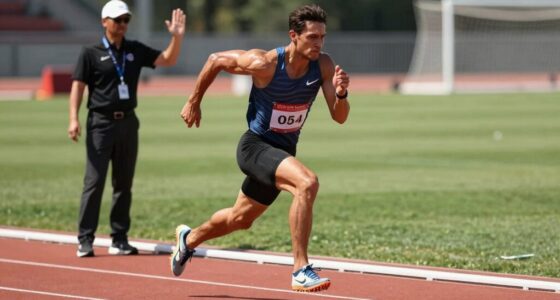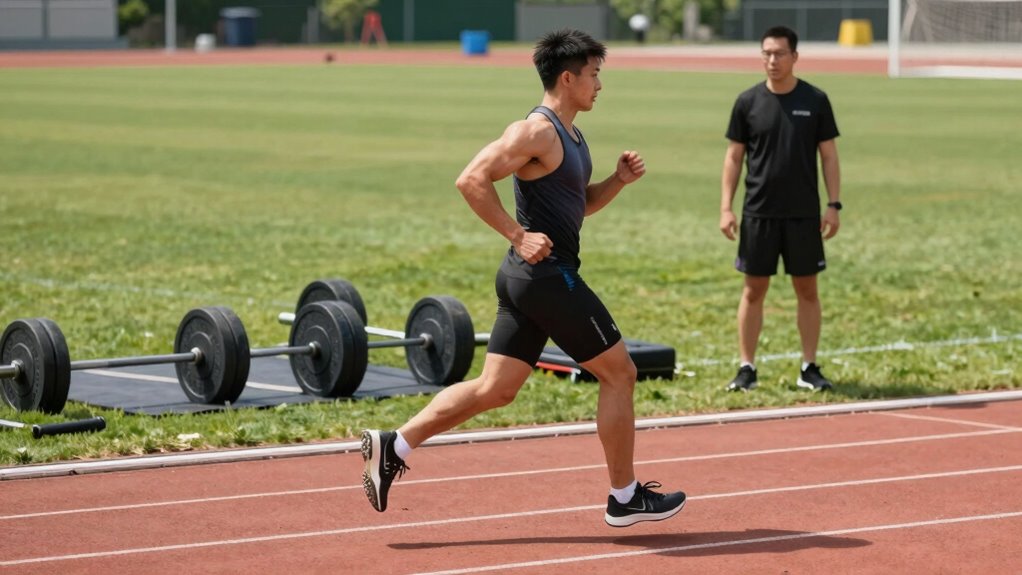

To balance strength work and sports practice, plan your training carefully by adjusting intensity and volume on busy sports days. Incorporate periodization to prevent overtraining and injuries, and focus on consistency with your routines. Prioritize recovery with rest, proper nutrition, and active recovery activities like stretching or foam rolling. Stay flexible to make adjustments based on your body’s signals. Keep these strategies in mind, and you’ll find ways to optimize both areas for better results.

Get workout gear delivered free with Prime
- Fast, free delivery on millions of items
- Prime Video, Amazon Music and more included
- Member-only deals all year
Key Takeaways
- Plan strength training sessions around your sports schedule, adjusting intensity on intense practice days.
- Use periodization to alternate between heavy and light training phases for recovery and progress.
- Incorporate active recovery and rest days to prevent overtraining and injury.
- Prioritize proper nutrition and hydration to support both training and recovery needs.
- Monitor fatigue and self-assess regularly to make flexible adjustments to your routine.

Balancing strength training and sports practice can be challenging, but with proper planning, you can improve both without risking burnout or injury. The key lies in understanding how to manage your workload, optimize nutrition planning, and incorporate effective recovery strategies. When you’re juggling two demanding activities, it’s easy to overlook how vital nutrition is for maintaining energy levels and supporting muscle repair. Prioritize balanced meals rich in protein, healthy fats, and complex carbs to fuel your workouts and aid recovery. Timing your nutrition around your training sessions can also make a significant difference; consuming a protein-rich snack or meal shortly after strength work or sports practice helps jump-start muscle recovery and replenishes glycogen stores.
Equally important are recovery strategies that allow your body to adapt and grow stronger. Incorporate rest days into your schedule, and listen to your body’s signals. If you’re feeling excessively sore, fatigued, or mentally drained, it’s a sign you need more downtime. Active recovery, like light stretching, walking, or foam rolling, can help improve circulation and reduce muscle tightness without adding significant stress. Sleep is another essential element—aim for at least seven to nine hours of quality rest each night to facilitate muscle repair, hormone regulation, and mental clarity. Proper recovery isn’t just about taking days off; it’s about actively promoting healing through hydration, nutrition, and gentle movement. Understanding how to balance workload and avoid overtraining is crucial for long-term progress. Incorporating periodization techniques into your training schedule can help prevent plateaus and overuse injuries, ensuring continuous adaptation. Additionally, staying consistent with your routine ensures continuous adaptation and improvement over time. Recognizing the importance of a well-designed outdoor space can also motivate you to stay committed to your training and recovery routines, especially if you have a dedicated area for stretching, foam rolling, or light workouts at home.
To effectively balance strength work and sports practice, you should also plan your training schedule thoughtfully. Adjust the intensity and volume of your strength sessions on days when you have intense sports practices to prevent overtraining. Conversely, lighter strength workouts can complement heavy sports days, aiding in injury prevention and performance enhancement. Incorporating periodization techniques, where you alternate between phases of heavier and lighter training, can help avoid plateaus and reduce the risk of burnout. Maintaining a balanced training routine is essential to prevent overexertion and promote steady progress.
Ultimately, maintaining this balance requires consistent self-assessment and flexibility. Track your progress, monitor how your body responds to different workloads, and don’t hesitate to make adjustments. By focusing on strategic nutrition planning and recovery strategies, you’ll set yourself up for sustained improvement in both strength and sports performance. Remember, the goal isn’t just to train harder but smarter—ensuring your body remains resilient, energized, and ready to perform at its best.
As an affiliate, we earn on qualifying purchases.
Frequently Asked Questions
How Do I Prevent Injury While Balancing Both Activities?
To prevent injury while balancing strength work and sports practice, you should incorporate injury prevention strategies like proper warm-ups, stretching, and listening to your body. Cross-training benefits help reduce overuse injuries by varying your activities, giving specific muscles time to recover. Make sure to gradually increase intensity and allow adequate rest days. Staying mindful of your limits and maintaining good technique also plays a crucial role in keeping yourself injury-free.
What Should I Eat to Support Both Strength and Sports Training?
To support both strength and sports training, focus on nutrition planning that includes balanced carbs, proteins, and healthy fats. Prioritize meal timing by eating a nutritious meal rich in carbs and protein about 1-2 hours before activity, and refuel with a protein-rich snack afterward. Stay hydrated and listen to your body’s hunger cues to optimize energy levels and recovery, helping you perform at your best.
How Many Rest Days Are Ideal Each Week?
You should aim for at least one to two rest days each week, depending on your training intensity. Use recovery strategies like proper sleep, stretching, and hydration to maximize your rest. Rest days help rebuild your muscles and boost mental resilience, preventing burnout. Listen to your body—if you feel fatigued or sore, add an extra day off. Balancing rest with your workouts ensures sustained progress and better performance.
Can I Do Strength Training and Sports Practice on the Same Day?
Yes, you can do strength training and sports practice on the same day, like weaving two threads into a stronger fabric. Cross training benefits come alive when you time your workouts ideally, perhaps doing strength early to fuel your sport or vice versa. Keep sessions focused and manageable, ensuring one enhances the other without draining your energy. This way, you build resilience and skill, making each workout a step toward mastery.
How Do I Stay Motivated to Maintain Both Disciplines?
To stay motivated, focus on building mental resilience by setting clear, achievable goals for both strength training and sports. Use effective time management to carve out dedicated moments for each discipline, preventing burnout. Celebrate small victories to keep your spirits high, and remind yourself of the progress you’re making. Staying consistent and maintaining a positive mindset will help you stay committed to both, making your fitness journey rewarding and sustainable.
protein powder for muscle repair
As an affiliate, we earn on qualifying purchases.
As an affiliate, we earn on qualifying purchases.
Conclusion
Remember, Rome wasn’t built in a day, and balancing strength work with sports practice takes time and patience. Listen to your body, prioritize rest, and stay consistent with your routines. By finding a harmonious rhythm, you’ll boost your performance without burning out. Keep pushing forward, but don’t forget—sometimes, less is more. With dedication and smart planning, you’ll see progress and enjoy the journey every step of the way.
As an affiliate, we earn on qualifying purchases.
sports recovery compression wear
As an affiliate, we earn on qualifying purchases.
As an affiliate, we earn on qualifying purchases.
Halloween Picks
halloween
As an affiliate, we earn on qualifying purchases.